
Overview
De Clercq's path into real estate marketing started with an internship at a real estate developer along the Belgian coast, working on investment real estate projects. He then started a real estate marketing agency.
Anton De Clercq is the founder and CEO of Immowi, a real estate lead generation company based in Ghent that has operated since 2019. The company reports a database of 61.000+ real estate leads, 2.500+ marketed projects and coverage of 12 countries. Immowi's product, MyImmowi, captures, scores and enriches leads and integrates with CRM systems such as HubSpot, Salesforce and Pipedrive. The company also runs a network of branded portals including Immowatchers, Vastgoed aan de Kust, Studentenvastgoed, Investeringsvastgoed and Vastgoed in Spanje. Immowi International has 2-10 employees. The company's stated specialties cover lead generation, media buying, artificial intelligence, big data, digital marketing, CRM and marketing automation.
Career history

Insights & ideas
The through-line
Almost everything Anton De Clercq says circles back to a single argument about real estate marketing: the cost of a lead is a meaningless number, and the only figure worth tracking is how many of those leads turn into clients. "The only question that matters: how many of your leads actually become" customers, he writes, and from that follows the whole position: "In practice, cheap leads are actually the most expensive leads out there" [14]. The corollary is that the risk of finding out should not sit with the agent. The model he describes is one where "We bear the risk and the advertising costs" and "You only pay for high-quality, filtered leads" [11].
The second, quieter through-line is that this is not a theory he sells but a system he runs. The platform was "gradually built and perfected" on his own account before being opened to the market [11], and the pitch to agents who eventually want to hand the work back is that "we use the exact same system for our own clients" [6]. His recurring subjects, data, dynamic content and progressive profiling, are the technical spine underneath all of it [16].
On why cheap leads are the expensive ones
The €3 lead is his standing example of a false economy. What arrives is "Wrong numbers, people who don't know anything, or who simply don't answer," and the real invoice is paid elsewhere: "You're paying with hours of fruitless calls, wasted time for your team, and a lot of frustration" [14]. He frames the alternative as removing the gamble entirely for the buyer of leads. Agents want growth but "don't want to spend thousands of euros every month on ads with no guarantee of results" [11], so the offer is inverted: no advertising risk, payment only on filtered leads [11], a money-back guarantee on any bad one that slips through, "Geen discussie" [14], and five qualitative leads free to start [14].
On the refund as a feedback loop
Where most operations treat a dropped lead as a write-off and move on, he treats it as research. "What when a lead drops out? Move on to the next one? Not with us" [15]. When an agent or developer requests a refund, the lead is contacted directly to establish why: price, location, or property type. The refund itself is almost secondary to what comes back with it, "not only do you get your credit back for invalid leads, but you also get hard, unfiltered market data" [15]. The principle he draws from it is a discipline against wishful thinking: steer on what the buyer actually wants, not on what you hope they want, because data does not lie [15].
On progressive profiling and knowing the buyer first
The counterpart to filtering out bad leads is building depth into good ones. He describes the output as "A mini-Immoweb, but tailored exclusively to your lead's preferences": the moment a potential buyer responds to one of the pages, a unique profile is assembled automatically, producing a personalised portal for the buyer and, for the agent, immediate clarity on desired location, exact budget and the property type they are really after [9]. The point of the exercise is operational rather than decorative, knowing precisely what your buyer wants before you pick up the phone [9]. Data, dynamic content and progressive profiling are the three terms he uses to describe this machinery [16].
On competing with the big portals as a local player
He accepts the budget asymmetry and argues visibility does not follow from it. "As a local player, you often don't have the budgets of the giant real estate platforms to advertise everywhere at once. But that doesn't mean you have to be invisible, does it?" [2] The answer is a network effect rather than a spending war: optimised SEO for maximum reach, visibility across multiple channels at once, and volume without a punishing cost per channel, which gives a small office "the impact and visibility of a big player, but with the flexibility of a local office" [2]. The same anti-monoculture instinct shows up in how he defines a good partner, someone who understands that genuinely high-quality leads come from a smart mix of channels and not from one single miracle channel [13].
On replacing agencies and software puzzles
His framing of the tooling is deliberately deflationary about the marketing services industry: "No more need for expensive agencies for every little campaign, and no more complicated software headaches" [6]. Agents get the tools and the automations to run it themselves, described as faster, cheaper and with a tight margin, with the option to scale up or outsource later to the same operators running the same stack [6]. The division of labour is explicit. The agent supplies the briefing, the vision and the property knowledge; the platform converts it directly into a complete action plan with clear tasks, automated workflows and strategies, removing the loose links between an idea and the finished campaign [4].
On expertise being the input that matters
He is indifferent to who fills in the form and insistent about what goes into it. It makes no difference whether the briefing comes from a major developer, a local builder or an assistant, because "The secret to good marketing lies in the knowledge and passion you bring to" the project [4]. The technology is positioned as smart but derivative, powered by the user's expertise rather than substituting for it [4]. This also shapes who he wants to work with: partners who set the bar high, who already have a strong sales and marketing team in place, who grasp that streamlined systems are the key to effective follow-up, and who stay open to new ideas and outside expertise [13]. That combination, in his account, is what makes real impact and scale possible [13].
On the market moving in the same direction
He reads competitor moves as confirmation rather than threat. When KBC Bank & Verzekering and immoscoop launched a feasibility certificate for prospective buyers, his reaction was that it looked as if they were watching what he was building, "Great minds think alike zou ik dan denken" [8], teed up alongside a preview of his own imminent release [8]. Alongside the product arguments he keeps a running provocation aimed at agents themselves, asking which kind of agent they are [1] and how they would rate their current real estate marketing [7].
Takeaways
- Judge lead sources on conversion to client, not on price per lead; cheap leads cost you in wrong numbers, unanswered calls and team time [14].
- Shift advertising risk to the supplier: pay only for filtered leads, take a refund with no discussion on bad ones, and test with the first five free [11][14].
- Interview the lead that dropped out. A refund investigation into price, location or property type returns market data that tells you what buyers actually want [15].
- Build the buyer profile automatically from the first response so you know location, budget and property type before the first call [9][16].
- Small offices can match portal-scale visibility through SEO, simultaneous multi-channel presence and volume at low cost per channel, rather than by outspending [2].
- Treat one "miracle channel" as a warning sign; quality leads come from a smart mix [13].
- Keep the briefing, vision and property knowledge in-house and let automated workflows turn it into the campaign, instead of hiring an agency for every small push [4][6].
- Choose partners with a real sales and marketing team, streamlined follow-up systems and openness to outside expertise [13].
Media & appearances
In the news
- Wanneer je zó trots bent op wat je gebouwd hebt dat je het hele team verplicht mee laat kijken naar elke nieuwe knop... 😂💻 - - - - - - - - - - - - - - - - - - - - - - When you're so proud of what you've built that you make the whole team watch every new button you add... 😂💻 #vastgoedmarketing #leadgeneratie #projectontwikkeling #vastgoedverkopen #marketing
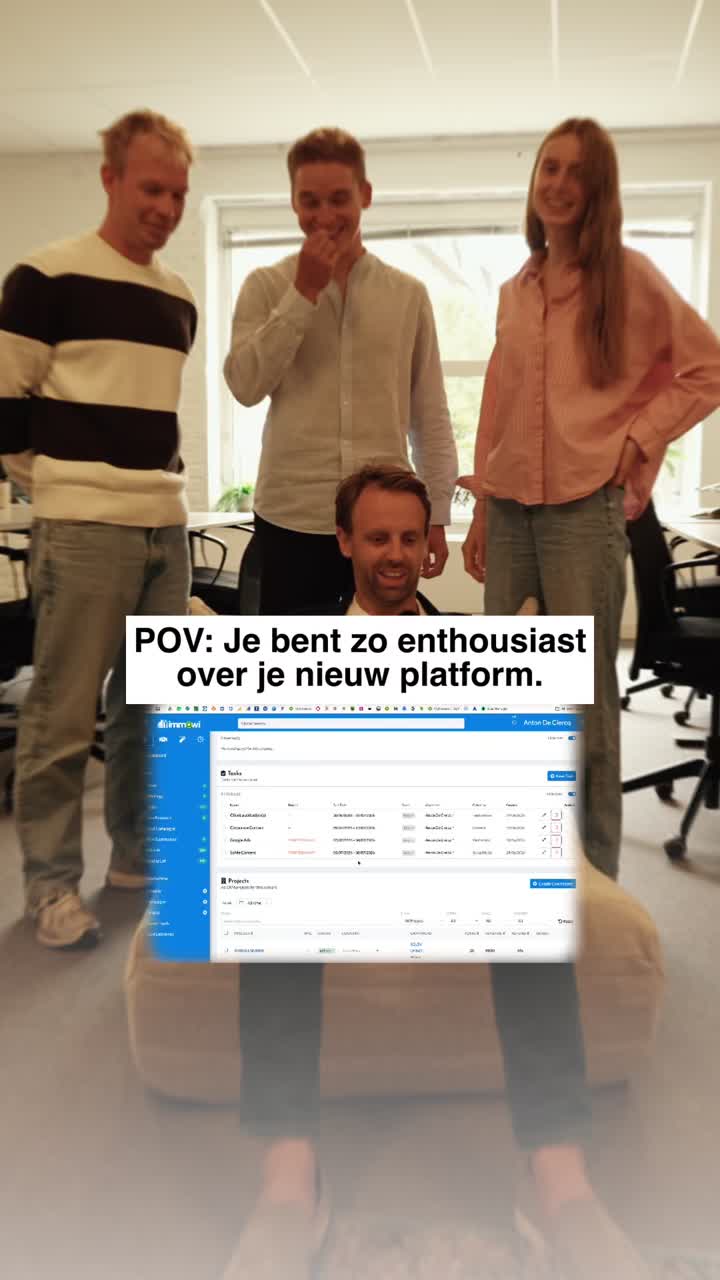
- Welke MyImmowi-functies leveren vastgoedprofessionals écht het meeste op? 📊🔍 Met MyImmowi bundelen we de complete marketing- en salesflow van een vastgoedkantoor in één overzichtelijk platform. Maar hoe verhouden de verschillende onderdelen zich tot elkaar als het gaat om dagelijks gebruik én directe impact op jouw resultaten? Van leadopvolging en automatisering tot advertentiebeheer en plaatsingen: elke feature speelt een eigen rol in jouw groei. Benieuwd welke tool op #1 staat en waarom juist die functie het verschil maakt voor

- Wanneer het zelfs in de hemel geschreven staat... 💚 #vastgoedmarketing #vastgoedmakelaar #leadgeneratie #marketing #vastgoedbelgië
- Durf jij de marketingaanpak van jouw vastgoed kantoor kritisch te laten bekijken? In vastgoedmarketing draait het niet om zomaar uitvoeren wat gevraagd wordt, maar om wat écht resultaat oplevert. Door onze jarenlange focus op de vastgoedsector, verspreid over verschillende landen en types vastgoed, heeft de markt steeds minder geheimen voor ons. Uiteindelijk hebben we maar één gezamenlijk doel: resultaat boeken voor jouw projecten. 💪 - - - - - - - - - - - - - - - - - - - - - - - - - - - - - - - Are you willing to take a critical

- Verbrand jij ongemerkt advertentiebudget? 🔥💶 Dit zijn de 3 meest gemaakte fouten: 👉 Iedereen willen targeten: Wie iedereen probeert aan te spreken, spreekt uiteindelijk niemand aan. Kies één specifieke kopersdoelgroep. 👉 Geen retargeting inzetten: 95% van de bezoekers koopt niet bij het eerste bezoek. Zonder retargeting blijf je telkens opnieuw betalen voor dezelfde lead. 👉 Geen duidelijke CTA: Een mooie advertentie zonder concrete actie is niks meer dan een dure foto. Met MyImmoWi zet je in een handomdraai doelgerichte én

- Stop met het betalen voor al die losse tools. ❌ 👉 Je website draait op WordPress. 👉 Voor blogs gebruik je ChatGPT. 👉 Socials maak je in Canva. 👉 Mailings gaan via Mailchimp. 👉 Je leads beheer je in HubSpot of Teamleader. 👉 En tussendoor draai je ook nog Ads op Meta en Google... Het kan veel eenvoudiger! Met MyImmowi vervang je ál die dure abonnementen door één overzichtelijk platform dat specifiek gebouwd is voor vastgoed. Van publicaties en blogs tot ads, mailings en CRM: alles op één plek. 😎 - - - - - - - - - - - - - - -
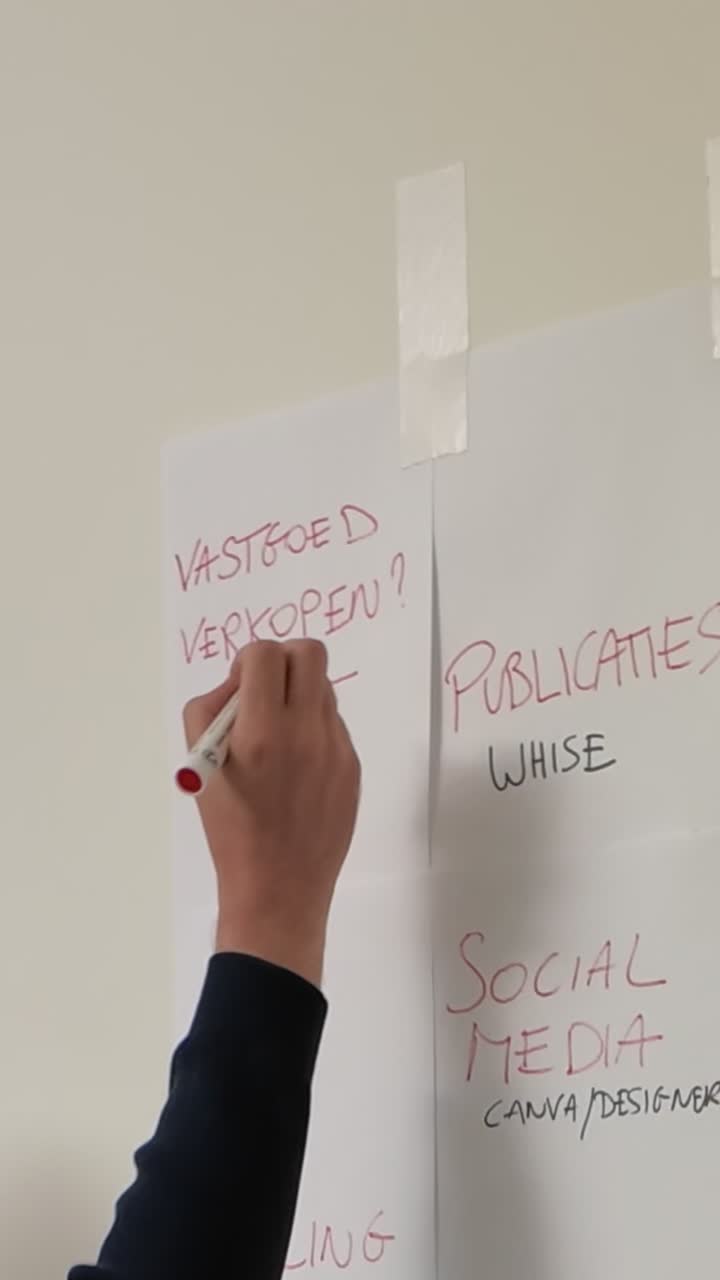
- Is de Belgische vastgoedmarkt klaar voor samenwerking tussen concurrenten?🤔 "Sorry, dat type pand hebben wij momenteel niet in portefeuille." Het is een antwoord dat veel woningzoekenden te horen krijgen... Resultaat? Een gemiste kans voor de makelaar én een teleurgestelde klant die op eigen houtje verder zoekt. Maar wat als we 'sharing is caring' écht gaan toepassen? Het vraagt een switch in mindset van puur concurreren naar slim samenwerken.🤝 - - - - - - - - - - - - - - - - - - - - - - - - - - - - - - - - Is the

- Stop met het combineren van 10 verschillende abonnementen, MyImmowi bundelt je vastgoedmarketing in één krachtig platform! 🚀 - - - - - - - - - - - - - - - - - - - - - - - - - - - Stop juggling 10 different subscriptions, MyImmowi brings all your real estate marketing together in one powerful platform! 🚀 #vastgoedmarketing #vastgoedmakelaar #leadgeneratie #marketing #vastgoedverkopen
Related profiles
This page shows public professional information only, each fact cited. Is this you? send a correction, or ask for removal within 24 hours, no questions asked.