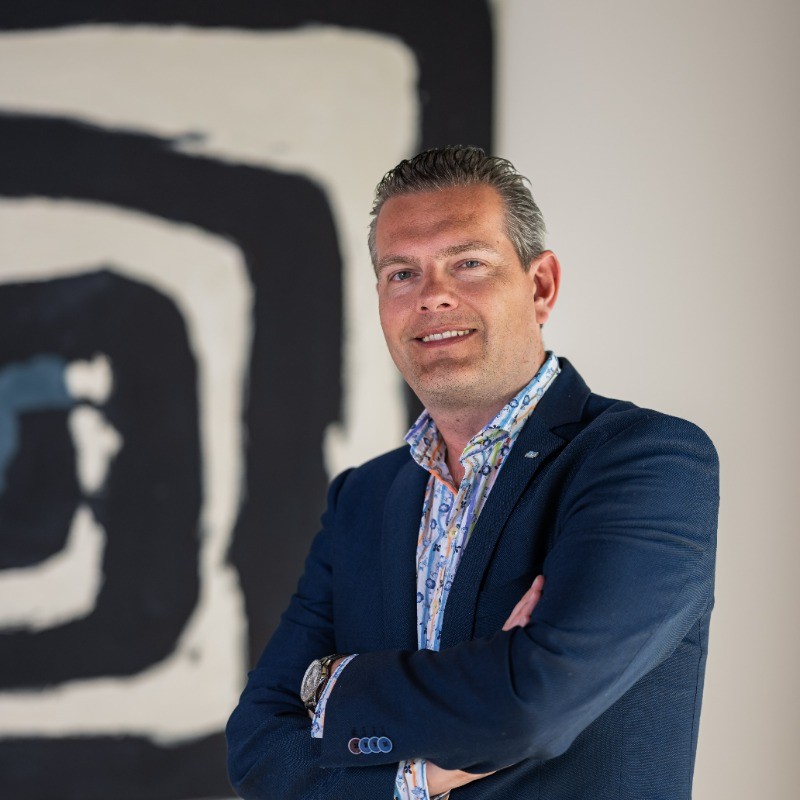
Overview
Bart built ITP Group (IT Provider) from 2011, growing it into a portfolio of ICT companies including DVIT and Lovatech. ITP Group became part of AXI ICT Services, where Bart took on the Group CEO role in January 2025. He is also active in JCI Belgium.
As Group CEO, Bart drives AXI's positioning in enterprise IT and transformation, managing a portfolio of services and clients across Belgium and beyond.
Career history
- Group CEOJan 2025 - PresentAXI ICT Services
- OwnerNov 2005 - PresentVerhelst Invest CommV
- CEOJan 2011 - Dec 2024ITP Group BV
- AXICurrent

Education
MBA Highlights2017Solvay Brussels School of Economics and Management
- Organizational Leadership, JCI Belgium2015
Talks about
- Buy-and-build
- M&A
- Exits
- Succession
- Entrepreneurship
- Investor Entrepreneur
Insights & ideas
The through-line
The constant in everything Bart Verhelst says is that a company is somebody's life's work, and that whoever takes it over is holding something entrusted rather than something bought. He frames the founders who joined his group in exactly those terms: "you didn't just sell us a company, you entrusted us with your life's work. That trust is the foundation this group is built on" [1]. The same instinct governs how he negotiates, how he integrates, and how he talks about the people he acquires from. What began as a small Tielt-based MSP turned into a buy-and-build platform, and then into a group of founder-built companies "joining forces while keeping the soul of what made each of them special" [1][2].
Alongside that sits a colder, more mechanical conviction: ownership is not a resting place. Verhelst is unusually blunt that value does not accumulate by itself, that concentration is a risk rather than a reward, and that the way to grow is to give a part away first. "Je kan maar gaan vermenigvuldigen door eerst te delen" [2].
On the divorce conversation you should have at the wedding
His hardest-won lesson concerns partnerships. He and his co-founder built together without ever agreeing what would happen if their ambitions diverged, and when they did, the exit had to be improvised at speed and at cost. "Achteraf gezien waren wij aan het huwelijk begonnen, maar hebben wij nooit gepraat of nagedacht over de scheiding" [2]. The prescription is simple and he states it as a rule: agree the terms of a split at the moment you start, not at the moment you need them, because the rushed buyout of 2015 was the price of not having done so [2].
On acquiring ethically when you hold the leverage
The most revealing case he tells is buying from a terminally ill owner, where every ordinary negotiating advantage sat on his side of the table. He refused to use it. "Ik kan jou één ding beloven, dat is dat we dat heel fair gaan spelen, want ja, je hebt niet veel tijd, dus ik ga daar absoluut ethisch correct mee omgaan en zorgen dat je een correcte prijs krijgt voor jouw bedrijf" [2]. His reading of the seller's position is what drives the behaviour: the man was not optimising price, he wanted a safe basis for his clients and staff and provision for his daughters, so the buyer's obligations were to act ethically, to move fast, and to pay a correct price [2]. On timing of communication he is pragmatic rather than sentimental: in the LOVA acquisition, staff were told only after the deal was legally closed and the money transferred, to avoid complicating the process, and the joint announcement by both owners landed well immediately [2].
On not integrating what you just paid for
Verhelst warns against the acquirer's reflex toward uniformity. LOVA served GP practices in a way that had nothing to do with how IT Provider served SMEs, and forcing the two into one model would have destroyed the very thing that justified the price [2]. He is explicit that the pressure to integrate is usually ego rather than logic, and that preserving the acquired firm's identity and service model is how you protect the value you bought [2]. The group-level version of the same principle is that founder-built companies can join forces and still keep their soul [1], and that a group can offer ambition "without ever taking away ownership, in every sense of the word" [1].
On multiplying by dividing
The smart deal that brought 50 private investors on board is his answer to the founder's core exposure problem. It converted concentrated business risk into diversified wealth while he kept 50% ownership and operational control, and it moved him from entrepreneur to entrepreneur-investor with stakes in other smart-deal companies [2]. The logic is captured in his own formulation, that multiplication starts with division [2]. It is also a partial exit rather than a departure, and he is clear about why: "Ik heb al heel wat waarde, maar ik wil die baby nog niet verkopen" [2].
On why sitting still destroys value
He rejects the assumption that revenue compounds on its own. Competition, mistakes and departing employees are certainties, not risks, and entrepreneurs who hold on too long frequently watch value shrink rather than grow [2]. The temperament this demands is relentless: "Eigenlijk is ondernemen een beetje topsport ook. Als ge een dag niet hebt, dan verliest ge de wedstrijd" [2]. The counterweight is that he credits others for the conditions that made it work, naming Matthias Vandepitte and the Strada team for "seeing potential where others saw 'just another IT company'" and for trusting a founder to lead the group, Paul Peeters for opening the door in 2022, and his management team of Geert Gobien, Matthias Van Snick, Rebekka Van Acker, Karel Vyncke and Gino [1].
Takeaways
- Settle the terms of a partnership split before you start; skipping that conversation forced a rushed and difficult buyout when ambitions diverged [2].
- When the seller is under duress, the buyer's job is to move fast, behave ethically and pay a correct price, because what the seller wants is security for clients, staff and family [2].
- Announce an acquisition to staff only once the deal is legally closed and the money has moved, then have both owners announce it jointly [2].
- Resist full integration of an acquired company when it serves a different market; the identity and service model you leave intact are what you paid for [2].
- Treat revenue as something that decays, not compounds; competition, mistakes and departing employees are certainties, and waiting too long shrinks value [2].
- Selling part of the business to a spread of investors can de-risk personal wealth while leaving 50% ownership and operational control intact [2].
- A group can add ambition to founder-built companies without stripping their ownership or their soul [1].
In the news
This page shows public professional information only, each fact cited. Is this you? send a correction, or ask for removal within 24 hours, no questions asked.