
Overview
Bram Verswalm is the CEO of caplo, based in Gent. He co-founded Caplo in May 2025, and during 2025 also worked as an agile enterprise architect at Renewi and as a consultant at Inno.com.
Earlier, Verswalm was head of product at LeanIX from January 2023 to June 2024, having spent the preceding years as an enterprise architect at Showpad from June 2019 to January 2023. At Deloitte he worked from January 2016 as a senior consultant in digital vision and roadmap, and from July 2017 as a digital vision manager. He joined Orbit One in May 2013 as a service engineer, becoming service desk quality officer in 2014 and service desk manager in 2015. He began his career as a junior developer at LoQutus from November 2011 to March 2013.
He studied at Katholieke Hogeschool 'Sint-Lieven' in Gent from 2005 to 2011.
Career history
In the news
- Kudo’s to Pieterjan Soetaert who pulled this project! Big step for us in proving that we take security seriously.
- Can AI build a capability map in 5 minutes? Jonas Van Riel challenged me to find out. Of course it can, all enterprise architects are doing this already with their favorite AI-tools. But generating isn’t the hard part. - Can you edit the result visually? - Can colleagues review and improve it together? - Can you use MCP, a built-in assistant, or make changes manually on a whiteboard? - And does the result become part of a shared, structured and versioned enterprise model? Instead of starting from a personal blank page, Caplo gives

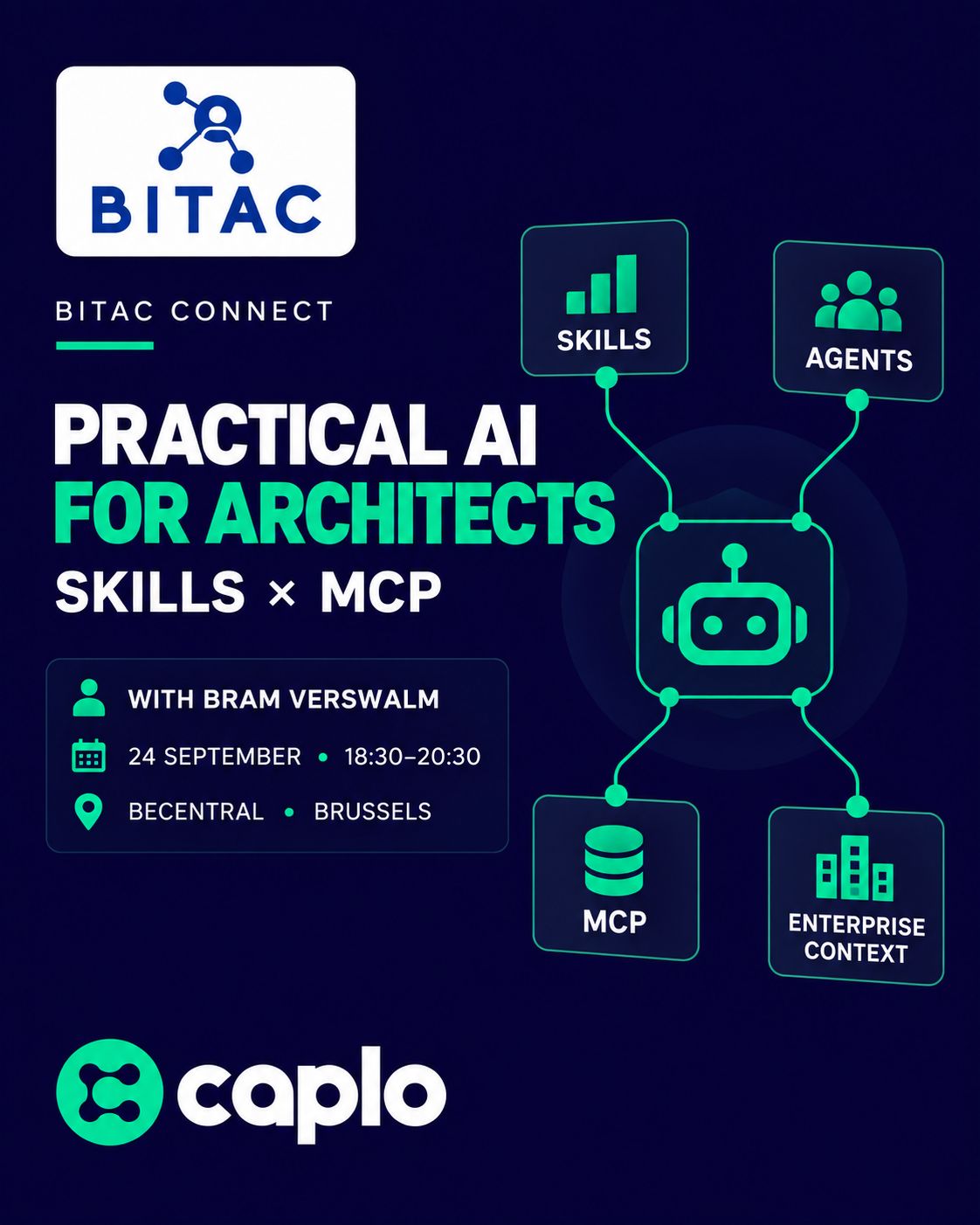
- In two weeks, I’ll be speaking at the next BITAC Connect event about a topic I’ve been exploring hands-on: how AI skills and the Model Context Protocol (MCP) can improve the quality and speed of enterprise architecture work. Bring your laptop, since you’ll try these tools yourself in a practical workshop! AI is moving incredibly fast. When you already have a busy job, it’s difficult to keep up with every new term, tool and protocol. Skills and MCP are getting plenty of attention, but I believe the best way to understand their
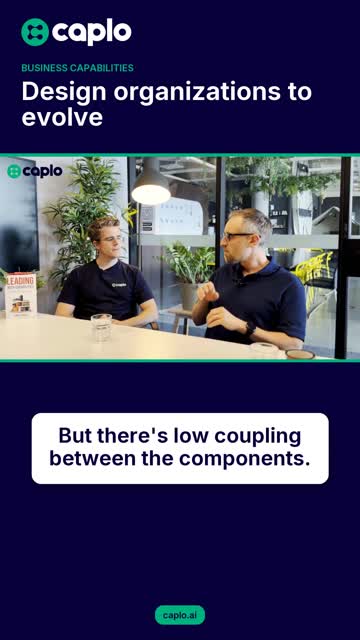
- Are capabilities designed just like software architects design their systems? Software architects aim for high cohesion and low coupling between components. Could the same design principle make organizations easier to change? Jonas van Riel is careful not to push the analogy too far: an organization is an organism, not a computer system. But capability domains can still help us create clearer boundaries, stronger accountability and more flexible evolution. Watch the full video here: https://lnkd.in/enGbvuC9 #BusinessCapabilities
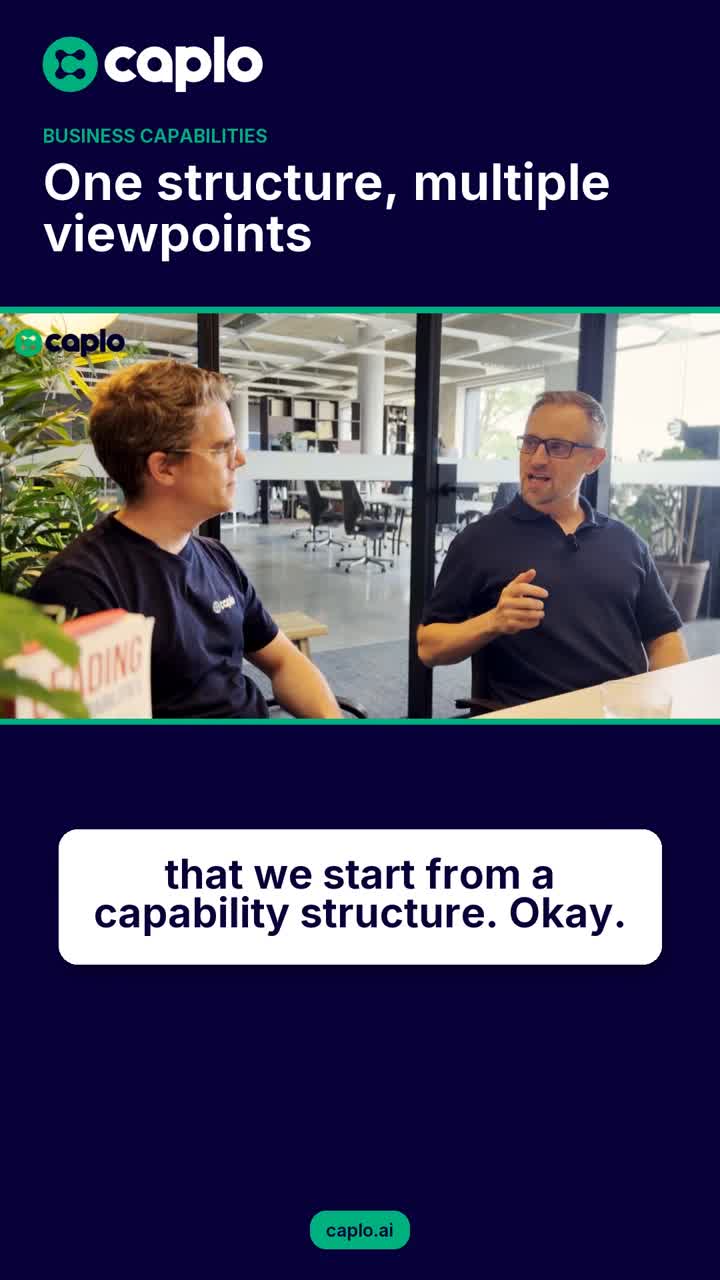
- How can you use capabilities for thinking about mergers and acquisitions? Or a carve-out? Or when you have multiple physical locations? Jonas Van Riel answers clearly: Build one capability map for what the group needs to be able to do. Everything else are different views, e.g.: filter on what capabilities are executed in a certain location. View the full video about what are capabilities here: https://lnkd.in/ejn_j__H #BusinessCapabilities #EnterpriseArchitecture #OperatingModel
- How can you assess the different capabilities of your organization? One of the my favorite mechanisms is leveraging the POPIT framework: - People - Process - Information - Technology Applying these lenses as Jonas Van Riel describes allows for properly designing the capability. Soon we'll show how you can execute this in Caplo! #BusinessCapabilities #OperatingModel #DigitalTransformation
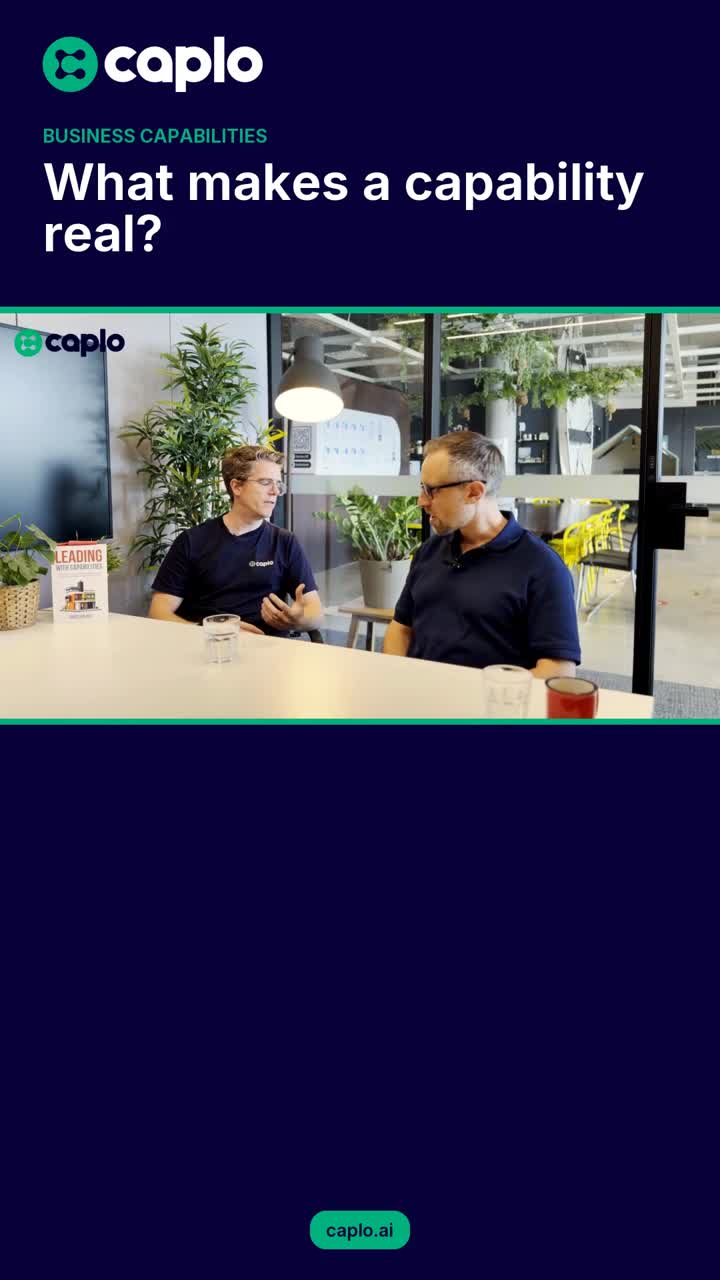
- How do you explain business capabilities? “Business capability” sounds vague until you make the purpose concrete. Capabilities are a way to decompose an organization into functional domains: coherent parts that fulfil a purpose and can have clear accountability. Or, as Jonas Van Riel puts it: how do you eat an elephant? Bit by bit. What definition has helped capabilities click with your stakeholders? #BusinessCapabilities #StrategyExecution #EnterpriseArchitecture
- Does your capability map look like your org chart? An org chart answers: who A capability map answers: what the organization needs to be able to do. Confusing the two quietly hard-wires today’s reporting lines, politics and staffing choices into what should be a more stable view of the business. Jonas Van Riel explains why the functional structure should come first and the people structure later. #BusinessCapabilities #OperatingModel #EnterpriseArchitecture

This page shows public professional information only, each fact cited. Is this you? send a correction, or ask for removal within 24 hours, no questions asked.