Talks about
- Robotics
- European competitiveness
- Autonomous vehicles
- Cybersecurity
- Drones
- Smart Cities
Insights & ideas
The through-line
The single preoccupation running through everything Erwin Verstraelen says is that Europe has forgotten how to innovate, and that the fix is neither more money nor better technology but a change of posture. "Het belangrijkste dat echt voor ons een prioriteit is als Europa, dat is stoppen met zelf genoegzaam zijn." [1] The comparison that makes the point is China, where the pattern is not that better products get built but that markets get made before they exist: "Ja, Chinezen hebben niet gewacht op een markt, ze hebben ze gewoon gecreëerd." [1][2] Europe develops for quality first and then tries to scale; China scales fast with imperfect products and learns from market feedback at speed [2]. He is explicit that Europe should not copy that model wholesale, but that it must borrow the willingness to run the experiment before the answer is known [2].
Underneath the geopolitics sits a simpler claim about temperament. "Innovatie is in essentie een mindset. Met op safe te spelen, ja, dat ga je niet innoveren, hè. Zo simpel is dat. En dat zijn wij compleet verleerd." [2] Everything else he argues, about regulation, drones, robots, Chinese components, follows from that diagnosis of a continent that has unlearned risk.
On European complacency and the cost of mockery
The clearest evidence he offers that complacency is expensive is the European car industry, which mocked China and as a result missed entirely what was happening with electric vehicles there [1][2]. The lesson generalises: dismissing a competitor is a way of avoiding the work of watching them. "Als je echt state of the art innovatie wilt in technologie, ja dan moet je gewoon dom zijn om de Chinezen te negeren." [1][2] What impresses him is not any single product but the density of the future on the ground: "Ja, de toekomst zie je daar gewoon elke dag in de realiteit." [1][2]
He is also realistic about where Europe simply cannot win a head-on contest. "Je kan niet concurreren op dat vlak met een land waar dat elk jaar 4 miljoen mensen met een stemdiploma afstuderen." [2] The response to that arithmetic is not withdrawal but a different set of choices about speed, regulation and appetite for failure.
On failure and long timelines
Europe abandons innovation too quickly, and Northvolt's bankruptcy is his standing example of an effort dropped after a setback rather than sustained across the long timelines that innovation actually requires [1][2]. Accepting failure is a precondition, not a regrettable side effect. The internal motto at the port compresses this into four words: "No guts, no glory. Punt. Dat is de essentie van innovatie." [1]
On regulation as something you write, not wait for
His sharpest structural criticism is of the European reflex to mitigate everything that could go wrong before anyone knows how a technology will evolve, which means the economic upside is gone by the time the rules are ready and the train has left [1]. China's government instead co-designs regulation so innovation can scale as fast as possible [1]. The workable European answer, in his account, is regulatory sandboxes, the "regelluwe zones" the Port of Antwerp created, from which legislation can then emerge rather than precede the technology [1][2]. The port co-wrote legislative frameworks for drones, remote-piloted shipping and smart cameras that did not exist when the experiments started [1]. He resists the idea that Europe is simply blocked: "Het is niet dat we niks kunnen of niks mogen, hè." [1] And the proof is airborne: "Wij vliegen hier in Antwerpen met drones rond met 15 kg aan chemische stalen door de lucht." [1]
On drones and the low altitude economy
Coffee delivery by drone in Shenzhen is routinely misread as a weak business case, and he thinks that misses the point entirely. The purpose is to generate flight volumes in a complex urban environment in order to learn what safe and responsible operation of the low altitude economy actually demands [1][2]. Antwerp's version of the same logic is commercial rather than promotional: the port deliberately built a drone ecosystem around inspections, chemical sample transport and oil-spill detection so that it becomes financially sustainable instead of dependent on subsidy, writing the regulatory frameworks as it went [2].
On Chinese technology in critical infrastructure
On the security question he is blunt about the timeline. Every container crane in the world comes from China, and Chinese components sit inside European-branded equipment: "Doe iets van elektronica open, dat is Chinees. Als je daar nu zorgen over maakt, ja, dat is ongeveer 15 jaar te laat." [2] Excluding Chinese state-of-the-art technology carries a real cost, and the EU's 5G decision set Europe years behind [1][2]. He redirects the threat assessment accordingly: the port's cyberattacks come from Russian rather than Chinese hackers, and they are best understood as geopolitical weapons in hybrid warfare, with tank installations in five ports attacked three days before the invasion of Ukraine [1][2].
On humanoid robots and demography
He treats humanoid robotics as close to inevitable rather than speculative, and the driver is demographic: with every mature country below the 2.1 reproduction rate, humanoids will become part of the technology mix simply to keep production levels stable [2]. Taiwan is the evidence that the field has matured. The industry there has moved past the tinkering phase into standards, protocols and plug-and-play industrial components, which is what readiness for primetime production looks like [1][2].
On how an innovation team should be organised
He rejects the framing of innovation as a department's job. "Wij noemen onszelf het innovatief facilitatieteam en niet het innovatieteam, want dat is in mijn beleving is het hele bedrijf het innovatieteam." [2] The team's role is to enable, and the responsibility for innovating sits across the organisation.
Takeaways
- Stop treating regulation as a precondition. Create sandboxes, run the experiment, then write the law from what you learn, as the port did for drones, remote-piloted shipping and smart cameras [1][2].
- Judge experiments by what they teach, not by their immediate business case. Shenzhen's coffee drones exist to build flight volumes in a hard urban environment [1][2].
- Design innovation programmes to pay for themselves. Antwerp built a commercial drone ecosystem around inspections, sample transport and oil-spill detection precisely to escape subsidy dependence [2].
- Debating Chinese components in critical infrastructure is roughly fifteen years late; every container crane comes from China and Chinese parts sit inside European-branded gear [2].
- Point the security budget at the actual threat: the port's attackers are Russian, and five ports had installations hit three days before the invasion of Ukraine [1][2].
- Expect humanoid robots as a demographic necessity, not a novelty, now that Taiwan has standardised them into plug-and-play industrial components [2].
- Budget for failure across long timelines. Walking away after one setback, as with Northvolt, is the European default worth breaking [1][2].
- Name the innovation function a facilitation team, because the whole company is the innovation team [2].
In the news
- Two intense days at Port of the Future Week. One clear conclusion: the port of the future is already being built. On 15 and 16 September, an extraordinary concentration of innovation came together at Quay 102: autonomous vessels and drones, robotics, AI, smart connectivity, cybersecurity and, most importantly, the people who can turn promising pilots into operational reality. What impressed me most was how these technologies are starting to connect across water, land and air. Innovation does not happen in isolated silos. It
- After a very successful first edition last year, we expand our scope. Day one is focusing on drones with Drone Horizon, a joint initiative by the three largest European ports. Day two is all about remote piloted and autonomous transportation in general (land, water, air), as part of the Autonomous Summit. Day three is the joint final event of two EU flagship projects, being Pioneers (Port of Antwerp-Bruges) and Magpie (Port of Rotterdam). Both ports have worked for several years on developing a green port master plan which includes
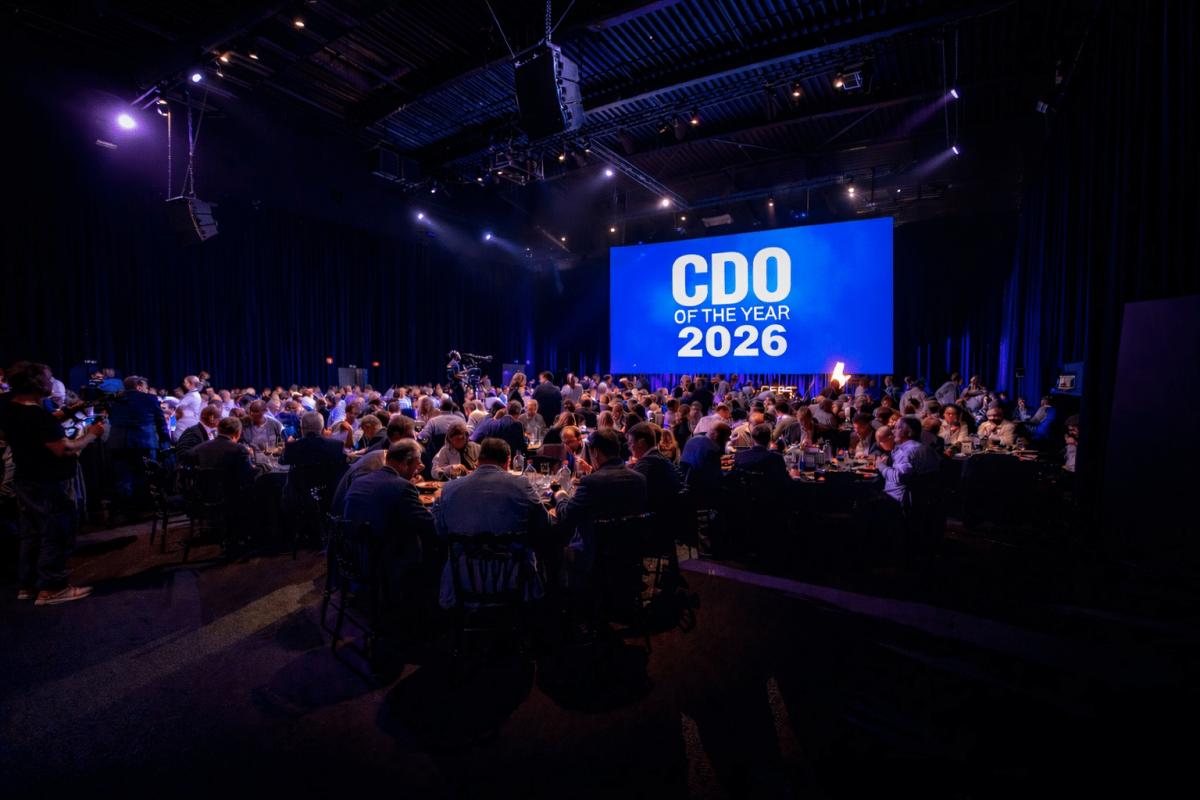
- I’m proud to serve as a Jury Member for the CDO of the Year Awards 2026. As digital transformation, AI and innovation continue to reshape our organizations, recognizing the leaders who turn vision into impact has never been more important. Together with my fellow jury members, I look forward to evaluating this year’s candidates and celebrating the digital leaders who are making a real difference in Belgium. Are you one of them? Or do you know a Chief Digital Officer, digital leader or transformation expert who deserves to be
This page shows public professional information only, each fact cited. Is this you? send a correction, or ask for removal within 24 hours, no questions asked.