
Overview
Frederic Stallaert is co-founder and CEO of Paperbox, a Ghent-based AI inbox intelligence platform for insurance companies.
Frederic Stallaert is co-founder and chief executive of Paperbox, a company he started in September 2021 and runs from Ghent.
Before that he spent four years at ML6, which he joined in September 2017 as an intern data scientist. He went on to work there as a machine learning and data engineer and solution engineer from October 2017 to December 2019, moved into business development and international go-to-market in September 2018, and served as a key account manager from April 2020 until September 2021. Earlier, in the summer of 2015, he worked as a business administrator at DBS-bekisting.
Stallaert studied applied economics and business engineering at Ghent University, completing a Bachelor of Science in 2015, and spent the 2014 to 2015 academic year reading Wirtschaftsingenieurwesen at the Technische Universität Berlin. He returned to Ghent University for a Master of Science in Business Engineering, specialising in marketing engineering and business analytics, which he completed in 2017.
Career history

Insights & ideas
The through-line
Across Frederic Stallaert's posts and talks, one preoccupation keeps resurfacing: insurance operations fail not at the point of AI deployment but at the point where data enters the organisation. Whether he is talking about claims, bordereaux, or GenAI pilots, the argument is the same: "AI doesn't fail at the idea stage. It fails at the ingestion stage" [9], because "over 80% of enterprise data is not AI-ready" [10]. Over time this has sharpened from a general efficiency message, sneller werken, meer volume, minder kosten [4], into a more pointed critique of the market's habit of waiting for someone else to fix intake, whether that is Lloyd's Blueprint Two [5] or a vendor's AI theatre [3]. The later posts also tie this data argument explicitly to regulation, framing auditability and governance as inseparable from the data problem rather than a separate compliance layer [6][8].
On efficiency as a means, not an end
Stallaert repeatedly pushes back on treating speed and automation as inherently good for the customer. "Efficiëntie is geen doel op zich. Het is een middel" [4], he argues, and the real test is what happens with the time that is freed up: "de echte vraag is wat je doet met de tijd die je wint" [1]. If that time is not reinvested "in beter advies, persoonlijk contact en de momenten waarop klanten je echt nodig hebben" [1], the organisation has simply delivered the same service faster, which raises the question "hoe ga je dan je marge in de toekomst nog verdedigen?" [4].
On intake as the real bottleneck
For Stallaert, the "inbox is still the front door" of insurance [10], and most of the friction people attribute to claims handling or delegated authority actually starts before a human ever opens the file. "A claim does not start when a handler opens it. It starts when it arrives" [2], and the same logic applies to bordereaux: "the bordereaux did not get easier while we waited" for a market-wide fix, because "the market spent seven years treating intake as someone else's problem to solve" [5]. He extends this into a broader diagnosis of AI failure: the issue is rarely the model, it is that "the data underneath wasn't ready" [9], so the operative question becomes "what is our AI actually reading?" [10].
On governance and auditability
Stallaert treats regulatory defensibility as a design requirement, not an add-on. "In insurance, compliance isn't a checkbox. It's a condition of operating" [8], and he insists accuracy and auditability "need to be baked in. Not bolted on" [8]. He extends this to enterprise AI generally, arguing the biggest risk "isn't the model. It's whether you can explain, validate, and defend the outcome when an auditor, regulator, or customer asks how it was produced" [6].
On operational discipline in a soft market
Reporting from the MGAA Annual Conference 2026, Stallaert frames a market shift: "the hard market hid operational debt. The soft market will expose it" [3]. He lists concrete symptoms, "the claims handler still sorting PDFs," "the MTA that never gets keyed," "the finance team reconciling spreadsheets by hand" [3], and reclassifies them as "margin, service and capacity risks" rather than back-office annoyances [3]. His prescription is explicit: "the market does not need more AI theatre. It needs proof that technology can remove friction without removing control" [3].
From the stage
In interviews, Stallaert fills in the career and product reasoning that the LinkedIn posts skip. He describes joining ML6 in 2016/2017 as one of the first European companies applying AI in business, which is where he built his expertise "bridging the gap between technical AI capabilities and business implementation across large organizations" [14]. He frames his later move as a search for roles with greater organisational impact, which led him toward "productizing AI to increase accessibility for companies of all sizes" [15]. On the mailroom specifically, he argues that large language models let document interpretation and task generation happen "without requiring complex configuration or AI expertise," which is what allows mailrooms to become more efficient [13]. He also describes Paperbox's mission in broader terms than the written posts do, combining human talent with AI capability while scaling "across multiple countries" and staying "lean, disciplined" in execution, particularly within insurance [15].
Takeaways
- Measure intake time, not just handler speed: "the clock is already running" before a claim is even opened [2].
- Do not treat freed-up time from automation as a win by default; reinvest it in advice and customer contact or margin erodes [1][4].
- Audit your own data pipeline before scaling AI: "over 80% of enterprise data is not AI-ready" and the inbox remains the real front door [10].
- Build auditability and accuracy into AI systems from the start rather than adding governance after deployment [8][6].
- In a softening market, fix the operational debt (unkeyed MTAs, manual reconciliation, PDF sorting) before it becomes a margin and capacity risk [3].
- Do not wait for market-wide infrastructure fixes like Blueprint Two; automate your own processes now [5].
Media & appearances
- Paperbox AI • Efficiency Engineers PodcastYouTubeGenAI in the Mailroom PresentationFrederic Stallaert discusses how generative AI can transform insurance mailrooms by automating the processing of emails and PDF documents that currently represent a major bottleneck in insurance operations. He explains that large language models enable document interpretation and task generation without requiring complex configuration or AI expertise, allowing mailrooms to become more efficient.
- Paperbox AI • Efficiency Engineers PodcastYouTubeTransformation in the Insurance Industry: The Mailroom is the beating heartFrederic Stallaert discusses his professional journey before founding Paperbox, explaining how he joined ML6 in 2016/2017 as one of the first European companies applying AI in business, and how he developed expertise in bridging the gap between technical AI capabilities and business implementation across large organizations.
- Paperbox AI • Efficiency Engineers PodcastYouTubeFounder Profile: CEO Frederic Stallaert of Paperbox.aiFrederic Stallaert discusses his career progression from machine learning engineer to co-founder of Paperbox.ai, explaining how he sought roles with greater organizational impact and eventually moved into productizing AI to increase accessibility for companies of all sizes. He describes Paperbox's mission to transform the workplace by combining human talent with AI capabilities, with an emphasis on scaling the business across multiple countries while maintaining lean, disciplined execution, particularly within the insurance sector.
In the news
- Very proud of the whole team for reaching the 2M ARR milestone! 🥂 We don't usually celebrate our milestones well enough, but we did celebrate this one and boy did it feel good! I left the offsite with a full heart. 💙 Looking forward to building the next chapter 👀
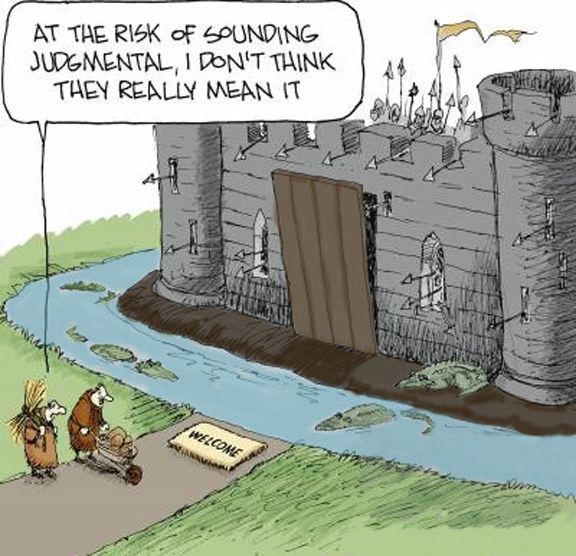
- 𝐌𝐨𝐬𝐭 𝐢𝐧𝐬𝐮𝐫𝐞𝐫𝐬 𝐚𝐫𝐞 𝐬𝐭𝐢𝐥𝐥 𝐫𝐮𝐧𝐧𝐢𝐧𝐠 𝐚 𝐦𝐞𝐝𝐢𝐞𝐯𝐚𝐥 𝐟𝐫𝐨𝐧𝐭 𝐝𝐨𝐨𝐫. A drawbridge works. It just needs someone to crank it. Someone has to be there. Someone has to decide. One arrival at a time. That is still how intake works in this market. 📥 Email with four attachments and no policy number 📄 Scanned claim form, half completed 🔁 Broker thread, six replies deep Every one of them waits for a person to lower the bridge. And here is the uncomfortable part. The market is investing heavily in
- 𝐂𝐥𝐚𝐢𝐦𝐬 𝐭𝐮𝐫𝐧𝐚𝐫𝐨𝐮𝐧𝐝 𝐢𝐬 𝐧𝐨𝐭 𝐚𝐧 𝐨𝐩𝐞𝐫𝐚𝐭𝐢𝐨𝐧𝐚𝐥 𝐊𝐏𝐈. 𝐈𝐭'𝐬 𝐚 𝐫𝐞𝐭𝐞𝐧𝐭𝐢𝐨𝐧 𝐊𝐏𝐈. Internally, claims is a cost centre. Externally, it's the moment your service gets tested. ➡️ Loss ratio. Handling cost. Leakage. Everything about claims gets measured as 𝐦𝐨𝐧𝐞𝐲 𝐥𝐞𝐚𝐯𝐢𝐧𝐠 𝐭𝐡𝐞 𝐛𝐮𝐢𝐥𝐝𝐢𝐧𝐠. Your customer is measuring something else entirely. 📄 They bought a promise. ⏱️ The claim is the day you either keep it or you don't. And what they remember is almost never the settlement amount.

- Een specialist en een consolidator zitten samen in de bar, zegt de ene tegen de andere: ik wil groeien. Ze botsen ze op dezelfde vraag: Hoe organiseer je groei zonder dat complexiteit, kosten en administratie even hard meegroeien? In de eerste aflevering van 𝗜𝗻𝘀𝘂𝗿𝗮𝗻𝗰𝗲 𝗨𝗻𝗯𝗼𝘅𝗲𝗱 ga ik daarover in gesprek met: ➡️ Janwillem Fidder van D&S Group ➡️ Alwien Geerts van Geerts Adviesgroep Twee verschillende modellen. Twee verschillende perspectieven. Maar opvallend veel herkenbare uitdagingen. We hebben het over operationele
- 𝐘𝐨𝐮𝐫 𝐒𝐋𝐀 𝐜𝐥𝐨𝐜𝐤 𝐬𝐭𝐚𝐫𝐭𝐬 𝐰𝐡𝐞𝐧 𝐭𝐡𝐞 𝐞𝐦𝐚𝐢𝐥 𝐚𝐫𝐫𝐢𝐯𝐞𝐬. 𝐀𝐫𝐞 𝐲𝐨𝐮? Most claims teams measure how quickly a handler acts, but not how long it takes before the claim reaches them. Opening emails, sorting attachments, finding the right file, rekeying the same information. ⏰ The clock is already running. Yet this invisible intake delay is still treated as admin, rather than part of claims performance. That is the mistake. A claim does not start when a handler opens it. It starts when it arrives.
- 𝐓𝐡𝐞 𝐡𝐚𝐫𝐝 𝐦𝐚𝐫𝐤𝐞𝐭 𝐡𝐢𝐝 𝐨𝐩𝐞𝐫𝐚𝐭𝐢𝐨𝐧𝐚𝐥 𝐝𝐞𝐛𝐭. 𝐓𝐡𝐞 𝐬𝐨𝐟𝐭 𝐦𝐚𝐫𝐤𝐞𝐭 𝐰𝐢𝐥𝐥 𝐞𝐱𝐩𝐨𝐬𝐞 𝐢𝐭. That was our team’s key takeaway from the Managing General Agents’ Association (MGAA) Annual Conference 2026. As rates soften and margins tighten, growth alone will not separate the winners. Operational discipline will. ➡️ The claims handler still sorting PDFs. ➡️ The MTA that never gets keyed. ➡️ The finance team reconciling spreadsheets by hand. These are no longer minor back-office inefficiencies. They are
- Is efficiëntie altijd beter voor de klant? De doelen zijn vandaag veelal hetzelfde: sneller werken, meer volume, minder kosten. 𝐌𝐚𝐚𝐫 𝐞𝐟𝐟𝐢𝐜𝐢ë𝐧𝐭𝐢𝐞 𝐢𝐬 𝐠𝐞𝐞𝐧 𝐝𝐨𝐞𝐥 𝐨𝐩 𝐳𝐢𝐜𝐡. 𝐇𝐞𝐭 𝐢𝐬 𝐞𝐞𝐧 𝐦𝐢𝐝𝐝𝐞𝐥. Want als je tijd wint en die niet teruggeeft aan de klant op de momenten die er echt toe doen, bij schade, bij advies, bij twijfel, dan heb je alleen maar sneller hetzelfde geleverd, en 𝐡𝐨𝐞 𝐠𝐚 𝐣𝐞 𝐝𝐚𝐧 𝐣𝐞 𝐦𝐚𝐫𝐠𝐞 𝐢𝐧 𝐝𝐞 𝐭𝐨𝐞𝐤𝐨𝐦𝐬𝐭 𝐧𝐨𝐠 𝐯𝐞𝐫𝐝𝐞𝐝𝐢𝐠𝐞𝐧? De echte vraag is dus
- 𝗡𝗼 𝗼𝗻𝗲 𝗶𝘀 𝗰𝗼𝗺𝗶𝗻𝗴 𝘁𝗼 𝗳𝗶𝘅 𝘆𝗼𝘂𝗿 𝗶𝗻𝘁𝗮𝗸𝗲 𝗳𝗼𝗿 𝘆𝗼𝘂, 𝗻𝗼𝘁 𝗲𝘃𝗲𝗻 𝗕𝗹𝘂𝗲𝗽𝗿𝗶𝗻𝘁 𝗧𝘄𝗼. For seven years, the London market said it had an answer, Blueprint Two. The big digital fix that would finally sort out how delegated authority data moves. In March, Lloyd's quietly walked away from it. Seven years, four delays, and a line drawn under the original vision. So that answer is gone. But the bordereaux did not get easier while we waited. Coverholders still send them in every format imaginable.
Related profiles

This page shows public professional information only, each fact cited. Is this you? send a correction, or ask for removal within 24 hours, no questions asked.