
Overview
Geoffrey De Smet is co-founder and chief technology officer of Timefold, a role he has held since December 2022. He is based in Ghent, and his stated areas of expertise are AI, planning, operations research and open source.
Before Timefold, De Smet spent twelve years at Red Hat, which he joined in October 2010. He worked there first as a JBoss Drools core developer until December 2012 and as a software engineer until February 2014. From January 2013 to November 2022 he created OptaPlanner and led its team, while progressing from senior software engineer in March 2014 to principal software engineer in March 2017 and senior principal software engineer from July 2021 to November 2022.
Earlier, he was a Java developer and project lead at Cipal Schaubroeck from January 2007 to September 2010, and contributed to Drools in the JBoss.org community from December 2006 to September 2010. He was a researcher at KAHO Sint-Lieven from September 2005 to December 2006, and a Java programmer and consultant at JCS RealDolmen from 2003 to 2005. He studied applied informatics at HOGENT, graduating with a bachelor's degree in 2003.
Career history

Insights & ideas
The through-line
Across these sources, Geoffrey De Smet keeps returning to one problem: schedules that look fine are often quietly wrong, and the hardest part of planning optimization is finding the failures nobody notices. In 2026 posts this shows up as false negatives in shift schedules that "silently drain money from your company" [2] and a 10-year-old solver bug that "didn't throw an error" and went undetected by code reviews, AI screening, and tens of thousands of users [10]. This is a continuation of a much older preoccupation: his talks describe building constraint solvers, from OptaPlanner's early days through elevator maintenance and school timetabling, that must balance many competing constraints to find schedules humans would call "optimal" but often aren't [16][17]. What has shifted is the frame around it: what started as an open source project judged by academic benchmarks [18] became a company, Timefold, now selling the discipline of validating and running solvers at production scale [4][5][11].
On false negatives and hidden bugs
De Smet's core insight is that errors in scheduling systems are asymmetric in visibility. "False positives are easy to identify. False negatives are not." [2] He illustrates this with the free-gift analogy and then applies it directly to automated scheduling, where "most false negatives go undetected" and "silently drain money from your company, with their suboptimal schedules" [2]. He backs this with a real example: a decade-old bug in Timefold Solver that caused one dataset to not actually optimize, costing an estimated "$2,855" in one case and "a far bigger dataset, with a far bigger price tag" in another, all while passing code review and going unreported by customers and open-source users alike [10]. His conclusion is practical rather than alarmist: "Luckily, with our platform, it's now easy to detect such issues." [10]
On benchmarking and validation
He treats benchmarking as a discipline that has to evolve with scale. Early on, "we benchmarked a new algorithm ... on our laptop on a number of datasets. If it's statistically better, release it. Like academic papers, basically." [5] As the solver spread globally, that approach became "a liability" because "a change might improve in one use case, it could regress in another," so the team moved to cross-use-case benchmarking, even though doing it on laptops proved "impractical, unreliable and irrelevant" since "production environments don't run on M-series Macbooks." [5] He explicitly frames avoiding regressions as a priority: "We actively avoid regressions." [5]
On the puzzle nature of scheduling
De Smet likes to explain scheduling by analogy to puzzles ordinary people already understand. "Shift Scheduling and Sudoku have a lot in common. In both cases, you're solving a puzzle to find the optimal solution." [13] He uses a Sudoku mistake to show how one wrong early assignment can leave a solution "95% of the puzzle" filled in but "only 65% correct" [13], then contrasts the two domains: in Sudoku a broken hard constraint is obvious immediately, but "in Shift Scheduling, you'll only find out 100 assignments later. And you might not know that there's a better solution." [13] The same interdependence shows up in his description of shift creation versus shift assignment: "Shift creation and shift assignment are two sides of the same coin," since demand-matching favors small shifts but "nobody wants to commute to work for a 2 hour shift." [15]
On scaling a scheduling business
He frames Timefold's growth in terms of scale and infrastructure choices made deliberately, not out of necessity. "Running a solver in production is one thing. Running thousands solvers every day reliably is another." [4] He's explicit that the technology isn't locked to one vendor: "Timefold Platform, runs on all major clouds," with GCP chosen for enterprise requirements like "uptime, data residency, security, reproducibility, monitoring, SOC2, ISO 27001, GDPR" [4]. He also states the mission in blunt terms tied to the company's funding: "13 million dollars to free the world of wasteful scheduling," aimed at not wasting "company time," "employee time," or "planet time" [11], with the API layer already handling "over 1,000,000 visits and 2,000,000 shifts per week" [11].
From the stage
In his talks, De Smet goes further into the technical and historical texture that the written posts skip. At Devoxx Morocco he uses the Traveling Salesman Problem and a real-world American road trip example to show constraint-solving algorithms beating published "optimal" solutions by reducing travel time, and separately describes an elevator maintenance scheduling case balancing customer preferences, maintenance intervals, and penalty fees across the globe [16]. At Bordeaux JUG he demonstrates building a school timetabling application "from scratch" with OptaPlanner on Quarkus, assigning lessons to time slots under teacher and student availability constraints, and connects this to job shop scheduling, equipment scheduling, and vehicle routing as instances of the same underlying approach [17]. In the Timefold interview he traces an "18-year journey" from an open source project that earned recognition through academic competitions and real-world use cases, including NASA suppliers, to becoming OptaPlanner at Red Hat in 2013, and finally to founding Timefold with co-founder Maarten [18].
Takeaways
- When auditing a scheduling system, look specifically for false negatives, not just false positives, since suboptimal schedules rarely throw errors [2][10].
- Don't trust laptop benchmarking once a solver is used across many use cases; a change that improves one case can regress another [5].
- Treat shift creation and shift assignment as coupled problems: optimizing demand curves with small shifts can conflict with employee preferences and labor law constraints [15].
- A scheduling model can look complete and still be wrong, the same way a Sudoku can be 95% filled in but only 65% correct if an early assignment was mistaken [13].
- Build infrastructure for production reliability (uptime, data residency, SOC2, ISO 27001, GDPR) as a deliberate choice, not an afterthought, once solvers run at scale [4].
- Long-lived bugs can survive code review, AI screening, and thousands of users undetected; dedicated tooling to catch non-optimizing runs is worth building [10].
Media & appearances
- Devoxx MoroccoYouTubeConstraint solving A.I. algorithms in OptaPlanner (Geoffrey De Smet)Geoffrey De Smet discusses the Traveling Salesman Problem and vehicle routing using a real-world example of finding an optimal American road trip, demonstrating how constraint-solving algorithms can improve upon published "optimal" solutions by reducing travel time. He also describes an elevator maintenance scheduling application where constraint solvers must balance multiple competing constraints such as customer preferences, maintenance intervals, and penalty fees to create feasible schedules for customers across the globe.
- Bordeaux JUGYouTubeBordeauxJUG - Mai 2020 - Geoffrey De Smet - Artificial Intelligence on Quarkus and OptaPlannerGeoffrey De Smet discusses artificial intelligence and constraint solving, specifically focusing on OptaPlanner as a tool for solving planning problems. He demonstrates a school timetabling application built from scratch that uses constraint solving to optimally assign lessons to time slots while respecting constraints like teacher and student availability, and he discusses other real-world planning problems such as equipment scheduling, job shop scheduling, and vehicle routing that can be solved using similar constraint-solving approaches.
- TimefoldYouTubeInside PlanningAI: Geoffrey De Smet on revolutionizing planning optimizationGeoffrey De Smet discusses his 18-year journey developing planning optimization technology, beginning as an open source project that gained recognition through academic competitions and real-world use cases including NASA suppliers, eventually becoming OptaPlanner at Red Hat in 2013 before he and co-founder Maarten launched Timefold.
In the news
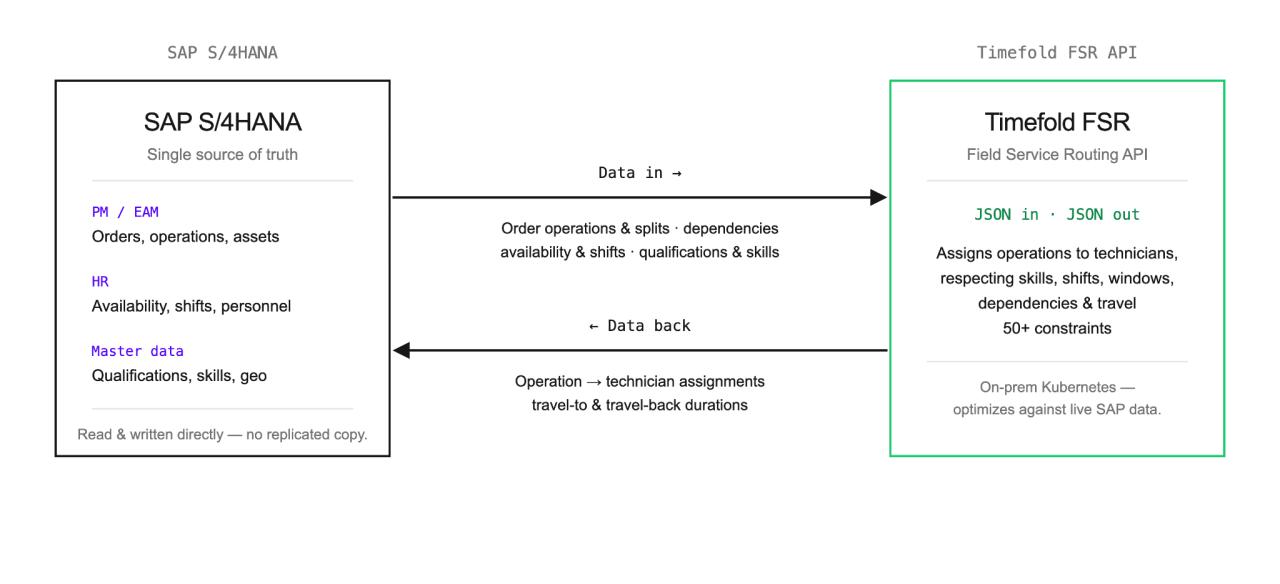
- Automatic scheduling of 50,000 maintenance operations per year for 1,500 technicians of a major railway provider, fully integrated with #SAP thanks to e-switch Solutions AG.
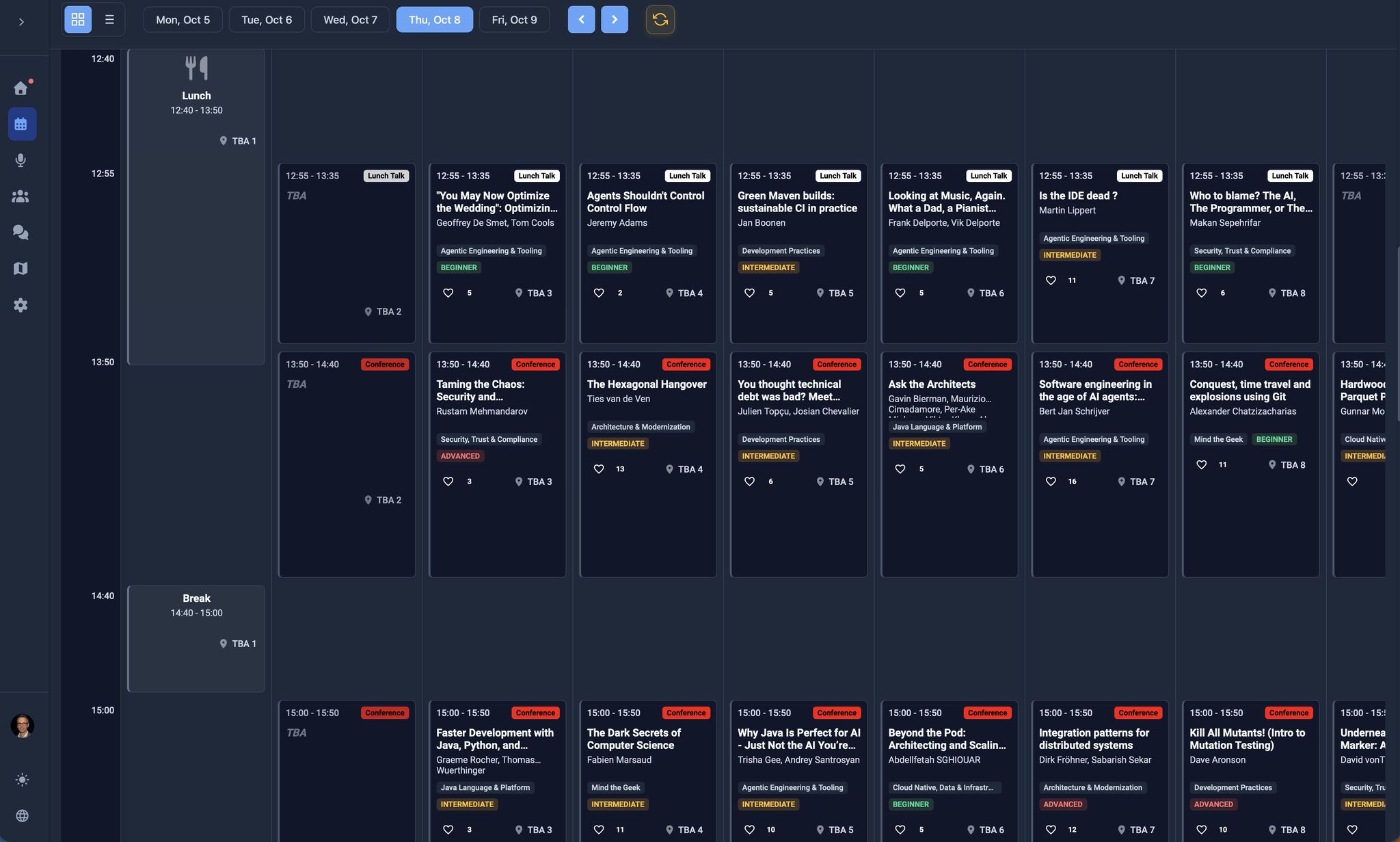
- Scheduling a 5-day conference with more than 200 talks and 3000 attendees is harder than it looks. #Devoxx does it every year with Timefold. What makes it hard? Well, a good schedule checks for - Speaker Availability: Rockstar speakers have tight schedules. - Room Requirements: Workshops can't use a cinema room. - Speaker Conflicts: Even Mario Fusco can't be at two places at the same time. But a great schedule also handles - Crowd Control: Avoid incidents. - Talk dependencies: Sometimes two talks need to be given in order. -
- Quantum Computing has no commercial use this decade" claims Sabine Hossenfelder in her latest video. She's wrong. I know a company that sells a "quantum schedule optimization solver". Under the hood, they solve the problem with classic computing... but by bolting on a small quantum function (which doesn't significantly affect the results) they successfully increase the commercial value of their product... Not to mention their funding efforts 🙃 https://lnkd.in/entHDEdX

- Don't miss this! Field service operations scheduling with Deloitte and Timefold on September 29th.
- For other great content around Operations Research, Decision Intelligence and AI, check out Mike's podcast and article archive: https://lnkd.in/eUtnj-AT
- Timefold is hiring a Chief of Staff to help drive the company’s next stage of growth. Think this could be you, or someone you know? Feel free to contact Maarten Vandenbroucke and Geoffrey De Smet 🚀 ⚡
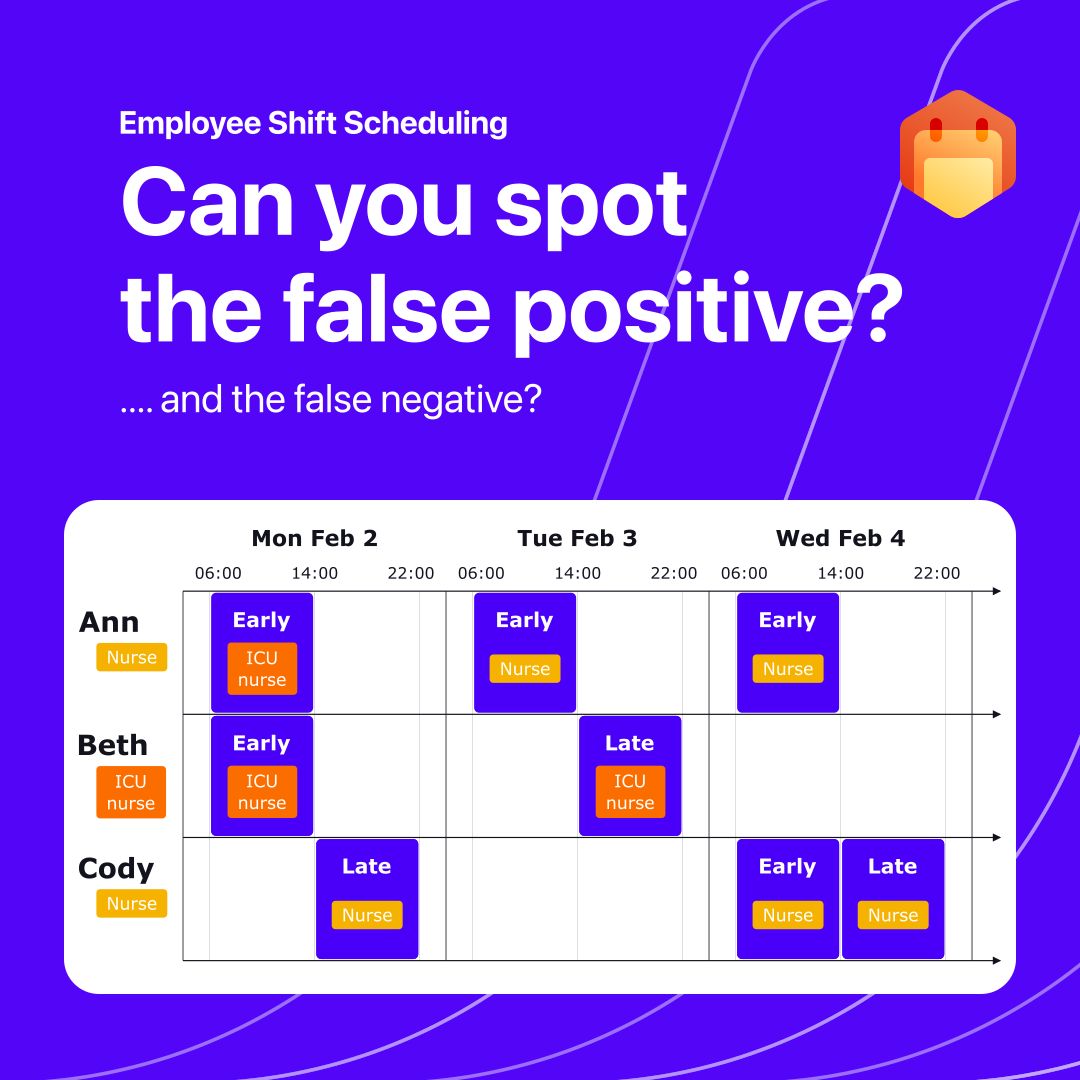
- False positives are easy to identify. False negatives are not. For example, in a large group, presume you want all women to collect a free gift. A man that collects a gift will stick out like a sore thumb. The false positive is easy to detect. But a woman not collecting her gift won’t be so easy to notice. The false negative is hard to detect. The same applies to automated scheduling. False positives are easily spotted. Yet, most false negatives go undetected. They silently drain money from your company, with their suboptimal
- The interview with Michael Watson and Vijay Mehrotra for the Intelligence Decision Lab podcast was a lot of fun! We talked about Field Service Routing (compared to a Vehicle Routing Problem), non-disruptive replanning, what-if scenarios, ROI, customization, explainability and finally AI (of course). And founding a company. Watch it here: https://lnkd.in/e7HJpBmV
Related profiles

This page shows public professional information only, each fact cited. Is this you? send a correction, or ask for removal within 24 hours, no questions asked.