Overview
Gunther Ghysels, founder of Get Driven, returns to Ben's Mentors to discuss letting go of his first company and launching Tinrate, a one-link platform where anyone can monetize their expertise via paid one-on-one video calls with fully automated booking, payment and invoicing. He details the origin of the idea (being asked for free advice constantly), how he validated the market, why he launched supply-side verticals before building the full marketplace, and the current monetization (5% buyer-paid transaction fee, with a future SaaS subscription for sellers). He raised €1.6M despite being rejected by four Belgian VC funds, crediting his Get Driven track record and network, and admits he's burning cash and must prove Belgium/Netherlands traction within a year to raise a €10M follow-on. The conversation also covers his failed German expansion with Get Driven, the OnlyFans comparison, personal branding, and misconceptions about how hard profitable entrepreneurship really is.
Talks about
Insights & ideas
The through-line
Ghysels builds platforms in markets where being fast and being visible matters more than being technically defensible, and he keeps arriving at the same conclusion: the software is not the moat, so capital, network and execution speed are. "Ik denk dat je zeer moeilijk nog iets kunt bootstrappen op vandaag omdat je gewoon heel snel gekopieerd wordt" [7], and earlier, in digital winner-takes-all platform markets, going it alone is close to impossible because competitors get pumped full of VC money [9]. That reading of the world explains most of his decisions: selling a large stake very early, raising €1.6M from angels after four Belgian funds passed, refusing soft launches, and pivoting hard seven months into a product rather than waiting for the market to reward patience [7][3][9].
The temperament underneath it is consistent and self-described. "Ik ben een man van extremen. Het is van mij all in or all out" [8], and "Ik word snel verveeld, dus voor mij moet het nieuw zijn en ook snel gaan" [9]. What has shifted is what he is all-in on. In 2022 and 2023 the subject is Get Driven, ownership structure and how to run a company you no longer majority-own [9][8]; by 2026 it is Tinrate, the economics of paid advice, and a public, unusually candid account of discovering that his original idea did not have the recurrence to survive [7][3].
On why people should pay for expertise
The founding thesis is that advice given for free is advice given badly. A paid transaction dramatically raises the quality and engagement on both sides: the provider prepares properly, the buyer turns up committed, an effect he says he had not written into either his pitch or his business plan [7]. The pricing objection he expected never materialised. "Er is nog niemand die zegt van ja, ik vond dat nu zijn geld niet waard. Het is altijd omgekeerde van moest dat nu drie keer zoveel gekost hebben, dan ging het nog betalen" [7]. He frames the whole category as revenue that simply did not exist before: "Die omzet is iets die niet bestond vroeger hè. Ofwel was het gratis ofwel hebben ze het niet gedaan. Dus it's new economy" [7]. The consumer-side pitch is blunt in the same way: if you want to tap someone's expertise, "just pay for it en bespaar de 'zin in een koffietje?'" [3].
On the pivot, and admitting the model was broken
Seven months in he published the diagnosis rather than the spin. "Recurrentie en willingness to pay is het grootste probleem met het initiële idee" [3]. The mechanics of the failure are precise: once a buyer has absorbed years of insight in thirty or sixty minutes for €100, €200 or €300, the customer cycle is over [3]. Worse, the market runs on personal brand, so demand concentrates on a handful of visible names like Maxim Sergeant, Serge Lamoral and Thomas Guenter while everyone else stalls [3]. He notes the gap between public perception and reality directly: people keep asking him how Tinrate is going, "top idee he!", while the recurrence problem sits underneath [3].
He also has a view on how to talk about this. Videos about the pivot performed poorly, and "Mn eerlijke founder stories deden het in het algemeen beter dus here we go" [3], which is why the pivot was narrated in the open rather than announced once it was finished [6][3].
On Tinrate concierge and the B2B answer
The pivot's centrepiece is the piece the team worked on longest: Tinrate concierge, described not as just another agent but as "uw eigen chat gpt" that gives website visitors the right information faster than ever and connects them to the right person inside the organisation [4]. The argument for it is a behavioural one. Nobody browses search results any more, you ask a question and get an answer, so why does every website still run on tabs and contact forms [5]. The promised outcome is the removal of a whole layer of friction: "Byebye websiteforms, hello@ mails en backoffice vertraging" [4].
That leaves three routes to the same goal of sharing knowledge: the tool, where you register and share your Tinrate link with existing clients or your socials and paid calls are automated end to end across planning, billing and payment; the concierge on your own website; and the search, where you check who has an account and book a call with someone holding practical expertise [5]. The distribution logic is now partnership-shaped, with a dedicated Tinrate page built for a specific audience through Tinrate x Dexxter, and an explicit expectation of more cases where Tinrate becomes an extension of an existing business [1].
On marketplace cold starts and monetisation design
He refuses to launch a full marketplace before the supply side can carry it. "Een zoekmachine is maar zo goed als de zoekresultaten die eruit komen" [7], and 1500 experts is not enough to feed demand-side discovery, so the build order is supply-side verticals first [7]. The fee design follows the same sequencing logic: the 5% transaction fee sits with the buyer, not the seller, because the long-term monetisation is a SaaS subscription for sellers, and you cannot charge a seller a subscription while that seller is still bringing their own audience to your platform [7]. His reference case is OnlyFans, originally conceived as a knowledge-sharing and subscription platform where adult content became an accidental vertical that exploded, and whose 50% commission with no real marketplace discovery he reads as a strategic vulnerability a competitor could undercut [7].
On launching, he has no patience for gradualism: "In 2025 er bestaan geen soft launches niet meer. Als je met iets naar buiten komt dat werkt, een MVP, then you do a launch" [7].
On capital, rejection and why bootstrapping is over
Four Belgian VC funds turned Tinrate down, citing no market validation, non-cutting-edge software and execution risk concentrated in the founder [7]. "Ik heb bij drie of bij vier Belgische fondsen aangeklopt die allemaal zeer enthousiast waren over mijn verhaal en die allemaal hebben bedankt. Heeft dat mij tegengehouden? Neen" [7]. He raised €1.6M from angels instead, largely on the Get Driven track record, and is honest that this validates him rather than the idea, which converts into pressure rather than reassurance [7]. The motivation is openly competitive: "Ik heb heel veel goesting en honger om die mensen binnen vijf jaar te bewijzen van goh, ga toch beter een ticketje gepakt" [7].
The capital argument is not that money buys technology, it is that money buys positioning, marketing and speed in a market where anything relatively new is copied fast [7]. Get Driven, by contrast, was bootstrapped for an unglamorous reason: extra capital would not have accelerated it, because they never had a validated equation where you spend €1 and get €3 back, the way companies with a proven marketing engine do [7].
On choosing an investor and what selling shares is actually for
He sold a large stake to Steve very early, straight out of school with a new product and no business network, on gut feeling and personal click rather than terms: a West-Flemish entrepreneur who backed the founder instead of the spreadsheet [9]. "Hij geloofde in mij en die dacht van oké, ik doe die gast van aan" [9]. What the investor supplied first was reach, not cash: "Netwerk is vaak belangrijker in begin dan middelen", because unless you have hundreds of millions to buy your way in, organic traction runs on ambassadors and connections rather than a marketing budget [9]. The relationship reads as father-and-son, where the handshake counts for more than the contract [9].
He insists founders name their reason for selling equity, because there are three distinct ones: cashing out, raising growth capital, or getting someone next to you on the ride. "Ik heb iemand nodig die met mij mee in de rollercoaster, bij wijze van spreken" [9]. Ownership and control he treats as separable: "Ik denk dat het runnen en aandeelhouder of eigenaar zijn van het bedrijf los van elkaar staan", and conflicts only surface when things go badly [9]. In practice, as a minority shareholder he keeps operational carte blanche plus majority control on certain matters: "Ook al zit ik nu in de minderheid, hij laat mij 100% carte blanche" [9]. The same instinct made him decline an acquisition and partnership approach from a multinational whose structure he was not comfortable with, even knowing they could copy him with fifteen times his budget. The market turned out to be big enough for both [9].
The partial cash-out he defends on psychological grounds. Paying yourself a minimum wage while being worth millions on paper is uncomfortable, and a founder on €1,400 a month worrying about private finances loses focus on the business; de-risking privately is what let him stay aggressive on international growth and negotiate from strength, because he no longer had to sell [9]. The reserve also mattered operationally: when COVID collapsed on-demand revenue to nearly zero, he and Steve personally funded continued development, bringing five developers in-house to rebuild the platform, instead of taking bank debt or selling equity at a depressed price [9].
On expanding abroad, and why software scales further than trust does
Germany was the expensive lesson. Six months living in Berlin and fifty nights in Munich were not enough against complex labour law, language and culture, down to drivers wanting lawyers to review their contracts [7]. The takeaway is that marketplace scaling still needs local reach and local faces even when the software itself scales perfectly [7]. Hence his preference for local co-investors over Belgian capital in new countries: a trust-based service business needs local entrepreneurs with large networks acting as ambassadors to spread the first oil slick of traction [9]. The structural version of the same idea is the concession model at Get Driven, a kapstok model where local managers own their pool of drivers and are paid on the quality and volume they deliver, keeping operational responsibility separate from the financial investors [9].
The same proof-first principle governs how he brings people in. In the ETB Drivers acquisition the incoming founder got no equity upfront: people prove themselves before earning a stake, which is what kept the deal frictionless despite the two companies having been fierce copycat rivals [9].
On how to run a team
His management position is that measuring hours is beside the point. "Het is een beetje get shit done dat we hier doen. En als het gebeurt: fine. Op welke manier maakt mij niet uit, en je moet hier niet zijn, maar het moet wel gebeuren" [8]. Get Driven has no clock-in system and no strict leave policy, people work where and when they want, and abuse surfaces quickly through the culture itself [8]. Accountability comes from structure rather than surveillance: weekly and monthly meetings with targets make undone work impossible to hide [8]. "Ik denk eerlijk gezegd dat het in badgen en uit badgen, dat dat niet meer van 2023 is" [8].
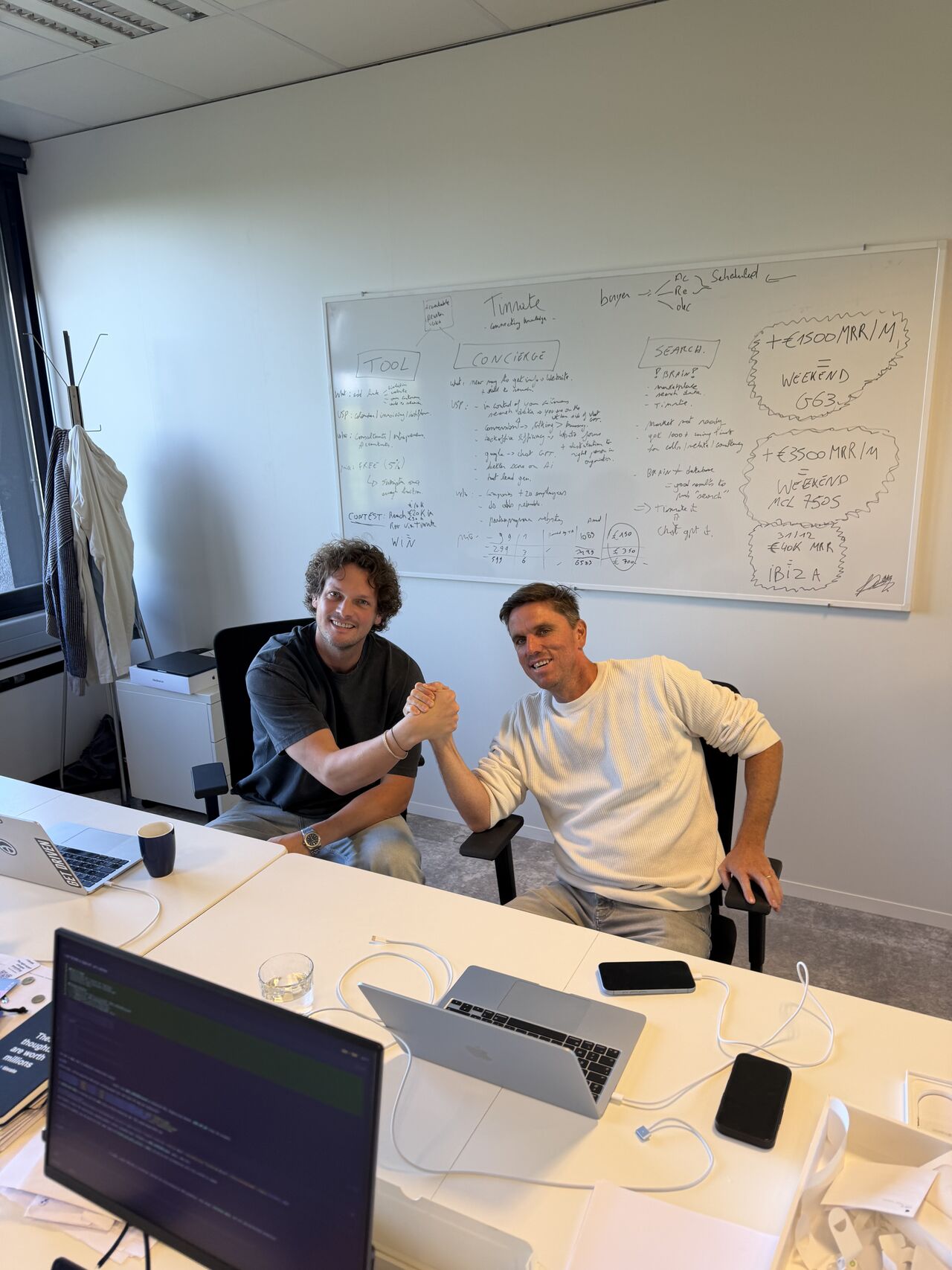
Incentives he prefers loud and visible. Get Driven once ran trophy cars as a reward for hitting results, and when a new sales hire, Bastien Ronneau, arrived with a record of twice being the first employee who built a sales organisation past twenty people, and a developer, Yorg Pauwels, insisted he could sell the product alongside his engineering job, Ghysels made the contest official by writing it on the whiteboard [2]. He hires for appetite as much as track record, singling out "veel goesting zelf op pad te gaan" [2].
On work, appetite and the myth of easy entrepreneurship
The energy argument is moral as much as practical. "Ik vind het zo zonde dat je 40 jaar tegen uw goesting zou moeten gaan werken" [8], and too many people work jobs they hate, which shows up directly as much worse performance [8]. His own version is total: even after stepping back from operations he still worked on Get Driven seven days a week [8], and on Tinrate, "nu werk ik veel liever dan dat ik op congé moet gaan, omdat ik gewoon zoveel goesting heb om dat van de grond te krijgen" [7]. "Do what you love, love what you do. Dat is allemaal zo cheesy en whatever, maar het is wel zo" [8].
Against that he sets a Belgian misconception he finds corrosive: that entrepreneurship is easy money. Candidates ask for €200k salaries plus 3% equity without putting in any investment, underestimating that the founder carries the risk and that getting to €500k of annual profit is genuinely rare and genuinely hard [7].
Takeaways
- Design the fee where the incentive is, not where the value sits: Tinrate charges its 5% to the buyer because the seller subscription comes later, and you cannot bill sellers who are still bringing their own audience [7].
- Do not open a marketplace before supply can answer demand, because "een zoekmachine is maar zo goed als de zoekresultaten die eruit komen" [7]; build supply-side verticals first [7].
- Test for recurrence before scaling: one-off expert calls end the customer cycle the moment the insight transfers, and demand concentrates on a few personal brands [3].
- Name your reason for selling equity, cash-out, growth capital, or a partner on the rollercoaster, and expect network to matter more than money early on [9].
- De-risk yourself privately: a founder on €1,400 a month who worries about personal finances loses focus, and a partial cash-out lets you negotiate from strength because you no longer have to sell [9].
- Replace time-tracking with target-tracking; weekly and monthly meetings make undone work visible, and "in badgen en uit badgen" is obsolete [8].
- Assume you will be copied, so budget for positioning, marketing and speed rather than technical defensibility, and drop the soft launch [7].
- Scalable software does not scale trust: foreign expansion in a service business needs local faces and local co-investors as ambassadors [7][9].
In the news
- The piece AI is missing today, is human expertise." Just had to video a 40 words pitch for a competition were participating in with Tinrate. We've added an AI B2B solution to our products (concierge), but both the tool, the concierge and the search have "connecting knowledge" in common. Actually, human knowledge. - The tool = tool to share/sell your advice/knowledge in a 1:1 call, fully automated. - The concierge = website add-on that qualifies your visitors conversations and connects them with the right person within the
- Thx Trends voor het artikel over onze pivot. Tinrate was oorspronkelijk een tool om je kennis betalend makkelijk te delen. We combineren een planningstool a la calendly, met een profiel en pricing, een dashboard met earnings en statistieken, en de betaling en facturatie verloopt 100% automatisch. Mensen die jouw kennis willen inwinnen, kunnen dat nu zonder gezeur of aan jouw mouw te trekken. Waar zijn mensen meer op zoek naar kennis, of informatie? Op jouw website. En die werkt vandaag nog steeds met een hello@ en een statisch
- Browsen tussen google resultaten is voor iedereen al lang verleden tijd, maar toch heeft iedereen nog een websiteformulier op hun website, en een FAQ, en een hello@ Gewoon de vragen stellen én met de juiste persoon verbonden worden indien relevant. Das hoe het zou moeten. Benieuwd hoe het werkt op uw website? Free demo. https://lnkd.in/ekn4pHWe
- Tinrate x Dexxter Leuk dat we een dedicated Tinrate pagina hebben kunnen opstellen voor een specifieke doelgroep. Ongetwijfeld nog tal van meer toepassingen waarbij Tinrate een verlengstuk kan zijn van bestaande businesses. Artikel hier: https://lnkd.in/eGSzf8fn
- Naadloos na mijn vorige post over onze pivot en ons nieuwe b2b product (Tinrate concierge), verwelkomen we vandaag Bastien Ronneau die de sales zal leiden bij Tinrate . Indrukwekkende trackrecord in sales, 2x eerste medewerker die de ganse salesorganisatie uitgebouwd heeft tot 20+ medewerkers en vooral veel goesting zelf op pad te gaan. Yorg Pauwels , één van onze developers en autofreak, is rotsvast overtuigd dat hij naast zn job als developer ook het product aan de man kan brengen. Bij Get Driven hebben we ooit trophy cars gehad,
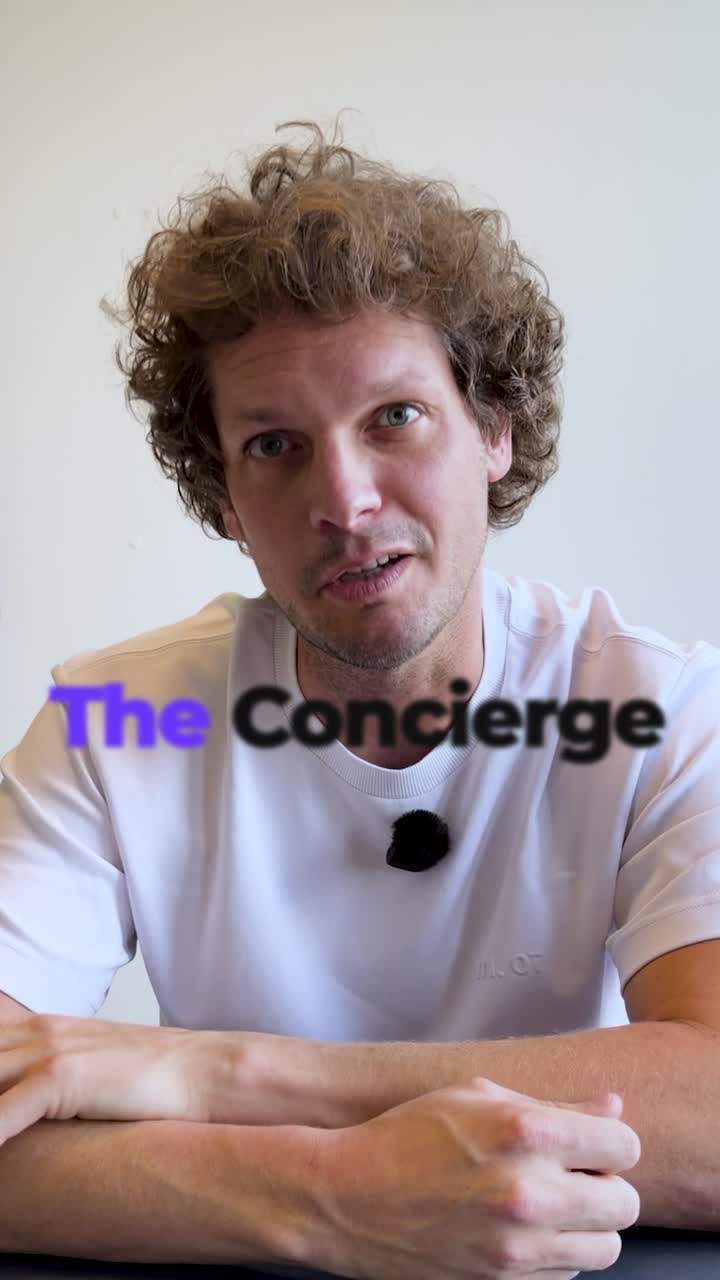
- Laatste week aantal videos gedeeld hier op Linkedin over onze pivot bij Tinrate , die het algemeen niet fantastisch goed doen in het algoritme. Mn eerlijke founder stories deden het in het algemeen beter dus here we go. Zijn 7 maanden ver en zijn intussen serieus gepivot. Ik ontmoet dagelijks dan niet wekelijks mensen die vragen: “Hoe ist met Tinrate, top idee he!”. Recurrentie en willingness to pay is het grootste probleem met het initiële idee. Wil je expertise tanken, just pay for it en bespaar de “zin in een koffietje?”.
- Ongetwijfeld het deel waar we het langst aan gewerkt hebben en die de grootste pivot teweeg brengt: Tinrate concierge. Niet zomaar een agent, maar uw eigen chat gpt die je uw website bezoekers sneller dan ooit de juiste info geeft én connecteert met de juiste persoon binnen uw organisatie. Byebye websiteforms, hello@ mails en backoffice vertraging. Tinrate
- 3 manieren om kennis te delen. De tool: registreer en deel jouw Tinrate link met uw bestaande klanten en of jouw socials. Al jouw betaalde calls/adviezen geautomatiseerd: planning, billing en betaling. De concierge: We zijn allemaal al lang gestopt met zoekresultaten te browsen op google. Je stelt een vraag, en je krijgt het antwoord. Waarom werkt iedereen zijn website dan nog met tabbladen en contactformulieren? Onze AI tool op jouw website lost dit op. De search: extern advies nodig? Check wie allemaal een account heeft, en book
Related profiles


This page shows public professional information only, each fact cited. Is this you? send a correction, or ask for removal within 24 hours, no questions asked.