
Talks about
Career history
- FounderCyclowax
Insights & ideas
The through-line
Jakob Lorré's fixed idea is that a business is made in the doing, not in the thinking. "Het succes is 1% een idee hebben en 99% uitwerken," he says, and its corollary, "De straten liggen geplaveid met mislukte genieën" [13]. The formative lesson came from a mentor who ignored an elaborate business plan and simply asked for a quote for one video, forcing him to concretize instead of dream; that single order launched Well Played [13]. The same reflex shows up years later when he wanted a German chain manufacturer he admired to change their production process and deliver chains pre-waxed, and got it by driving there with a presentation and his bike [13]. Underneath sits a belief he states plainly: "Ik had altijd het gevoel dat de wereld kneedbaar is, dat u uw eigen verhaal kunt kneden" [13].
What has shifted is where the risk sits and how patient he is willing to be. Having sold Well Played after an investor took him to a minority position on a comfortable salary, where he felt like a passive employee hiding in his own company [13], and having become a father, he now takes fewer professional risks and builds in financial security, because he can no longer defer his own salary the way he did before [13]. His verdict on that trade is unsentimental: "Het leven is iets comfortabeler nu, maar het is ook kleurlozer geworden" [13]. The ambition, meanwhile, has only grown blunter, from "Als ik eerlijk moet zijn, dan wil ik de grootste leverancier worden van kettingen" [13] to "We want to be the dominant player in that field. We started it all" [12].
On proving demand before building
The conversion problem in hot wax is psychological, not technical: people will not take their chain off. Cyclowax's answer was to force them over that barrier once. They sent a "black box" test kit to 120 cyclists across Europe with mandatory weekly feedback forms, and the result was decisive: "In the end, I think 80% of all those test riders were like, I'm never switching back to oil" [12]. Scaled up, "This initiative in total converted about 150,000 cyclists to hot wax" [12]. The pitch that followed was equally direct: "I really believe in this technique in hot wax. I think we're going to take over the market. We're going to change the market with hot wax. I'm looking for like a face but also an investor. Are you interested?" [12].
The barrier that remains is the same one, and Lorré is explicit about where the company is aiming: "The holy grail in hot waxing is that you don't have to take the chain off... We have working prototypes to do that. They're patented" [12].
On building physical products
He judges categories before he judges ideas, using value-to-weight ratio as the filter: supplements ship 100g for €50, while Cyclowax's set weighs 3kg for €200 to 250, which explains why certain e-commerce categories boom and others struggle [12]. Once inside a category, the discipline is to close the gap between the product you dreamed up and the product that can actually be manufactured, which means fewer parts, smaller packaging, feasible manufacturing processes, part costs, assembly costs and import duties considered from day one [12]. R&D itself can be cheap if you are willing to start from something that exists: the core hardware is an off-the-shelf leg-waxing heater from the beauty industry, which they reverse-engineered with new PCBs and better thermostat control before persuading the manufacturer to adopt the improvements [12].
He is equally insistent that the object is not where the product ends. "When people think about product development, they usually think about the product itself. I obsess just as much about the box it comes in" [4]. The reasoning is that packaging is "the very first physical interaction someone has with your brand. Before they use your product. Before they experience whether it works" [4]. For the Performance Wax Kit that meant countless hours on the box, the layout, the order in which each item is discovered, the welcome card and the onboarding guide, with small adjustments still being made after launch, measured against the benchmark of opening a new iPhone or MacBook [4]. The kit itself was developed with his brother Arthur, who joined Cyclowax officially almost two years ago [2].
On data and proactive maintenance
Bike maintenance today is entirely reactive, and Lorré's long-standing argument is that with cyclists' data already available through Strava and similar platforms, the whole category should shift to proactive maintenance of wear parts like chains, with Cyclowax pioneering it [13]. The asset is already accumulating: one in four customers uses the Strava-connected app to log wax sessions and chain wear, which leads him to claim, "I honestly think that today there is no other party besides us that has such an amount of data on real life chainware in the market" [12]. He treats it as an unmonetized asset that extends beyond chains to other wear parts [12].
On athletes, teams and partnerships
The pattern he prizes is product first, partnership second. Hayden Wilde had been using Cyclowax since 2023 with no contract and no sponsorship, simply because he started and never stopped, and only after 24 hours together in Andorra did it become official: "To see our products being used by possibly the best triathlete in the world is pretty special. Especially knowing that the product came first and the partnership followed later" [1]. When he asks athletes why they like Cyclowax, the answer is almost always the same word, clean, and Hanne De Vet's version of it covers both halves of the value: every watt counts on the bike so there is energy left for the run, and she can travel between races without chain oil over her bike case, race kit and hands [6]. Lorré thinks that second benefit is underrated: "A clean chain means a clean bike, a clean garage, clean hands, clean clothes and a clean bike case" [6].
Working with Lidl-Trek changed how he reads racing. As a fan he thought the Tour de France Femmes was won in August; working alongside the mechanics, "you actually realise it's won months before the first stage" [5]. Cyclowax's own remit is narrow, making sure every chain is perfectly hot-waxed, but the chain is one small piece of a much bigger puzzle of tyre choice, tyre pressure, gear ratios, bike fit and nutrition, where "Everything is planned. Everything is measured. Everything is thought through" [5]. He draws the analogy directly: there are many similarities between a high-performing cycling team and building a company [5]. The counterweight is LeBlanq's philosophy of Joyriding, that not every ride has to be about watts, data or racing, sometimes it is about roads, company, food and a small party afterwards, a mindset he says sits close to Cyclowax and was reinforced by being there with Johan Museeuw and Greg Van Avermaet, champions who also remember that cycling is about enjoying the ride [9].
On putting customers ahead of investors
Every year Cyclowax visits Lidl-Trek at the Tour and brings one customer along. The alternatives are named and dismissed: "We could invite investors. We could invite the press. We could invite an influencer. But there's nothing like bringing a customer behind the scenes of the world's biggest cycling race" [7]. Joran Poelman got the full VIP experience, the Village Départ, the Lidl-Trek bus, the race from a team car, plus a ride together and a conversation about cycling, clean chains and great wine, because Lorré remembers his own first time at the Tour as an experience he will never forget [7]. The principle behind it: "I've always wanted Cyclowax to be more than just great products" [7].
On investors, ownership and motivation
He distinguishes sharply between free advice and advice from someone with skin in the game. An investor in your company gives unfiltered counsel, though it can be biased toward short-term financial gains over long-term interests [13]. He has also learned to structure the cap table cleverly: the Olympic champion who invested in the roughly €1M round agreed to be the last to put money in while allowing his name to be used from the start, capturing the name's value while keeping certainty [12]. The cautionary half of the story is Well Played, where taking an investor and moving to a minority position with a comfortable salary left him feeling like a passive employee hiding in his own company, so he sold his remaining shares during COVID once he was no longer mentally challenged [13].
On hiring and business models
His own early mistake was hiring people too nonchalantly; hiring should be a deliberate step taken only when freelancing becomes too expensive or the signals are very clear [13]. He is equally clear-eyed about the shift from services to products: a service business can live off relatively few clients, while a product business demands much more upfront investment and only works at scale, and the customer feedback on social media ads is far more brutal than anything in a B2B relationship [13]. In practice the labour has often been family labour, from packing, shipping and waxing at the very start through to his mother in the warehouse during a growth surge, a debt he repays by waxing their chains when they bring bikes to the Pyrenees [2].
On stopping to notice the milestones
He returns often to the distance travelled and the risk of missing it. Five years ago he was melting wax in a garage; now thousands of Performance Wax Heaters ship out of a warehouse that "genuinely feels like it's Black Friday", to more countries than he imagined at the start [8]. The first Performance Wax Kits reaching customers prompted the same reflection: in the middle of building something you get so used to the problems, the delays, the prototypes and the daily decisions that you forget the bigger picture, and "A few years ago, Cyclowax was an idea. Today, thousands of cyclists around the world are waiting for a product we designed from scratch" [11]. Walking into GCN's studio as a guest on the Tech Show, after years of learning about training, bikes and gear from GCN videos, felt surreal for the same reason: "Sometimes you're so focused on the next project, the next product or the next challenge that you forget to stop and appreciate the journey" [10].
Takeaways
- Force prospective customers over the psychological barrier once rather than arguing them past it: 120 test cyclists with mandatory weekly feedback forms produced 80% who said they would never switch back to oil [12].
- Pick physical-product categories by value-to-weight ratio, and design for manufacturability from day one, counting parts, packaging size, assembly costs and import duties before the product is finished [12].
- Reverse-engineer an existing off-the-shelf product instead of funding R&D from zero; Cyclowax's heater began as a beauty-industry leg-waxing device with new PCBs and better thermostat control [12].
- Treat the box as the first physical interaction with the brand, controlling layout, discovery order, welcome card and onboarding guide, and keep adjusting after launch [4].
- Let athletes use the product before any contract exists; Hayden Wilde used Cyclowax from 2023 with no sponsorship, and the partnership followed the product [1].
- Spend the scarce invitations on customers rather than investors, press or influencers [7].
- Hire deliberately, only when freelancing becomes too expensive or the signals are very clear, and expect a product business to need far more upfront capital than a service business [13].
- Stop protecting the idea and start executing: "Als je een idee hebt, dan zit de kracht hem in het doen, en blijf niet te lang vast zitten in uw plan" [13].
Media & appearances
- SuperNovaYouTubeSuperHeroes at SuperNova — Ep.10 | Jakob Lorré & Frederik Neus — CyclowaxJakob Lorre discusses how he and Frederik Neus founded Cyclowax after knowing each other for over 15 years and working in separate industries (video production and tech advertising). During the pandemic, Lorre became interested in hot wax chain maintenance for bicycles—a niche technique that kept bike chains clean without buildup—and partnered with Neus to create commercial products around this technique. Lorre emphasizes that Cyclowax aims to position itself as a central hub within the cycling industry, providing value to bike shops, consumers, and manufacturers alike.
In the news
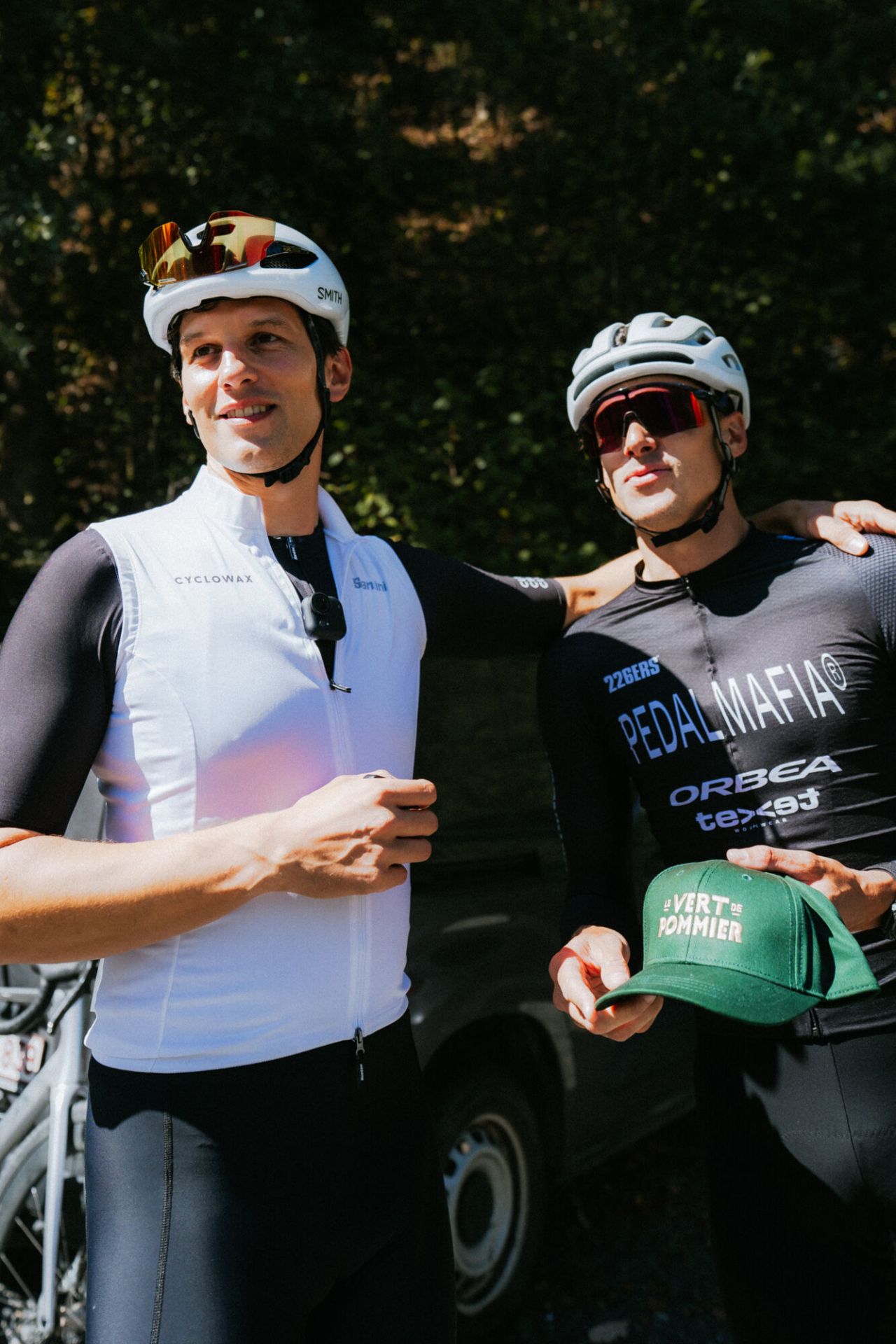
- Our best product testing happens on a bike ride. Not in a lab, not behind a desk. On the bike, with actual cyclists using our products in real-life conditions. Last Friday I joined Lawrence Naesen, Greg Van Avermaet and his GVA Gold team in Houffalize for a recon ride of the European Championship Gravel. We talked about the course, equipment, conditions and, obviously, chains. Which wax makes the most sense here? How should we prep it? How does it feel after an hour? What happens when the conditions change? And I love this part of
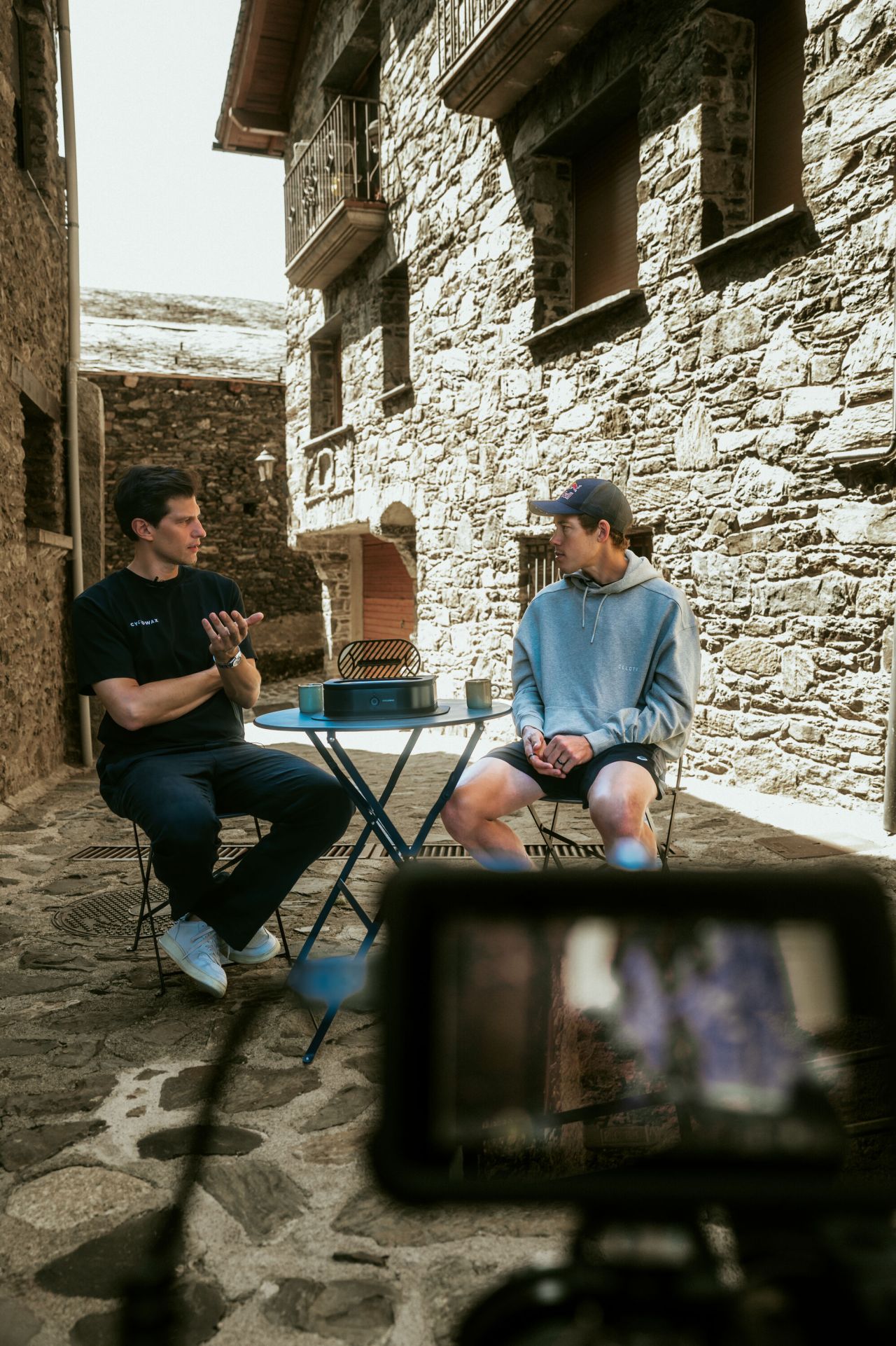
- The best triathlete in the world invited me to his home in Andorra. Hayden Wilde has actually been using Cyclowax since 2023. No contract, no sponsorship. He simply started using our products and never stopped. So we spent 24 hours together. We had dinner, talked about what a crazy sport triathlon is, combining 3 sports at the highest level. He took us with him on a swim & bike session. We went through his ridiculously organised workshop. And, obviously, we talked a lot about marginal gains and hot wax. Now we're making this
- My family has always been very involved in Cyclowax. From the very start of the company, everyone helped get this thing off the ground. Packing, shipping, waxing. Since this year, we've been growing like crazy and literally yesterday my mom was in our warehouse helping us pack and ship massive volumes of customer orders, helping out again. And then there's my brother Arthur. He actually joined Cyclowax officially almost 2 years ago and developed our new Performance Wax Kit with me, a product that apparently every cyclist wants.
- Meanwhile at the Tour de France Femmes 😎
- When people think about product development, they usually think about the product itself. I obsess just as much about the box it comes in. Not because it's just packaging, but because it's the very first physical interaction someone has with your brand. Before they use your product. Before they experience whether it works. They're opening a box. For our new Performance Wax Kit, we spent countless hours discussing things most people will never notice. The box, the way everything is laid out, the order in which you discover each item,
- We're back at the Tour De France Femmes this week. As a fan, I used to think that race is won in August. But working with the mechanics, you actually realise it's won months before the first stage. Our focus at Cyclowax with Lidl-Trek is simple: making sure every chain is perfectly hot-waxed and ready to fly. But when you spend time with the mechanics, you realise the chain is just one small piece of a much bigger puzzle. Tyre choice, tyre pressure, gear ratios, bike fit, nutrition plan... The list goes on and on. Everything is
- A question I always ask our athletes is: "Why do you like Cyclowax?" The answer is almost always: "Because it's clean." Hanne De Vet, one of the world's top triathletes, said this: For her, every watt counts. She wants to be as fast and efficient as possible on the bike, so she has enough energy left for the run. But she also loves the fact that she can travel from race to race without getting chain oil all over her bike case, race kit or hands. It's one of those benefits we don't talk about enough. A clean chain means a clean
- Every year we visit Lidl-Trek at the Tour. Every year, we bring 1 lucky customer with us. We could invite investors. We could invite the press. We could invite an influencer. But there's nothing like bringing a customer behind the scenes of the world's biggest cycling race. We've been working with Lidl-Trek for a while, but I can still remember my first time being at the Tour. It's an experience I'll never forget. So it's awesome to be able to give that same experience to another cycling fan. We took Joran Poelman with us this
Related profiles
This page shows public professional information only, each fact cited. Is this you? send a correction, or ask for removal within 24 hours, no questions asked.