Overview
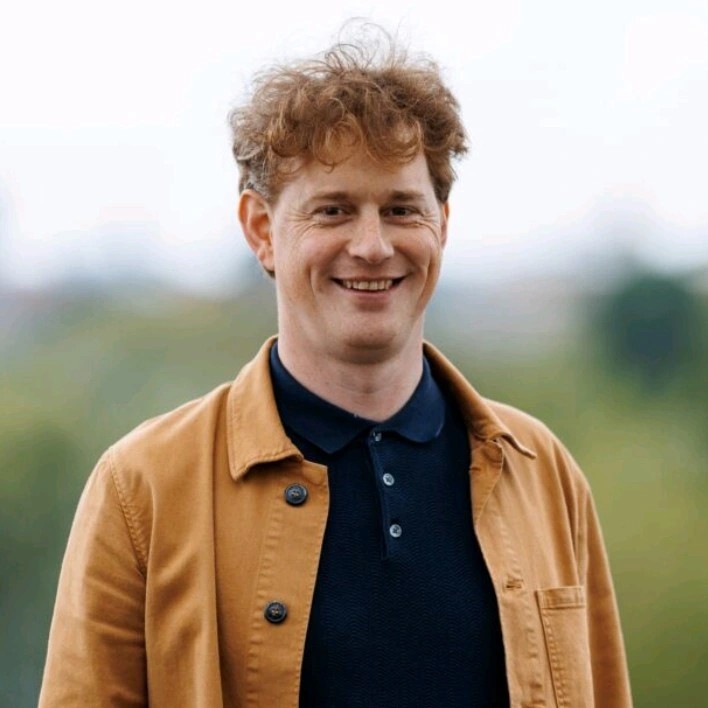
Jelle De Zwaef is the founder of Nordend, which he established in June 2019 and where he serves as managing director. He is based in Brussels. Since January 2021 he has worked at Agentschap Wegen en Verkeer as a business and change data migration analyst, and he has been a member of Rubicon since September 2021.
From March 2017 to December 2021 he was a senior GIS consultant at Infrabel, and between April 2015 and May 2019 he was a project delivery manager at Avineon Europe. Earlier roles include geospatial specialist at Intergraph, team leader map production at XMedia AG and business development manager at media swiss ag, both now Ringier Digital. He spent five years at Star-Apic, first as an application support engineer and then as an application consultant, and before that worked as a GIS expert at Tele Atlas and as a cartographer at Geocart.
He studied geography with a major in geomatics at Ghent University, graduating in 2002, and completed an Executive Master Class in Business Process Management at Vlerick Business School in 2015.
Career history

Insights & ideas
The through-line
Across nearly every post, Jelle De Zwaef returns to the same gap: the difference between what an organization pays for and what it actually uses or understands. Whether it is FME licenses sitting idle [1][9], a handover document that "does not solve" the loss of an outgoing engineer [3], or a BIM attribute that passes visually but fails an OTL compliance check [12], his preoccupation is with the quiet drift between the paperwork and the workflow underneath it. This has sharpened rather than shifted over time: early in his career as an IT consultant he lost sleep over problems that were not his to solve [11], and running Nordend has turned that same attentiveness into a business model built around auditing the gap before it becomes a crisis [1][9][3].
On renewal audits
De Zwaef treats the FME renewal cycle as the moment truth gets told or avoided. He recounts auditing a Belgian agency with "23 FME desktop licenses" of which only "9" were active, renewed for four years "by a procurement process that nobody had questioned" [1]. His framing of the reseller's job is explicit: "A volume vendor sells you 23 licenses next year. A partner-reseller asks why you are paying for 14 unused ones" [1]. He extends this into a standing offer of discovery calls for "teams approaching an FME renewal in the next 90 days," aimed at producing "a clear view of which licenses are earning their cost" [9]. He also holds resellers accountable for representing clients back into the vendor relationship, noting that his team submitted "a detailed bug report to Safe Software" that later shipped in a release, and that "you are paying the partner margin for nothing" if your reseller never does the same [15].
On patience
De Zwaef names Hemingway, Humboldt, and De Gerlache as his heroes, not business leaders, because "the pattern across all three is patience" [4]. He explicitly pushes back on industry culture: "Our industry talks about pace as if speed were the only kind of progress" [4]. The work he is proudest of at Nordend "did not happen in a sprint" but over "a year of slow, low-volume conversations" [4]. His line on the cost of speed is blunt: "Speed has a cost. The receipt arrives months later in the form of workarounds nobody planned" [4].
On asking for help
He describes asking for help as "the hardest skill I have had to learn in years of running Nordend," using bookkeeping as the concrete example [5]. He still keeps "an hour each month on the books" not to do the work but so "the company can tell me how it is doing without using words" [5]. He generalizes this into a tension he sees in founders broadly: those who never ask for help "drown in the work," while those who "hand it all off lose touch with what is actually changing" [5]. This connects to his account of ownership as a founder: seven years into Nordend, "the stakes are higher" than his consulting days yet "I sleep better than I have in twenty years," because "ownership closes the loop" [11].
On institutional knowledge
De Zwaef treats a resignation letter as "the most fragile moment in any spatial data team," since the departing engineer "remembers why every workaround exists" and "a 40-page handover document does not solve this" [3]. His response is a structured pairing exercise: "One Nordend engineer pairs with your outgoing expert before they leave," documenting "the routing logic, and the reason a specific transformer was chosen over the obvious one" [3]. The same worry about undocumented drift appears in his description of BIM-to-GIS translation work, where unresolved OTL attribute failures accumulate into "four workarounds nobody documented" by the third project [12], and in municipal geoportal pipelines where "nobody remembers what changed" once a file has passed through several hands [13].
From the stage
In the Solutions Review interview at FMEUC, De Zwaef describes founding Nordend three years after already working with FME technology since 2006 across cartographic software, public safety, and utilities roles, and he details a specific service his company built to help customers deploy FME Server processes across development, test, and production environments with proper governance, a response to organizations struggling with process stability whenever environments changed [16]. This governance-across-environments problem is not addressed anywhere in his written posts, which focus instead on licensing, handover, and translation-layer issues.
Takeaways
- Before an FME renewal, audit which licenses are actually active and what the underlying workflows do, not just whether the license still works [1][9].
- Treat a resignation on a data team as an urgent two-week window to pair the outgoing expert with a successor and document routing logic and transformer choices, not just write a handover document [3].
- Expect BIM-to-GIS and OTL translation failures to compound silently across projects if workarounds go undocumented; catch them early with a focused discovery session on the specific failing attribute [12].
- Keep a small personal touchpoint on your own numbers or workflows, even after delegating, so you notice drift before it becomes obvious [5].
- If you buy FME through a reseller, ask what bugs or roadmap changes they have personally pushed to Safe Software on your behalf [15].
- Reduce platform noise deliberately; De Zwaef left Twitter and reports his industry knowledge got sharper once fewer hours went to hot takes and more to focused reading [2].
Media & appearances
- Solutions ReviewYouTubeJelle De Zwaef - Founder @ Nordend | A @SolutionsReview On Location Interview at #FMEUCJelle De Zwaef discusses how he founded Nordend three years ago after working with FME technology since 2006 in roles involving cartographic software, public safety, and utilities. He describes a key service his company developed to help customers deploy FME Server processes across development, test, and production environments with proper governance, addressing a problem he identified where organizations were struggling with process stability when environments changed.
In the news
- I once audited a Belgian agency that owned 23 FME desktop licenses. They were actively using 9. The remaining 14 were renewed annually, by a procurement process that nobody had questioned in four years. The licenses cost money. The bigger cost was that the workflows running on the 9 active machines were never audited either. People assumed if the license worked, the workflow worked. This is the moment a reseller earns its keep, or doesn't. A volume vendor sells you 23 licenses next year. A partner-reseller asks why you are paying
- I do not have a system for keeping up with my industry. The closest thing to a system is that I watch every Safe Software webinar unless the topic is too basic, and I follow two people on LinkedIn who post often enough to teach me something. The two are Matt Forrest, who writes about geospatial in a way that does not assume you already know the answer, and Don Murray, who co-founded the company whose product we resell and writes about what is changing inside it. I used to follow more. I was on Twitter for years. I left when the
- The most fragile moment in any spatial data team is a resignation letter. The person leaving usually built the FME workflow and remembers why every workaround exists. A 40-page handover document does not solve this. The next engineer reads it, then meets the first edge case alone. That is when the calls start. We run a focused handover audit for organizations in this exact situation. Two weeks. One Nordend engineer pairs with your outgoing expert before they leave. We document what the document cannot. The routing logic, and the
- My heroes are not business leaders. They are Hemingway, Humboldt, and De Gerlache, a Belgian who in the 1890s sailed a ship, called the Belgica, into the Antarctic and let it freeze in for several months on purpose. The pattern across all three is patience. Discovery arrives when the conditions are right, and the conditions are usually wrong for a long time before they shift. Our industry talks about pace as if speed were the only kind of progress. The work I am proudest of at Nordend did not happen in a sprint. It happened over
- Asking for help is the hardest skill I have had to learn in years of running Nordend. I am still not great at it. Bookkeeping is one of the places this lesson finally landed. For years I did most of it myself, because I wanted to understand every corner of the company I had built. But then it was clear: I needed help. I still do spend an hour each month on the books. That hour keeps me close enough to the numbers that the company can tell me how it is doing without using words. This is the tension I see in many founders. Founders who
- Most European FME consultancies stop at the border. We did the same for a while. Until several US-based GIS and infrastructure teams started reaching out with the same problem. Their workflows ran in FME. Their data lived under US standards. But the suppliers or parent companies they answered to ran on Belgian or European standards. The translation layer kept breaking. That is why Jonathan Cornelus runs our New York office. Same craft, closer time zone. If you are a US-based GIS or AEC team running FME, and you need someone
- Two days after FME Day this spring, somebody from the audience sent me a message. He had attended our event for the first time. His opening line was that he had not realized Nordend was operating at the level we were operating at. I sat with that sentence for a few hours before replying. The honest reaction was equal parts compliment and warning. The compliment is obvious. The warning was that someone in our exact corner of the market, paying attention, did not know what we did. We have been a Safe Software Partner since 2019. A
- I learned to read when I was six years old. The first thing I read was a map. By eight, I could look at a topographic map of a place I had never been and imagine the landscape behind it. By eighteen, I was studying geography. There was no deliberation in it. The work simply matched the way my brain already worked. Most of the people I have hired into Nordend over seven years had a similar story. Geography arrived without permission. Maps explained something before anybody asked the question. When I started Nordend, the work that
This page shows public professional information only, each fact cited. Is this you? send a correction, or ask for removal within 24 hours, no questions asked.