
Overview
In this first episode of a three-part series, Jelle Van Impe tells how volunteering in Brazil and building a startup accelerator in India inspired him to found Studaro, which places ambitious students in study-relevant, paid student jobs via a consultancy model rather than interim staffing. He describes the brutal early years: working 7-to-7 then delivering pizzas at night, a friendship-destroying co-founder conflict that triggered a 1.5-year legal battle, the entire 8-person team resigning in February 2020 right before COVID, and rebuilding alone from an attic room. He shares highlights including raising investment from HR figure Conny Vandendriessche and buying his Tesla after four years of hard work. The episode closes with practical advice on the Belgian student-entrepreneur statute, bootstrapping with tools (copywriting, Wix/WordPress, CRM like Pipedrive/HubSpot), and overcoming fear of starting.
Talks about
Insights & ideas
The through-line
Everything Jelle Van Impe says circles back to one diagnosis: the education system has barely changed in a century while the labour market has changed drastically, and Studaro exists to close that gap [3]. He refuses the usual framing of the problem. "Er is geen generatiekloof, er is een innovatiekloof" [1]: schools don't teach the newest technologies, so companies can't absorb innovation through the young graduates they hire, and the fix is to make 'learning and earning' part of studying rather than something that starts after it [1]. The same conviction drives his view of student work itself. "Als je vandaag aan studentenjobs denkt, denkt iedereen aan de quick and dirty work, goedkope werkkrachten... De jonge generatie heeft zoveel meer potentieel" [4].
Alongside that sits a second, more personal preoccupation that has hardened over time: that a company is built through confrontation with yourself and with other people, and that most of the damage comes from ego and silence. A co-founder split during COVID, a year-and-a-half legal battle, and a 2023 ultimatum to leave his own company produced a founder who now says "Elke ondernemer moet een [f***] you moment hebben" and "Ik heb bewezen dat ik letterlijk op mezelf Studaro er heb doorgetrokken, mijn eentje" [1], while simultaneously insisting "Als er iets is dat ik geleerd heb: je gaat het nooit, nooit, nooit alleen doen" [3]. The two are not in tension for him: proving he could carry it alone is what freed him to build something that runs without him.
On the innovation gap between school and work
Belgium sits on a large untapped pool of highly educated international student talent that ends up in horeca or night shops because nobody facilitates study-relevant student jobs for them, and that is the founding problem Studaro set out to fix [1][5]. The blockage runs deeper than placement. Education doesn't cover the newest technologies, so the transmission belt that should carry innovation into companies through young hires simply isn't turning [1]. He is blunt about where the resistance sits: "Sorry boomers, maar zij zijn de grootste blokkade van een generatie innovatie" [3], and equally blunt about the institutions: "Er is niks dat je niet kunt leren van het internet. Sorry dat ik het zeg, hogescholen en universiteiten: letterlijk niks" [2]. Belgium also remains one of the last countries in Europe still permitting unpaid internships, which Studaro positions itself against by offering paid roles carrying real responsibility [4].
On how Studaro is built
Studaro runs a consultancy model rather than an interim one: students are employees of Studaro itself, which lets them be deployed across multiple projects and companies with talent-coach guidance behind them [4]. Experienced higher-educated students work two to five days per week at student tariff before graduating, which lets companies bind talent early and fill hard-to-fill vacancies [1]. The sweet spot for timing is six months to a year before graduation, with the explicit goal of converting into a permanent role at that company [4]. Growth is deliberately throttled: Studaro restricts itself to Ghent and turns away demand from Brussels and Antwerp to protect quality while the scalable systems are built, choosing qualitative matching over placing as many students as possible [3]. The current constraint is demand, not supply. There is more talent than vacancies in the database because companies don't yet know the model, and the vacancies that are needed aren't findable on VDAB, so sales still runs on manual intakes [1].
The mission is not abstract to him. The moment that stayed with him was watching an international student's wife walk out of the airport gate: "De moment dat zijn vrouw uit die gate stapte en dat ik een volwassen man in tranen zie uitbarsten, dat was een moment dat ik nooit ga vergeten. En dat hebben we mogelijk gemaakt dankzij het studaro concept" [5]. The wolf in the logo carries the philosophy: "Bij wolven is het zo dat de sterkste wolf loopt altijd achteraan in de rij om ervoor te zorgen dat iedereen altijd mee is. En dat is een beetje de community die wij willen creëren" [5].
On selling into companies
His technique for closing HR and IT managers and CEOs is emotional rather than economic: he asks whether they would want their own children to have a study-relevant student job, a sweet spot that almost always wins them over [5]. The go-to-market lesson came the hard way. His first mistake was approaching universities and hogescholen, which resist commercial partnerships, instead of first defining the real target audience and the 'why' behind the outreach [4]. If he started something new tomorrow he would set up a pricing model and validate product-market fit immediately, which he did not do at Studaro, where he spent too long behind a computer instead of networking [5]. "Een bedrijf bouw je niet alleen achter uw computer" [5].
On starting young
Student entrepreneurship is the least risky moment there is to start, because you have nothing to lose, and the parents trained to seek safety are often the biggest blocker of a generation's innovation [3]. "Wat hebt je te verliezen? Niets" [3]. He worked the statute hard, re-enrolling at a hogeschool after graduating without following the classes purely to keep using the student-entrepreneur status and earn through student hours while building the company [3]. The statute also buys what he calls youthful forgiveness: cold outreach as a self-declared student entrepreneur produced roughly 80 to 90 percent response rates, against 5 replies out of 150 before he had started anything, because experienced people root for young founders taking the leap [4].
On method, he is anti-idea and pro-need. Don't start from an idea, start from a need or issue you personally run into, and if you don't have one, go and work, even for free, to learn a skill and identify a need in a field you would want to work in anyway [4]. "Een idee is niks waard, execution is key" [1], and half-commitment kills it: "Je gaat het niet halen als het maar een probeersel is in uw eigen hoofd" [3]. Studaro was bootstrapped with €150 using free and cheap growth-marketing tools, and his tooling advice for starting founders is to master a copywriting tool, a website builder such as Wix or WordPress, and a CRM such as Pipedrive or HubSpot with automations [4]. Don't rush to raise capital either. First map where your time goes and automate the biggest sinks, because the long-term compounding gain is enormous [3].
On co-founders, ego and conflict
Co-founding with best friends cost him both the friendships and a legal battle of one to one and a half years that nearly killed Studaro, and the conflict was about diverging personal life phases rather than the company's mission [4]. February 2020 was the low point: "Iedereen heeft ontslag genomen in februari 2020... en een maand later brak Corona nog een keer uit er bovenop" [4]. The lesson he draws is procedural and characterological at once. Appoint a genuinely neutral external mediator as early as possible; Studaro's mediator was a consultant already embedded in the company and no longer unbiased, which made the split worse [1]. And not communicating, or communicating badly, ends up costing far more in legal fees, mental rest, sleepless nights, health and time than the hard conversation would have [1].
His selection criteria follow from this. Run if money is the driver, pick someone far outside your existing network, look for the opposite energy profile so that structured and analytical meets visionary and energetic, and make sure you share an interest outside work [1]. "Als geld de intrinsieke motivatie is: run. Ondernemen draait niet om geld" [1]. Underneath all of it he puts one cause: "Ego is de grootste killer van samenwerkingen, van connectiviteit met mensen" [1]. Ego blocks empathy, and becoming aware of the moment it takes over, plus communication, is what resolves conflict [1].
On risk, fear and standing alone
He treats risk as an accounting exercise other people refuse to do honestly. "What is the worst that can happen? ... dat je iets geprobeerd en gedaan hebt dat 99% van de anderen niet geprobeerd of gedaan hebben of zelfs niet zouden durven" [4]. Advice is systematically biased toward safety: "Mensen zijn heel hard van nature uit tegen risico, dus die gaan altijd het meest safe advies geven. Nee, sorry, nee, echt niet. Ik zou gewoon springen" [5]. Some of that advice is worse than cautious. The people who told him to quit Studaro turned out to want his position so they could continue it themselves [5], which pairs with his general rule that people are less altruistic than you expect: "In die end denkt iedereen in de eerste plaats aan zichzelf. Prepare for that" [2]. Social pressure deserves the same discount: "De mensen die je vandaag kent, 90-95% daarvan gaat je binnen 10 jaar of 5 jaar niet meer kennen. Dus wil je uw leven vandaag laten bepalen door mensen die er binnen 10 jaar ook niet meer gaan zijn?" [4].
The fuel is doubt turned outward. "Als zij zeggen dat het niet kan, dan heb je zo die inherente bewijsdrang om te tonen: jawel, ik ga je een keer tonen" [4], and he names an intense fear of failure as a major driving force without which he could not sustain the ambition and effort he puts in [5]. He has paid for that in hours, working seven in the morning to seven at night and then delivering pizzas on a Pizza Hut moped until ten or eleven [4]. When it mattered he borrowed and personally invested the largest sum of money he had ever seen to keep the company alive, lost sleep over it, and found that surviving the self-doubt made every other problem look minuscule [5]. After the 2023 ultimatum to leave his own company he bought out all shareholders and investors and dissolved the board, accepting he would repay debt for fifteen years if Studaro failed, because his team's jobs and passion outweighed the financial risk [1]. "Ik denk de echte groei zit hem in breken, niet buigen" [5], and "Ik heb er nog geen seconde spijt van gehad, maar daar heb ik een nieuwe versie van mezelf leren kennen" [5]. What carries him through the bad stretches is proportion: "Ondernemen is sowieso meer zwarte sneeuw dan dat het goed gaat, maar de kracht die je haalt uit de kleine mooie momenten zijn zoveel intenser" [4]. And the framings he repeats: "Er zijn geen problemen in het leven, alleen maar uitdagingen en oplossingen" [1], "In the end it will all be ok, and if it's not ok, it's not the end" [1], "If not now, when?" [1].
Loneliness he treats as a solvable operational problem rather than a mood. The answer is to surround yourself with entrepreneur communities that ask about your personal challenges rather than only your business challenges, and to drop the belief that showing weakness will be used against you [1].
On leadership and making yourself dispensable
The end state he aims for is his own redundancy. "Ge moet zorgen dat gij misbaar zijt. Het bedrijf moet kunnen draaien zonder u, dat is het einddoel" [3], because only then can the founder move from daily operations to business development, which is the only route to real size [3]. Credit and blame are asymmetric by design: "Als het goed gaat met het bedrijf, dan is het de verdienste van uw collega's. Je kunt het nooit alleen. Maar als het slecht gaat, is het de fout van u" [1]. On decision-making he trusts instinct over analysis, "One gram of gut feeling is worth more than a thousand grams of knowledge" [1], and he allows for pause without treating it as regression: "Stilstaan is niet altijd achteruit gaan. Stilstaan is gewoon af en toe ook een keer genieten van het moment om daarna vooruit te gaan en energie te hebben om dubbel zo snel vooruit te kunnen gaan" [2].
On networking and personal branding
Real networking is an interplay of outbound and inbound. Outbound means relentless outreach and a tolerance for rejection: "Stalk mensen, echt waar. Krijg 100.000 keer nee en de ene ja gaat zo satisfying voelen" [3]. Inbound means posting on TikTok, Instagram and LinkedIn so people come to you [3]. Networking events, he argues, achieve the opposite of networking: quick, quantity-driven interactions where prominent figures forget you, whereas a one-on-one conversation in a café builds a genuine relationship [3].
On your first job and the shape of a career
He wants students to stop putting pressure on themselves to identify a dream job, and instead to notice which activities give them energy and build from there [3]. The first job is a filter. "Als je weet wat dat je niet wilt, is een process of elimination. Verwacht dat je leert wat je niet graag doet" [2]. For graduates with no direction, his concrete prescription is three jobs of one month each: one brain-dead job outside your interests, one aligned with what you think you want, and one aligned with your hobby, then compare how each felt [3]. Money should not lead. "Je moet niet op je 27 jaar 10, 15.000 willen verdienen. Op je 27 jaar moet je genieten van wat dat je doet en voornamelijk ontdek wie dat je zijt" [2]. Job hopping for salary reads as a mindset problem to employers, and a candidate with three or four jobs in four years will not be hired at Studaro, because someone present only for money is toxic to a team's passion and ambition [2]. In smaller companies where you can make real impact, staying and working hard for two or three years pays better than hopping does [2]. Nor does breadth without depth serve anyone: "Jack of all trades, Master of none — ik kan je nu al zeggen, daar werd zij ook niet gelukkiger van, maar niemand, niet bedrijf, wordt er ook niet beter van" [2]. Looking further out, falling birth rates and mass baby boomer retirement mean young people should not count on a state pension: "Ik ben er rotsvast van overtuigd dat het best gewoon voor u eigen pensioen spaart" [2], though only after first building skills and value early in the career [2].
On AI and the skills that will hold value
As AI floods the market with tools and hype, the student jobs that gain value are the empathic ones, customer skills, sales and storytelling, because most people still prefer being helped by a person over a chatbot [2]. The complementary bet is technical: prompt engineering will become a formal field of study, and companies buying ChatGPT licences currently extract a fraction of the capacity because nobody there can optimise prompts [2]. Consistent with his view of institutions, he does not expect universities to teach this. You learn it by experimenting and by joining communities of like-minded people, and never by buying online courses from influencers [2].
Takeaways
- Reframe the generational argument as a technology one: "Er is geen generatiekloof, er is een innovatiekloof", and fix it by making learning and earning part of studying [1].
- Treat your first job as a process of elimination and expect to do work that doesn't interest you, because knowing what you don't want is the more useful discovery [2][3].
- Don't start from an idea, start from a need you personally hit; if you don't have one, go and work in the field to find it [4].
- Pick a co-founder outside your network with the opposite energy profile, and run if money is their motivation; appoint a genuinely neutral external mediator the moment conflict starts [1].
- Before raising capital, map where your time goes and automate the largest sinks; €150 plus a copywriting tool, a website builder and a CRM with automations was enough to start Studaro [3][4].
- Use the student-entrepreneur statute for the response rates it unlocks: 80 to 90 percent on cold outreach versus 5 replies out of 150 beforehand [4].
- Skip networking events in favour of one-on-one café conversations, and pair relentless outbound with inbound posting on TikTok, Instagram and LinkedIn [3].
- Aim at your own redundancy: "Het bedrijf moet kunnen draaien zonder u, dat is het einddoel" [3].
- Sell the model emotionally by asking decision-makers whether they would want their own children to have a study-relevant student job [5].
In the news
- BANDEAL Studaro haalt €1,5 miljoen op voor de verdere uitbouw van zijn skillsplatform! De Gentse HR- en edtechspeler wil met AI studenten, werkgevers en hoger onderwijs sterker met elkaar verbinden. Niet alleen kijken naar diploma’s en cv’s, maar vooral naar de skills die mensen vandaag al hebben én nog kunnen ontwikkelen. 👏 Met meer dan 20.000 studenten en jonge professionals op het platform heeft Studaro al een stevige basis. Dankzij deze nieuwe investeringsronde kan het bedrijf zijn AI-technologie verder ontwikkelen, uitbreiden
- Studaro haalt 1,5 miljoen euro op voor skillsplatform ++ Hoe zorg je ervoor dat wat studenten leren, wat werkgevers zoeken en wat medewerkers al kunnen beter op elkaar aansluit? Het Gentse HR- en edtechbedrijf Studaro, dat studenten via studiegerelateerde jobs dichter bij de arbeidsmarkt brengt, haalt 1,5 miljoen euro op. Met dat kapitaal bouwt het zijn skillsplatform en nieuwe AI-technologie verder uit. Die technologie helpt werkgevers om functies te vertalen naar concrete vaardigheden. Zo kunnen ze gerichter kandidaten

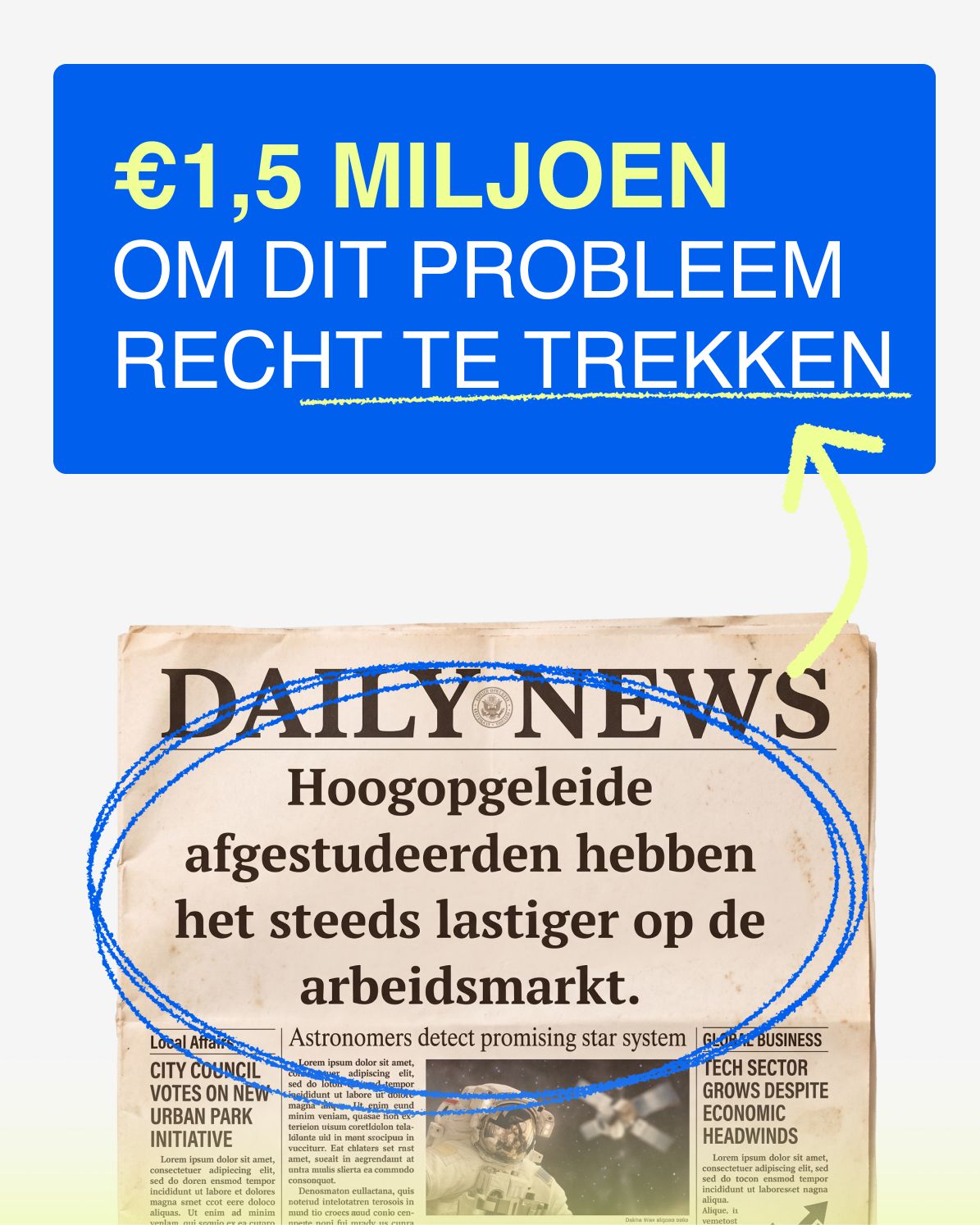
- WE RAISED €1,5M. WE. DID. THAT. (YES THIS DESERVES ALL CAPS) 1,5 miljoen euro opgehaald in onze allereerste fundingsronde ooit, insane. Thanks to all our investors 🙏 Jullie zorgen ervoor dat we kunnen blijven groeien en het grootste probleem van deze generatie kunnen aanpakken: de skillskloof. Want deze treft namelijk iedereen op hun eigen manier, of je nu werkgever, werknemer, of bijna/net afgestudeerd bent. → Werkgevers: geen idee welke skills er al zijn binnen hun team. → Werknemers: geen idee waar ze zelf in uitblinken en
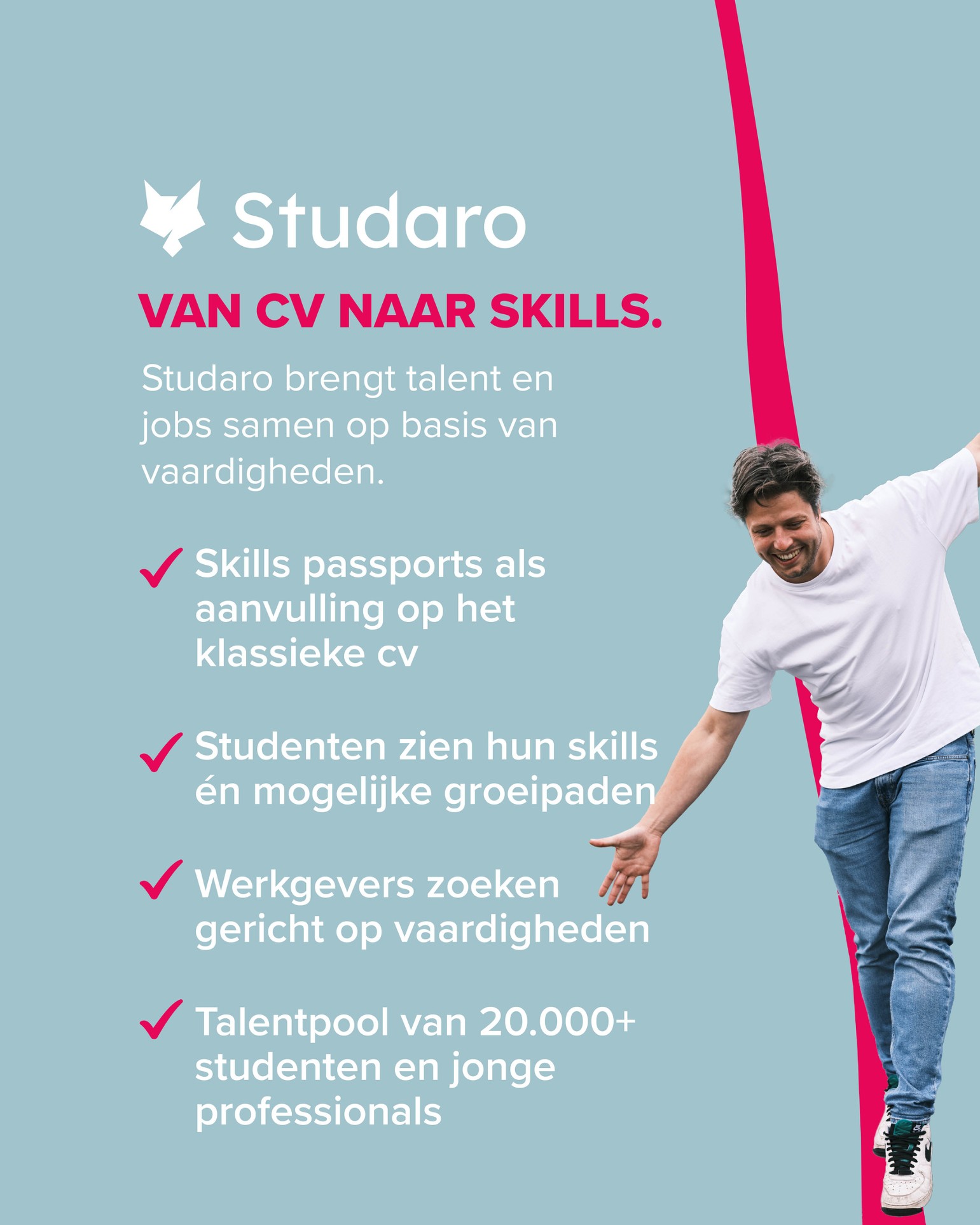
- ONE FINAL PUSH, BECAUSE WE ARE NOMINATED!! 🚀Studaro is genomineerd als AI-proof Company of the Year op de HR Tech awards van HRmagazine! 🙏 It's now or never: maandag 31/08 sluit de stemming en we kunnen jouw hulp gebruiken! Geloof je ook dat de toekomst van werk razendsnel aan het veranderen is, de skills-gap tussen arbeidsmarkt & onderwijs dringend nood heeft aan innovatie en je vandaag zelf zou willen weten hoe je job van morgen eruit gaat zien en hoe jij hierin kunt pionieren op basis van je eigen interesses en passies? So do


Related profiles

This page shows public professional information only, each fact cited. Is this you? send a correction, or ask for removal within 24 hours, no questions asked.