
Overview
Based in Ghent, Jeroen co-founded Factry to help manufacturers capture, visualize, and act on real-time production data. The platform bridges the gap between operational technology and IT, enabling data-driven decisions on the shop floor.
Career history

In the news
- 𝐈𝐭'𝐬 𝐭𝐡𝐞 𝐝𝐚𝐲 𝐛𝐞𝐟𝐨𝐫𝐞 𝐅𝐚𝐜𝐭𝐫𝐲 𝐂𝐨𝐧𝐧𝐞𝐜𝐭 𝐀𝐟𝐭𝐞𝐫 𝐇𝐨𝐮𝐫𝐬 2026! Lots of opinions about industrial data and AI flying around these days, so we decided to put the most important ones on one panel. Register here (limited seats left): https://lnkd.in/e597KaMe Richard A. Beeson III Christophe Rosseel Frederik De Bosschere Jeroen Coussement

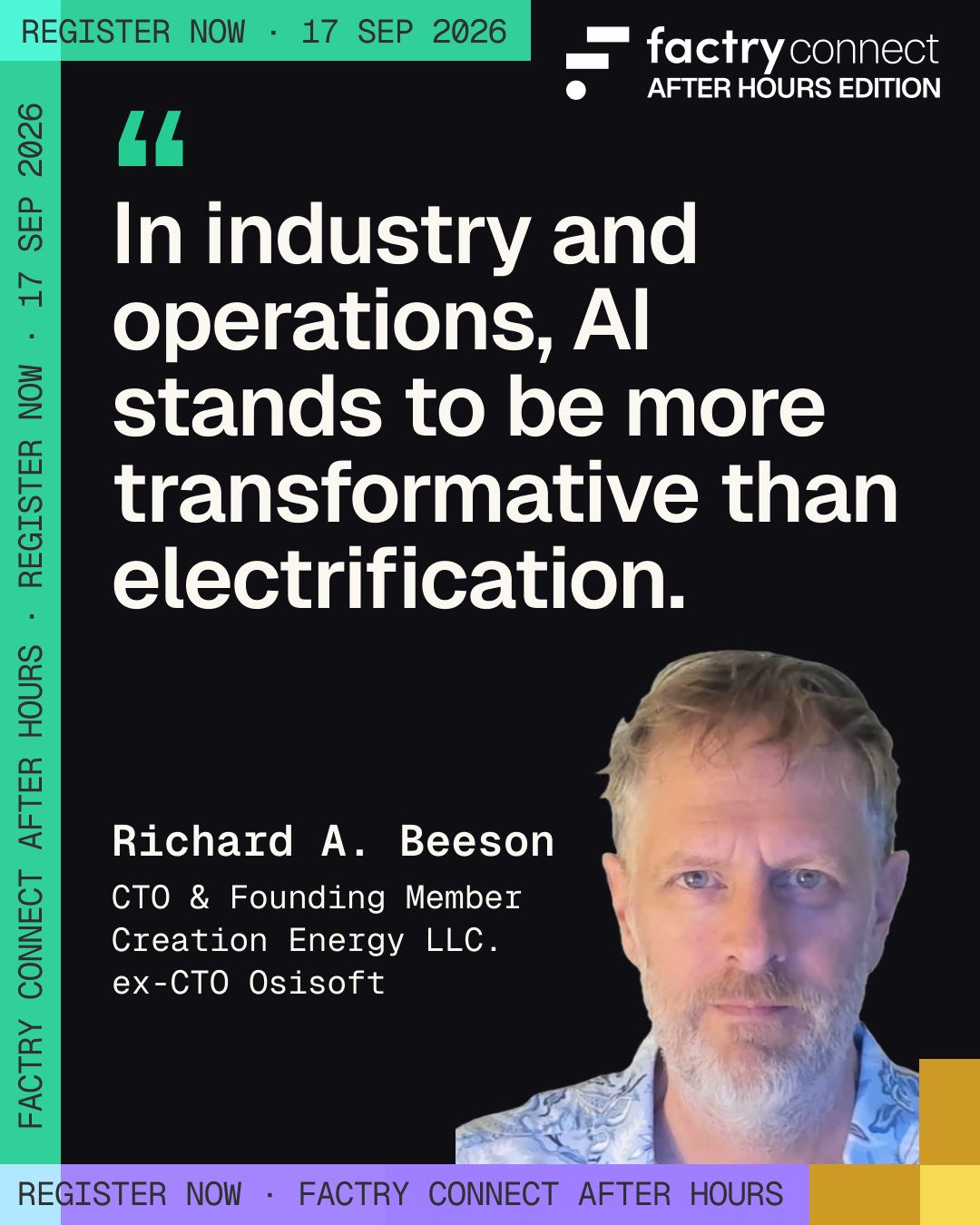
- Richard Beeson joins our panel at Factry Connect After Hours 2026 along with Frederik De Bosschere, Christophe Rosseel, and Jeroen Coussement With more than 30 years in the industry, Richard spent most of his career creating enterprise information software and systems for the OT crowd. We asked him about how he sees open data and AI playing out in the near future. Here's what he had to say: "When I reflect on Open Data, historically two dimensions stick out, Ownership and Access. Personal information, operational
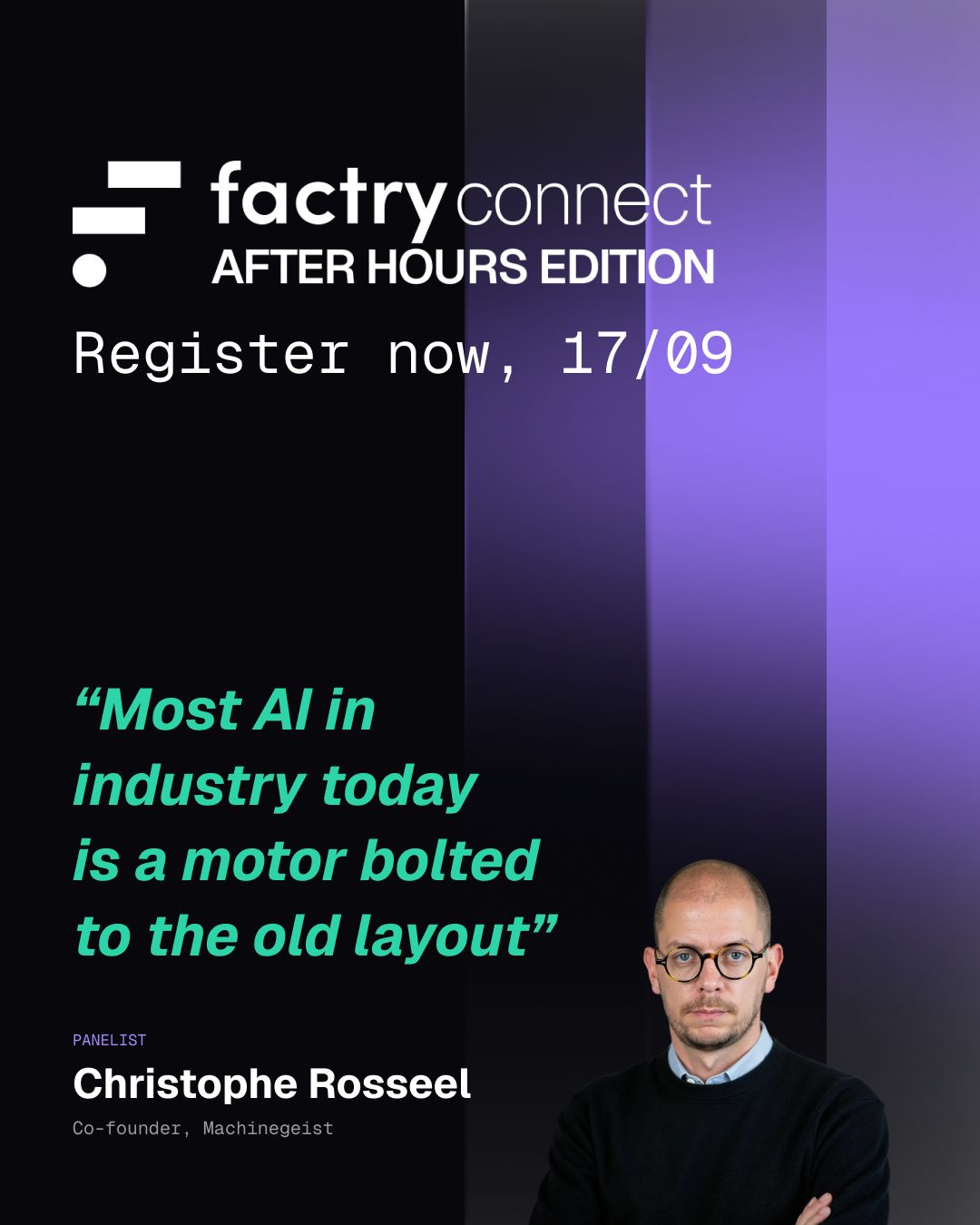
- Christophe Rosseel (co-founder, Machinegeist) joins the panel at Factry Connect After Hours, 17/09. An evening on open data and AI, with Jeroen Coussement and Richard A. Beeson III . All moderated by Frederik De Bosschere. https://lnkd.in/e597KaMe
- 40 years of industrial data history. And the next 4 will change more than all of it. That's the tension we're unpacking at Factry Connect After Hours, 17 September in Ghent. On stage: Jeroen Coussement (CEO, Factry) opens the evening Richard Beeson (30+ years in industrial data software) on History of the Historian: time-series, AI, and the second half of the chessboard Then both join Christophe Rosseel (Machinegeist) and Frederik De Bosschere (In The Pocket) for a panel on open data & AI After that: walking dinner and drinks with
- Data Readiness for AI, and (among other things) how reframing raw data into contextualized, trustworthy information is the necessary layer in between. Interesting piece by Bert Baeck, definitely worth a read.
- You wouldn't print and fax a PDF. The problem of sending a document has been solved by technology built for it from the ground up. The same is true for industrial data. Thirty years ago, historians were built to get data out of control systems and archive it. And (don't quote me on this) they're still really good at it. Since then, they've evolved. Just not as fast as everything around them. Databases, reporting tools, broader integrations, and now AI, have moved well beyond what legacy historians can keep up with. The good news:
- Nobody ever budgets the glue. One thing we rarely talk about is where the cost of fragmented systems actually shows up. It's buried in headcount. It's the engineer or production manager who spends two days a week moving data between isolated plant systems, so that someone, somewhere, can make a report. Every report becomes a small project. Updating it means going after that data all over again. Point solutions solve a specific problem. They were never designed to talk to each other. The integration cost never makes it onto the
- The oldest controller we recently needed to integrate was 40 years old. It's still running. Still generating data. Still part of how that plant operates. Any data layer you put on top needs to think on that timescale, not on the timescale of the dashboard someone built last quarter. Because here's what that longevity actually buys you: the ability to build use cases you haven't thought of yet. AI applications that didn't exist two years ago can run on data that's been structured and stored correctly for a decade. The analytics use
Related profiles

This page shows public professional information only, each fact cited. Is this you? send a correction, or ask for removal within 24 hours, no questions asked.