
Overview
Jochem Hoes is a co-founder and chief technology officer of crypdefi, and is based in Antwerp. Since January 2024 he has also been a co-founder of Fortkey.
He worked as a business analyst at Deloitte from September 2021 to April 2024. Earlier he held a student position in purchasing at Glacio NV between July 2018 and September 2021, and interned at Rombit in July and August 2020. His first recorded role was as a student at Belgian Ice Cream Group from July 2016 to September 2017.
Hoes studied at KU Leuven, where he completed a bachelor's degree in computer engineering between 2016 and 2019 and a master's degree in electrical and electronic engineering between 2019 and 2021.
Career history

In the news
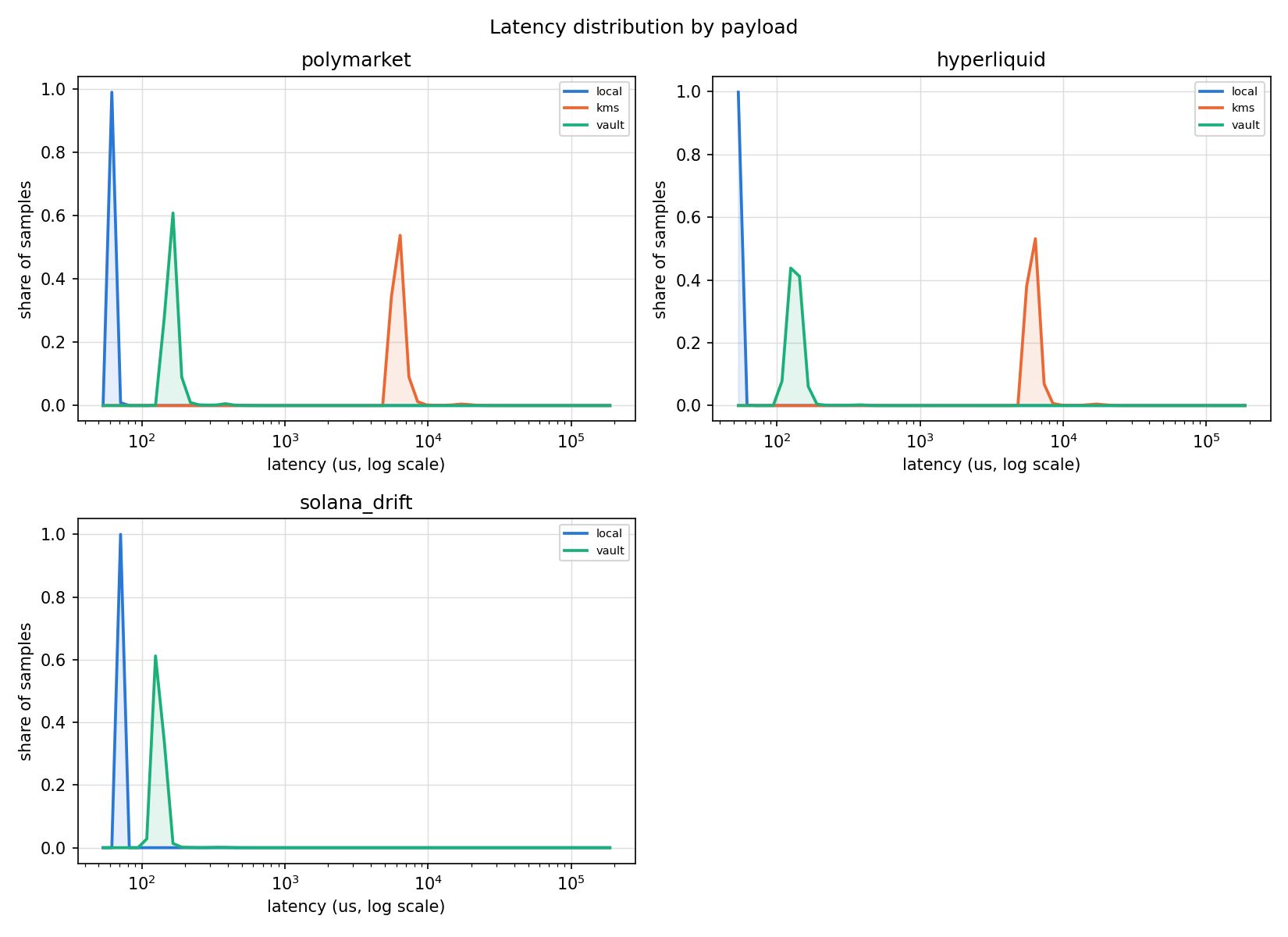
- Keeping the signing key in plaintext on the trading box costs 52μs per signature. Sealing it in an enclave with policy enforced on every signature: 133μs. The whole price of doing it properly: about 80μs, still under a millisecond at p99.9. Jochem Hoes ran 5 million signatures per payload type to get this number. Full tables and the caveats in the first comment.
- It was a lot of fun to push our own solution to it's limits! While talking to traders about our HFT Vaults, we always get the question "How does it compare to X". This article gives some honest answers to how we compare today and where we will be pushing towards next.
- We ran 20,000 signatures through AWS KMS. Every single one took longer than a millisecond. The same payloads through our HFT Vault: 133 microseconds median, still under a millisecond at p99.9, with policy enforced on every signature. Jochem Hoes published the full benchmark: methodology, every percentile, and the caveats. If you sign anything latency-sensitive, it's worth ten minutes.
- I'm excited for the rebrand we've been building up over the two last months! The new name reflects our ongoing focus on fortifying on-chain keys. Now pushing signing latencies even below 1ms for low latency trading, while still staying firmly in control over every transaction you sign.
- Spent Thursday afternoon at the STAC event at NPL in Teddington, and I came away thinking about clocks more than qubits. I knew trading infrastructure needed accurate time, but the level these systems actually operate at genuinely surprised me. What stuck with me most was the mental flip on GNSS: we all think of it as positioning, but underneath its a network of atomic clocks broadcasting time, and position is just something you calculate from that. Turning it around and using the satellites purely as a time reference for your
- It was a great experience working with the Station70 to get this integration going. Very easy collaboration, good docs, and a smooth integration! I'm happy we were able to set this up for our clients, disaster recovery was and remains a primary concern for them.
- The panels were good, but the people were the real takeaway. The traders and LPs in that room are the ones who underpin this stuff. Real capital, deep books, and most of them have been around long enough to not care about whatever the current narrative is. That's the part you can't fake or outspend. Those are the people who'll build fast, deep, trustworthy on-chain finance. Looking forward to what's next.
- For trading firms with on-chain, low-latency trading, a common practice is still to sign with generic private keys that have very little context on what they actually sign. We have fixed that! Self-custody is powerful, but needs to be done right.
Related profiles

This page shows public professional information only, each fact cited. Is this you? send a correction, or ask for removal within 24 hours, no questions asked.