
Overview
His most cited work includes Cycling of conventional power plants: technical limits and actual costs (2015), The flow-based market coupling in central western Europe (2016) and the LUSYM unit commitment model (2015), with 1,543 citations in total.
Kenneth Van den Bergh is co-founder and CEO of Carbon+Alt+Delete, a carbon accounting software company headquartered in Mechelen with a second office in London. He founded the company in 2020 together with Hanspeter Höschle, who is CTO; both hold PhDs in engineering sciences from KU Leuven. The legal entity Carbon+Alt+Delete SRL was incorporated on 29 October 2020. The software is built for sustainability consultancies. It collects business data such as energy consumption and purchased goods, converts it into scope 1, 2 and 3 emissions, and simulates reduction scenarios. Named clients include BDO, Climact, Encon, First Climate, Forvis Mazars, Nordic Sustainability and Sitowise. In August 2022 the company raised €600,000 from Silverfin co-founder Tim Vandecasteele and a group of angel investors, at a point when 50+ companies across Europe used the software. By November 2025, when Carbon+Alt+Delete announced a partnership with ESG reporting platform Karomia, 150+ consultancies used the platform to manage the carbon footprints of 1,500+ companies. The company is a Certified B Corporation, ISO 27001 certified and a founding member of the Carbon Accounting Alliance. Environmental Business Review named it Top Carbon Accounting Software in Europe 2026.
Career history

Insights & ideas
The through-line
Kenneth Van Den Bergh's recurring preoccupation is that climate change will be solved not by scientific truth-telling or labels, but by rigorous measurement and accounting, in the same way financial accounting disciplines an economy. He frames this explicitly: "we should track carbon emissions with the same rigor we apply to financial accounting" [18], built on the premise of a finite "carbon budget" of approximately 600 gigatonnes before 1.5°C is breached [18]. Over time this position has matured from a binary view of corporate climate credentials into a more layered one. He describes the shift himself: "2010–2020: The label era... 2020–2030: The target era" where "good" companies now "acknowledge they are not net zero today, but they set science-based targets and outline a credible transition pathway," while conceding "setting a target is often easier than achieving it" [9]. The through-line has moved from advocating for measurement to interrogating whether measurement and targets actually translate into delivery.
On carbon accounting and reporting standards
Van Den Bergh tracks the granular evolution of reporting frameworks closely, treating standards convergence and new mandates as central to his work. He notes that "As of 2028, there should be no more differences between ISO 14064 and the GHGP Corporate Standard," while flagging unresolved fights such as "the battle on discounting of emissions from capital goods over time" [11]. He follows new frameworks like the Land Sector and Removals Standard, which "takes effect for 2027 carbon reporting, with companies submitting results in 2028" [2], and the ISO's parallel net-zero efforts: "ISO/DIS 14060 Net Zero Aligned Organizations Standard" covering "Scope 1, 2 & 3 targets, transition plans, and strict rules on carbon credits" [14], alongside "ISO 32212 Sustainable finance" for financial institutions [14]. On CSRD specifically, he explains carbon footprint as "a mandatory component," embedded in "E1 climate disclosure requirements," with companies required to "update their scope 1 and 2 emissions annually and scope 3 emissions at least every two years" [17].
On whether reporting mandates actually cut emissions
A recurring test he applies to regulation is whether it delivers real mitigation, not just paperwork. Citing the UK's SECR review, he states "SECR reporting is linked to real emissions reductions," with "in-scope companies used 4.5-6.2% less energy than a comparable 'synthetic' group of similar but unregulated businesses," though "about 25% of compliers said SECR itself drove a reduction in their energy use" [5]. He also emphasizes cost-effectiveness: "£2.72 in benefits... for every £1 of cost" [5], reflecting his broader stance that "we report on carbon emissions to reduce them" [5].
On net-zero credibility and target-setting
Van Den Bergh is attentive to the mechanics of how corporate net-zero claims are judged legitimate. He lays out three competing philosophies on market interventions: "The Permissive Patch," "The Negotiated Path," and "The Contribution Path," ranging from "most interventions are target-fulfilling" to "no interventions are target-fulfilling, they are just contributions" [7]. He distinguishes "Unconditional" targets, "what companies can deliver through its own decisions," from "Conditional" ones that "depend on policy, infrastructure, markets, innovation" [7]. This connects to his broader narrative of the "target era," where credibility now hinges on transition pathways rather than labels, even as achievement lags ambition [9].
On financing the transition
Van Den Bergh also engages with the macro-financing question behind climate adaptation and mitigation, arguing affordability is a matter of priorities rather than absolute scarcity. He calculates that a headline climate cost is "0.4% of European GDP," which is "substantial... but not unfeasible" [1], and points to existing pools of money that could be redirected, noting NATO's 1.5% GDP commitment on "broader security" "seems to overlap with climate adaptation," and that "fossil fuel subsidies are still in the range of €50-100bn per year," concluding "we are still subsidising the cause of all this trouble" [1]. This is paired with urgency drawn from direct experience: after "the biggest nature fire in our country's history" in Belgium, he states "2027 is likely to be even hotter," giving "9 months to prepare (adaptation) and to accelerate the fight against the root cause (mitigation)" [3].
From the stage
In his TEDx talks, Van Den Bergh makes an argument not present in his written posts: that scientific truth alone is an ineffective lever for climate action, framing the talk explicitly around "Why Scientific Truth Is Not Working for Climate Change" [16], and instead positioning accountants as the profession poised to solve the problem, built on the finite carbon budget framing of roughly 600 gigatonnes remaining before 1.5°C [18]. On the AtlasZero podcast, he goes into more procedural depth on CSRD than any post, detailing that E1 disclosure "encompasses nine disclosure items including energy consumption, carbon emissions across scopes 1-3, climate targets, governance, action plans, and climate risks" [17], with carbon footprint work serving as "a foundational input for the broader climate reporting obligations" [17].
Takeaways
- Track the ISO/GHG Protocol convergence deadline: "no more differences between ISO 14064 and the GHGP Corporate Standard" as of 2028, with capital goods discounting still contested [11].
- If preparing for CSRD, note that scope 1 and 2 emissions need annual updates and scope 3 at least biennial updates under E1 [17].
- Corporate net-zero claims should be evaluated against which of the three market-intervention philosophies (Permissive Patch, Negotiated Path, Contribution Path) an organization implicitly follows [7].
- Reporting mandates can work: SECR-regulated firms cut energy use 4.5-6.2% versus unregulated peers, at a benefit-cost ratio of £2.72 to £1 [5].
- Climate finance gaps are addressable by redirecting existing spending, such as the €50-100bn in annual fossil fuel subsidies or NATO's 1.5% GDP "broader security" commitment [1].
- Land Sector and Removals Standard reporting requirements take effect for 2027 emissions, with submissions due in 2028, relevant for companies in land sector value chains [2].
Media & appearances
- Daniel from AtlasZeroYouTubeThe Carbon Footprint in your CSRD report - with Kenneth Van den BerghKenneth Van Den Bergh discusses how carbon footprint calculation is a mandatory component of CSRD reporting, particularly within the E1 climate disclosure requirements, which encompasses nine disclosure items including energy consumption, carbon emissions across scopes 1-3, climate targets, governance, action plans, and climate risks. He explains that companies must update their scope 1 and 2 emissions annually and scope 3 emissions at least every two years, with carbon footprint serving as a foundational input for the broader climate reporting obligations under CSRD.
- TEDx TalksYouTubeWhy Accountants will Solve Climate Change | Kenneth Van den Bergh | TEDxKULeuvenBrusselsKenneth Van Den Bergh explains that humanity has a finite "carbon budget" of approximately 600 gigatonnes of emissions remaining before reaching a 1.5 degrees Celsius temperature increase, and argues that we should track carbon emissions with the same rigor we apply to financial accounting.
- TEDx TalksYouTubeWhy Scientific Truth Is Not Working for Climate Change | Kenneth Van den Bergh | TEDxKULeuven
In the news
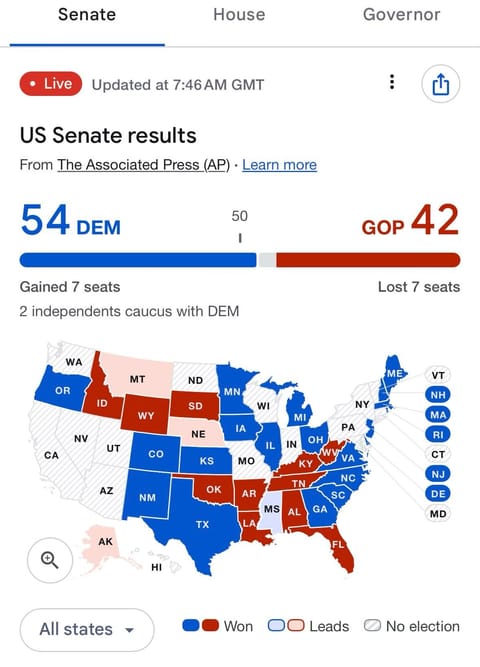
- Great summary on how the midterms might (not) impact US Climate policy.
- Carbon+Alt+DeleteDelete est désormais certifié Bilan Carbone® par L'Association Bilan Carbone Nous sommes la première plateforme certifiée Bilan Carbone® qui travaille exclusivement avec des consultants. Chez nous, les consultants ne sont pas une offre complémentaire: toute la plateforme est construite autour de leurs missions, de la collecte des données chez leurs clients jusqu’au plan de transition, avec un accès dédié pour les auditeurs aux données et aux pièces justificatives. Ce que cela change pour les cabinets qui réalisent

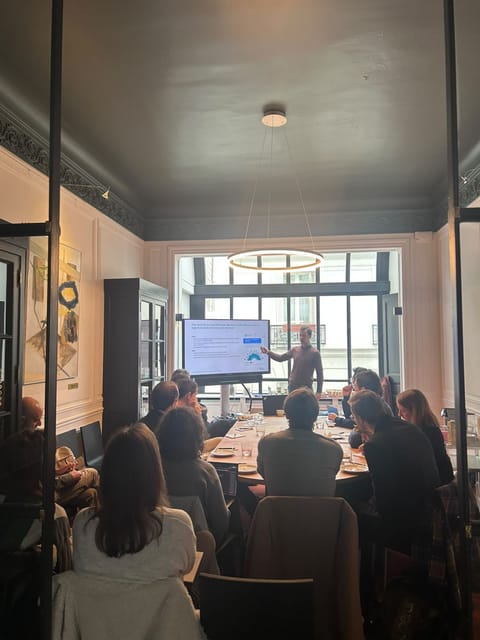
- Today my colleague Ines Vanderzande and I travelled to Paris to host another Lunch & Learn session. This time we dove into the Land Sector Removal Standard, which remains a highly relevant and debatable topic. We also got some great news right on time to share with the attendees. Carbon+Alt+Delete got it's Association Bilan Carbone certificate as the first 'consultancy only' carbon accounting platform! 🎉
- Since a few weeks now, we're having a new member in our carbon experts team! 🇮🇪 Paul Stephenson joined us as a carbon expert and will focus on carbon-related frameworks bringing updates and new features while our software remains compliant. Besides that, he will also keep an eye on our community channel to make sure all technical questions get the answer they deserve. 🤝 Very excited to have Paul on board and looking forward to making more impact together. Welcome Paul! 🙌 Carbon+Alt+Delete
- The summer of 2026 will be remembered as the moment Europe realised that climate adaptation is not only something for the Global South. It is a European issue too. In January 2026, a study for the European Commission (DG CLIMA) put a price tag on it. As if they knew what was coming. The EU needs around €69 billion per year to prepare for the climate risks expected by 2050. That is about 0.46% of EU GDP. To put that number in perspective: ✔️ It is substantial for an economy growing 1 to 2% per year. ✔️ It is more than six times
- Berichtje voor mijn netwerk in Mechelen. Sinds enkele jaren zitten we met Carbon+Alt+Delete in de superleuke, community-based co-working space The Colab in Mechelen. In januari verhuizen we mee naar de Impact Factory, de nieuwe place-to-be voor impact bedrijven. Dit betekent dat het kantoor van The Colab een nieuwe huurder zoekt: * Vlakbij station (Hendrik Consciencestraat 5) * Volledig en gezellig ingericht voor 20-40 mensen * Ideaal voor groeibedrijven in Mechelen * Beschikbaar vanaf 1 januari 2027 (meer info in reactie onderaan
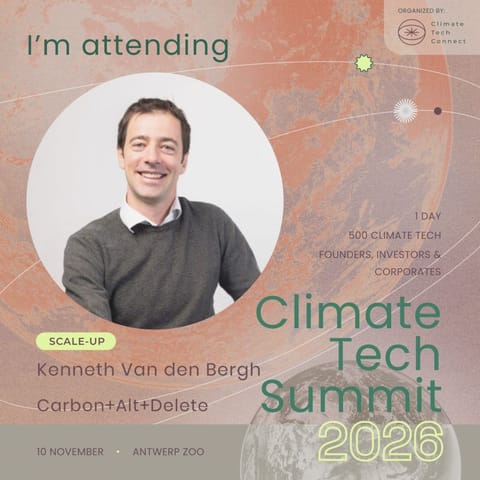
- Very excited to be attending the Climate Tech Summit 2026 at Antwerp Zoo, themed around building resilience! Organised by Climate Tech Connect, the summit brings together a curated group of climate tech founders, investors, ecosystem players and corporates from across the Benelux and beyond. Looking forward to a day of sector deep-dives, matchmaking and great conversations. See you there! Antwerp Zoo | November 10th | 08:30 - 17:15 Sign up here: https://lnkd.in/eYWy4iFU
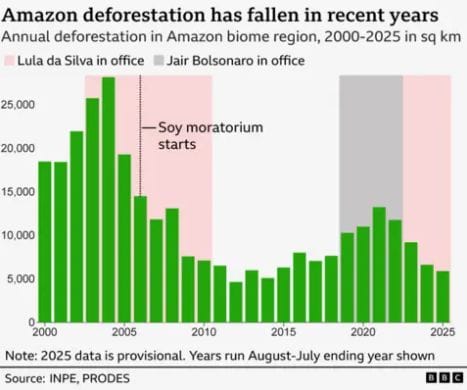
- Last Sunday could prove to be one of the most significant days of the year for climate action. Under a Lula presidency, the Amazon is far better protected than it would be under a Bolsonaro presidency.
Related profiles
This page shows public professional information only, each fact cited. Is this you? send a correction, or ask for removal within 24 hours, no questions asked.