
Overview
Koen Van De Putte is CEO of Olympus Mobility, a Brussels-based mobility platform offering access to over 35 mobility services through a single app.
Koen Van De Putte is the CEO of Olympus Mobility, a position he has held since September 2015. He is based in Brussels.
His career has been closely tied to NMBS-SNCB, which he joined in June 1995 for work in ICT management and business development until June 2006, returning in November 2008 as Director Corporate & Change Office until April 2014 and then working in Marketing & Sales Rail from May 2014 to June 2015. Between those periods at the railway operator he was programme director for public transport ticketing at Syntigo from July 2006 to November 2008. He chaired the board of Blue-mobility from December 2010 to April 2014 and the board of cambio Vlaanderen from August 2013 to May 2016. Earlier, from January 1994 to June 1995, he was an IT and telecom manager in the Belgian Army.
He studied civil electrotechnical engineering and physics at Ghent University from 1986 to 1991, followed by an MBA in industrial management at KU Leuven, and took a programme in innovation and entrepreneurship at Vlerick Business School in 2009 and 2010.
Career history

Insights & ideas
The through-line
The single idea running through everything Koen Van De Putte says is that complexity is what stops people and companies from changing how they move. Stated plainly: "If we want people to commute more sustainably, we have to stop making it complicated" [6]. Every product move he describes is an act of subtraction, taking planning, ticketing, payment and reimbursement out of the user's hands and putting them in one flow, on the conviction that "When the sustainable option is also the easiest one, more people choose it. That has always been the goal of Olympus Mobility" [6]. The same reasoning is applied one level up, to employers: fleet management has grown more complex through hybrid and electric vehicles, mobility budgets and shifting regulation, and simultaneously more personalised toward the individual employee, so companies now need advisory support and digital tools rather than a fleet manager expected to master every practical, fiscal and regulatory detail [12].
The second, harder-edged half of the through-line is that simplicity has to be paid for. He is unsentimental about mobility services that do not cover their own costs, and he holds his own company to the same standard, refusing to open up to consumers until the economics work [10]. Around both sits a consistent preference for doing this with partners and in good faith: trust, decent service, supporting each other when something goes wrong, dealing with each other as human beings are what make people want to work together [2].
On making the sustainable option the easiest one
The concrete work is integration, mode by mode. De Lijn route planning and realtime information have been added to the Olympus Mobility and KBC app, so bus and tram planning, easy ticket purchase and realtime information arrive at once, built together with KBC Bank & Verzekering and Belgian Mobility Company [1]. That followed a renewed NMBS ticket flow in Olympus and the KBC app, where route planning and realtime information were also added [1]. He frames all of it as a continuation of the "Mobility matcher" project, whose purpose is to make train plus last mile easy as an alternative to the car: planning, buying a ticket or reserving transport, and following your journey in realtime, each step a little smoother [1]. His argument to the sceptic is a range argument, that with train plus bus, tram, metro, Blue-bike, cambio car sharing in Vlaanderen and other shared modes "geraak een stuk verder dan je zou denken" [1].
The same logic extends beyond public transport into purchases. UBike, an online bike shop with a large range of bikes, e-bikes and accessories, is now fully integrated into the Olympus app, so employees with a federal mobility budget can buy a bike and the necessary accessories directly in the app "with no out-of-pocket payment and no reimbursement process to manage", with delivery home, to the office, or collection at a nearby UBike shop [6]. He is deliberate about the modesty of it: "It's a simple idea, but an important one" [6].
On B2B first, and the missing consumer business model
He is open about wanting to open the Olympus Mobility app to private users, and equally open about the condition: it will happen when a revenue model has been found that covers the costs. He is convinced one exists, he simply has not found it yet, and asks anyone who has to call him [10]. That admission comes with a pointed reading of others' failures. He says he expected the Floya app to be shut down from the moment it launched, and asks what the added value was that anyone thought could be created and monetised above the costs, calling the many millions spent a waste [10].
So the focus stays on B2B, with two clearly distinguished segments. Freelancers and small companies are invited to put parking, train, bus, shared car and bike, fuel and charging on a single invoice, registering directly in the app, something he notes is particularly useful now that 4411 has stopped selling train tickets [10]. Medium and large companies are addressed on management of their mobility policy and mobility budget [10]. B2C is deferred, not abandoned: he insists he will find a profitable consumer business model one day [10].
On the mobility budget debate
He reads the policy debate critically and dislikes how much of it is self-interested. Commenting on an analysis arguing that the success of the mobility budget mainly shows that employees have already reinvented their own mobility, he calls those sensible words, "Breder dan het gelobby vanuit eigen belangen dat je zo dikwijls leest" [11]. On the substantive economics he agrees that the TCO calculation is too complex [9], but he thinks the debate is missing something: the factor of the unlimited fuel or charging card and the highly variable cost it represents for companies, which he finds a strange thing to leave out [9].
Olympus Mobility contributed to the evidence base by making a representative, anonymised sample of data available to KPMG Belgium so their study, covered in De Tijd, could be carried out properly and scientifically, and he recommends the chapter on the origin context of the federal mobility budget as genuinely interesting [9]. He also polices how his company is represented in that coverage, correcting the name to Olympus Mobility rather than Olympus and questioning where a cited market share figure came from [9]. The image he offers for what the mobility budget could symbolise is deliberately ordinary: a nice house with a car in front of the door [9].
On partnerships with HR and payroll players
The route to employers runs through HR. He is proud to be one of the first partners of Liantis, where the partnership lets companies unpick the statutory mobility budget without much work of their own, described as simply pulling up a chair to the table, and he thanks the service owners and marketing colleagues who steered the collaboration [3]. With Attentia the framing is the same and the ambition is stated most clearly: together they make sure the mobility budget is no longer a separate story but a self-evident part of HR and pay policy [5]. The division of labour is explicit, with Attentia's DOTS tool giving employers overview and correct processing while employees fill in their own mobility through the Olympus Mobility app, producing "Minder complexiteit, meer transparantie en een oplossing die duidelijk écht werkt in de praktijk" [5].
What he values in these relationships is not the contract but the texture: involvement, trust and shared ambition, strong bonds formed with a whole team, and enough warmth to hide something tasty in a partner's office and let colleagues go looking for it [3][5]. That is consistent with what he says makes collaboration work at all, namely trust in each other, good service, backing each other up when something goes wrong, and treating each other as people [2].
On meeting customers where they are
Sales, in his telling, is a matter of accommodating the customer's timetable rather than your own. "Tegemoet komen aan je toekomstige klanten is essentieel" [8], which in practice meant offering mobility budget demos late into the night: with a Rode Duivels match against the USA starting after midnight, mobility adviser Stijn Devriendt gave information on the mobility budget from 22:00 until an hour before kick-off, leaving time to set out the beers and crisps, with bookings via the website mentioning "Rode duivels USA Special" [8]. Daytime slots stayed available for the rest of the tournament and the summer, with only the match itself blocked out [8]. The tone is light, the underlying rule is not.
On complexity for fleet managers and employers
Fleet has become both more complicated and more individual. Multiple mobility options, hybrid and electric vehicles, mobility budgets and changing regulations have made the domain harder, while at the same time it has become more personalised toward individual employee needs [12]. His conclusion is that the expectation placed on the fleet manager has become unreasonable, since no one person can be an expert across all the practical, fiscal and regulatory aspects of modern mobility, and that companies therefore need both advisory support and digital tools to find their way through [12]. This is the employer-side version of his consumer argument: the answer to complexity is not more effort from the person in the middle, it is better tooling and better advice around them.
On working rhythm and staying open
He treats slower months as a resource rather than dead time. When the holiday months start and the work rhythm drops, he deliberately makes room for herbronning and inspiration, "om serendipiteit toe laten", freeing up time to catch up, meet new people and have interesting encounters [7]. He advertises the topics he wants to be approached about, entrepreneurship whether or not in Gent, life as it is, mobility and new business models, the mobility budget and Olympus Mobility, IT and AI, technology and quantum computing, or simply getting acquainted, and offers to find a pleasant terrace in Gent for anyone who sends a DM [7]. He is similarly candid about the annual ritual of clearing the mailbox before leave starts, which he treats as a check on your own organisational capacity [4].
Takeaways
- Design for the path of least resistance: "When the sustainable option is also the easiest one, more people choose it" [6].
- Integration should collapse several steps into one, as with De Lijn and NMBS route planning, ticket purchase and realtime information inside the Olympus Mobility and KBC app [1].
- Remove the financial friction, not just the interface friction: mobility budget holders buy bikes and accessories in-app with no out-of-pocket payment and no reimbursement process to manage [6].
- Do not launch a consumer proposition before the revenue model covers the costs, and ask hard what value a service creates above what it spends before praising it [10].
- Segment B2B clearly: single-invoice simplicity for freelancers and small companies, mobility policy and budget management for medium and large ones [10].
- Land the mobility budget inside existing HR and pay processes through partners like Liantis and Attentia, so it stops being a separate story [3][5].
- Add the unlimited fuel or charging card and its highly variable cost to the mobility budget debate, alongside the acknowledged over-complexity of TCO calculation [9].
- Stop expecting fleet managers to be experts in every practical, fiscal and regulatory aspect of modern mobility, and give them advice plus digital tools instead [12].
Media & appearances
- dVO, de Vlaamse OndernemerYouTubedVO Buzz: ʻWelke impact zal de nieuwe mobiliteit hebben op het Fleet-gebeurenʼKoen Van De Putte discusses how fleet management has become more complex due to multiple mobility options including hybrid and electric vehicles, mobility budgets, and changing regulations, while also becoming more personalized toward individual employee needs. He explains that companies now require advisory support and digital tools to navigate this complexity, as fleet managers can no longer be expected to be experts across all the practical, fiscal, and regulatory aspects of modern mobility.
In the news
- Sinds enkele dagen is ook De Lijn routeplanning en realtime informatie beschikbaar in de Olympus Mobility en KBC app 👊 Routeplanning Bus/tram, vlot tickets kopen én realtime informatie inééns. Een mooie realisatie samen met KBC Bank & Verzekering en Belgian Mobility Company. 🚊 Een tijd geleden lanceerden we onze vernieuwde NMBS ticketflow in Olympus en KBC app. Ook daar voegden we al routeplanning en realtime info toe. 💡 Dit is een verderzetting van ons 'Mobility matcher' project waar we trein + last mile gemakkelijk maken
- Ik repost niet alle company posts maar deze graag wel. Vertrouwen in elkaar, goede service bieden en elkaar ondersteunen als er iets verkeerd gaat, menselijk met elkaar om gaan, ... Deze dingen zorgen er voor dat je graag samenwerkt.
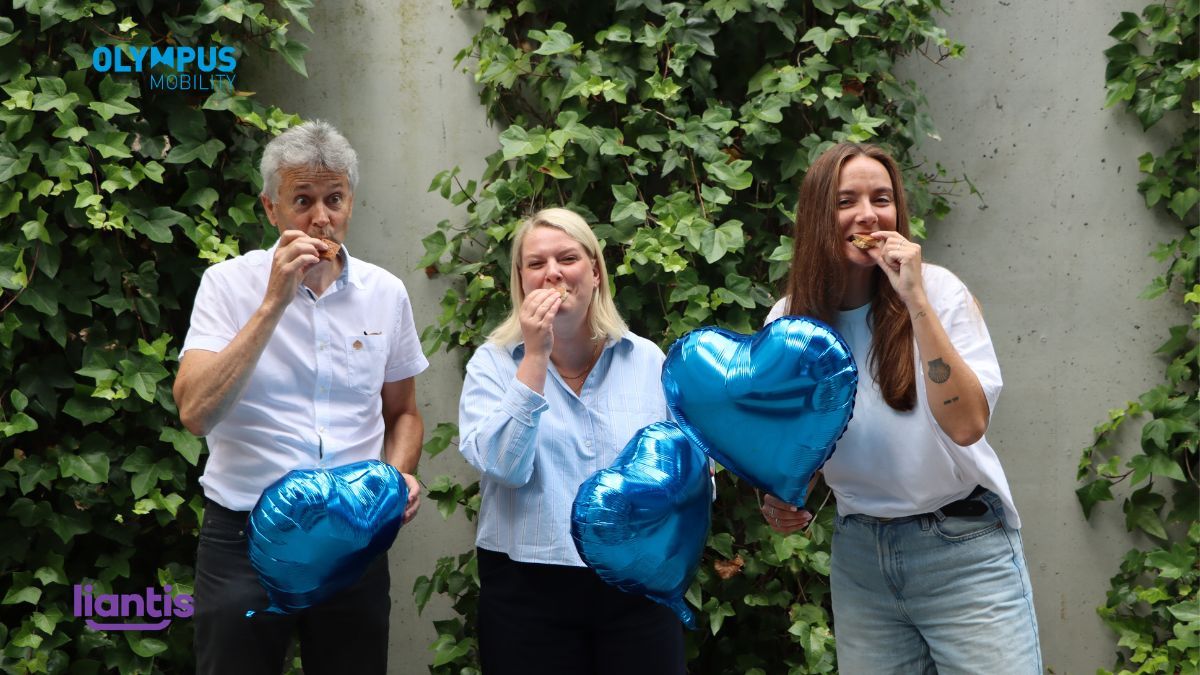
- Koekjes, taart en het mobiliteitsbudget. Alleen maar lekkers bij Liantis. 🍰 Dankzij het partnership tussen Olympus Mobility en Liantis scoren bedrijven een heerlijk competitief voordeel. Zonder al te veel werk: gewoon aanschuiven aan tafel en klaar. 😋 Van groot tot klein: samen ondersteunen we elk bedrijf bij het uitpluizen van het wettelijk mobiliteitsbudget. Bedankt, Kaat De Beuckelaer en alle betrokken collega's (van service owners tot marketing), om onze samenwerking in goede banen te leiden. We zijn vereerd om een van de
- Voila, we zijn er geraakt enkele dagen voor mijn verlof start. 🦾 👊 Elk jaar toch een opdrachtje om die mailbox leeg te krijgen. Is ook een check momentje voor je organisatie vermogen, hé hé 🏃♂️➡️
- Ons partnership met Attentia, da's er eentje met véél plezier en energie. Om onze samenwerking even te vieren, gingen we even langs in hun kantoor in Gent. 🙌 Attentia is voor ons niet zomaar een partner. Het is een samenwerking waar betrokkenheid, vertrouwen en dezelfde ambitie samenkomen. Guy Van Hauwermeiren, Eefje. Dulsster en het hele team: bedankt voor de sterke banden die we vormden. Samen zorgen we dat het mobiliteitsbudget geen los verhaal meer is, maar een vanzelfsprekend deel van het HR- en loonbeleid. Dankzij de
- If we want people to commute more sustainably, we have to stop making it complicated. 💡 I'm pleased to share a meaningful step forward: UBike, an online bike shop with a large range of bikes, e-bikes and accessories, is now fully integrated into the Olympus app. 🚲 ✨ Employees with a federal mobility budget can purchase a bike, along with the necessary accessories, directly within the app with no out-of-pocket payment and no reimbursement process to manage. Orders are delivered to their home, office, or can be collected at a
- Zomer = tijd = bijbabbelen ? 😎 De vakantiemaanden zijn gestart en het ritme werk daalt. Tijd om even ruimte te maken voor herbronning en inspiratie, om serendipiteit toe laten. Dus ook deze zomer maak ik tijd vrij om bij te babbelen, kennis te maken en interessante ontmoetingen te hebben. Interesse in een koffie of pintje en bijbabbelen of sparren over : #ondernemen al dan niet in #Gent #hetlevenzoalshetis #mobiliteit en #nieuweBusinessModellen #mobiliteitsbudget, Olympus Mobility, ... #IT en #AI #technologie en #quantumcomputing
- EXTRA TIME: Olympus Mobility geeft demo’s tot 1 uur ‘s nachts ⚽️😎 Tegemoet komen aan je toekomstige klanten is essentieel. Wanneer jullie wakker willen blijven om te supporteren, dan zorgen wij dat die tijd extra nuttig gebruikt kan worden. Je raadt het: tijdens de match van de Rode Duivels tegen de USA in de nacht van maandag tot dinsdag staan we klaar voor jullie. Onze mobiliteitsadviseur Stijn Devriendt geeft info over het mobiliteitsbudget vanaf 22 uur tot een uurtje voor de match, 1 uur dus (pintjes en chips moeten ook
Related profiles
This page shows public professional information only, each fact cited. Is this you? send a correction, or ask for removal within 24 hours, no questions asked.