
Overview
Kristof Van Tomme is CEO of Pronovix, a role he has held since October 2005, and is based in Gent. His stated areas of expertise are developer portals, open source, API documentation, developer documentation and strategy. Since June 2020 he has hosted the API Resilience and Developer Success podcasts.
He was project lead on WalkHub from August 2012 to September 2017 and on LinkForward during 2015. Earlier he was CEO of Transmentix KFT from 2006 to 2008 and COO of Avicor Kft between June 2006 and January 2008, and before that technology manager at biopolisz from January 2005 to July 2006. In 2003 and 2004 he was an account executive at Petrus Communications and an international board member of the Erasmus Student Network.
Van Tomme studied bio-engineering, specialising in cell and gene biotechnology, at Ghent University from 1998 to 2004, including an Erasmus semester at the Universidad Politecnica de Valencia in 2002. He attended MIC Brussels in 2011 and 2012, founded BootCircle in 2014, and has been part of the Drupal community since 2006.
Career history

Insights & ideas
The through-line
Everything here circles one question: how does an organisation make its capabilities understandable and findable by the people who need them, and who is responsible when that fails. The starting point was technical documentation, specifically the problem of reuse and delivery across different channels, which led on to graph databases as a way of serving people the right information based on who they are [14][15]. That same concern later hardened into a business practice, developer portal consulting and implementation approached as a single domain to be studied deeply through research, community engagement and industry events [13]. The most recent thinking extends the line to machine consumers: MCP servers, AI-mediated discovery, and AI-native documentation workflows [1][3][12].
The constant across all of it is a refusal to let internal structure dictate external interface. Documentation should be assembled around the reader rather than around where it was authored [14][15]; APIs and MCP servers should be bundled around what customers need rather than around the organisation's historical domain model [1]; and the business meaning of a capability is not the property of whoever happens to have built it [5].
On deliberate boundaries and the MCP moment
The case against letting your organisation's historical domain model define your interface architecture is that it exposes your customers to your internal complexity and produces a suboptimal Developer eXperience [1]. This is the frame applied to MCP: roughly three architectures exist depending on how you package capabilities, and translating an existing API landscape one-to-one into MCP servers is the easy choice rather than the right one [1]. The framing is that "MCP gives you another chance to rethink your capability bundles" [1], a second opportunity to make a deliberate boundary choice rather than inheriting one. The fact that hosts can compose capabilities as needed does not remove the obligation to package them well in the first place [1].
On who owns the business meaning of APIs
The ownership question is posed deliberately as uncomfortable, because the answer is not a single role and the work will remain collaborative, with no single team seeing the whole situation from a neutral position [5]. What resolves it is consequence rather than org chart: "if a business line depends on digital capabilities being understood and adopted, then business leadership owns the consequence of whether this system works" [5]. That does not mean business leadership should own the portal. It means they need a clear enough view of the relationships between the API program, the developer portal, the solution content, competitor positioning, and AI-mediated discovery to decide what should happen next [5].
On AI-mediated discovery and share of voice
AI-mediated discovery is treated as one of the relationships business leadership has to hold in view alongside the portal and competitor positioning [5], and it has a measurable surface. The relevant question for an API program is what its brand's share of voice is for the program's core capabilities, an input into an AI visibility strategy rather than a vanity metric [3]. The reporting exists to help customers decide whether to work with Pronovix in the first place [3].
On AI-native documentation workflows
The open problem in AI-native work is not generation, it is coordination. The specific gap is how to coordinate between roles to create effective business docs that complement API descriptions [12], which places the difficulty in the seam between the reference material a machine can emit and the explanatory material that makes a capability adoptable. The Workflow Lab is framed as an invitation to people already working on AI-native workflows for their API documentation rather than as a finished method [12]. Context-aware engineering agents, and the move beyond code generation, sit in the same territory [8].
On Drupal, context engineering and human review
There is an emerging idea of a role for Drupal in an open source context engineering stack, where Drupal's value is that it would allow non technical users to review generated entities before they are added to a graph database such as Neo4j [6]. The economics are acknowledged rather than assumed away: this only makes sense for key entities where the review costs and efforts make business sense [6]. The engineering status is honest about its own limits. A proof of concept exists for content augmentation, adding AI generated fields to an entity with a markdown body, but a one-to-many generated entities proof of concept has not been done, though ECA looks like a plausible route [6]. The open call is for anyone who has built an entity extraction pipeline in Drupal for a similar purpose [6]. The same curiosity about the Drupal and AI intersection runs both directions, in Drupal applications that leverage AI and AI applications that leverage Drupal [2].
On personalised documentation and the Clippy problem
The interest in graph databases came directly out of documentation, from the problem of reuse and delivery across different channels [14][15]. What a graph makes possible is personalised, context-aware delivery, a system that serves users the right information based on who they are [14][15]. The reference point is Clippy: the ambition was right and the execution failed, and the technology may now be able to realise what Microsoft's assistant was reaching for [14][15]. The path into this work ran from bioengineering into IT through a biotech startup and then into the Drupal open source community [14][15].
On specialisation and digital proximity
The strategic position is deliberate narrowness. Pronovix specialises exclusively in developer portal consulting and implementation, and the differentiation comes from going deep into that single domain via research, community engagement and industry events [13]. The demand for that depth has a stated cause: COVID-19 acted as a catalyst that accelerated the shift from physical proximity to "digital proximity" [13]. Companies had to transform their digital interactions and their business models, and developer portals and APIs were the mechanism that made the transition possible [13].
On building the field in public
The community work is not separate from the consulting; it is the research method [13]. That shows up as MC-ing conference rooms and programming sessions on self-service integration platforms and context-aware engineering agents [8][10][11], as running the annual call for developer portal nominations [9], as opening calls for speakers on Drupal and AI [2], and as amplifying colleagues' and peers' writing rather than only one's own [3][5][7]. The MCP boundary argument itself is built by combining a colleague's article on publishing MCP servers on developer portals with Daniel Kocot's article on deliberate versus natural DDD boundary choice [1], and the context engineering stack idea came out of interviewing Daniel Kocot for the API Resilience podcast and then being pushed on it by Michael Hunger [6].
Takeaways
- Do not translate an existing API landscape one-to-one into MCP servers; treat MCP as another chance to rethink your capability bundles, since roughly three architectures exist depending on how you package capabilities [1].
- An interface built on your historical domain model exposes customers to your internal complexity and degrades Developer eXperience [1].
- Nobody owns the business meaning of APIs alone, but business leadership owns the consequence, and needs a view across the API program, the developer portal, the solution content, competitor positioning, and AI-mediated discovery [5].
- Measure share of voice for your API program's core capabilities as the concrete entry point to an AI visibility strategy [3].
- The hard part of AI-native documentation is coordinating between roles to produce business docs that complement API descriptions, not generating reference material [12].
- Human review of AI generated entities before they enter a graph database is worth building only for key entities where the review cost makes business sense [6].
- Graph databases make context-aware documentation possible, serving people the right information based on who they are, which is what Clippy was reaching for and failed to deliver [14][15].
- COVID-19 accelerated the shift from physical to "digital proximity", forcing changes to digital interactions and business models with portals and APIs as the enabling layer [13].
Media & appearances
- I'd Rather Be Writing podcastYouTubeDeveloper Portal Strategies for Complex Landscapes -- conversation with Kristof van TommeKristof Van Tomme discusses how Pronovix specializes exclusively in developer portal consulting and implementation, distinguishing itself by focusing deeply on this single domain through research, community engagement, and industry events. He explains how COVID-19 acted as a catalyst accelerating companies' shift from physical proximity to "digital proximity," requiring them to transform their digital interactions and business models, with developer portals and APIs playing a key role in enabling this transition.
- Neo4jYouTubePodcast Interview with Kristof Van Tomme, PronovixKristof Van Tomme discusses how his background as a bioengineer led him into the Drupal open source community, where he became focused on technical documentation reuse and delivery across different channels. He explains that this interest in documentation led him to graph databases and Neo4j, which he sees as enabling personalized, context-aware documentation delivery, comparing the potential to what the failed "Clippy" assistant was attempting to achieve.
- Neo4jYouTubePodcast Interview with Kristof Van Tomme, PronovixKristof Van Tomme discusses his background as a bioengineer who entered IT through a biotech startup and became involved in the Drupal open-source content management system community over ten years ago. He explains how his interest in technical documentation reuse led him to graph databases and Neo4j, specifically how graph databases could enable personalized documentation systems that serve users the right information based on who they are, potentially realizing capabilities similar to what Microsoft's Clippy aimed to achieve.
In the news
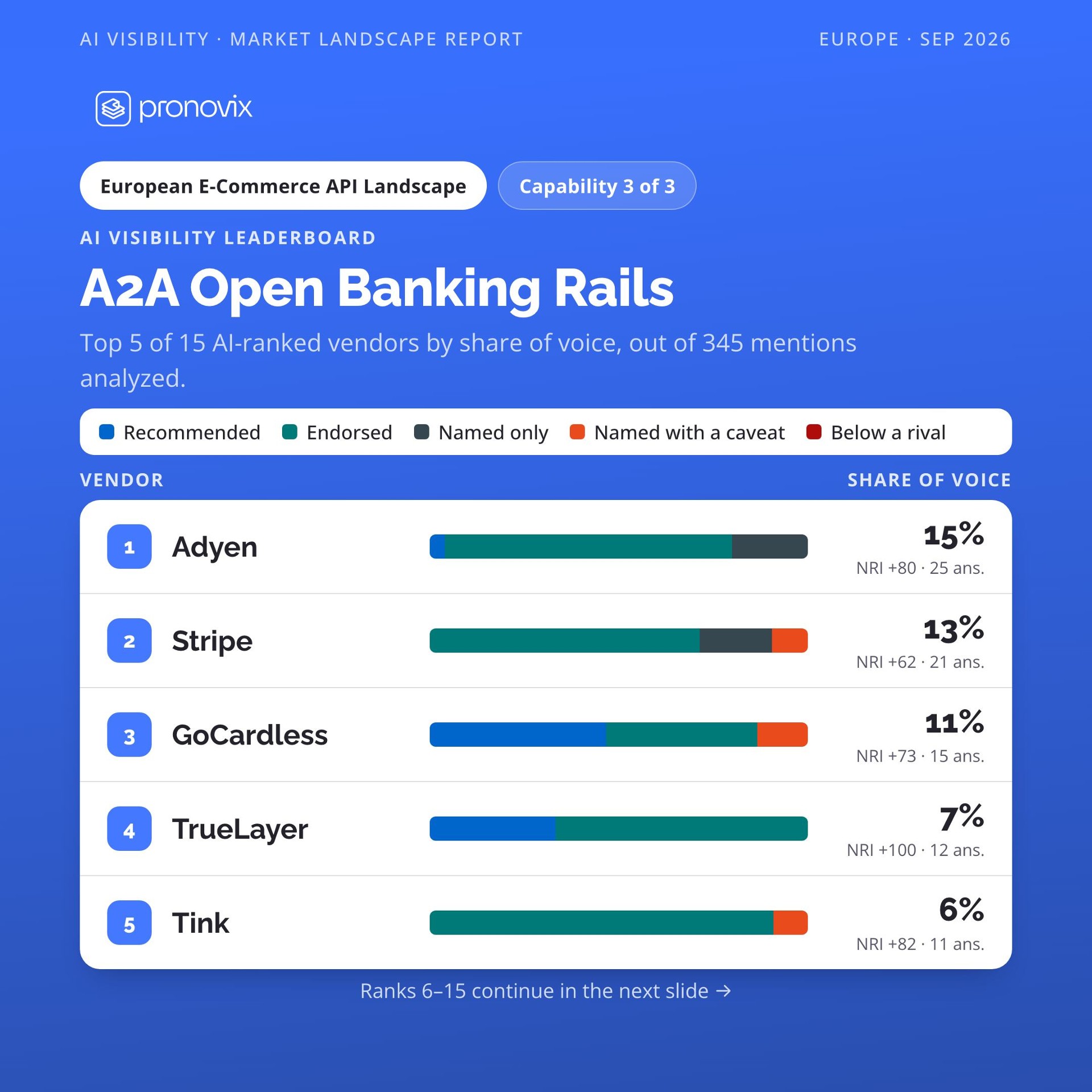
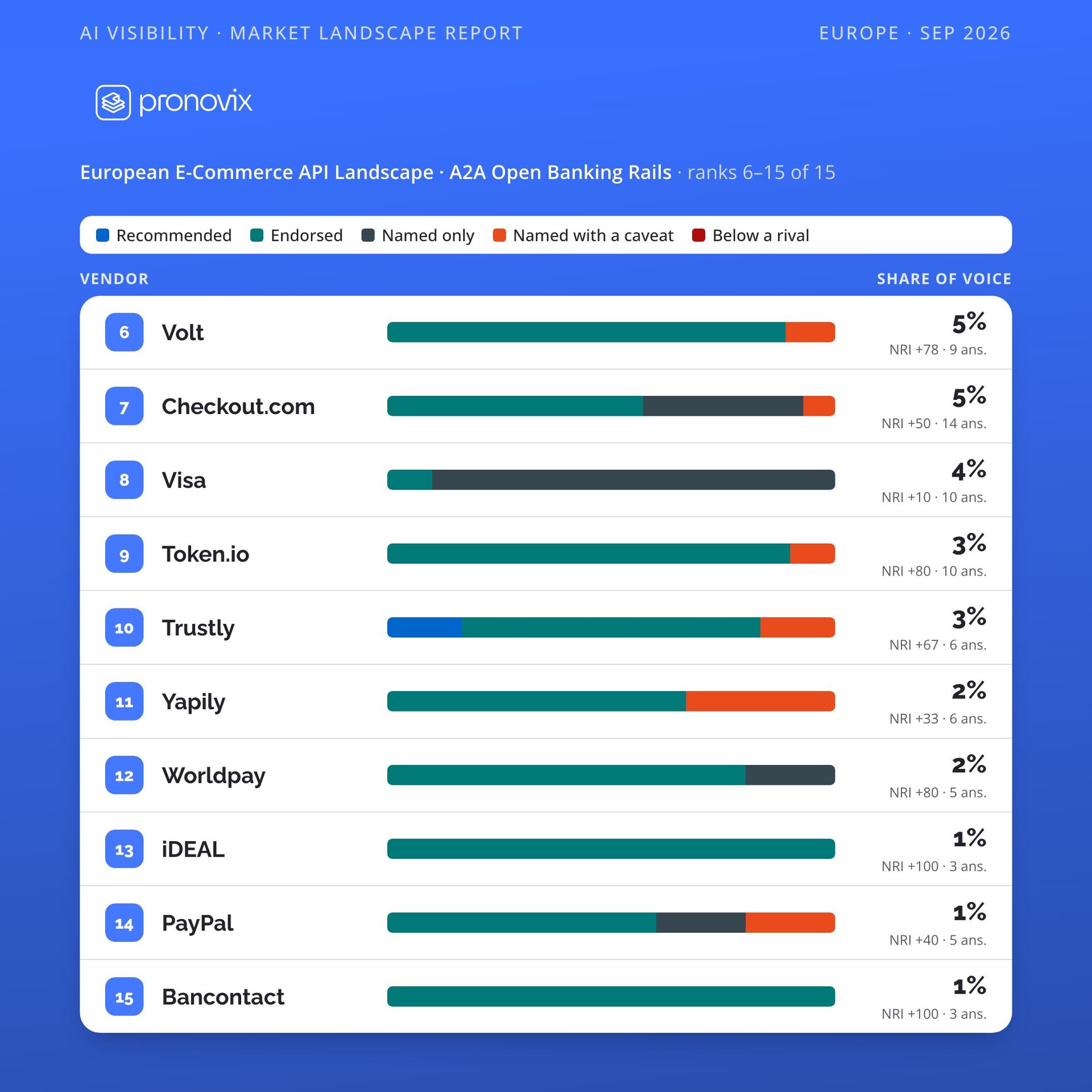
- 𝗪𝗵𝗶𝗰𝗵 𝗔𝗣𝗜 𝘃𝗲𝗻𝗱𝗼𝗿𝘀 𝗹𝗲𝗮𝗱 𝗶𝗻 𝗔𝟮𝗔 𝗢𝗽𝗲𝗻 𝗕𝗮𝗻𝗸𝗶𝗻𝗴 𝗥𝗮𝗶𝗹𝘀? In the European E-Commerce API Landscape benchmark series, here is a look at the third and last capability that we checked. Based on 345 brand mentions analyzed, here are the top vendors by AI share of voice: 1️⃣ Adyen — 15% Share of Voice (NRI +80) Leading position in AI recommendations for account-to-account and open banking payments. 2️⃣ Stripe — 13% Share of Voice (NRI +62) Strong visibility across open banking prompts. 3️⃣
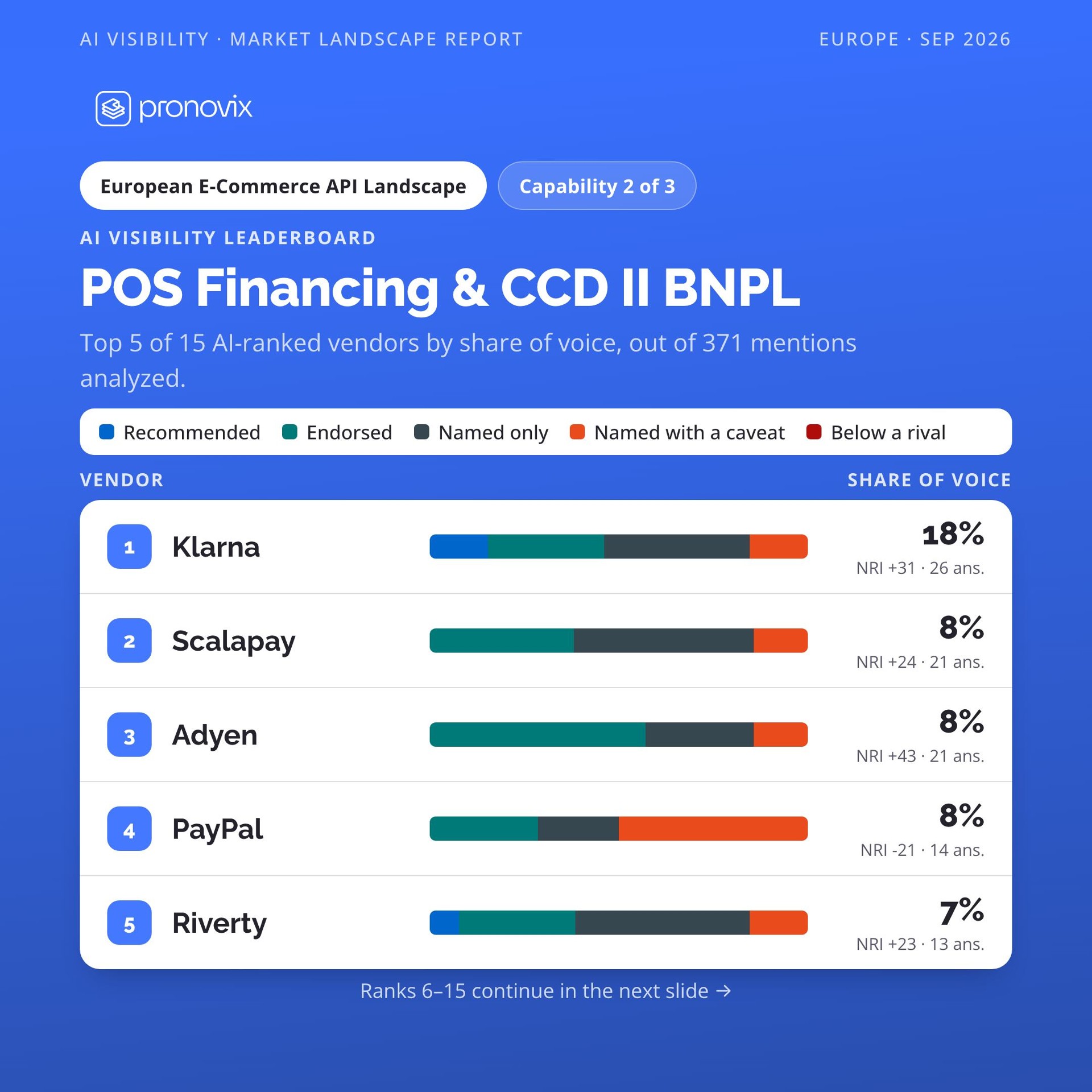
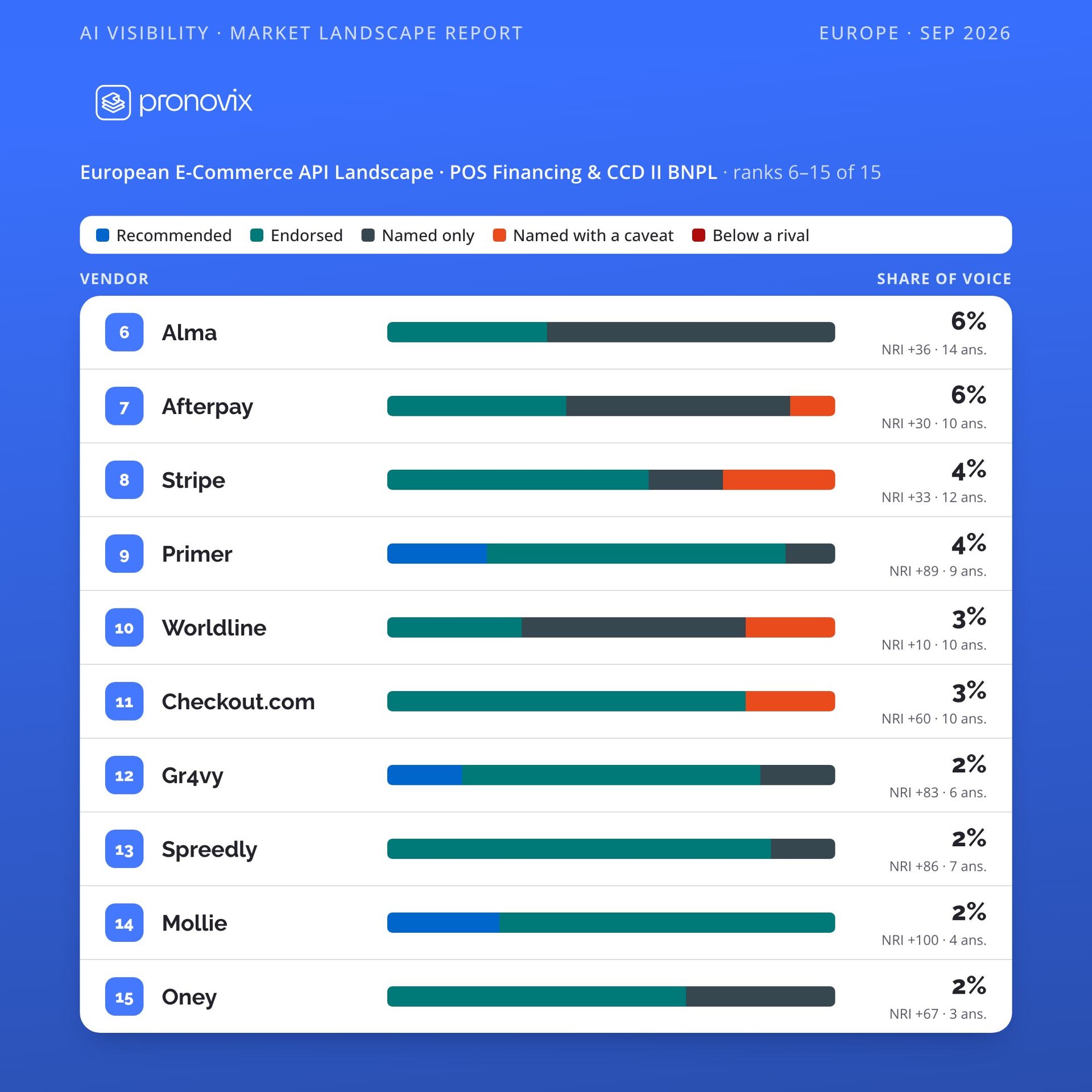
- 𝗪𝗵𝗲𝗻 𝗯𝘂𝘆𝗲𝗿𝘀 𝗮𝘀𝗸 𝗖𝗵𝗮𝘁𝗚𝗣𝗧 𝗼𝗿 𝗖𝗹𝗮𝘂𝗱𝗲 𝘁𝗼 𝗿𝗲𝗰𝗼𝗺𝗺𝗲𝗻𝗱 𝗮 𝗕𝗡𝗣𝗟 𝗼𝗿 𝗣𝗢𝗦 𝗳𝗶𝗻𝗮𝗻𝗰𝗶𝗻𝗴 𝗔𝗣𝗜, 𝘄𝗵𝗶𝗰𝗵 𝗯𝗿𝗮𝗻𝗱𝘀 𝗴𝗲𝘁 𝘀𝗵𝗼𝗿𝘁𝗹𝗶𝘀𝘁𝗲𝗱? Continuing our European E-Commerce API Landscape benchmark series, here is a look at Capability 2: POS Financing & CCD II BNPL. Based on 371 brand mentions analyzed across Claude, ChatGPT, and Gemini, here are the top vendors by AI share of voice: 1️⃣ Klarna — 18% Share of Voice (NRI +31) Clear leader in AI visibility for buy now, pay
- Want to see how your brand compares? Reach out to Kristof Van Tomme to get started. #Logistics #SupplyChain #APIs #AIVisibility #B2BMarketing #ProductStrategy #TMS
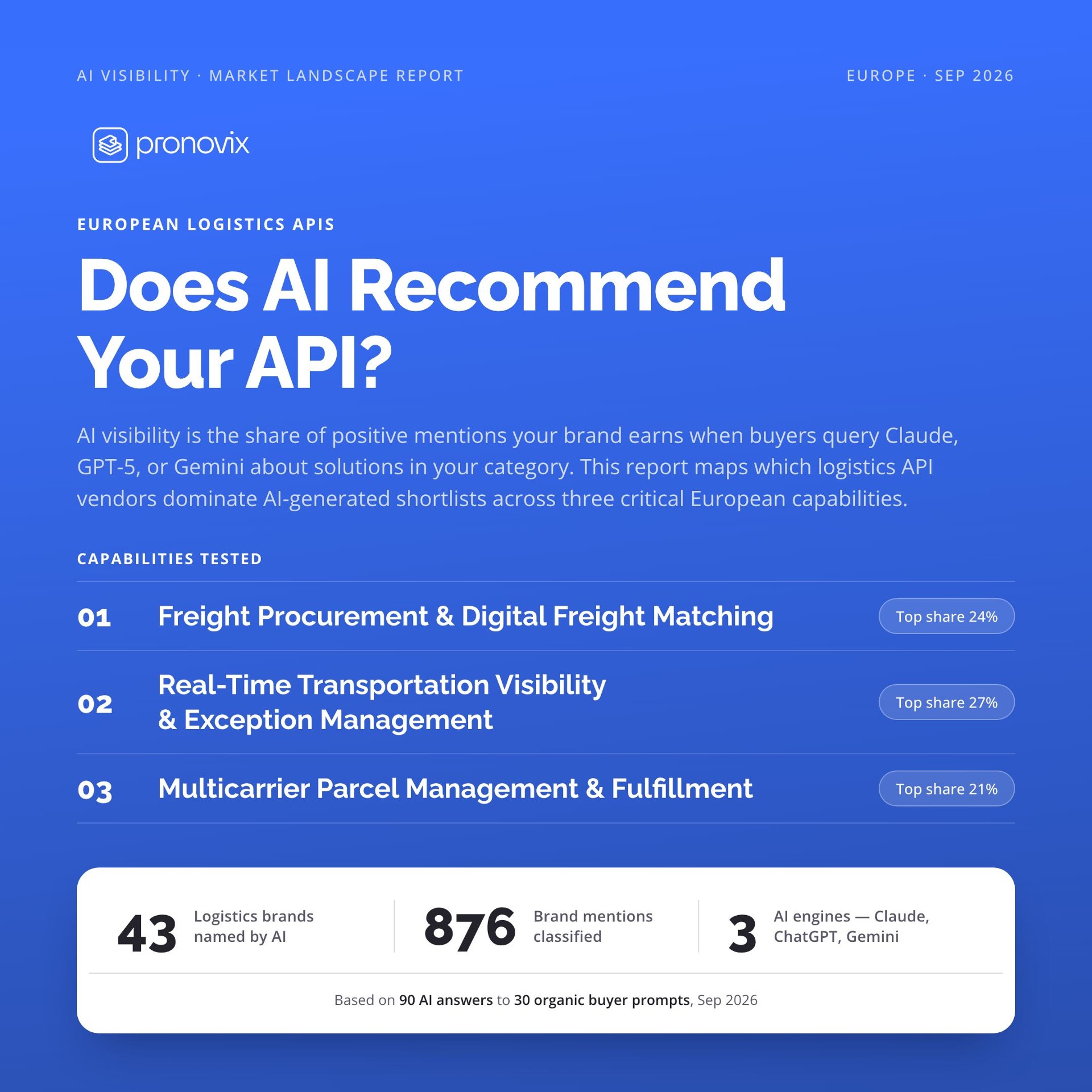
- Over the past few days, we’ve been mapping three capabilities in logistics technology. We analyzed AI-generated brand mentions across Europe to see which companies get the most visibility when buyers ask AI about these areas. Across all three capabilities, a few patterns stood out: 𝘚𝘩𝘢𝘳𝘦 𝘰𝘧 𝘷𝘰𝘪𝘤𝘦 𝘪𝘴 𝘩𝘪𝘨𝘩𝘭𝘺 𝘤𝘰𝘯𝘤𝘦𝘯𝘵𝘳𝘢𝘵𝘦𝘥 In each category, a small group of market leaders captures a large share of AI mentions and recommendations. When AI has limited information about a company and its capabilities,
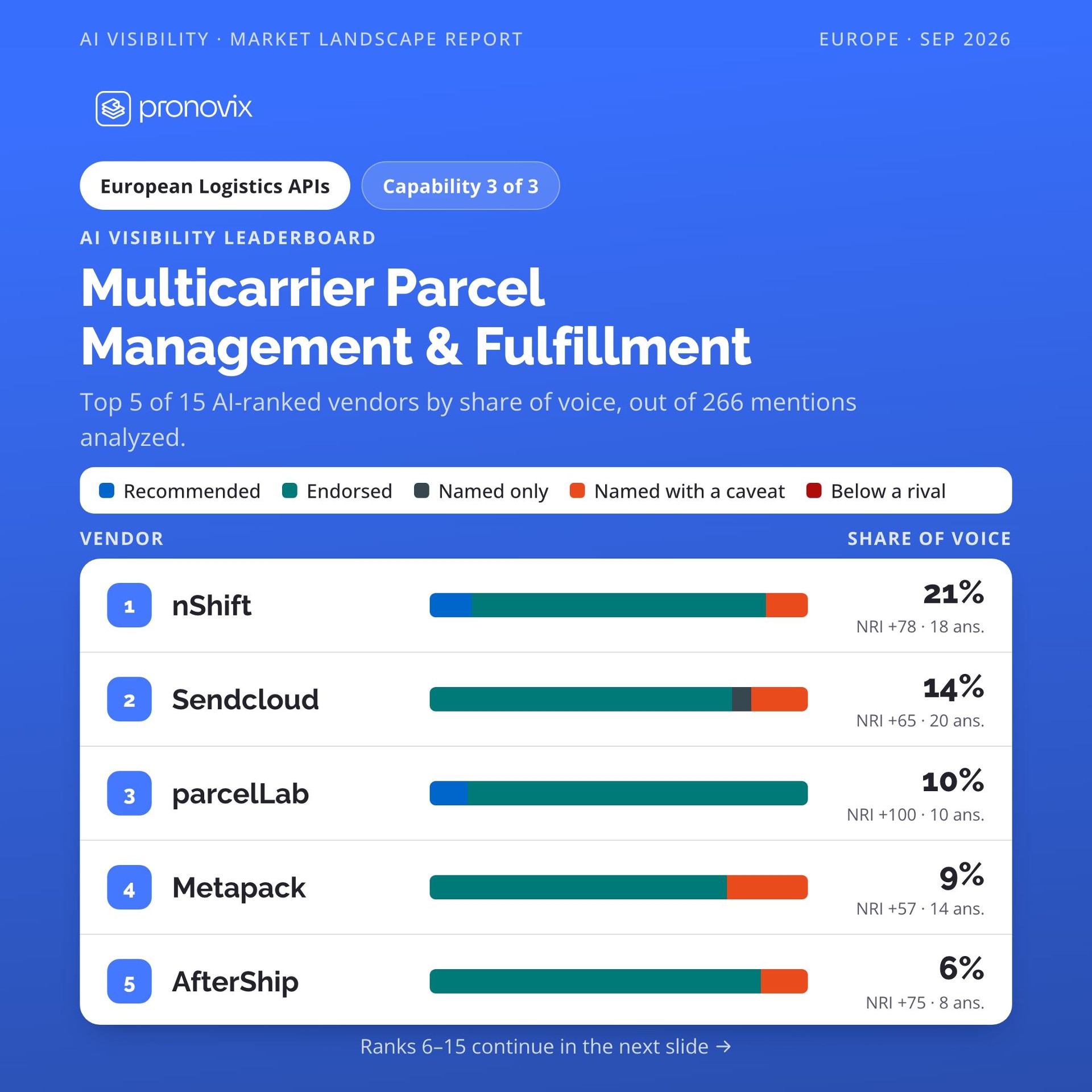
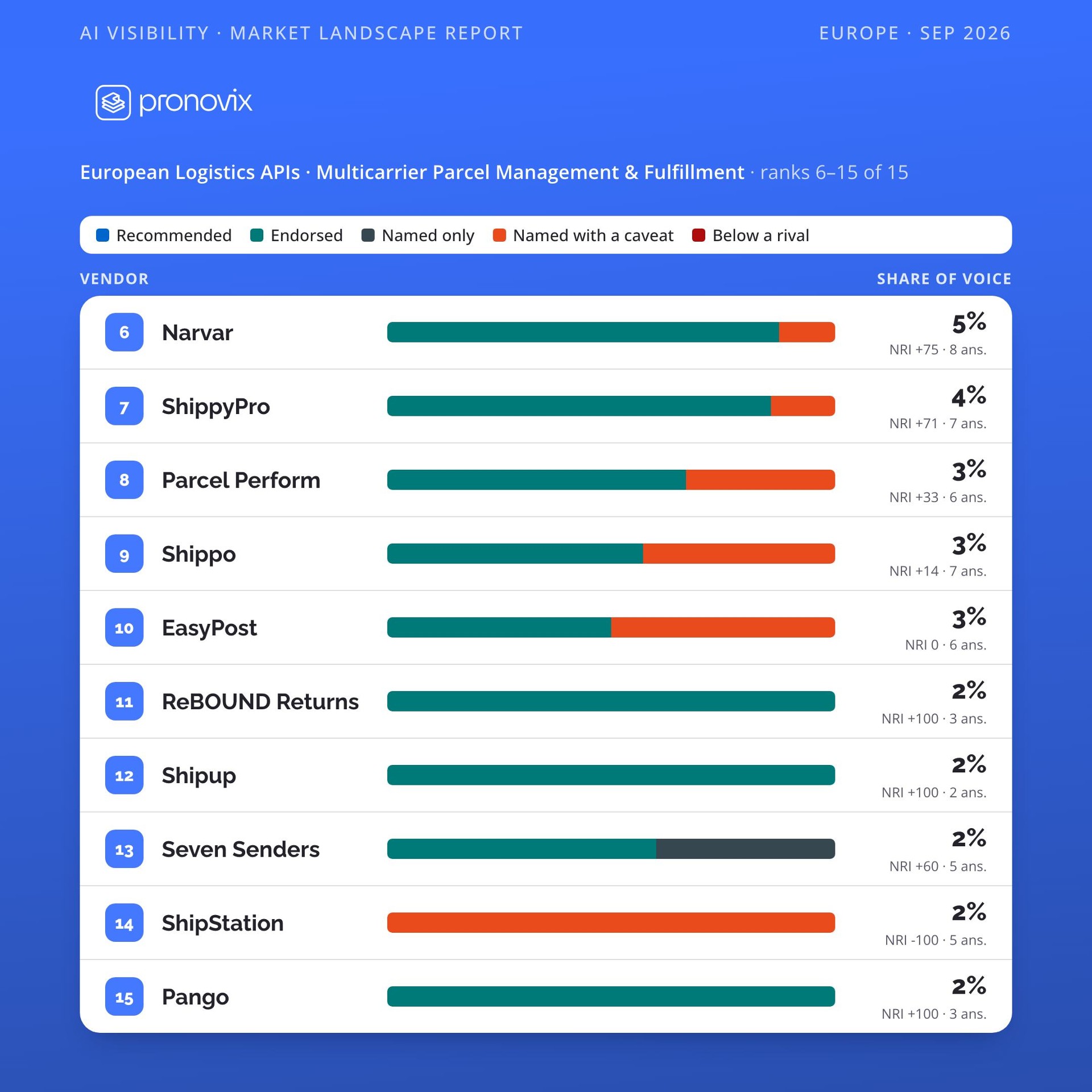
- 𝗪𝗵𝗮𝘁 𝗯𝗿𝗮𝗻𝗱 𝗽𝗲𝗿𝗰𝗲𝗽𝘁𝗶𝗼𝗻 𝗶𝘀 𝗔𝗜 𝗽𝗶𝗰𝗸𝗶𝗻𝗴 𝘂𝗽 𝗮𝗻𝗱 𝗮𝗺𝗽𝗹𝗶𝗳𝘆𝗶𝗻𝗴 𝘄𝗵𝗲𝗻 𝗯𝘂𝘆𝗲𝗿𝘀 𝗮𝘀𝗸 𝗳𝗼𝗿 𝗵𝗲𝗹𝗽 𝘀𝗲𝗹𝗲𝗰𝘁𝗶𝗻𝗴 𝘁𝗵𝗲 𝗿𝗶𝗴𝗵𝘁 𝘁𝗲𝗰𝗵𝗻𝗼𝗹𝗼𝗴𝘆 𝘁𝗼 𝗺𝗮𝗻𝗮𝗴𝗲 𝗰𝗼𝗺𝗽𝗹𝗲𝘅 𝗽𝗮𝗿𝗰𝗲𝗹 𝗻𝗲𝘁𝘄𝗼𝗿𝗸𝘀? 📦🌐 For our final logistics analysis, we examined 266 AI-generated mentions across Europe for 𝘔𝘶𝘭𝘵𝘪𝘤𝘢𝘳𝘳𝘪𝘦𝘳 𝘗𝘢𝘳𝘤𝘦𝘭 𝘔𝘢𝘯𝘢𝘨𝘦𝘮𝘦𝘯𝘵 & 𝘍𝘶𝘭𝘧𝘪𝘭𝘭𝘮𝘦𝘯𝘵. 🏆 The Top 5 Leaders: nShift – 21% share of voice Sendcloud – 14% parcelLab – 10%
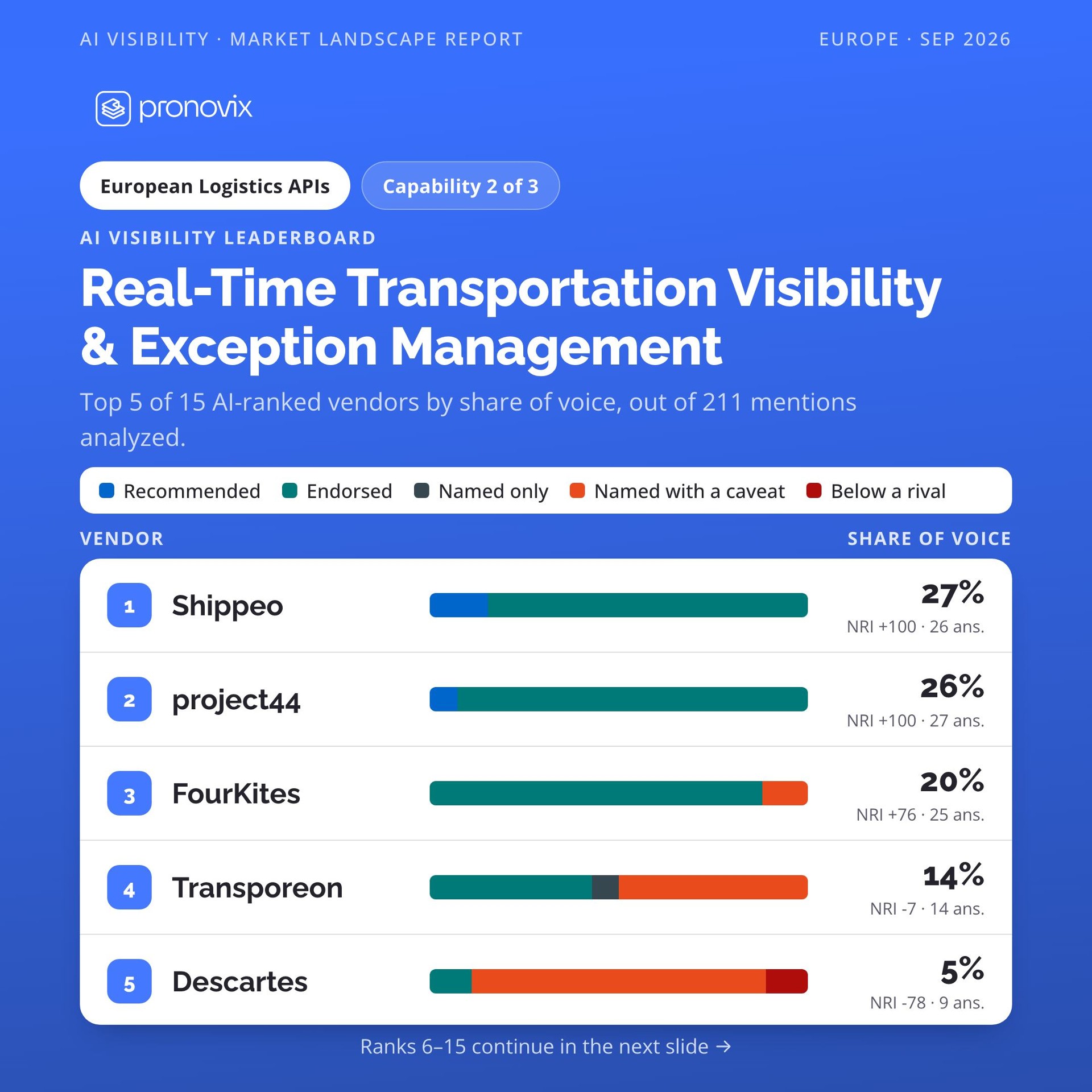
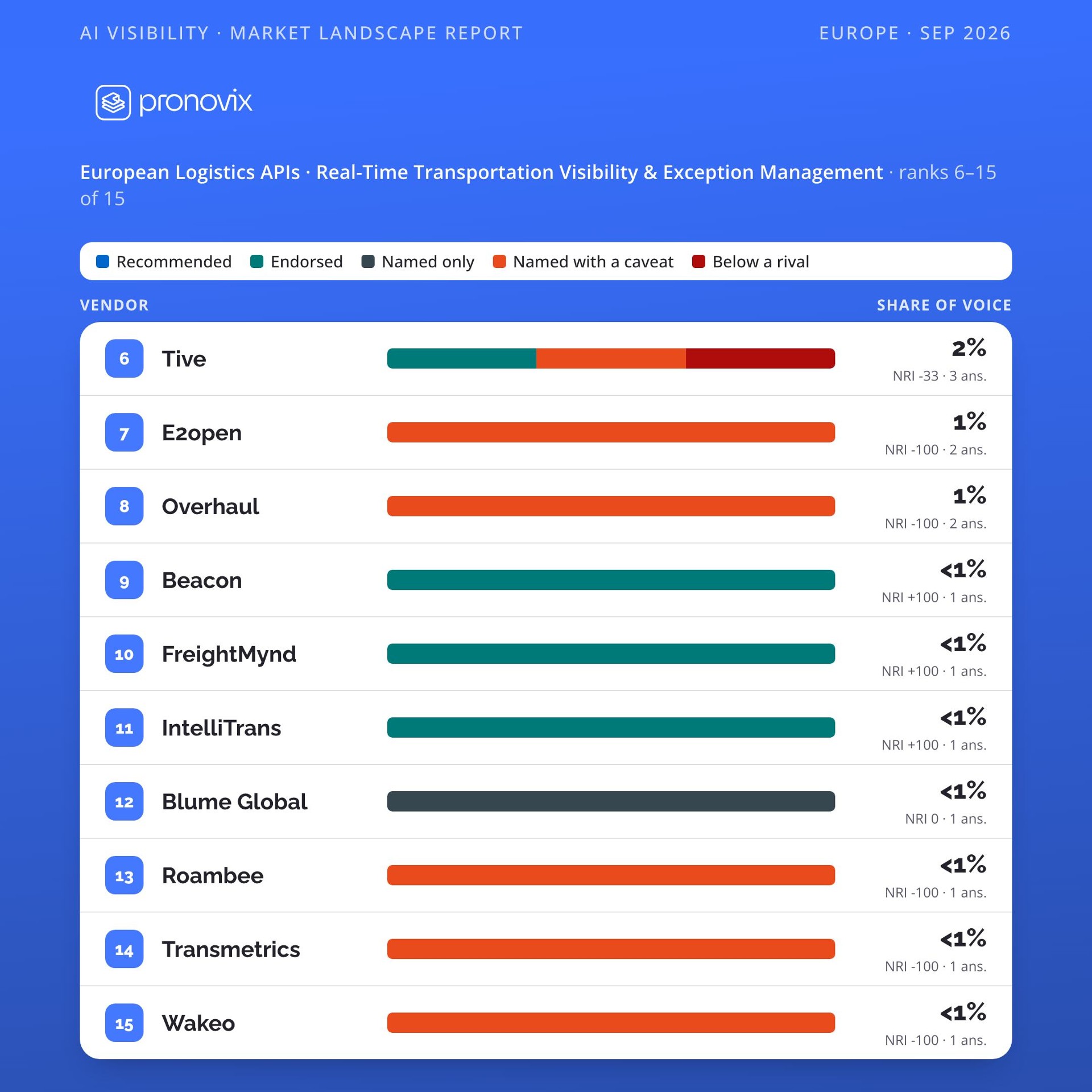
- 𝗜𝗳 𝗮 𝗯𝘂𝘆𝗲𝗿 𝗮𝘀𝗸𝘀 𝗔𝗜 𝗳𝗼𝗿 𝗮 𝗹𝗼𝗴𝗶𝘀𝘁𝗶𝗰𝘀 𝗔𝗣𝗜 𝘃𝗲𝗻𝗱𝗼𝗿, 𝘄𝗵𝗼 𝘀𝗵𝗼𝘄𝘀 𝘂𝗽? 👀 Today, we analyzed 211 mentions across Europe for 𝘙𝘦𝘢𝘭-𝘛𝘪𝘮𝘦 𝘛𝘳𝘢𝘯𝘴𝘱𝘰𝘳𝘵𝘢𝘵𝘪𝘰𝘯 𝘝𝘪𝘴𝘪𝘣𝘪𝘭𝘪𝘵𝘺 & 𝘌𝘹𝘤𝘦𝘱𝘵𝘪𝘰𝘯 𝘔𝘢𝘯𝘢𝘨𝘦𝘮𝘦𝘯𝘵 in the supply chain and logistics technology sector to find out which brands have the strongest AI share of voice in this category. 🏆 The Top 5 Shippeo – 27% project44 – 26% FourKites, Inc. – 20% Transporeon – 14% Descartes Systems Group – 5% The Net
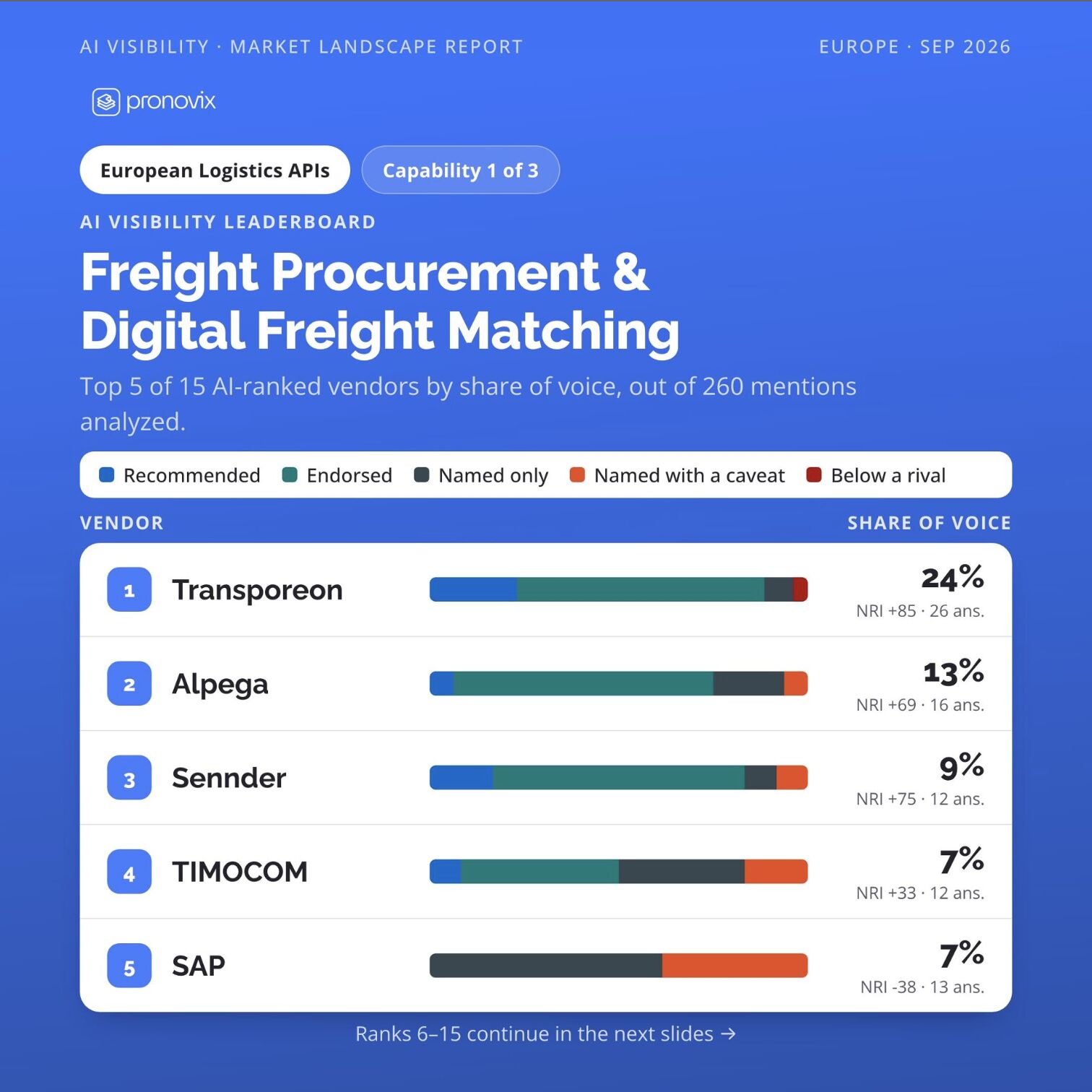
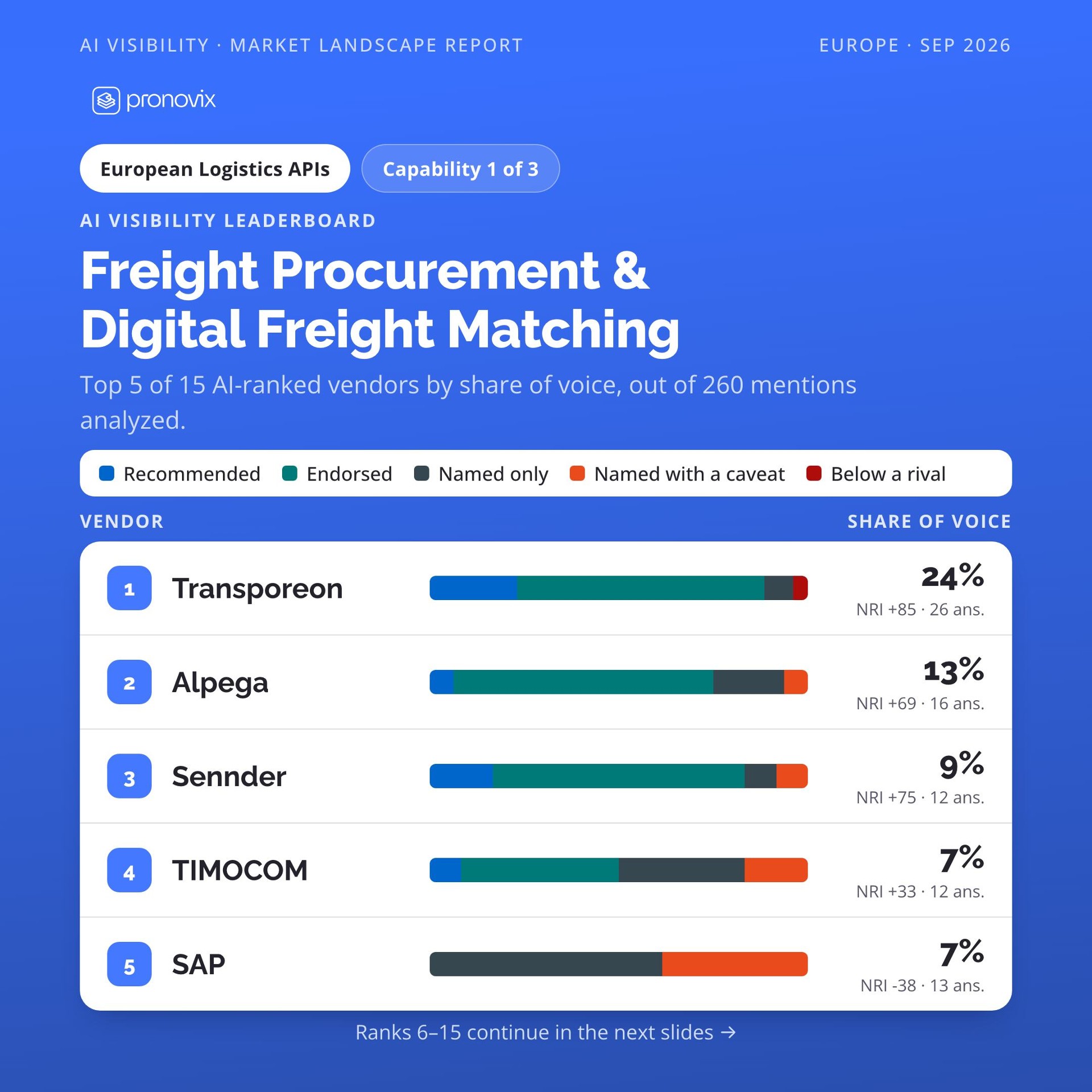
- This week we are starting something new! You might have read about the AI-native service we developed to analyse a company's API portfolio, how well it is performing against its competitors, and what can be done to improve its mentions in Answer engines and agentic integration flows. We've now adapted our data pipelines to generate a leaderboard for a strategic capability in a given market. The first leaderboard we've published is for the European Logistics market. Where Transporeon, Alpega, sennder, TIMOCOM, and SAP top the
- This is so cool! How do you do enough work to remove an AI watermark, while keeping track of the editorial history? A new module just landed that addresses this problem, another example of how awesome the Drupal community is. The past weeks I've been thinking how Drupal is the perfect to help a team collaborate with AI tools in the mix, while also keeping track of the human efforts that went into that content. Especially with the new AI watermarks I presume this is going to become essential to safeguard your content's authority.
This page shows public professional information only, each fact cited. Is this you? send a correction, or ask for removal within 24 hours, no questions asked.