Talks about
Insights & ideas
The through-line
Growth is the unit of account in everything Kristof Vande Capelle says, and finance exists to make it happen rather than to police it. "Groei is ons werkwoord. Groei is onze KPI." [1] At Gimv that is literal: if he could see only one number to judge whether the firm is doing well, it would be the EBITDA growth of the portfolio companies, and that number has long driven the annual bonus for staff, on the logic that if growth is realised "al de rest volgt wel" [2]. The corollary is a view of the finance function that refuses the controller's chair: "CFO is er niet om te controleren. CFO is om mee aan de kart te trekken om die groei waar te maken." [1]
What keeps this from being cheerleading is an equally firm insistence that growth must be funded and must convert into cash. The plan has to be fully funded from day one, because the worst outcome is discovering halfway through a rollout that the money has run out [1]; and growth that never generates cash is a red flag on any company he evaluates [1]. Time is the other qualifier. Building European growth champions takes patience, and he has structured Gimv's balance sheet and mandates so patience is affordable rather than merely aspirational [2].
On growth as the only KPI that matters
EBITDA growth of the portfolio companies is the single most important measure at Gimv, and Vande Capelle is unambiguous about why he would choose it over anything else: "Moest ik nog maar één cijfer willen zien waarmee dat ik aanvoel van zijn we met Gimv goed bezig of niet, dan wil ik eigenlijk de EBITDA-groei van onze portefeuillebedrijven." [2] It is not a reporting convention but an incentive: it has for years determined the annual bonus, precisely because everything else follows once growth is delivered [2]. The same conviction shows up in the way he frames the finance role generally, as an active participant in pulling the cart rather than a check on it [1].
On growth that destroys value
The enthusiasm stops sharply at growth without capacity or without cash. A German portfolio company won so many projects that it lacked the people and the machines to deliver them, putting its reputation at risk, producing negative value creation, and ultimately requiring a CEO replacement [1]. That is his standing example of growth for growth's sake. The financial version of the same failure is growth that never turns into cash: many immature companies do not track their free cash flow generation capacity at all, and the promise that "give us a few years and the cash will come" often fails to materialise [1]. The discipline he demands ahead of all this is funding the plan in full before it starts, which he treats as an instrumental CFO responsibility rather than a treasury detail [1].
On raising money before you need it
His funding philosophy is a single sentence: "Je moet eigenlijk geld ophalen op het moment dat je het niet nodig hebt." [2] Proactive long-term funding buys pricing power, and the proof he offers is a 12-year bond that the market did not believe Gimv could place. "De bankiers wouden het zelfs niet geloven dat we dat gingen kunnen doen. We hebben gezegd: 'Jawel, we kunnen dat wel.' En het is ons gelukt." [2] The result is a bond portfolio with an average coupon under 3% [2]. Alongside the debt side, 2025 brought Gimv's first-ever capital raise, funding European growth themes [2].
On liquidity, not cash
The 2008-09 crisis is the formative reference point: the liquidity Gimv held then "made the difference", and holding sufficient liquidity at all times is existential for an investment company [2]. But he draws a careful distinction between liquidity and cash. Excess cash sitting on the account costs money when measured against portfolio return targets, so bank lines are used instead to manage capitalisation and the spread between gross and net returns efficiently [2]. Leverage at the portfolio companies is deliberately kept low, in contrast with peers who lever up to boost equity returns. The point is resilience, and more importantly the ability to seize opportunities rather than merely absorb setbacks [2].
On what an investment company CFO actually does
The role diverges from the classic CFO job on two axes: monitoring portfolio company performance and translating it into valuations and results, and guaranteeing sufficient funding for the investment firm itself [2]. It also requires keeping a deliberate distance from the portfolio companies' own financial management. "Je zou kunnen zeggen dat er hier tientallen CFO's rondlopen bij Gimv." [2] Since those CFOs already exist, his team adds value at portfolio level instead, one example being a WhatsApp group of portfolio CFOs during COVID for sharing practical tips [2]. The pressure concentrates at the exit: "Op het moment dat wij een bedrijf verkopen kunnen wij ons ook geen enkel fout permitteren." [2]
He is equally deliberate about how deal responsibility is organised. Gimv's investment teams carry a company end to end, from sourcing through due diligence to exit, which avoids the conflicting agendas that arise when deal and diligence sit in separate teams; separate operational teams are not used either [2].
On taking time
"Wij beseffen dat voor het uitbouwen van Europese groeikampioenen dat je af tijd moet nemen." [2] To make that possible structurally, Gimv introduced 'anchor' investments with horizons of 15 to 20 years and more, backed by dedicated funding so the firm does not feel the classic private equity pressure to exit within the usual five-to-seven-year rotation [2]. TINC/CEGEKA-style long-term thinking is what allows value-creation trajectories that show no immediate return to be pursued at all [2].
On digitalisation and AI
He looks for digitalisation exposure through non-obvious enablers rather than the obvious names: two portfolio companies in Germany and the Netherlands that lay public networks for electricity, sewage and digital have order books full for two years, constrained mainly by materials and people [2]. Inside the finance function, digitalising the close pulled portfolio-status reporting from 10 to 12 days down to day three after a closing, and the time saved goes into analysis [2]. On AI his position is deliberately bounded: "AI is voor ons ondersteunend in plaats van vervangend. En die combined intelligence blijft wel heel belangrijk." [1]
Takeaways
- Pick one number that tells you whether the whole business is working; for Gimv it is portfolio company EBITDA growth, and it drives the staff bonus because "al de rest volgt wel" [2].
- Fund the entire growth plan before you start executing it; running out of money mid-rollout is the worst case [1].
- Treat growth that does not generate cash as a red flag, and be sceptical of "give us a few years and the cash will come" from companies that do not track free cash flow generation capacity [1].
- Growth beyond delivery capacity is value-destroying: winning more projects than you have people and machines for risks reputation and can cost the CEO the job [1].
- Raise money when you do not need it. Proactive long-term funding gave Gimv a 12-year bond bankers thought impossible and a bond portfolio averaging under 3% coupon [2].
- Manage liquidity rather than cash: idle cash underperforms portfolio return targets, so use bank lines to manage capitalisation and the gross-net return spread [2].
- Keep portfolio leverage low so companies can seize opportunities, not just survive setbacks [2].
- Give investment teams end-to-end ownership from sourcing to exit to avoid conflicting agendas between deal and diligence teams [2].
- Digitalising the close moved portfolio reporting from 10-12 days to day three, converting closing time into analysis time [2].
In the news
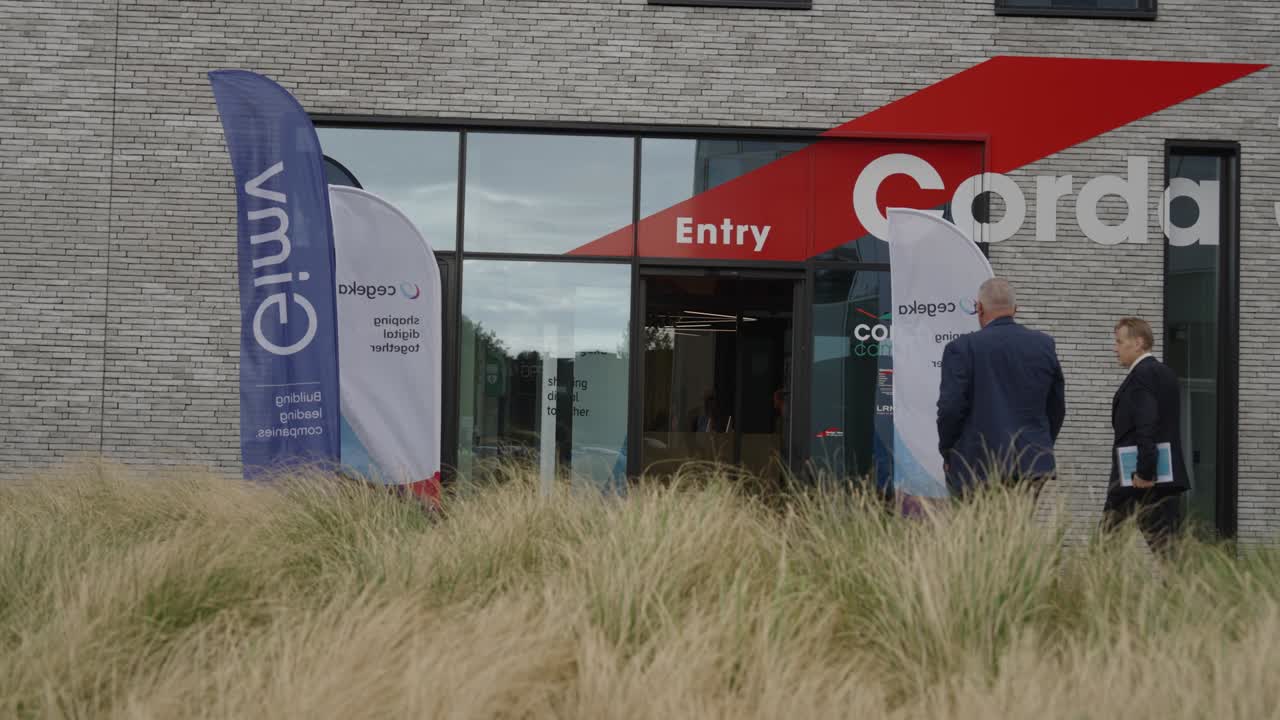
- Last week, when Cegeka hosted Gimv's presentation of its half-year 2026 results, I shared the strategy we have set for our company and what it means for the years ahead. Cegeka starts from a strong position as an independent European technology company, close to our clients and with deep technology and industry expertise. Those strengths matter as AI fundamentally changes our industry and the businesses we serve. For Cegeka, the opportunity is not only in the technology itself, but in how our people put it to work, supported by the
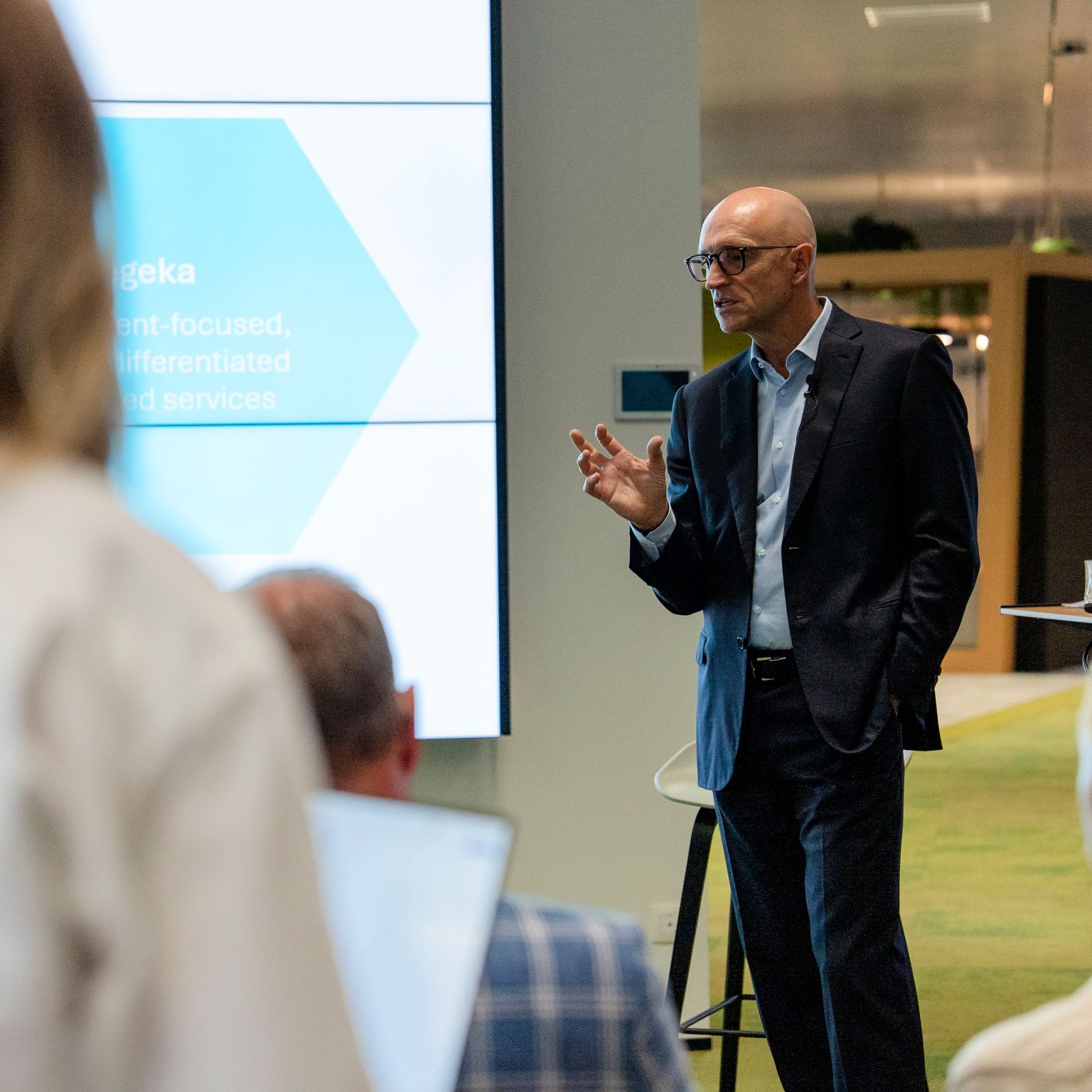
- Thank you for a great day of #Combining #Intelligence, Cegeka team! #BuildingLeadingCompanies #Anchor #BuildingEuropeanChampions koen dejonckheere Kristof Vande Capelle Bart Troubleyn Koen Deryckere André Knaepen
Related profiles

This page shows public professional information only, each fact cited. Is this you? send a correction, or ask for removal within 24 hours, no questions asked.