
Overview
Lorenzo is a serial entrepreneur based in Ghent. He founded StoryMe in 2013 and ran it as CEO for 8 years before stepping into a board role. He then co-founded aydoo (exited 2023) and launched HappyClient in 2025.
At HappyClient, Lorenzo leads the company's mission to help teams collect video testimonials from clients remotely. The product sits at the intersection of SaaS tooling and video communication.
Career history
- Co-FounderJan 2025 - PresentHappyClient
- Co-FounderMay 2022 - Apr 2024aydooexited
- Founder + Board MemberFeb 2021 - Jan 2022StoryMe
- Founder + CEOFeb 2013 - Feb 2021StoryMe
- FounderNov 2011 - Oct 2012PicPocket

Education
MBA, SME Excellence2016 - 2019Vlerick Business School
- AI in Business, Growth Tribe2024 - 2025
Talks about
Insights & ideas
The through-line
Lorenzo Bown's recurring argument is that the more content becomes machine-made, the more valuable a real human voice becomes. He frames good business ideas as counter-movements to big macro trends, microdosing against overmedication, authentic video testimonials against AI fake content, and puts his own company on the authenticity side of that trade [16]. The reasoning is concrete rather than sentimental: AI-generated content will inevitably be labeled on platforms, and an "AI generated" label on a testimonial destroys the trust it was made to create, which is why he expects real human testimonials to beat AI avatars [16]. As he puts it, "Als die labeling er niet komt, dan gaat het gewoon bijna onmogelijk worden om nog te begrijpen of dat real is of niet" [16], and "We leven in een wereld waar de authenticiteit nog belangrijker is geworden" [16].
The second half of the through-line is the opposite instinct: use AI relentlessly on everything that is not the human moment. The testimonials must be real; the editing, the drafting, the recaps, the standups can all be automated [9][16]. That combination is what he credits for HappyClient reaching "cashflow positive na drie maand een technologiebedrijf. Dat is redelijk ongekend" [16], and it is a deliberate correction to his earlier experience of a services company that never fully scaled [16].
On authenticity as a market position
The thesis is that customers already want to talk. "your customers absolutely hate giving reviews. 🙄 that's BS. when we love a product or service, we talk about it. we evangelise. for free. with pleasure. that's exactly where others get curious, get excited, and become buyers" [8]. What is missing is not willingness but the ask: "you have to ask. via the right channel, at the right moment" [8]. The same logic drives how he sells the product to clients. For Bank Van Breda the pitch was to stop having a trainer explain why customer feedback matters and have customers explain it instead, producing honest customer videos covering why they would recommend the bank and why they would not, because "A real client saying 'this is what nearly lost me' beats any internal slide. That's the whole idea" [2].
He ties this directly to discoverability, arguing that reviews are key to getting found in AI search and pairing video with GEO expertise from Rankshift for a joint webinar and follow-up live session [8][11][12]. The market response is part of the evidence he cites: 92 marketing and SEO experts from 12 countries attended [12].
On how the product actually works
Bown describes video as fundamentally a transcription problem, which is what makes it tractable for language models: LLMs select the best answers from testimonial Q&A, combined with sentiment analysis and image and audio quality analysis, to auto-assemble a timeline [16]. The capture side is deliberately frictionless. For delaware BeLux, collecting video reviews at every event runs on "a simple link, shared with people at the hackathon. No app, no setup", with attendees recording themselves, hacker teams sharing their story mid-build and experts giving their take, during and after the event [10]. The output then goes two places, the hackathon website to show future attendees what it is really like, and socials to extend reach [10]. His summary of the model is "No film crew, no production nightmare. Just a link, real voices, captured live", and his advice to anyone running events is that this is the easiest place to start [10].
Virality is engineered into the mechanism rather than hoped for: clients send testimonial links to thousands of customers, 7 to 12 percent respond, and every video carries "made by HappyClient" branding with a clickable link, which has generated use cases he never planned for, including funeral memorials and author-to-reader video messages [16]. Speed is part of the pitch too. With COPRO the sequence was a request for video testimonials, case studies and LinkedIn marketing content, a five-minute call, and two weeks later finished on-brand assets ready to publish [7]. Most of the marketing and sales teams he works with are B2B [15], though he insists the asking tactics work in both B2B and B2C [8], and the client roster stretches to consumer brands like Carhartt [15].
On AI workflows and why context beats the model
The internal AI system is described as a brain that drafts his sales follow-ups at 5:45 twice a week, refines the website daily and builds a visual deck of each team member's activities, all of which he reviews with a coffee [9]. The specific workflows he shows publicly are worth naming: one prompt turning a webinar into a gated, on-brand playbook page live on the site in seconds and pushed to the team in Slack; a weekly sales routine where AI scans his calls, stages follow-up drafts in Gmail but never sends them, and mails him a checklist; a Friday 8:30 branded deck of his week that builds itself from HubSpot, Fathom, Gmail and Slack; and webinar slide designs generated in brand style and pushed to the website [9]. His conclusion under all of it is the one he repeats: "context is everything. the model is the footnote, the hard part is giving it the right pictu[re]" [9].
Automation also replaces management ritual. Stand-up meetings have been swapped for automated Slack micro-standups asking "What's your focus of the day?" at 7am, one of roughly ten automations that cut meetings and keep the team on execution [16]. Focus is enforced by a "one domino a day" system drawn from The One Thing: reverse-engineer twelve monthly dominoes from the end goal, knock over only the next one, and deliberately drop 99 percent of possible tasks [16].
On co-founding
He is unusually specific about structure and has publicly corrected the record on it: "𝐓𝐰𝐨 𝐜𝐨-𝐟𝐨𝐮𝐧𝐝𝐞𝐫𝐬. 𝐍𝐨 𝐂𝐄𝐎. 𝐍𝐨 𝐂𝐓𝐎", with articles wrongly calling Jonathan CTO and him CEO, and advisors nudging in the same direction [13]. The split he describes is external against internal: one runs leads, partnerships, story and investors, the other runs product, ops, team and AI agents, while "Strategy lives in both. External brings in the new context, internal turns it into shipped product and a stronger team. Remove one side and it breaks" [13]. He points to Aikido Security and to Jorn and Gilles building Henchman as precedent, and notes wryly that proving the model probably requires reaching unicorn level or exiting at €165m first [13].
Getting to speed fast came from difficult conversations at the very start: have a coffee, put a couple of bullets on paper about what matters to you, check alignment with your co-founder, then "stop overthinking and buildddd" [14]. The counter-lesson comes from experience: "Dat ik niet moest ondernemen met vrienden, dat heb ik zeker geleerd" [16]. Both he and his friend-cofounder were good entrepreneurs, but the incompatibility made an already complex business more complex [16]. He offers this openly to other founders working through the same questions [14].
On hiring and leading
First hires should have founder mentality rather than execution skill alone. What he looks for is hunger and belief in something others do not yet see, and pure executors do not work in the startup phase [16]. The mentality he wants is "we zijn hier aan het bouwen, we hebben honger en we willen echt alles geven om dit te doen slagen" [16]. Leadership then works by vision pull rather than pain push: "Forceren werkt gewoon niet. Op korte termijn lukt dat af en toe. Meestal breekt het. Meestal breekt de mensen, breekt de zaken, breekt de organisaties" [16]. The same refusal to over-manage applies to circumstances generally: "Probeer niet te controleren wat dat er oncontroleerbaar is. Dat is gewoon totaal absurd" [16].
The scaling limit he learned from StoryMe sits behind all of this. As a services company it never became fully scalable, because beyond 15 to 20 people it turned into a constant HR and coaching machine, with new hires taking three to nine months to become fully productive [16].
On selling, exits and what fails
Early StoryMe traction came from old-school event sales, with a pitch that reframed the prospect's own four-minute company pitch into a 30-second video offer [16]. On exits, his position is to prepare from day one by continuously thinking about who the potential buyers are and what size range you need to be in, while continuing to build rather than trying to time the sale; HappyClient's shareholder agreement is explicitly built around an eventual exit [16]. The failure case is instructive in a different way. Aydoo could not scale because a gray-zone psychedelics business model is incompatible with VC funding, and raising €1-2M from business angels alone is very hard [16]. What survives all of it is the motive: "Dan weet je gewoon van oké, het gaat niet om het geld. Het gaat echt gewoon om het bouwen en die impact te hebben op mensen" [16].
On building an audience through events
Events are his distribution channel as much as his product's showcase. The webinar with 92 attendees converted into a Ghent live session, with a slide deck and playbook offered to anyone commenting "deck" and a waiting list for anyone commenting "GEO" [12]. A session in Antwerp drew 55 people in 32°C heat, where the workflows themselves were the content [9]. The AI Hackathon for CMOs is the fullest version: September 10th, 7am to 7pm, 30 spots, a full day of building in Ghent with tokens covered for Claude Code, Lovable and ElevenLabs, run together with Vince Buyssens from Loop Earplugs, with selected teams notified on August 15th when applications close [5]. The objective is stated plainly as levelling up the marketing AI skills of a team, and seats are reserved for marketing professionals at innovative companies of 50 to 500 employees serving international clients [3].
Partner selection follows the same taste test he applies to clients. Pajottenlander joined alongside OpenAI, Claude, Lovable and Djar because he has been drinking it since childhood, because healthy energy means sharp brains during workshops, and because it has a "Sexy new brand and marketing, exactly how you'd want a clean, traditional product to be marketed", adding that "we like to work with likeminded teams" [3]. The same hospitality instinct shows up at scale: for IBC2026 in Amsterdam the plan is chocolate, fresh juice and Italian espresso sourced in Belgium, on the theory that "we love your conference, but coffee & food tastes like sh*ttt" [1]. Physical space matters too, with a new Ghent office kitted out first with "whiteboards, lots of whiteboards" [4].
On balance
He rejects the idea outright. Perfect work-life balance does not exist; what he believes in is periods of total imbalance that may average out over seasons, compensated by being 100 percent present with his kids when he is with them [16].
Takeaways
- Build against a macro trend rather than with it: authentic video testimonials work precisely because AI-generated content is flooding the market and will eventually be labeled, and an "AI generated" label destroys the trust a testimonial exists to create [16].
- Customers are willing to review; the failure is in the ask. Reach them "via the right channel, at the right moment" [8], and let real customers, including on why they would not recommend you, replace internal training slides [2].
- Remove production friction entirely: a single link with no app and no setup lets attendees and customers record themselves, which is why events are the easiest starting point for review capture [10].
- Automate management ritual, not the human moment: 7am Slack micro-standups replace stand-ups, AI stages sales follow-ups in Gmail but never sends them, and a weekly deck assembles itself from HubSpot, Fathom, Gmail and Slack [9][16].
- When working with AI, "context is everything. the model is the footnote, the hard part is giving it the right pictu[re]" [9].
- Hire for founder mentality over execution skill in the startup phase, and lead by vision pull, because forcing works short-term then "breekt de mensen, breekt de zaken, breekt de organisaties" [16].
- Have the difficult co-founder conversation on day one, bullets on paper about what matters to each of you, then stop overthinking and build [14]; and do not co-found with close friends [16].
- Two equal co-founders with an external/internal split and no CEO or CTO titles is a workable structure, provided strategy lives on both sides [13].
- Services businesses hit a wall around 15 to 20 people where they become an HR and coaching machine, with new hires needing three to nine months to be productive [16].
- Prepare an exit from day one by tracking who the buyers are and what size you need to be, and write it into the shareholder agreement, while continuing to build rather than timing the sale [16].
Media & appearances
- Ben's MentorsYouTubeSerie-Ondernemer: Maak Deze Fouten Niet! Lessen uit Startups en ExitsLorenzo Bown discusses how he evaluates business ideas by identifying market needs and macro trends, using examples from his ventures Storym, Ido, and Happy Client to illustrate how he looks for large movements and countertrends that solve real problems. He also shares lessons from his entrepreneurial experience, including that working with friends as business partners should be avoided, that forcing results doesn't work long-term, and that team mentality focused on building and hunger is essential for success.
In the news
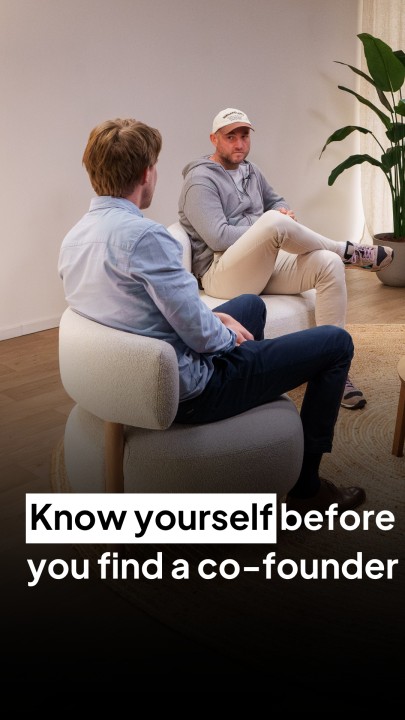
- Know yourself before you find a co-founder.” Indeed, finding the right match starts long before you even meet them. In this episode of How I Met My Co-Founder, Lorenzo Bown (HappyClient) shares one important piece of advice: first get clear on what 𝘺𝘰𝘶 want. How do you see your business - and your life - in the next years? What are the things you’re not willing to compromise on? Write it down. Then use it to figure out whether the people you meet are actually the right match. His take? Think of it as a “pre-shareholders agreement
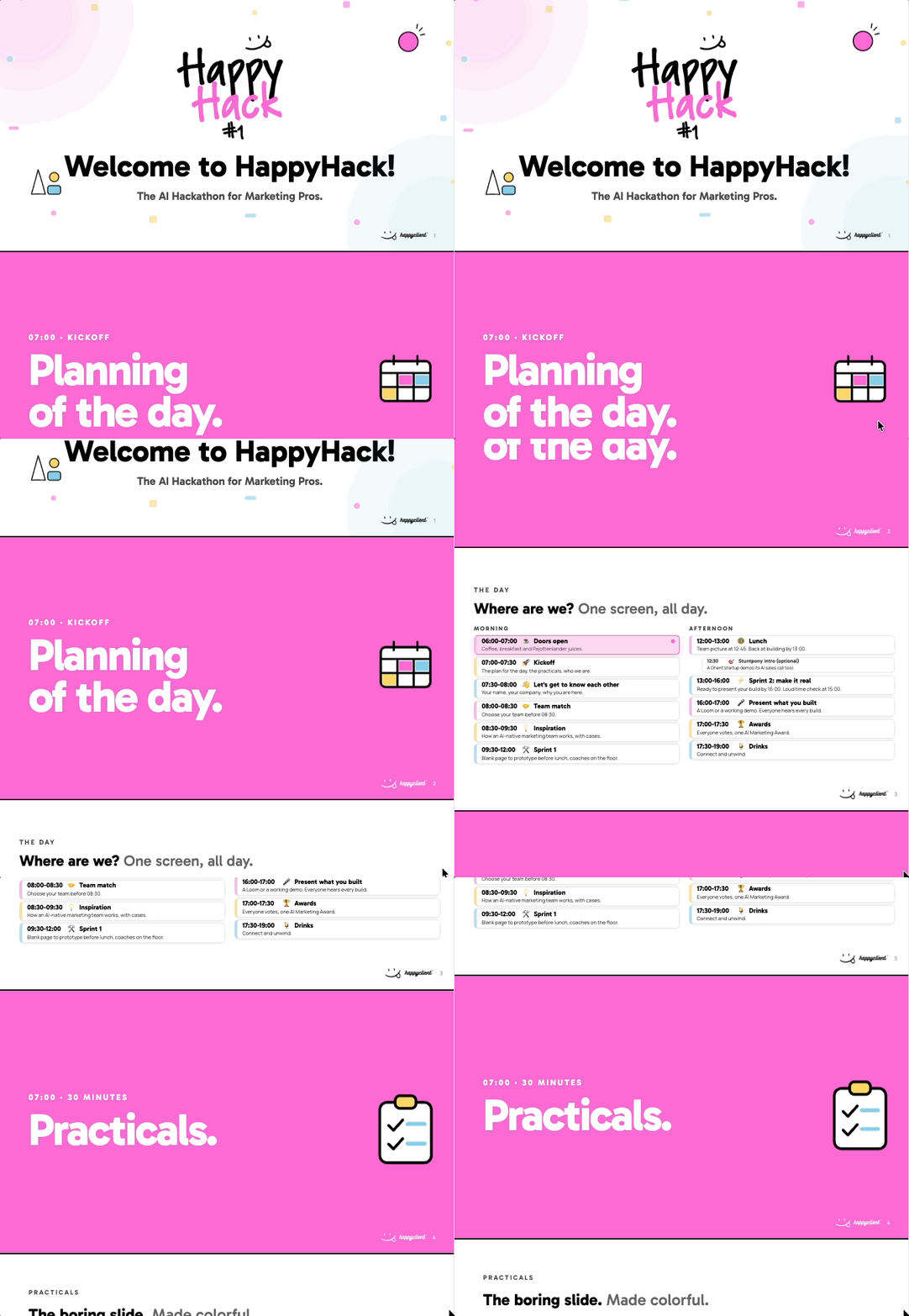
- One seat just opened up for HappyHack, our AI hackathon for marketing leaders, tomorrow 17/09 in Ghent. We start at 7:00 sharp and by 16:00 every team presents a working AI marketing build: a campaign, an automation, a video pipeline, an agent. Small group, coaches on the floor, food, prizes and all tools included. Send me a DM, and I'll get you the invitation 🩷
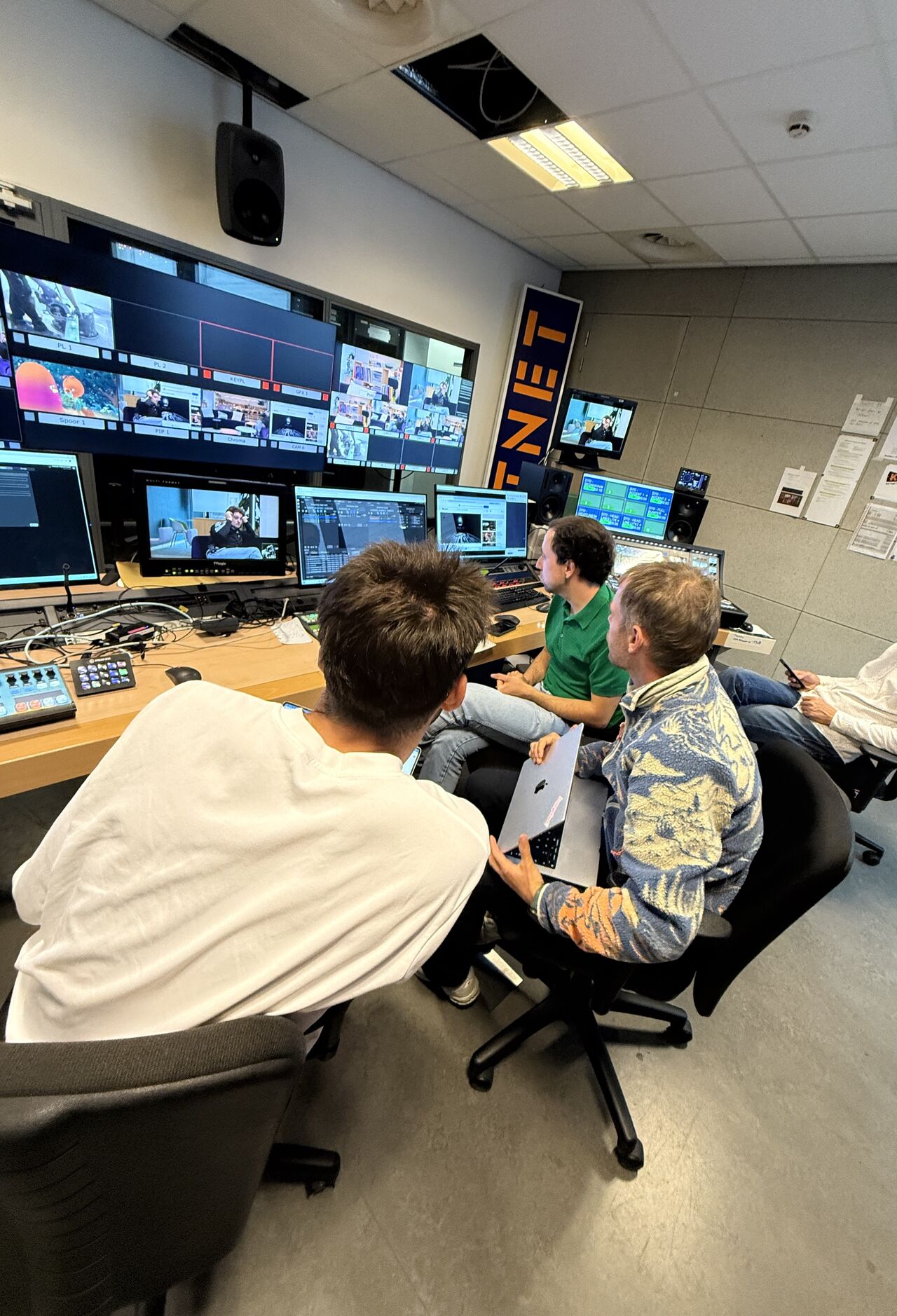
- day 1 of 4 at a 16.000 visitors media tradeshow = no sunlight, chaos, hundreds of conversations and even more useless pictures 🖼️🖼️ forgetting to eat, laughs 🤣, then feeling down when it’s a clear ‘no I don’t care about your fuc#%}$# solution’ the adrenaline rush when demos are booked and you see the team looking at each other with a big smile 😜 🎢 🎢 🎢 letsgo day 2
- Letsgoooo 🚀 VRT Team magic ✨ to get to this smooth solution with Jonathan, Toon, Mathias

- september kickoff with @VRT and De Zevende Dag 🚀 now, every viewer can send in their own question. Video, audio or text, straight from their phone or any device what that used to look like for a broadcast team: → a complex flow that loses half the audience with bad UX → hundreds, sometimes thousands of submissions landing via WeTransfer, WhatsApp, Google Drive, email, slack, .. → every format you can imagine, multiple languages, no subtitles → clips ranging from 3 minutes to 30 minutes → hours and hours of manual review → and no
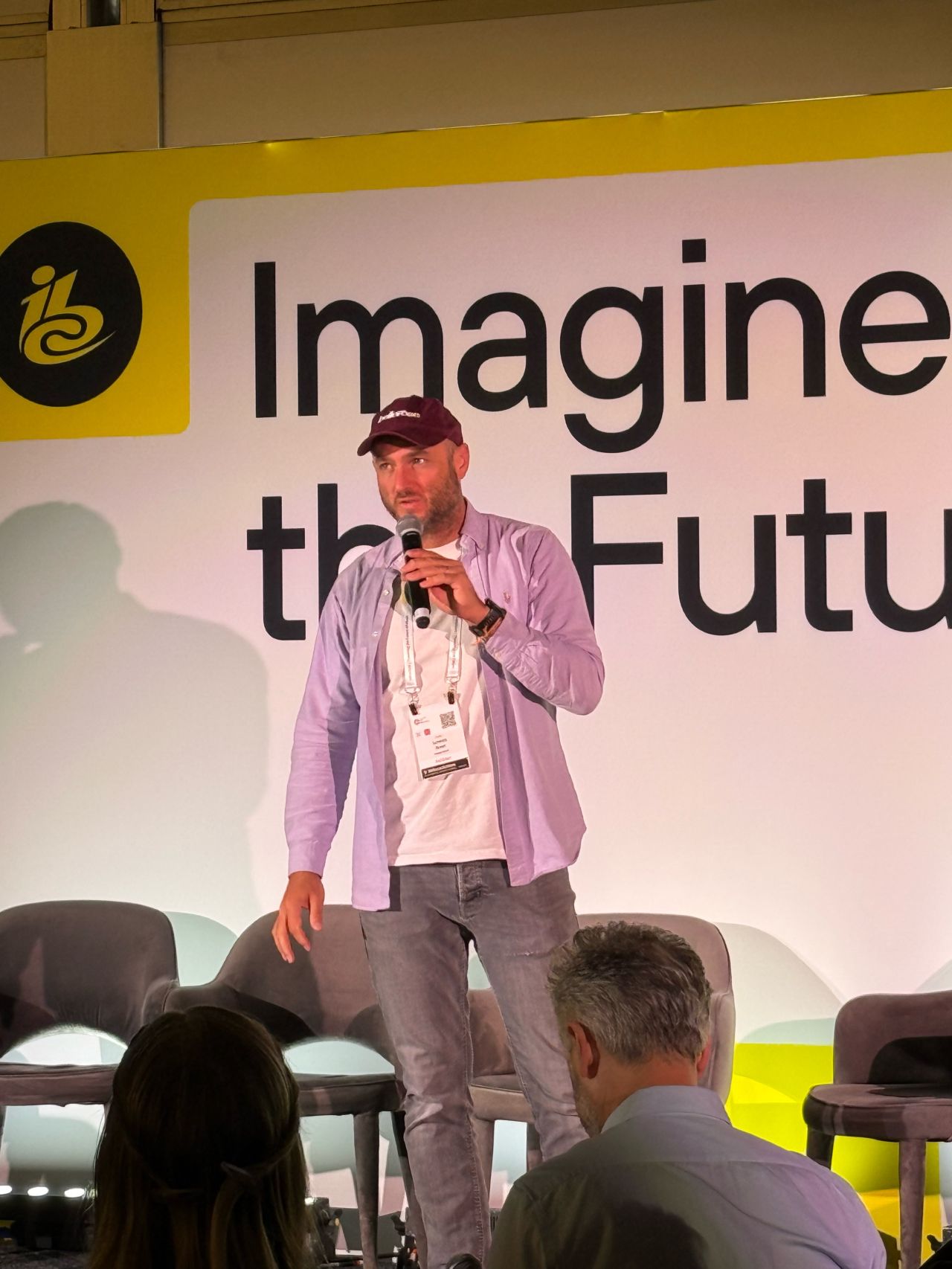
- we love your conference, but coffee & food tastes like sh*ttt 🤢 (and that's ok) prepping for #IBC2026 biggest Media Tech Conference in Europe we bring: 🍫 chocolate 🥤 fresh juice 🇮🇹 espresso (sourced in 🇧🇪) Who is going to Amsterdam 11 to 15th of Sept? ps: new team mate is joining, in depth bio for the next video >> Mathias Teuwen
- new client onboarded, welcome to the team Bank . Banque Van Breda The story: Bank Van Breda is onboarding 200+ account managers, and they made a smart decision: don't have a trainer explain why customer feedback matters. Have customers explain it. We're producing honest customer videos (why they would recommend the bank, and why they wouldn't) plus expert interviews. A real client saying "this is what nearly lost me" beats any internal slide. That's the whole idea. Whoppaaa 🩷 thanks for the trust Simon Enthoven 🚀
- juices, juices! super happy to have Pajottenlander onboard for our Marketing Hackathon in September, next to OpenAI, Claude, Lovable and Djar. Why? - Been drinking it since I was a kid, huuge fan - Healthy energy = sharp brains during the workshops - Sexy new brand and marketing, exactly how you’d want a clean, traditional product to be marketed (we like to work with likeminded teams) Only a few spots left. Reserved for marketing professionals, working at innovative companies with 50-500 employees that service international
This page shows public professional information only, each fact cited. Is this you? send a correction, or ask for removal within 24 hours, no questions asked.