
Overview
Agoya reported doubling revenue, clients and consultant numbers in the year to February 2025, and opened delivery hubs in Morocco and Greece. In April 2025 Voka magazine covered the firm's rightshoring model for small and medium enterprises.
Martijn Bauters co-founded Agoya, a Belgian data and AI consultancy registered as a private limited company on 13 October 2022 under enterprise number 0792.402.304. The firm has an office at Oudstrijdersstraat 76 in Oudenaarde and a registered address at Vredesplein 22 in Zwalm, and its work covers machine learning, generative AI, data governance, data platforms and dashboards. Bauters holds his mandate through a company of his own, registered on 29 May 2024 under enterprise number 1009.835.227, and has been permanent representative of a corporate director of Agoya since 1 October 2024. Co-founder Tineke Vanden Meerschaut, a director since 26 April 2023, took on the Managing Director role in February 2025, a change Agoya framed as letting Bauters concentrate on delivery quality and talent development at its hubs.
Career history

In the news
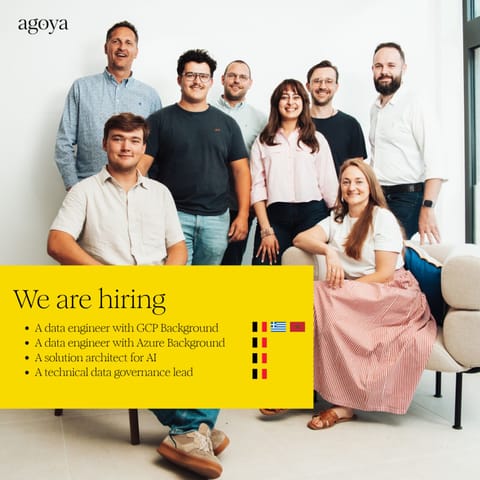
- We are growing Agoya and looking for a few additional people in my delivery team: In any of our office (🇧🇪 🇲🇦 🇬🇷) a Data Engineer who is confident in GCP, and has an affinity with DevOps In our Belgian office only: 🇧🇪 a Data Engineer with strong Azure knowledge and practical skills with Fabric 🇧🇪 a Tech Lead with solution architecture knowledge within AI 🇧🇪 a Technical Data Governance expert, with a background in data delivery Does any of these rolls appeal to you? or you know someone who would fit? let me know!
- Last time I wrote that I was looking at the Harada method to set our new strategic goals. Yesterday we spent our strategy day on it. This is how went: 1️⃣ Writing the pillars was the hard part. Two of them kept overlapping on our people and culture. It only clicked when we clearly drew a line between them, one is about belonging, the other is about growing. 2️⃣ Financial health matters, but it’s a condition, not a goal. 3️⃣ A goal only counts once it has a deadline and a KPI. A nice sentence is easy to write. Saying by when, and
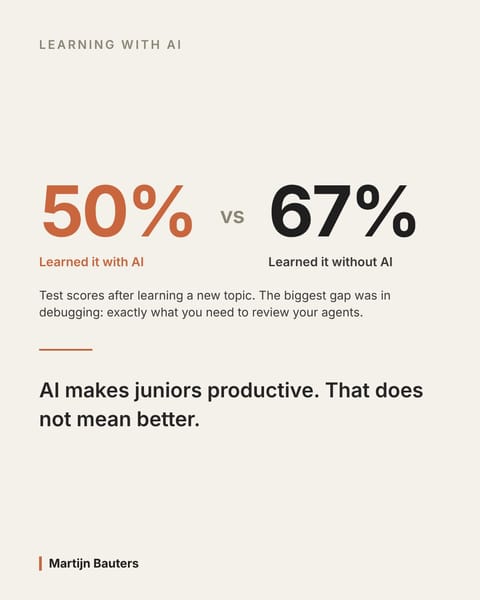
- In our industry AI makes juniors productive, but that does not mean better. Most recent graduates do not get or take the time to deep-dive the issues they have to resolve, as they hand most of these tasks over to their “agents”. This gives most of them the impression that they are not learning, as they shift directly into reviewing and steering their agents. We haven’t cracked the code ourselves. But if we want to make sure that in the future we still have strong senior employees, we need to tackle this problem sooner rather than
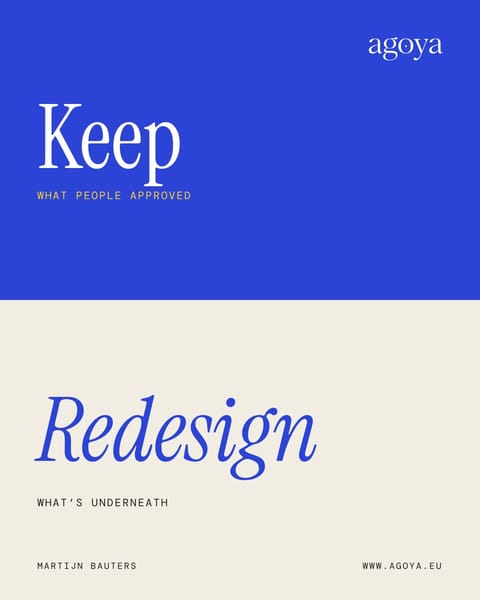
- A colleague from sales vibe-coded a working app over the weekend. Now what? Now the industrialisation should happen. It’s probably the best spec sheet you’ll get: it’s built by the person who owns the problem, and tested by him and, most often in his own enthusiasm, by his team and his partner as well. The issue is that these apps often run on a single machine and aren’t connected, and there’s no login or audit trail, that's the technical side that needs to fit in your architecture. What we often do at Agoya is keep what people
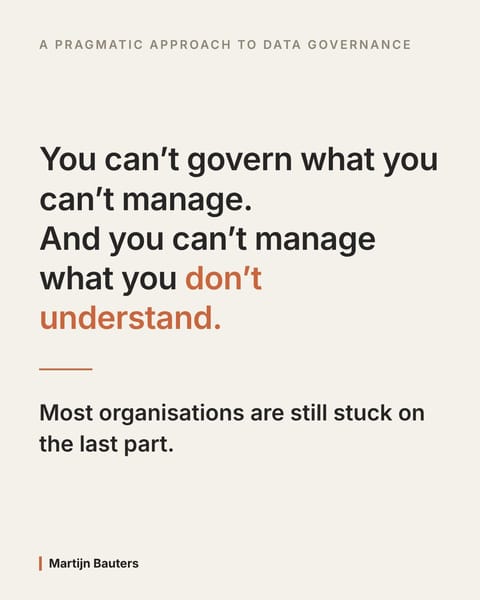
- A pragmatic approach to data governance follows an easy logic: “You can’t govern what you can’t manage, and you can’t manage what you don’t understand.” A lot of organisations are still struggling with the last part: understanding the amount of information they have. For that, there are in my opinion two artifacts that are important: a data catalogue and an information model. They should go hand in hand. The best way to understand your data is by building that data catalogue. You don’t want to aim for perfection, but you do want to
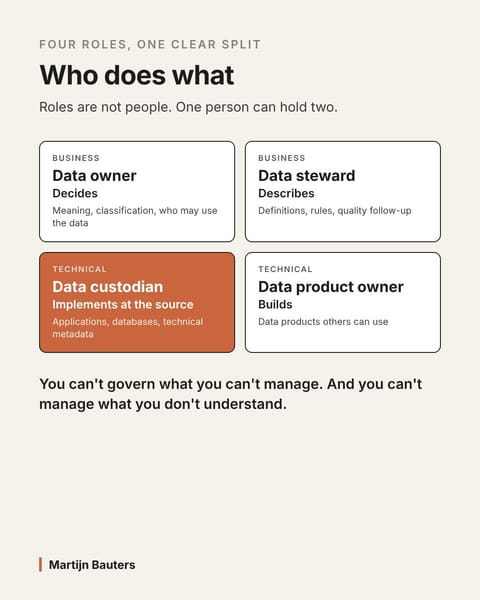
- Last week we kicked off with our data custodians at RVA. Before anyone documents anything, everyone needs to know who does what. We work with four roles. 🙋The data owner decides what the data means and who may use it. 🙋The data steward describes it: definitions, rules, quality. 🙋The data custodian implements at the source: applications, databases, technical metadata. 🙋The data product owner builds what others use. We spent as much time on what a custodian doesn’t do. They don’t decide on entity meaning or write business
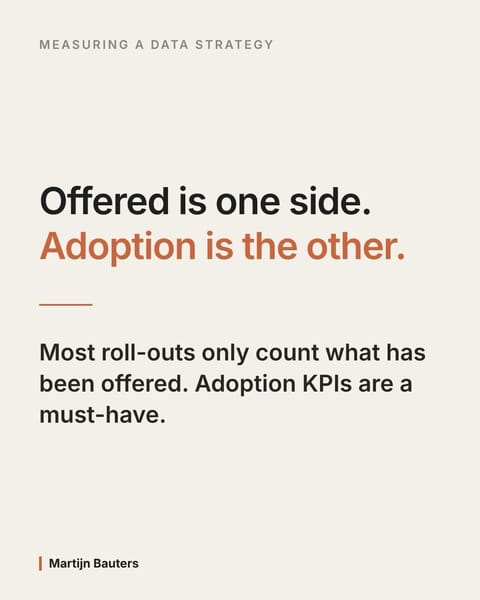
- We see it many times: a data strategy, data excellence or data governance roll-out where the only KPIs count what has been offered. On their own, those are just one side of what you need. The second group of KPIs is a must-have: adoption. For example: "Every department has a trained data owner" counts what was offered. "How many of those data owners approved or changed a definition in the last quarter" counts adoption. The first tells you the training happened, the latter tells you the role exists in practice. At the end of the
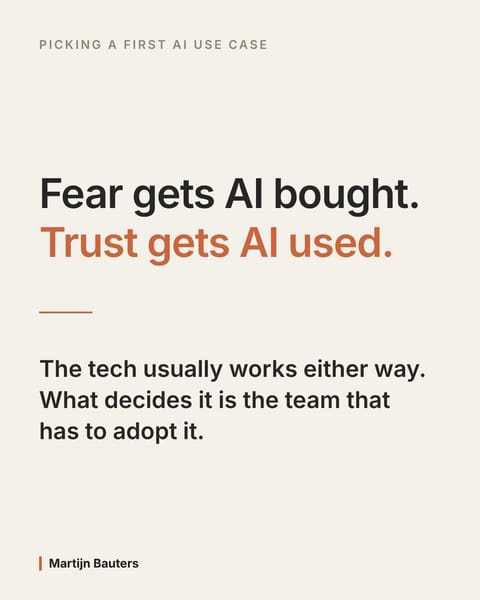
- The fear part is easy as nobody wants to fall behind, so the licences and tools get bought and the project gets approved, yet that doesn't mean anyone will use it... When we pick a first use case with a company, there is usually a list. One idea is the most impressive on paper, another is smaller and less exciting. More and more often we start with the smaller one, if the team that has to use it every day is capable of championing for it. A first project has one job: make people trust the tool or technology enough to try the next
This page shows public professional information only, each fact cited. Is this you? send a correction, or ask for removal within 24 hours, no questions asked.