Overview
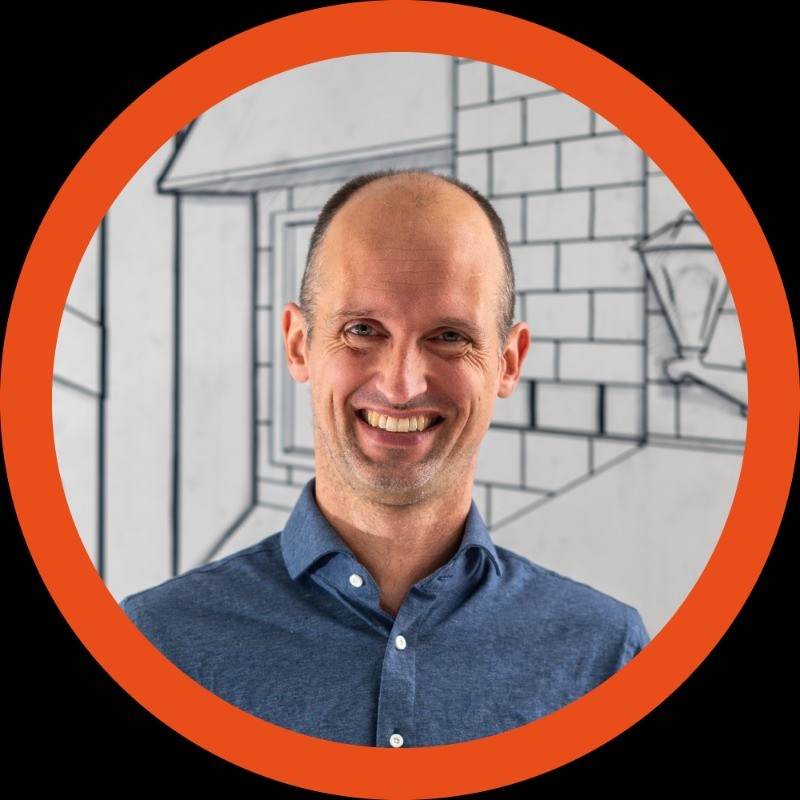
Niels Arts is a co-founder of Clonable, a role he has held since November 2021. He is based in Gemert and states expertise in digital marketing, innovation development, e-commerce, start-ups and presentations.
Between October 2017 and April 2025 he was co-owner of Wecommerce V.O.F., and from January 2013 to October 2023 he was a webshop partner of Hockeygear.eu, Keepershandschoenen-shop.nl and related shops. He was a partner in World of Watch Straps at Horloge-bandjes.nl from 2010 to 2017, owner of Cursusvoor.nl from 2010 to 2014, and owner and project leader at Arts Media from 2005 to 2011. From 2012 to 2017 he worked as an online strategist, consultant and marketer for various companies.
Earlier interim and freelance assignments included senior online marketeer at Hendriks Uden, online marketeer and SEO-SEA specialist at StelZorg and at TIAS School for Business and Society, online marketeer for e-commerce at Unicef, webcoordinator at KNMP, webmanager and project leader at Deelgemeente Kralingen-Crooswijk, webshop project manager at Van Maanen, webmanager at the Centrum voor Wiskunde en Informatica, editor at Weijmans publishers, contentmanager at Rabobank Nederland and editor at Castel communicatiegroep.
Arts holds a master's degree in history from Radboud University, completed in 2004, and has taken courses including Nima Emarketing B and Prince2 project management.
Career history

Insights & ideas
The through-line
Everything Niels Arts says circles back to one problem: getting a website to work properly in another country. The origin was practical rather than theoretical, discovered while running an online marketing company and trying to help an e-commerce client expand internationally, a gap that became Clonable, a platform for localising and translating websites for multiple markets [12]. The framing has stayed constant since, whether the subject is multilingual WordPress, international e-commerce, global SEO, or the mechanics of translation quality [11][14]. His own summary of the ambition is deliberately unserious and entirely sincere: "To infinity and beyond in online internationalisation..." [6].
What has moved is the emphasis inside that mission. The early work was about making the process happen at all; the more recent preoccupation is with quality and control, a run of features grouped under "improve translation / localisation quality" where the stated goal is "to generate the best quality content for each language and target group" [6]. Alongside that sits a growing interest in the decision that comes before the build, forecasting international SEO traffic before a company goes global, which he treats as the point where his SEO background and his product work meet [1].
On where the idea came from, and what came after
The need for website internationalisation was not identified from the outside. He and a co-founder ran into it while operating an online marketing company and working with an e-commerce client who wanted to expand internationally, and that is what led to building Clonable [12]. He is candid about the arc that followed: an early naive optimism about the startup's potential after receiving interest at an e-commerce event, then the far harder reality of building a product that actually worked reliably for all customers, a stretch of three and a half years [12]. The interest of a room at an event and a product that holds up across every customer are two different things, and the gap between them is the part of founding he describes as the emotional journey [12].
On automation with a manual override
The product philosophy is that automation should be the default and personalisation should always be available on top of it. He states the principle directly: "We aim not only to make our automations better, but also our personalisation options. Because every site and every content is a bit different, and as a site owner you'd like to be able to strive for the best results (...while in most cases you just want to be lazy)" [6]. That parenthesis is the honest half of the argument. Most site owners will never touch the controls, so the automated path has to be good; the controls exist for the cases where it is not.
The concrete expressions of this are context questions and style prompts. Context questions help when "you doubt if a specific text / some parts of a page or correct, because they have a slightly other context or purpose than most pages on your website", and the fix is to tell the system "something about the place of the text and what it's meant to do" [6]. Style prompts go further, letting the tone and branding change per language: "It means you can now completely change the 'vibe' of your website per language. The branding and the style so to speak" [3]. He is explicit that this was a long-awaited capability, and that the earlier context questions update made the system understand the original text better, which the style layer then builds on [3].
On testing by going to extremes
His method for validating a new feature is to push it past anything a customer would ask for and see whether it holds. Returning from holiday, he added a "Pirate" language style to the beta and pointed it at his own holiday house website in the Ardennes, with the instruction to "Translate the text as if you are a rough, rum-drinking pirate captain addressing your crew. Use heavy pirate slang and describe the holiday home and its surroundings as a pirate hideout and a place to bury treasure" [3]. The reasoning behind the joke is a real quality question: "I needed to know if our style prompts actually listens to extreme instructions or if it just politely ignores them" [3]. A feature that quietly softens an instruction it does not like is a feature that cannot be trusted on the ordinary instructions either.
On forecasting before you go global
The pre-launch question interests him as much as the execution. He frames it as forecasting your international SEO traffic before going global, and treats it as the natural combination of two decades of SEO knowledge with the internationalisation work [1]. It is the same instinct that runs through the product side: decide what the target market and target group actually need before pouring effort into building for them [1][6].
On meeting the ecosystem where it is
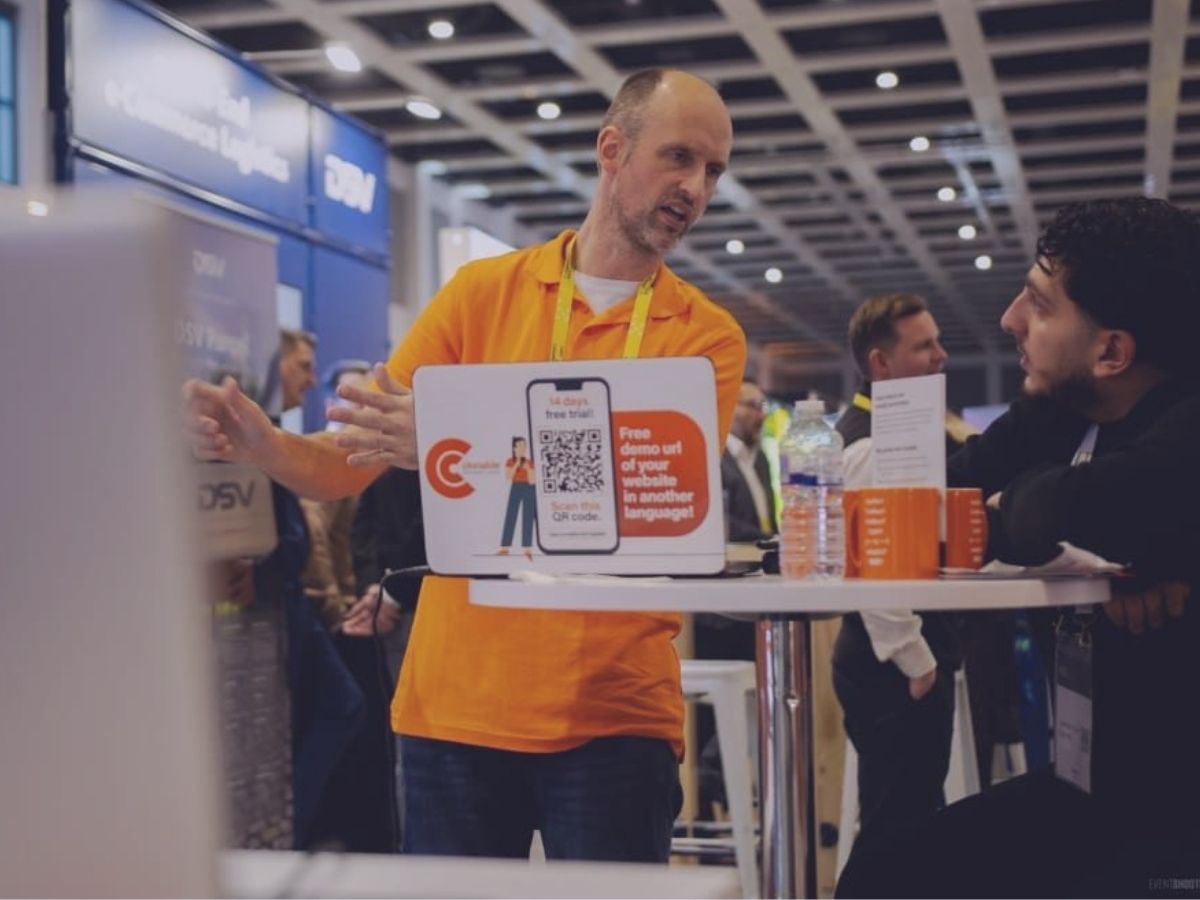
Much of his outward-facing energy goes into the specific communities that run multilingual sites. He talks about Clonable and internationalisation on WordPress-focused podcasts and about multilingual WordPress, global SEO and international e-commerce with interviewers in that world [2][11][13][14], and describes the platform's purpose as supporting "WordPress and other users with their online internationalisation journey" [2]. When he travels, he does it the same way: heading to GITEX AI EUROPE in Berlin with the Embassy of the Kingdom of the Netherlands in Germany, he used the spare Sunday to ask publicly for introductions to online marketing and web development agencies working heavily with WordPress, WooCommerce, Shopware or Magento [9][10]. The social side is treated as part of the job rather than separate from it, down to offering to bring orange Clonable shirts to a side event around the Netherlands against Morocco [9]. He is also frank about how these conversations go, admitting he was invited "to ramble on about my personal adventures in the last 2 decades" and that once again he "didn't realise time was flying" [2][11].
On running the operation without dropping the ball
Practical continuity matters to him and he says so plainly. Moving the office to Uden was justified on two grounds, being closer to the highway while staying close to where most employees live, and the announcement came with a commitment that support would continue through the move plus a request to postpone small, non-urgent issues to the following week [7]. Holidays are taken and declared rather than half-worked: "my holiday has started... So I will probably not reply to any messages..." [5]. Whether people actually stop is another matter, given the aside that some think sleep is overrated [9].
On what he reads outside the day job
His attention extends beyond his own field to how digital evidence can be manipulated, flagging a piece on planting a nuclear plant in Iran as both "Good and worrying" [4].
Takeaways
- The internationalisation problem was found in practice, while running an online marketing company and helping an e-commerce client expand abroad, not identified as a market opportunity first [12].
- Event interest is not product-market fit: enthusiasm at an e-commerce event was followed by three and a half years of building something that worked reliably for all customers [12].
- Build for the lazy default and the demanding exception at once, improving "not only our automations, but also our personalisation options" because "every site and every content is a bit different" [6].
- Context matters more than vocabulary in translation quality: tell the system "the place of the text and what it's meant to do" and the output improves [6].
- Style prompts allow the branding and tone to differ per language, so you "completely change the 'vibe' of your website per language" [3].
- Test new features with instructions extreme enough to reveal whether the system obeys or "just politely ignores them" [3].
- Forecast international SEO traffic before committing to a market rather than after launching in it [1].
- Announce operational disruption in advance, keep support running through it, and ask customers to defer only the small stuff [7].
Media & appearances
- Jack CohenYouTubeS01 E17 THE EMOTIONAL JOURNEY OF FOUNDING A STARTUP | Featuring Niels ArtsNiels Arts discusses how he and a co-founder discovered the need for website internationalization while running an online marketing company and helping an e-commerce client expand internationally, which led to building Clonable, a platform that simplifies the process of localizing and translating websites for multiple countries. He describes the early naive optimism about the startup's potential after receiving interest at an e-commerce event, followed by the challenging reality of actually building a product that worked reliably for all customers over the subsequent three-and-a-half years.
- WP BuildsYouTube479 – How Clonable automates and personalises multisite translation for WordPress
- Seahawk MediaYouTubeNiels Arts, Co-Founder of Clonable, on Multilingual WordPress, Global SEO, and E-commerce | E153
In the news
- Next week we'll be in Cologne for #DMEXCO. Are you an online marketing or webdevelopment agency and going to this event? Connect with me to see if we can become partners. Here on LinkedIn and / or in the DMEXCO app.
- 𝗪𝗲’𝗿𝗲 𝗵𝗲𝗮𝗱𝗶𝗻𝗴 𝘁𝗼 𝗗𝗠𝗘𝗫𝗖𝗢 𝟮𝟬𝟮𝟲! 🚀 On September 23 & 24, you’ll find the Clonable team in Cologne at 𝗛𝗮𝗹𝗹 𝟳.𝟭, 𝘀𝘁𝗮𝗻𝗱 𝗙𝟬𝟰𝟰. Want to see how Clonable works in practice? Stop by our stand for a live demo and discover how you can expand your website internationally without adding more and more work for every new market. And don’t miss 🌎 Niels Arts 🌍 Arts on stage! On September 23 at 11:00, Niels will take the Start-up Stage with his talk:“What if every new market increased revenue instead of
- Question: am I the only one? I've noticed that LinkedIn is 'facebooking / tiktokking' a lot...too much in my opinion. There's way too many videos on this platform. Of animals, feelgood stuff, and others which get a lot of views but are annoying in my opinion. I like the 'boring' stuff way more. It's work, and I don't want to see minutes long videos, I want to see updates of people that completed a project, share some knowledge about their work, about partnerships, and so on... Maybe together with an image, gif or once per month with
- Still finetuning a bit next weeks, and doing some A/B tests, but our new website is live...Proud to present a more professional branding, which fits our target group a lot better.
- Which GIF perfectly describes in which country you live? With some humor in it? Drop your best GIF in the comments 🌍👇 I'm playing with the thought of building a visual collection from around the world to use for our Clonable country-specific 404 pages, and maybe also for some backend status updates, newsletters, and so on. Drop your best GIF in the comments, and add your flag icon underneath so we know which country it belongs to... Oh, and if you like other gifs let me know which ones by liking those. #Clonable
- Do you have a blog, or do you share content on video or LinkedIn about online marketing or webdevelopment? And excited about Clonable? Checkout our Reditus Affiliate Program. Check our campaigns here: https://lnkd.in/eHPgZ2GN
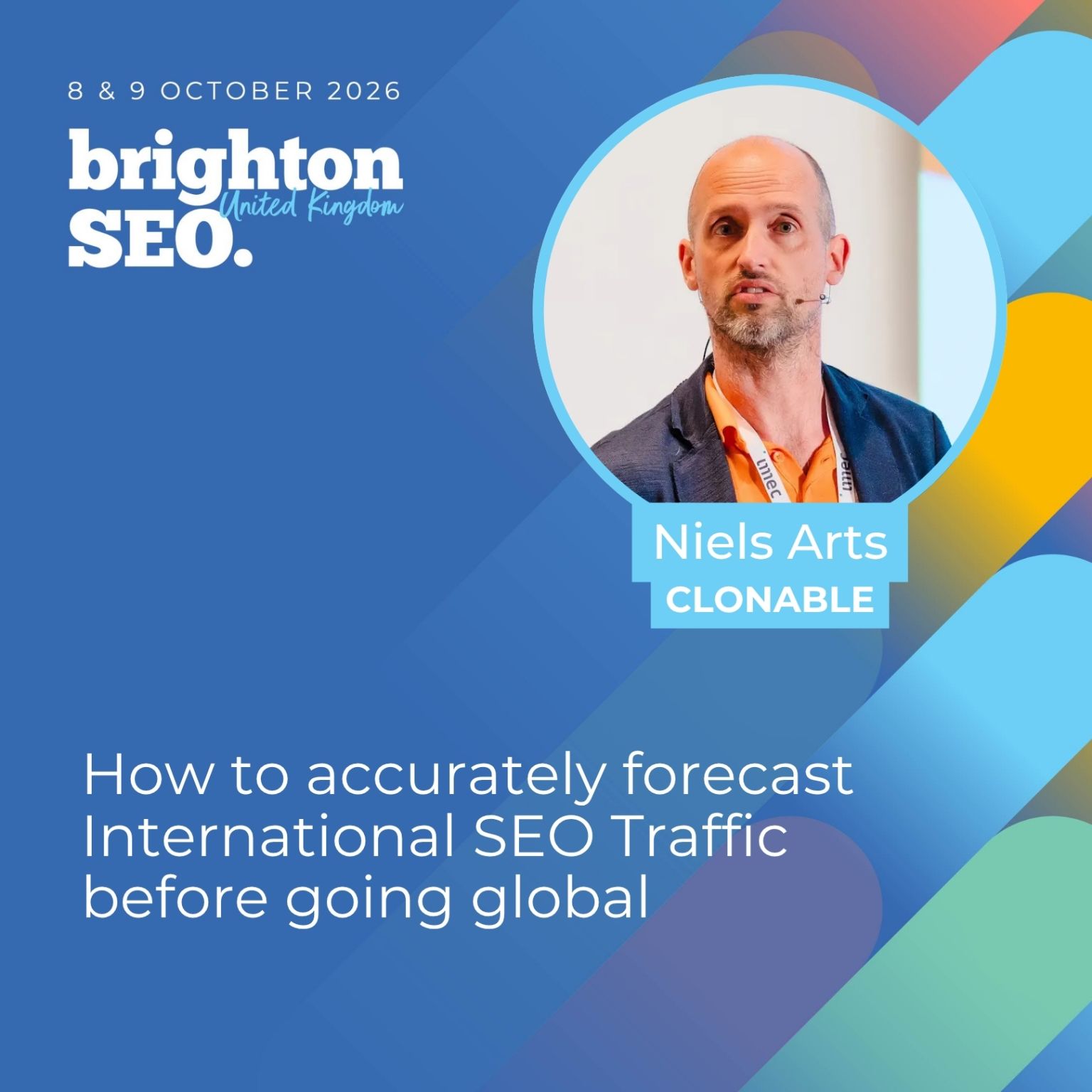
- It's great to announce I will be speaking at brightonSEO in october about forecasting your international SEO traffic before going global. Feels good to combine my knowledge of SEO with my work at Clonable. #seo #internationalisation
- Had a really nice conversation with Nathan Wrigley from WP Builds in his podcast. Thanks for inviting me to ramble on about my personal adventures in the last 2 decades and why and what we have build with Clonable to support WordPress and other users with their online internationalisation journey. You can listen to it on different channels https://lnkd.in/eEnhds6y https://lnkd.in/eF8CbRna https://lnkd.in/euWXrPuC https://lnkd.in/e3kU5W2w
Related profiles
This page shows public professional information only, each fact cited. Is this you? send a correction, or ask for removal within 24 hours, no questions asked.