
Overview
Olivier Delangre is the co-founder and CEO of amoobi, a company he co-founded in April 2011 and where he is based in Belgium. From September 2009 to November 2015 he was a coach and co-founder at Starter Coaching, and between July 2009 and October 2011 he was a partner at EmendoPro.
His earlier career was spent at the Université libre de Bruxelles, where he was a teaching assistant from September 2003 to September 2007, president of the researcher's association from 2006 to 2007, a researcher from 2007 to 2008 and an entrepreneur from October 2008 to October 2011. He held student internships at Telematics and Services in July 2002 and at Getronics in July 2001.
Delangre studied applied sciences at the Université libre de Bruxelles, completing a master's degree in 2003, followed by a DEA in engineering and a PhD in engineering awarded in 2008, the latter also conferred by the University of Lille 1 Sciences and Technology. He took a master's in management at the Solvay Brussels School of Economics and Management in 2007 and returned there for executive education in entrepreneurship in 2008-2009 and 2013-2014. He also completed the Venture Management program at RealAcad in 2008 and a Scale-up Masterclass at Vlerick Business School in 2019-2020.
Career history

Insights & ideas
The through-line
Across Olivier Delangre's posts and interviews, one preoccupation never lets up: physical stores are data-blind compared to e-commerce, and closing that gap is both a technical and a mindset problem. In earlier interviews he explained the mechanics of this gap and how Amoobi's sensors fill it [15][17]; in more recent posts the framing has shifted toward industry-wide validation, pointing to Carrefour, Walmart, Leroy Merlin and others as proof that the "Connected Store" is no longer hype but an accelerating reality [10][13]. The constant underneath both phases is his insistence that AI and technology are only as good as the granular, real-world behavioral data feeding them [7][12].
On AI hype versus data
Delangre is consistently skeptical of AI conversation that isn't grounded in real inputs. At Connect Lille he noted that "the current conversation centers around AI. Everyone is talking about it, but the reality is always grounded in data" [12], and pushed the same audience on a concrete question: "How can you leverage AI for the physical store if you can't actually 'see' it?" [12]. Elsewhere he puts it more bluntly: "AI doesn't fix bad data, it just make it looks more convincing and shiny" [7], adding that retailers focused on physical stores need "quality data ... about your customers" as the precondition for anything else [7].
On the Connected Store
He treats the "Connected Store" as a real, trackable trend rather than a marketing term. Asked directly whether it "actually exist[s] in real life, or is it just industry hype," his answer was that "it's becoming a reality much faster than many think" [10], citing Carrefour's partnership with Vusion following Walmart's similar move as evidence that "physical operations are fully digitalized" [10]. He frames the payoff in category management terms: digitalizing the shelf "bridges the gap between e-commerce-style insights and brick-and-mortar reality" [10], and building that connected environment requires "granular, real-world data on how shoppers navigate your aisles" rather than "guesswork or buzzwords" [12].
On store layout and congestion
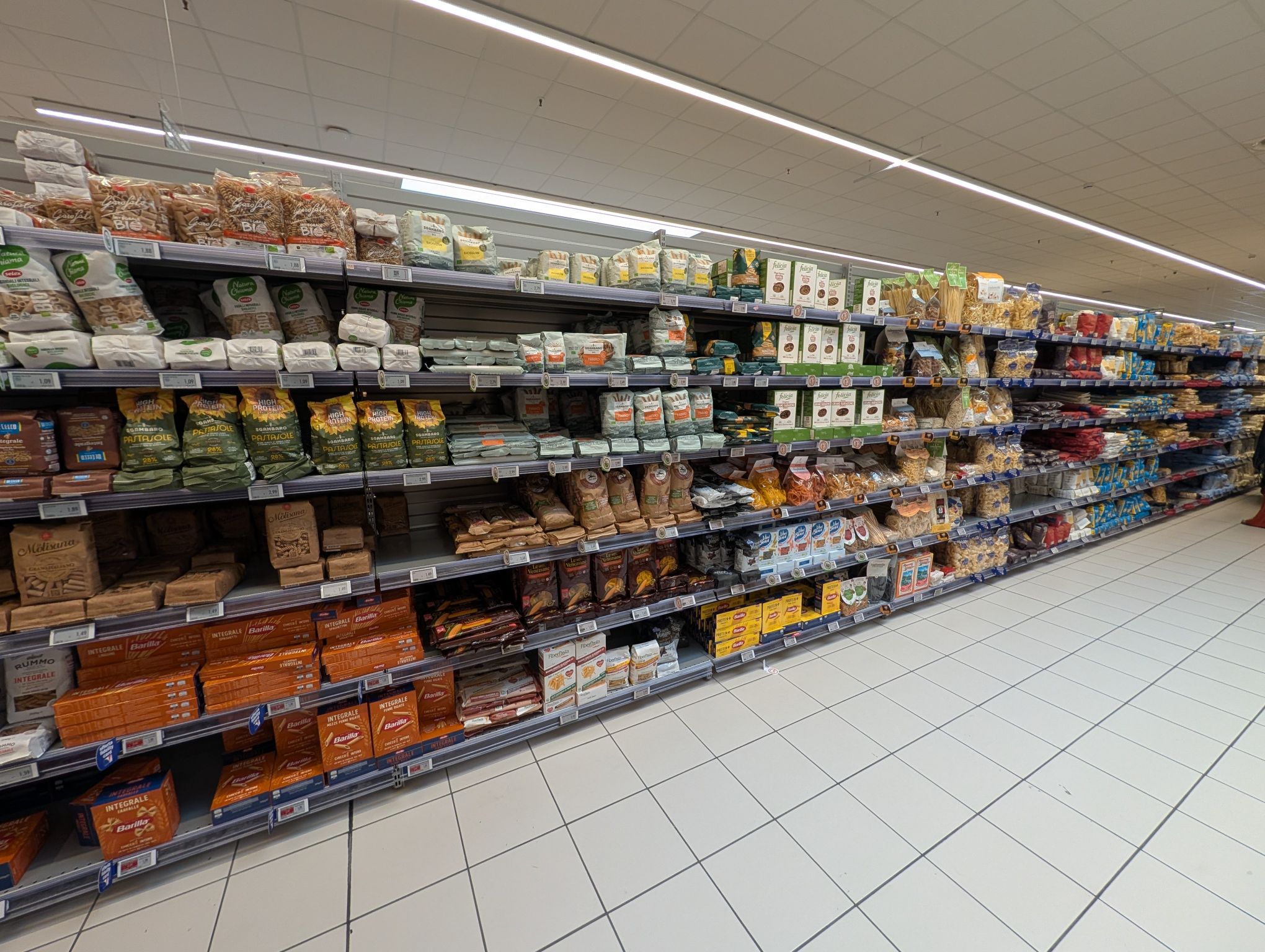
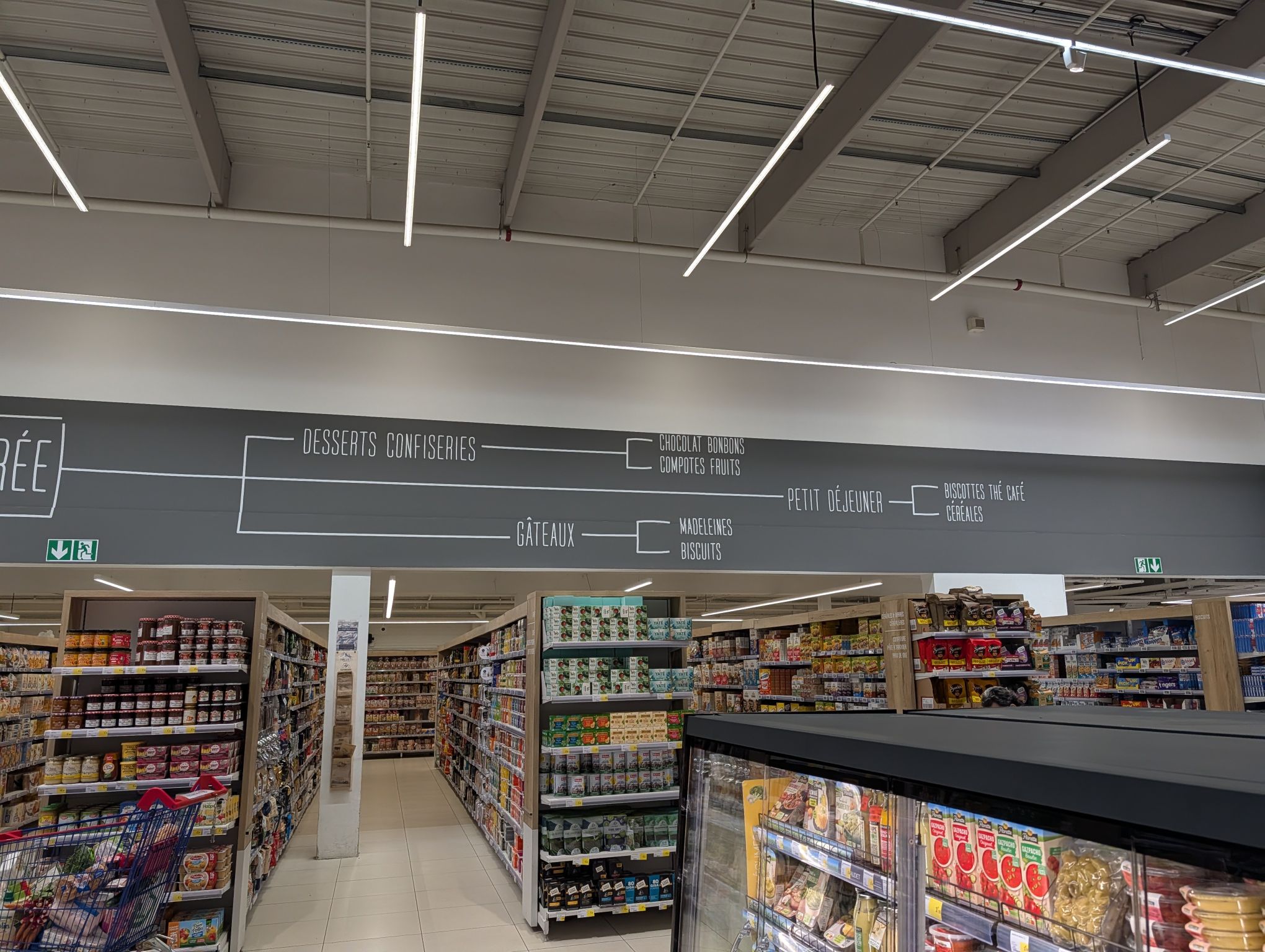
A recurring behavioral claim is that shoppers avoid friction. On the podcast circuit he coined the idea that "congestion kills conversion," arguing that excessive displays and clutter reduce sales because "shoppers naturally choose paths of least resistance and avoid congested areas" [16]. In his written posts he applies this operationally: "space creates movement" and shoppers "navigate toward open spaces where they feel comfortable moving," while something as ordinary as an employee restocking a display can create "an instant bottleneck" [9]. He also treats decision-tree-driven layout as something retailers should be deliberate about, asking whether "shoppers actually understand your store layout and how sub-categories are grouped together" [2], and observing in store visits that categories like pasta are "almost always organized as a brand block on the customer decision tree" [1].
On lost sales
Delangre frames Amoobi's purpose around sales that never happen rather than sales that do: "We track lost sales that didn't make it to the register" [6][17]. He describes the underlying system as functioning "similar to Google Analytics for brick-and-mortar locations," identifying where customers hesitate before recommending layout or adjacency changes that "typically result in 5-15% sales increases" [17].
From the stage
In podcast appearances he goes further into the technical description than his written posts do, explaining that Amoobi relies on "3D optical sensors placed in store ceilings to track customer movements and behavior" [15], and drawing the direct analogy to web analytics tools to explain the model to a general audience [17]. The "congestion kills conversion" phrase itself appears to originate from these spoken appearances rather than his LinkedIn writing [16].
Takeaways
- Treat AI claims with skepticism unless backed by granular physical-store data; "AI doesn't fix bad data, it just make it looks more convincing and shiny" [7].
- Watch for real-world Connected Store proof points, not just industry talk: Carrefour/Vusion and Walmart's computer-vision moves are cited as evidence the trend is materializing now [10].
- Audit in-store congestion actively: replenishment schedules and staff habits can create bottlenecks that shoppers avoid entirely, directly suppressing conversion [9][16].
- Measure "lost sales" rather than only completed transactions; layout and adjacency fixes informed by shopper hesitation data have produced 5-15% sales increases in Amoobi's tracked deployments [17].
- Check whether category layouts (e.g. brand-block merchandising) actually match how customers mentally navigate the decision tree, rather than assuming they do [1][2].
Media & appearances
- AmoobiYouTubeWe track sales that didn't make it to the register - Olivier Delangre on ARCAST podcastOlivier Delangre discusses how Amoobi uses 3D ceiling sensors to track shoppers' anonymous movements and behavior patterns in physical retail stores, similar to Google Analytics for brick-and-mortar locations. He explains that the technology identifies where customers hesitate and spend time, then provides recommendations for store layout optimization and product adjacencies that typically result in 5-15% sales increases. He emphasizes that the system focuses on understanding and recovering lost sales that never reached the register by making the shopping path easier for customers.
- AmoobiYouTubePure FM Empreinte digitale Olivier Delangre présente Amoobi - 2017Olivier Delangre explains that Amoobi uses 3D optical sensors placed in store ceilings to track customer movements and behavior inside retail stores, filling a gap in physical retail where stores lack the detailed customer interaction data available to online retailers.
- AmoobiYouTubeCongestion kills Conversion - Extract from ARCAST podcast with Olivier DelangreOlivier Delangre discusses how excessive displays and clutter in retail stores actually reduce sales rather than increase them, explaining that shoppers naturally choose paths of least resistance and avoid congested areas. He argues that when displays create visual or physical congestion in an aisle, they prevent customers from entering that space, coining the phrase "congestion kills conversion" to describe this phenomenon.
In the news
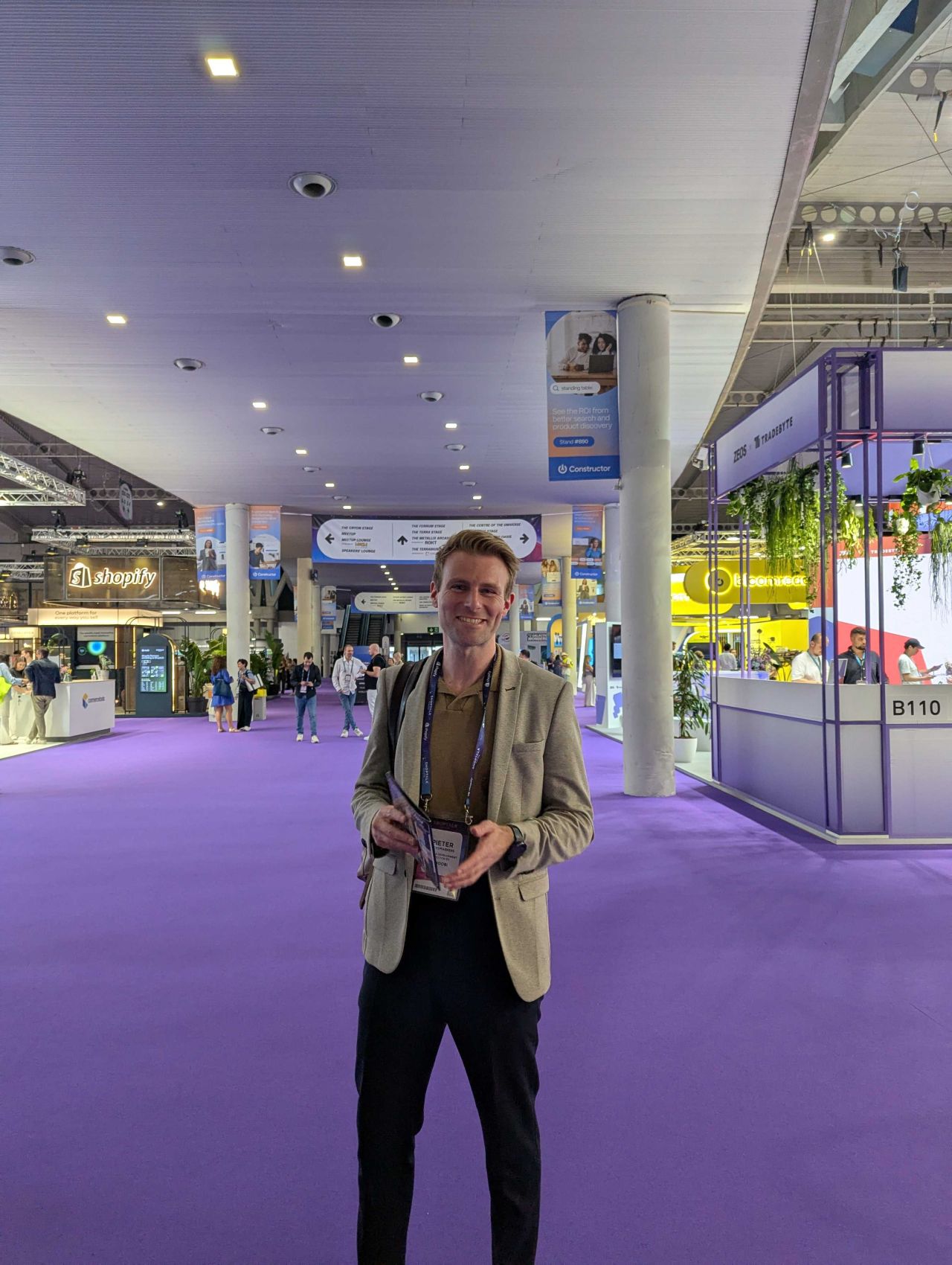
- Heading to Groceryshop in Las Vegas next week? While I won't be attending this year, my colleague Pieter will be on the ground and ready to connect. With AI rapidly transforming store management, automation opportunities are endless—but your AI is only as smart as the data feeding it. That’s precisely where Amoobi comes in. Connect with Us: Meet on-site: Drop Pieter a message directly to grab a coffee in Vegas. Get introduced: Send me a quick DM, and I'll gladly set up the connection. And if you've never met Pieter, that's him at
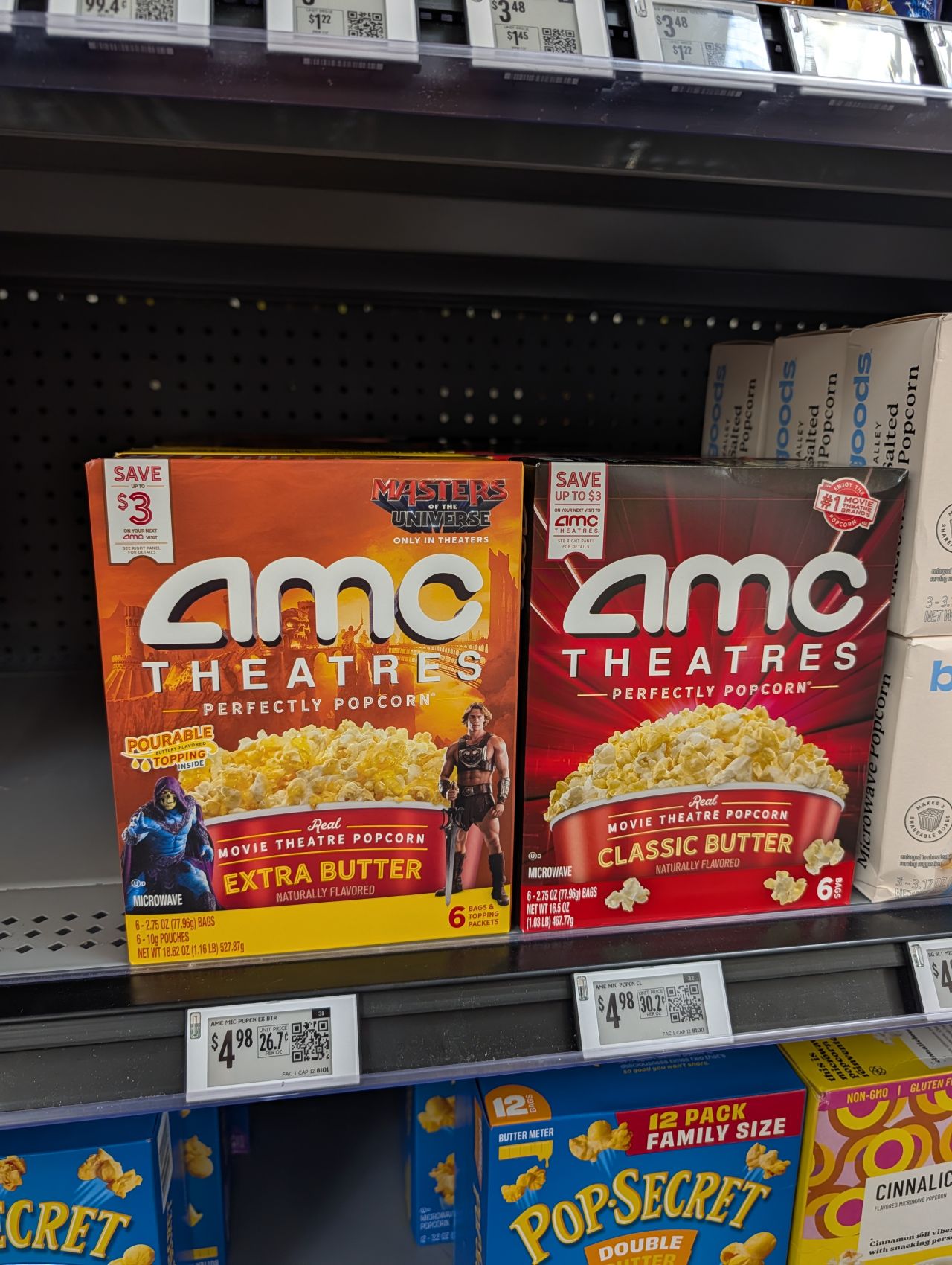
- Seen at Walmart, AMC Theatres branded popcorn - AMC is the largest cinema operator in the world operating more than 860 theaters across United States and Europe (ODEON in Europe). If a Theater operator can be a consumer brand, how far can this go? Which (non food) consumer brand do you know that could become a food brand?
- Stories from store visits on holidays – Episode 3 In Italy, pasta is an essential part of almost every meal. Here are a few shots of the pasta aisle at a Mercatò Extra—pretty impressive variety! One thing that remains consistent across markets: pasta is almost always organized as a brand block on the customer decision tree. Have you ever encountered a pasta category that wasn't merchandised by brand block?
- Holiday store-spotting, episode 2! 🏖️ Why not turn the customer decision tree into store decor? That seems to be the exact strategy behind this Leclerc layout. When done well, it’s a brilliant way to guide shoppers seamlessly through the aisles. 👇 It’s a fun, visual example of a question we think about constantly at Amoobi: Do your shoppers actually understand your store layout and how sub-categories are grouped together?
- What do I do on holidays? I visit stores of course 😅 In a Leclerc Hypermarket in France I found this machine in the wine department. Want your preferred wine chilled immediately, no problem it will be done in 4 steps. Select how cold you want the bottle and you get it. I didn't try it but I think it's a nice service for their clients. Would be curious to know if people stop, use it , coming from which sub-category of wine...too bad it's not an Amoobi store. Have you seen this before ?
- As I'm seeing in my timeline several people attending right now the Omnichannel Leadership program at Cornell University, it brings back good memories as I was myself attending one of the first sessions 3 years ago in beautiful Roosevelt Island in NYC (they now moved the program to Ithaca). It was such an intense and rewarding program surrounded by many retail experts coming from all over the world. Back then, AI was just a buzzword, retail media was already front stage and opportunities were already limitless. Wishing all the
- Morrisons in the UK announced today the test of the Caper Smart Trolley from Instacart. To my knowledge, it's the first attempt of the Caper trolley in Europe (though Colruyt Group has been testing a home made smart trolley for almost 2 years). I tested the Caper Smart trolley at Schnuck Markets, Inc. in Missouri 2 years ago in 2024. The experience is really cool even for fresh products like bananas where you do have to enter a code. However, the product recognition for traditional center stores was already really good. Unlike
- We track lost sales that didn't make it to the register 💸 Still don't know what we do at Amoobi? I tried to provide a concise yet clear answer to that question asked by James during a recent podcast of the Category Management Association 👇
Related profiles

This page shows public professional information only, each fact cited. Is this you? send a correction, or ask for removal within 24 hours, no questions asked.