Overview
Omar Mohout is a professor of Entrepreneurship who combines academic work with hands-on advisory for Belgian tech scaleups. He helps founders navigate funding rounds, acquisition processes, and growth strategy.
He previously chaired the board of BeCentral, the digital campus at Brussels Central Station, and served on the board of Startups.be. He was a fellow at Sirris, where he worked alongside the team that launched Startathlon, one of Belgium's first formal accelerator programmes.
He created the Belgian tech "mafias" concept and visualization, mapping the key companies whose alumni networks went on to seed the next generation of Belgian startups and investors. The work identified Netlog, Porthus, Lernout and Hauspie, and ML6 among the top talent accelerators that built the Belgian tech scene.
He publishes detailed ecosystem analyses through his "Silicon Waffles" newsletter, covering individual cities including Brussels and Ghent with data on headcount growth, investment patterns, founder demographics, and exit histories.
Career history
- Professor of Entrepreneurshipcurrent
- Former ChairmanBeCentral
- Former Board MemberStartups.be
- FellowSirris


Notable Work
- Belgian tech "mafias" visualization mapping talent networks
- "How Brussels became Belgium's most surprising startup city" (Apr 2026)
- "Ghent: the most connected tech ecosystem" (Nov 2025)
- Silicon Waffles newsletter
Talks about
Insights & ideas
The through-line
Across everything, one argument repeats: building the thing is no longer the hard part, and Europe keeps losing on the second half of the job. European founders over-invest in value creation (the product) and under-invest in valorisation, meaning distribution and value capture, which is why faster-growing US rivals with objectively worse products end up acquiring them [6]. The same diagnosis surfaces in the 2026 Scale-Ups Confidence Survey of 226 Belgian founders and CEOs, where 64% named market demand and sales execution as their number one challenge, ahead of funding and ahead of talent: "The ability to convert pipeline into revenue is now the defining constraint. Building products is no longer the hard part; selling them at scale is" [1]. Confidence sits at 7.7/10, solid but down from the previous peak, and the bottleneck has moved rather than disappeared [1].
The second constant is a refusal to treat European weakness as destiny. "EUROPE IS NOT A MUSEUM. IT'S THE FUTURE" is the framing: Europe invented the smartphone chip, the programming language powering AI, and the operating system running the majority of the world's servers [4]. What has shifted over time is a long-held technical dogma. "I have preached it for decades myself: if it's not software, it doesn't scale" [2] is now stated as a position being revised, because AI has opened a path to scale for businesses that were previously written off as un-investable.
On valorisation, and the 2:1 rule
The core prescription is budgetary. At scale, a tech company's sales and marketing should cost roughly twice R&D: every €1 of development matched by €2 of valorisation spend, which most Belgian companies simply fail to do [6]. This is not a soft cultural point about ambition, it is a spending ratio, and the consequence of getting it wrong is being outsold by a weaker product and then bought by the company that outsold you [6]. Marketing is not a separate discipline in this view: "Marketing is voor mij schaalbare sales" [6].
On product-market fit
Product-market fit has three testable conditions rather than a feeling: a minimum of around 40% retention on an MVP, two to three cost-effective acquisition channels, and knowing what the organisation needs to reach the next order of magnitude in customers [6]. The channel condition carries a warning attached, that channels are temporary, so the two or three that work today are not a permanent asset [6]. Getting there starts from the right direction of travel: begin from problem seeks solution, not solution seeks problem, because solutions can always be built once a real market need is found. "Je moet op het probleem verliefd worden, op de oplossing. En dan kun je aanpassen richting de behoefte, het probleem" [6].
Speed to market matters more than polish, and the failure mode is specifically European perfectionism: "Als ge u niet schaamt voor uw eerste versie ga het laat aan de markt. En ik kan u zeggen we schamen ons zo dood dat we het gewoon niet doen" [6]. Compressed to a slogan: "Don is better than perfect" [6].
On the 5% problem and what a scale-up actually is
Of Belgium's roughly 5,000 digital tech companies, "Slechts 5% van de techbedrijven geraken aan 10 miljoen of meer omzet" [6]. The rest stall on growth plateaus, get acquired cheaply somewhere in the €3-7M revenue band, or fall apart through founder conflict [6]. A scale-up itself can be identified from public signals rather than self-description: 10 or more employees on payroll, venture capital investment of typically €1M or more from an institutional investor, and the opening of a foreign subsidiary. Age is irrelevant to the classification [6].
On funding and when to raise
Capital is a lever, not a starting condition. The smartest companies bootstrap until product-market fit and raise only when money will accelerate scaling, on the reasoning that money is much cheaper once you have traction [6]. This sits alongside the survey finding that funding is no longer what founders name as their binding constraint [1]. Ambition has not fallen away, since 98% expect growth in 2026, but the projections behind it are grounded, which reads as a maturation of forecasting discipline after the over-optimism of 2022-2023, with companies aligning projections to what they can operationally deliver [1].
On exits, IPOs and being for sale
The exit-as-playbook mentality, driven by a handful of outliers, is described as almost toxic [6]. The mechanics of price make the point: "De mooiste bedrijven die worden verkocht staan niet te koop, hè. De beste manier om een lage prijs te hebben is u te koop stellen" [6]. The structural remedy is more IPOs in Europe, so that its tech champions are not routinely absorbed by US buyers [6].
On market structure and choosing where to fight
Digital markets follow a power law in which the winner takes most, illustrated by Google holding 95.8% search share in Belgium [6]. That leaves two honest strategies and no third: dominate a category outright, or deliberately take a defensible niche in the long tail [6].
On founders knowing their limits
Founders should ask themselves the uncomfortable question of whether they are the right person to lead the next phase. Bringing in an external CEO is no longer perceived as weakness, and in a mature ecosystem every role, CFO and marketers included, rotates per growth phase [6]. Experience shows up in unglamorous places too: second-time founders pay far more attention to legal, tax and outsourcing than first-timers, because they have learned it saves time and pays for itself [6].
On superlinear growth and AI in services
The old venture logic was clean, invest in software because software scales with minimal marginal costs, and service firms needing an extra person for every extra project were left behind [2]. The distinction that matters now is between exponential growth, "doubling on doubling, a hockey stick that goes almost vertical", and superlinear growth, where "output rises faster than input - not infinitely fast, but significantly faster than linear" [2]. AI enables superlinear growth in professional services by decoupling output from headcount, the example being a 50-lawyer firm lifting capacity from 500 to 900 cases [2]. That makes service firms investable in a way they were not before.
On ecosystems and how they compound
An ecosystem's maturity is not measured by funding rounds or unicorn counts. It is measured by density of connectivity, the cyclical transfer of entrepreneurship, talent, capital and experience from one generation of startups to the next [3]. Every ecosystem has cornerstone companies, the hubs producing the highest concentration of serial entrepreneurs, highly connected investors and tier-one operators, and in Belgium that map runs through Showpad, Netlog, Aikido Security, Zembro, Donna, Banqup Group, ONTOFORCE, Collibra, Teamleader, Barco, TechWolf, Porthus, Telenet group, Indigo Diabetes, EVS, Hello Customer, Lexis® Create+, formerly Henchman, Deliverect, NGDATA, Vendorvue and Robovis [3]. Regional transformation follows the same logic over long horizons, as with a decade of LSU turning Limburg from a mining region into an innovation hub [5].
Takeaways
- Set the ratio deliberately: at scale, every €1 spent on development should be matched by roughly €2 on sales and marketing, and treat marketing as scalable sales [6].
- Test product-market fit against three conditions, around 40% retention on the MVP, two to three cost-effective acquisition channels, and knowing what the next order of magnitude of customers requires, remembering channels are temporary [6].
- Ship before you are comfortable, because the European default is to be so embarrassed by version one that it never leaves the building [6].
- Fall in love with the problem, not the solution, and start from problem seeks solution [6].
- Bootstrap to product-market fit and raise only when capital is a lever, since money is far cheaper once you have traction [6].
- Do not put yourself up for sale; the best companies that get sold were never on the market, and Europe needs more IPOs rather than more cheap acquisitions at €3-7M revenue [6].
- Pick your market position consciously, dominate a category or own a defensible niche in the long tail, because digital markets are power laws where the winner takes most [6].
- Judge an ecosystem by its density of connectivity and the recycling of talent, capital and experience between generations, not by unicorn counts [3].
In the news
- Looking back at 2014, it’s crazy how the world has evolved. Still happy that we tried to contribute to the conversation with our 5 books! Writing a book is easy in the beginning and hard towards the end, especially the last 20% where you need to bring everything together. But it forces you to clarify your thinking and define a direction, a North Star, something to believe in when the future feels foggy. Thanks to my compagnons de route: Jo Caudron, Omar Mohout, Nils van Dam and Jeremy Denisty for the shared thinking, the debates
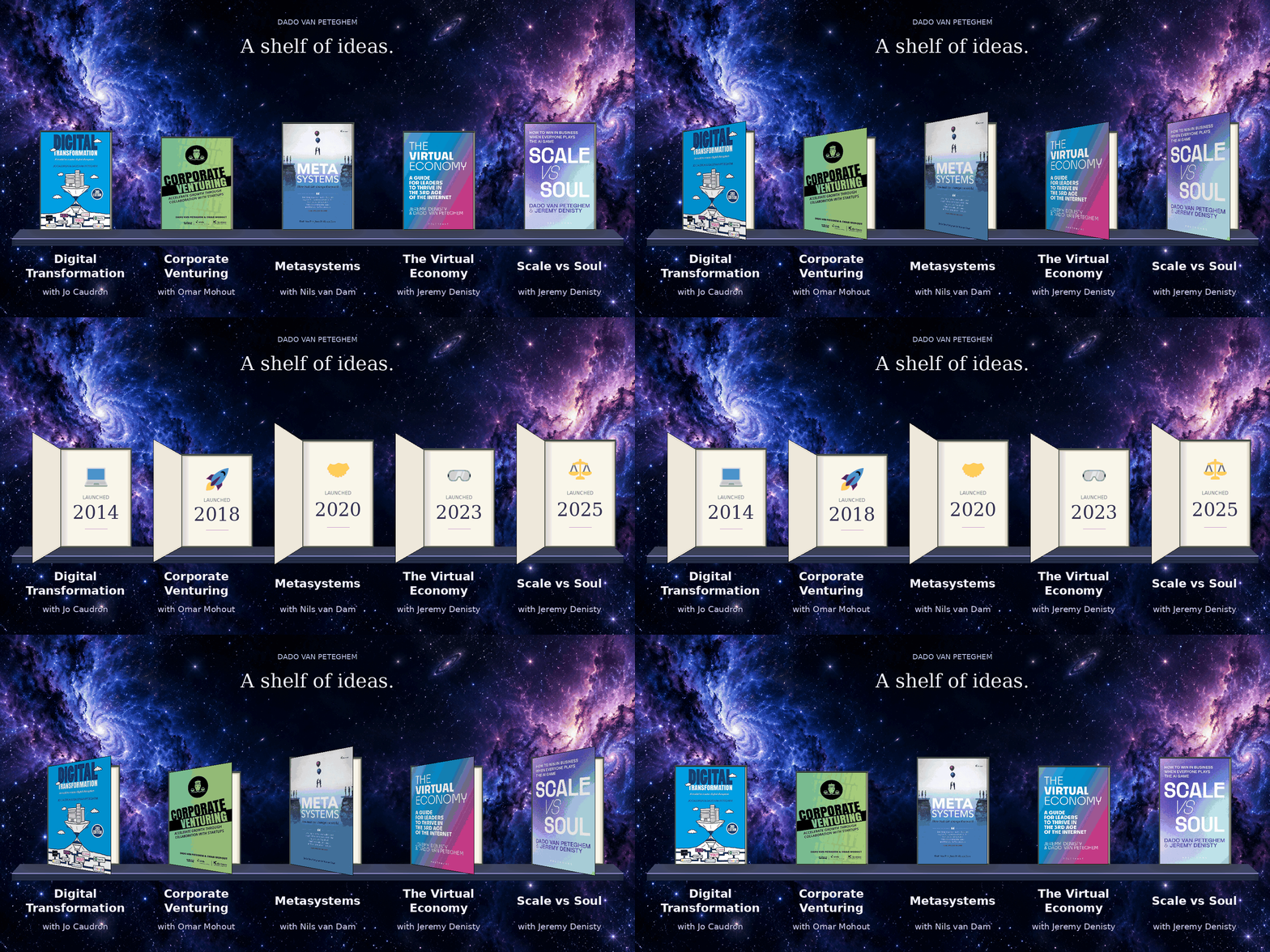
- In 2018 Omar Mohout and I wrote a book on Corporate Venturing. This year, he will be a speaker at Digital First 👌🏻 Omar is one of the smartest people I know so really honored to have him on stage! Currently he is Scaleup Director, M&A & Finance at Deloitte, advising high-growth tech companies and Fortune 500 enterprises on growth strategy and value creation. His talk will be about 👉 DATA VALORISATION: TURNING DATA INTO BUSINESS VALUE 📊 In a digital-first world, data is everywhere, but value is rare. Discover why data is the

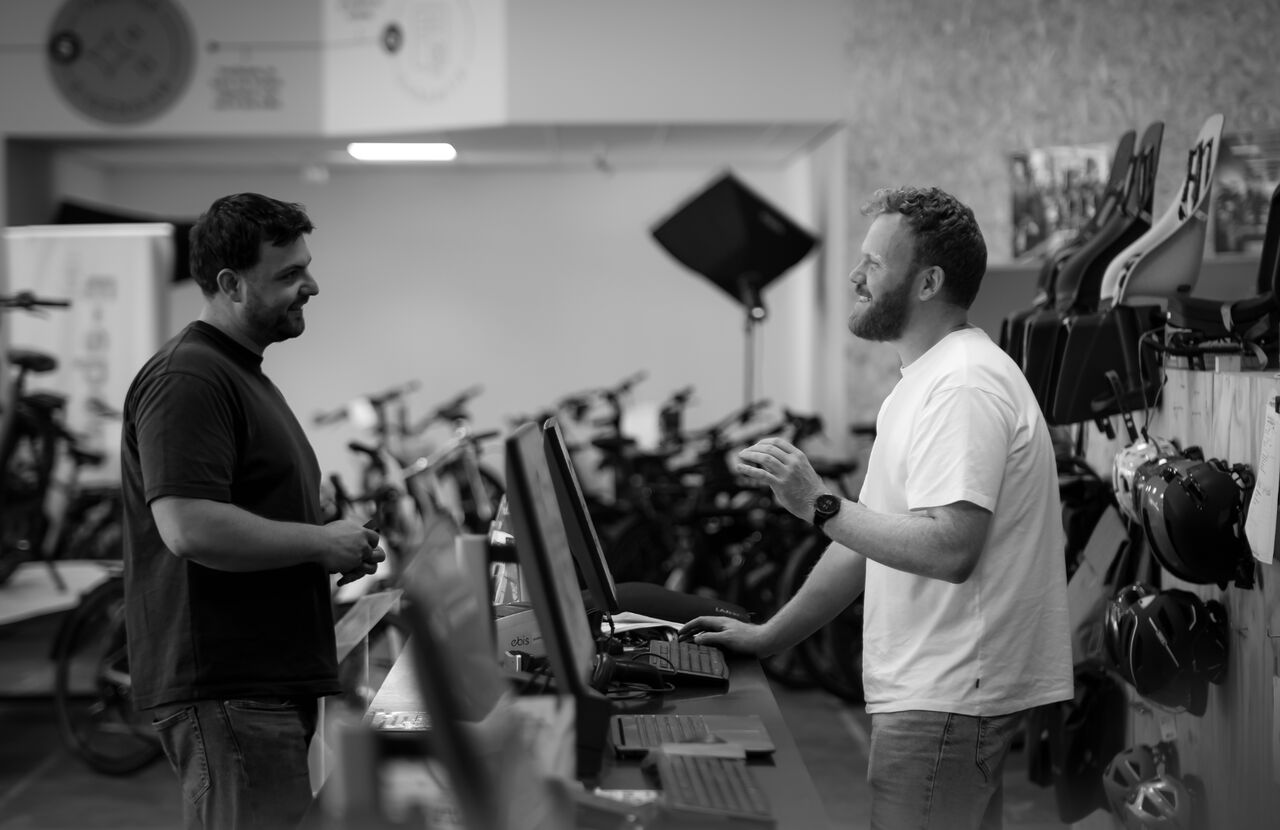
- Nog enkele dagen om te stemmen op onze Willem! Wist je dat Willem Beeck met E-bis genomineerd is voor de #PrijsJongeOndernemer2026 van Jong VOKA Mechelen-Kempen? 🏆 Tot en met 31 augustus kan jij mee bepalen wie de Publieksprijs wint. Elke stem telt, en we zouden het enorm appreciëren als jij de jouwe aan ons zou geven. 💚 👉 https://lnkd.in/ewdED4y En daar stopt het niet: op donderdag 3 september pitchen we voor een jury van ervaren ondernemers en experten, onder wie Kurt Peys (Voorzitter Vlaio), Omar Mohout (Solvay Business School
- EXECUTION IS THE NEW MOAT: WHAT BELGIUM'S SCALEUPS TELL US ABOUT 2026Just released our 2026 Scale-Ups Confidence Survey, and the message is crystal clear: the game has changed. We surveyed 226 Belgian founders and CEOs, and the data reveals a decisive shift. Confidence stands at 7.7/10 -solid, but down from last year's peak. More importantly, the bottleneck has moved Here's what's changed: 📊 64% cite market demand & sales execution as their #1 challenge -not funding, not talent. The ability to convert pipeline into revenue is now
- SUPERLINEAR GROWTH: HOW SERVICE FIRMS CHANGE INTO VC MAGNETSFor years, the logic of venture capital was crystal clear: invest in software companies, because software scales with minimal marginal costs. I have preached it for decades myself: if it's not software, it doesn't scale. The exponential growth curve of the startup became the holy grail - and service firms, which needed extra people for every additional project, were left behind Exponential growth is doubling on doubling, a hockey stick that goes almost vertical. But
- THE BELGIAN "MAFIA" EFFECT: MAPPING THE ECOSYSTEM'S CORNER COMPANIESAn ecosystem's maturity isn't just measured by funding rounds or unicorn counts. It is measured by its density of connectivity, the cyclical transfer of entrepeneurship, talent, capital, and experience from one generation of startups to the next. Every ecosystem has its cornerstone companies. These are the hubs that attract and produce the highest concentration of serial entrepreneurs, highly connected investors, and tier-one operators. Based on network
- EUROPE IS NOT A MUSEUM. IT'S THE FUTUREEurope invented the smartphone chip, the programming language powering AI, the operating system running the majority of the world's servers and the design language of the most valuable company in history. And yet every week someone publishes a piece about how Europe has "missed the tech wave." I refuse to join the chore of European pessimism. ✅ A Belgian co-invented the World Wide Web ✅ A Belgian invented the JPEG ✅ The "chip lab of the world" is in Leuven
- FROM MINING REGION TO INNOVATION HUB: 10 YEARS OF LSUThis morning, I presented on a milestone that still fills me with admiration: a decade of transformation. Ten years ago, Limburg was a region rebuilding, not with grand words, but with action. After the mines closed, they had to reconstruct not just their economy, but their confidence. They were a place where talent was born, but not always stayed. Today? That story has fundamentally changed. The numbers tell it: 9% annual growth in their
Related profiles
This page shows public professional information only, each fact cited. Is this you? send a correction, or ask for removal within 24 hours, no questions asked.