
Overview
Patrick leads VaultSpeed's transition from deterministic data vault automation to an agentic framework where AI agents build and maintain enterprise data warehouses, with humans reviewing and approving every decision.
Patrick started in software at 22, coding and selling his first application. Studied library sciences, then software engineering, then MBA.
His career arc: ten years in a 1990s tech startup, fifteen years at SAS leading operations (including data mining in its early days), Managing Director at SAP Belgium and SAP Netherlands, then C3.ai alongside Tom Siebel pre-IPO, then Partner at Fortino Capital during the pandemic.
At Fortino Capital he invested in VaultSpeed at the 2021 seed round and became chairman. After the 2023 Series A led by Octopus Ventures, he joined the founding team as CEO in January 2025.
Focus
- Product direction for VaultSpeed's agentic data framework
- Go-to-market for AI-driven data warehouse automation
- Enterprise sales across financial services, insurance, telecom, and manufacturing
- Translating complex technical ideas for buyers and boards
Perspective
Patrick has watched the entire arc from mainframes through client-server, web, cloud, and now AI. His pattern read: every generation of tooling automates the previous generation's manual work, but the real value is always in the layer of understanding above the automation. That is what VaultSpeed's knowledge graph is designed to capture.
Personal
Reads one novel per week. Never business books. Treats it as the unplug.
Contact
- LinkedIn: https://linkedin.com/in/patrickvandeven
- Email: patrick.vandeven@VaultSpeed.com
Career history

Insights & ideas
The through-line
Across his posts, talks and interviews, Patrick Van Deven keeps returning to one claim: the hard, valuable work in data has never been writing code, it's the messy human judgment layered underneath it, and that judgment is now the thing standing between companies and real AI adoption. In the spring posts this shows up as a product argument about VaultSpeed's template library and agentic framework [11][12]. By early summer it hardens into an economic argument: the integration work that used to be invisible, buried in headcount, now shows up directly in AI agents' token bills [10]. And in the podcast and webinar appearances, it becomes a governance argument: most regulated industries are running AI on top of decades-old data infrastructure that was never built for it, and bolting AI onto that infrastructure creates regulatory exposure rather than a genuine "frontier firm" [13]. The throughline holds steady, but the framing moves from "we generate better code" to "we make the knowledge underneath the code explicit, reusable, and safe for agents to reason over" [4][11].
On code generation versus the real work
Van Deven is explicit that code generation was never the differentiator: "we generated code long before the LLMs did" [11]. What actually consumes months is "profiling a source you've never seen," figuring out "which column is the business key and which is noise," and "designing the semantic layer so analysts get answers, not just tables" [11]. That work, he says, "has always been manual, person-dependent, and slow" [11], which is why data projects take months rather than days.
On knowledge that compounds
He frames every migration, acquisition, or platform move as the same set of unanswered questions repeating: "How do we match customers across systems? What do we do when sources disagree? Which fields can we actually trust?" [4]. His complaint is that teams "solve those questions, bury the answers in code, and start over next time" [4], and his stated fix is building "a way to capture those answers as knowledge that compounds," so you "solve it once, carry it forward to every project after" [4]. He ties this directly to agents: "when that knowledge is trapped in scripts and spreadsheets, agents guess. When it's structured and explicit, agents reason" [4].
On treating AI agents like employees
In the deterministic-versus-agentic split, Van Deven draws a hard line: "the agents propose. Humans review. The production code stays fully deterministic" [11]. On the podcast he extends this into an operating principle: organizations should treat AI agents like employees with clear briefs and operating parameters, rather than expecting legacy pipelines to magically produce AI-native capability [13]. He also frames the stakes in regulatory terms, arguing that automating the deterministic data layer underneath agents is essential, and that companies which simply layer AI onto existing systems are vulnerable to regulatory problems rather than becoming true frontier firms [13].
On the cost of bad data hitting token budgets
Van Deven's clearest cost argument: "the cost of bad data integration used to be invisible. Now it shows up in tokens" [10]. He walks through what a data warehouse actually does, "name and address matching, code table harmonization, pre-calculation, aggregation," and warns that removing that layer means "every user's AI agent" has to rediscover it "from raw sources... for every single query," multiplied across users [10]. The same instinct shows up as a design principle for VaultSpeed's own tooling: "good for the data teams, good for the planet, good for everyone's token budgets," with "no need to pull a bazooka to reinvent joins and data pipeline at every turn" [6].
From the stage
In the Sabine VdL podcast, Van Deven goes further than any written post in naming regulatory risk directly: most regulated industries still run on data infrastructure built decades ago, and layering AI on top of it, rather than fixing the deterministic layer underneath, is what makes companies "vulnerable to regulatory problems" instead of genuine frontier firms [13]. In the VaultSpeed webinar with Hans, he pushes into modeling philosophy not covered in the LinkedIn posts, insisting that core business concepts, natural business relationships, and logical data modeling terminology should be based on how businesses actually operate rather than on technical abstractions [14]. And in the Valipac interview, he describes his own approach to a real deployment: treating physical waste streams as data, tracking packaging from market entry through recycling, and organizing both the physical and financial flows of waste recovery as an integration problem [15].
Takeaways
- When scoping a data integration project, expect the bottleneck to be profiling unfamiliar sources and defining business keys, not writing the transformation code itself [11].
- Capture matching, conflict-resolution, and trust decisions as explicit, structured knowledge rather than burying them in one-off scripts, so they carry forward to the next migration or acquisition [4].
- Budget for the fact that ungoverned, unmodeled data now costs AI agents directly in tokens on every query, not just people in headcount [10].
- Keep AI agents proposing changes while humans review and production code stays fully deterministic, rather than letting agents write directly to production [11].
- Before adopting AI agents in a regulated industry, audit whether the underlying data infrastructure was actually built to support them, since layering AI on legacy pipelines creates regulatory exposure [13].
- Build logical data models and business terminology around how the business actually operates, not around technical abstractions [14].
Media & appearances
- VaultSpeedYouTubeCustomer Testimonial | Valipac | Interview with Patrick Van Deven & Jo CoutuerPatrick Van Deven discusses his career in data warehousing, including roles as chief data officer at BNP Paribas and partner at Deloitte, before joining Valipac and Recitata two years ago. He explains that Valipac manages industrial and commercial packaging waste streams across Belgium by treating waste as data, tracking packaging from market entry through recycling globally, and organizing both the physical and financial flows of waste recovery.
- VaultSpeedYouTubeWebinar: What AI Needs From You To Get It RightPatrick Van Deven discusses how AI is transforming data engineering and introduces the webinar's main topic about the limits of AI and the importance of human decision-making in building data pipelines. He and his guest Hans explore core business concepts, natural business relationships, and logical data modeling terminology, emphasizing that these foundational concepts should be based on how businesses actually operate rather than technical abstractions.
- Sabine VdLYouTubePatrick Van Deven: The Frontier Firm Has a Data ProblemPatrick Van Deven discusses how most regulated industries still rely on outdated data infrastructure built decades ago that cannot support AI adoption, making companies that simply layer AI onto existing systems vulnerable to regulatory problems rather than becoming true frontier firms. He argues that automating the deterministic data layer underneath AI agents is essential, and that organizations should treat AI agents like employees with clear briefs and operating parameters rather than expecting legacy data pipelines to magically enable AI-native capabilities.
In the news
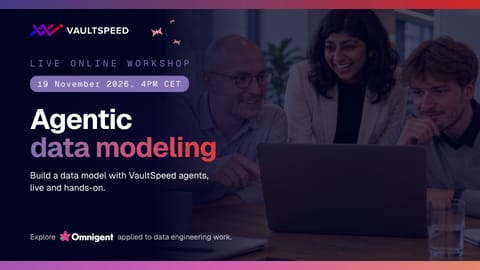
- Want to get access to VaultSpeed for an hour, guided by Jonas and the team ? Better than a demo, a highly engaging and fun way to explore VaultSpeed 8.
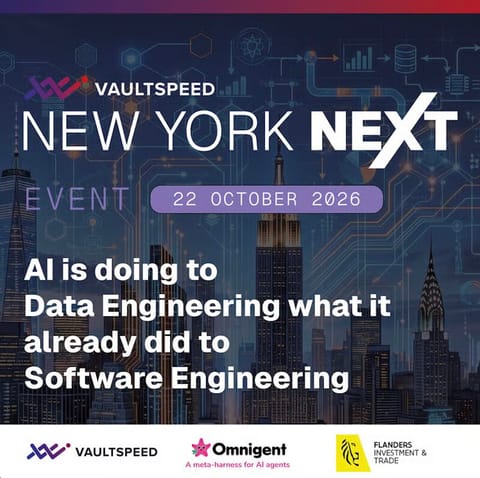
- Next Thursday, October 22, we’re in New York on 8th Avenue for a morning session with people who build, code and model data. Bring your laptop and see how agents generate, convert and maintain data pipelines from a governed data layer with Omnigent. A few seats are left.
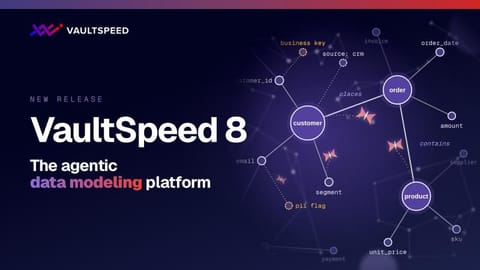
- VaultSpeed 8 is live today. Since 2018 we’ve built one template library with our customers, and we made ourselves run every customer on it. We never forked it or patched it for a single account, so every edge case had to be solved in the library itself, once, and everyone got the fix. Each new data warehouse starts from all of that, and the same input gives the same code every time. When Claude Code arrived, we saw what an agent could do on top of that library, and we rebuilt the platform around it. An agent starting from scratch
- Colruyt Group migrated from a legacy on prem DWH to Snowflake in 6 months, leveraging VaultSpeed automation. If you aren’t from Belgium, it’s hard to fully grasp the cultural phenomenon that is Colruyt. Imagine if Walmart’s price guarantee met Costco’s industrial efficiency, but it was run with the heart of a local family business. That’s Colruyt. As one of Belgium's largest retail ecosystems, they’ve mastered a hyper-efficient, "no-nonsense" model. Walk into their flagship stores and you won't find flashy decor or mood lighting.

- Data governance is turning into something closer to data control. Give AI agents the business context to answer correctly, and the guardrails to keep them from acting outside their lane. That was the throughline running through last Wednesday's session at Collibra's Brussels office, where teams from Collibra, Snowflake, VaultSpeed and Colruyt Group broke down what that shift looks like in practice. The clearest proof came from Colruyt Group: a full migration from Cloudera to Snowflake in under six months, pipelines
- 𝗩𝗮𝘂𝗹𝘁𝗦𝗽𝗲𝗲𝗱 𝗡𝗘𝗫𝗧 𝗰𝗼𝗺𝗲𝘀 𝘁𝗼 𝗡𝗲𝘄 𝗬𝗼𝗿𝗸 𝘄𝗶𝘁𝗵 𝘀𝗲𝘀𝘀𝗶𝗼𝗻𝘀 𝗼𝗻 𝗠&𝗔 𝗮𝘁 𝗲𝗻𝘁𝗲𝗿𝗽𝗿𝗶𝘀𝗲 𝘀𝗰𝗮𝗹𝗲, 𝗱𝗮𝘁𝗮 𝗺𝗼𝗱𝗲𝗹𝗶𝗻𝗴 𝘄𝗶𝘁𝗵 𝗮𝗴𝗲𝗻𝘁𝘀, 𝗮𝗻𝗱 𝘁𝗵𝗲 𝗱𝗮𝘁𝗮 𝗳𝗼𝘂𝗻𝗱𝗮𝘁𝗶𝗼𝗻𝘀 𝗔𝗜 𝗮𝗴𝗲𝗻𝘁𝘀 𝗻𝗲𝗲𝗱. We keep it small on purpose: the room holds 75 people. When Anup Bommu explains how Thomson Reuters handles M&A at enterprise scale with Snowflake, you can ask him a follow-up and he'll hear you. When Keith Belanger, Snowflake Data Superhero, talks about data modeling with
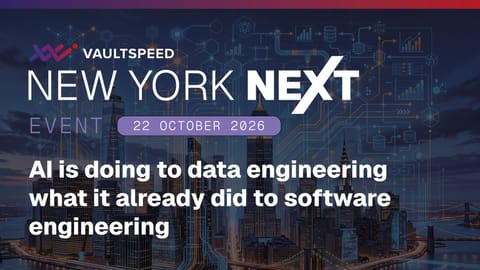
- 𝗢𝗻 𝟮𝟮 𝗢𝗰𝘁𝗼𝗯𝗲𝗿 𝘄𝗲'𝗿𝗲 𝗯𝗿𝗶𝗻𝗴𝗶𝗻𝗴 𝗮 𝗯𝗶𝘁 𝗼𝗳 𝗕𝗲𝗹𝗴𝗶𝘂𝗺 𝘁𝗼 𝗠𝗮𝗻𝗵𝗮𝘁𝘁𝗮𝗻. 𝗩𝗮𝘂𝗹𝘁𝗦𝗽𝗲𝗲𝗱 𝗡𝗘𝗫𝗧 𝗰𝗼𝗺𝗲𝘀 𝘁𝗼 𝗙𝗹𝗮𝗻𝗱𝗲𝗿𝘀 𝗛𝗼𝘂𝘀𝗲 𝗶𝗻 𝘁𝗵𝗲 𝗡𝗲𝘄 𝗬𝗼𝗿𝗸 𝗧𝗶𝗺𝗲𝘀 𝗕𝘂𝗶𝗹𝗱𝗶𝗻𝗴. We keep it small on purpose: the room holds 75 people. When Anup Bommu explains how Thomson Reuters handles M&A at enterprise scale with Snowflake, you can ask him a follow-up and he'll hear you. When Keith Belanger, Snowflake Data Superhero, talks about data modeling with agents, the questions
- Excellent write up by Dounia

Related profiles


This page shows public professional information only, each fact cited. Is this you? send a correction, or ask for removal within 24 hours, no questions asked.