
Overview
Verschueren's work sits in SEO and its extension into AI search. At Rankshift he is a director and the author of the company's blog content on Generative Engine Optimization.
Pieter Verschueren is co-founder of Rankshift and of the SEO agency Depends. He works on SEO and Generative Engine Optimization, helping brands measure and improve how they show up in AI-generated answers from ChatGPT, Google Gemini, AI Overviews, AI Mode and Perplexity. Verschueren and Denis Debacker have been directors since incorporation; Stijn Vermeulen joined the board on 26 November 2025. The company's registered activities cover software publishing, computer programming, IT consultancy, hosting and advertising services, and its terms fall under Belgian law with the Enterprise Court of Ghent, Kortrijk division, as venue. The product tracks brand mentions and citations across AI search engines including ChatGPT, Gemini, Claude and Perplexity, and adds sentiment tracking, competitor benchmarking and AI crawler monitoring. Plans run from Starter (150 prompts per day) to Business (850 prompts per day), plus a custom Enterprise tier, with a 30-day free trial. Verschueren writes the Rankshift blog, publishing ten posts between May and August 2026 on GEO tooling, AI visibility tracking and agency comparisons.
Career history
Insights & ideas
Pieter Verschueren's public writing centers on a single conviction: AI platforms have become a discovery layer that brands cannot afford to ignore, and most of them are currently flying blind within it. He puts it plainly, "Every organization now has an AI bio," and argues that whether or not a company actively manages this, "AI is (re)shaping how people perceive your company" [15]. His recurring question set for brands is consistent across posts: what themes does AI associate with you, what strengths and weaknesses keep surfacing, what story are the answer engines actually telling [15]. This framing is the intellectual backbone of everything else he builds and posts about at Rankshift.
A second theme is competitive dynamism. Verschueren repeatedly stresses that visibility in tools like ChatGPT, Gemini, and Perplexity is not a fixed leaderboard but a moving target. "A brand you've never heard of can suddenly start showing up... after investing in GEO," he warns, and the practical risk is that "you'll only notice once they've already taken visibility from you" [4]. This belief directly shaped a product decision: automated brand suggestions in Rankshift, so users don't have to manually guess which competitors to track [4]. He extends the same logic to platform-level shifts, noting Sensor Tower research showing "ChatGPT's market share is declining, while Gemini and Claude continue to gain ground," and volunteering that his own daily habit has shifted accordingly, "I mainly switch between Claude and ChatGPT for my day-to-day work" [8].
Verschueren is also insistent on practicing what he preaches, almost to the point of making it a personal brand. He launched a public tracker of GEO agencies' own AI visibility with the explicit rationale: "If you claim to be one of the best GEO agencies, you should probably show up in AI search" [2]. He did the same for B2B SaaS marketing agencies, building a public, login-free dashboard because "most buyers don't stop at Google anymore," they now ask ChatGPT, Gemini, Claude, or Perplexity for recommendations before deciding [5]. These projects aren't framed as marketing stunts in his telling but as demonstrations of a broader belief that visibility claims should be independently checkable.
On competitive ethics, he draws a sharp line. Reacting to a rival's paid-review incentive, he writes, "Honestly, I was quite shocked by this," pointedly noting the company "raised more than $90M" and asking "why spend money buying reviews like this?" before adding a dry dig, imagining a future ChatGPT answer that concedes "many were bought" [14]. His closing line, "This is not how we do things at Rankshift," functions as a values statement more than a complaint, positioning organic, verifiable AI visibility as the only legitimate path [14]. This connects back to his review-and-source thesis elsewhere, where he flags that AI answers "frequently pull information from YouTube, Reddit, Trustpilot, G2, and other review platforms" and that these sources are "in many cases... cited more often than the brands themselves" [13].
Across the product-update posts, a clear pattern emerges: rapid, incremental shipping paired with direct explanation of the underlying problem each feature solves. Annotations exist because "without context, every visibility spike or drop becomes a guessing game" [10]. Improved citation analytics exist to help users "spot trends, shifts, and emerging patterns much faster" [9]. Even smaller conveniences, like pasting prompt research directly into the tool, are announced with the same low-key confidence [11]. He treats these as evidence of momentum rather than isolated features, tying them together with an almost gamified enthusiasm, "The internet has no secrets for me anymore," when describing a side project, Rankshift: The Game [3].
Personally, Verschueren is candid about the tension between founder intensity and rest. After a break in Crete, he reflects that "it's easy to fall into the trap of always chasing the next milestone, feature release, or growth target," and admits surprise at "how easy it became to completely disconnect once I gave myself permission to do so" [12]. He credits a colleague, Denis, for covering support and marketing, framing delegation as the enabling condition for actually switching off [12]. This same voice, grateful and slightly incredulous at momentum, shows up when Rankshift gets mentioned in Martin van Kranenburg's book "Van SEO naar GEO," which he calls being able to "pinch me," and when the book hits number one on the Management Book Top 100, he calls it exciting that "GEO and AI Search" are finally "getting the attention they deserve" [6].
The concrete takeaway from his body of work is a consistent operating philosophy: track competitors continuously rather than periodically, treat AI-generated brand perception as a real and monitorable asset, earn visibility rather than buy it, and keep shipping visible, explainable improvements rather than infrequent large releases. He frames the stakes simply and often, tying product features back to competitive urgency, and closes several announcements with the same unadorned confidence, calling milestones "Great" [1] or new capabilities "Very excited about this one" [9], suggesting a builder who treats public transparency, both about his product and about the market Rankshift measures, as the core of his credibility.
In the news
- Big announcement: Rankshift will NOT be exhibiting at BrightonSEO San Diego. No booth. No conference swag. No networking drinks. So while everyone else is busy in San Diego, we’ll be happily sitting behind our screens giving demos to anyone who wants a glimpse of the beauty that is Rankshift. ✨ Want to see how we track AI visibility across ChatGPT, Gemini, AI Overviews and more? Book a demo. We promise there won’t be a queue at our booth. 😉

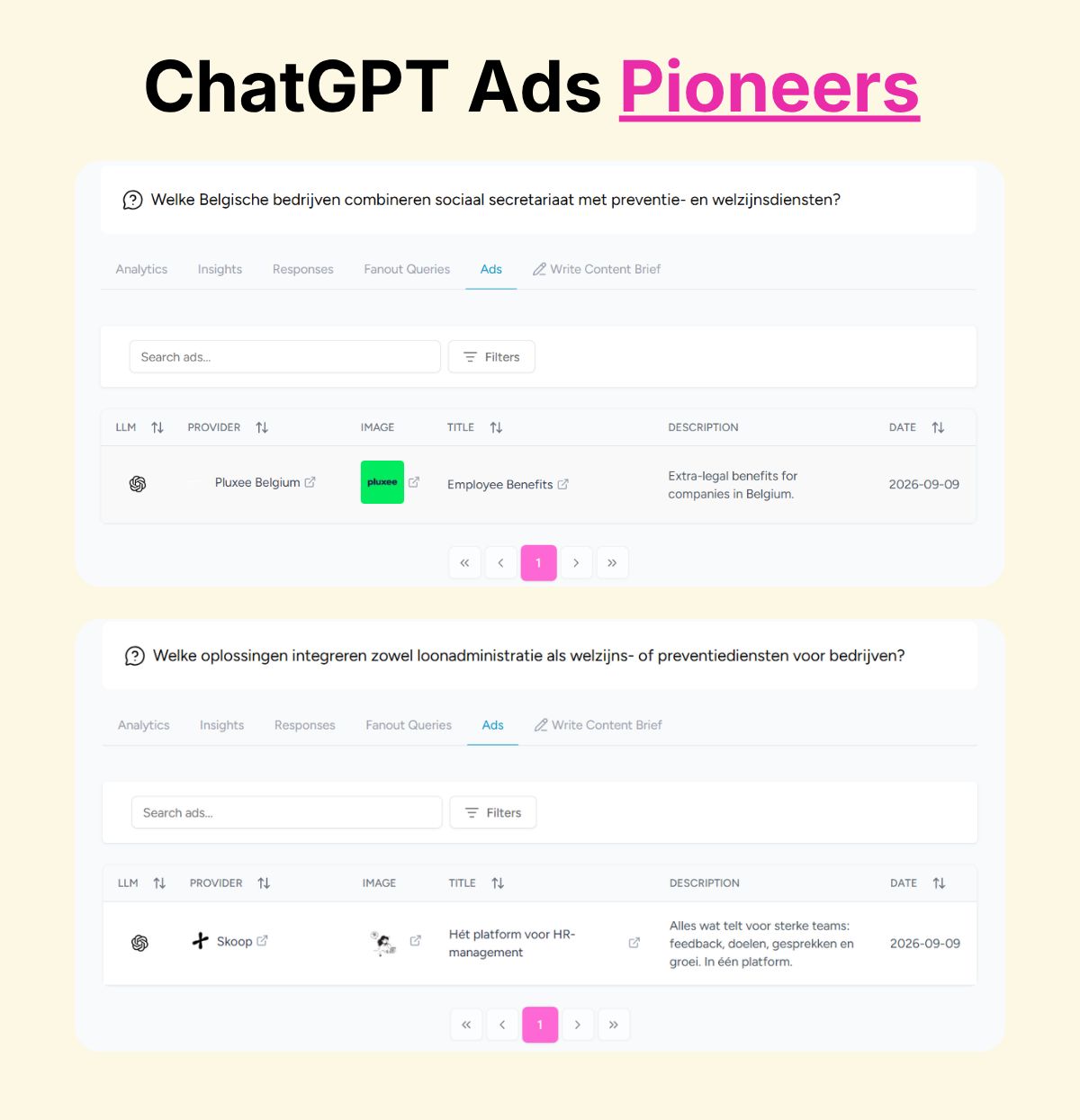
- First Belgian advertisers revealed. 👀 Recently, we launched ChatGPT ad tracking in Rankshift. And now we’re seeing the first European advertisers popping up in the data, including Belgian companies. Two examples: Skoop and Pluxee, both active in the HR space. It’s still a very new advertising channel. There aren’t many case studies yet, benchmarks are limited, and most companies are still figuring out what works. That’s exactly what makes it interesting. Are you already experimenting with ChatGPT Ads? I’d be very curious to
- The conversation most SaaS founders avoid might be the one that teaches them the most. 👉 The churn conversation. New customers tell you why people buy. Churned customers tell you where your product, onboarding, pricing or expectations fell short. At Rankshift, we’ve learned not to treat churn as just a number in Stripe. We try to understand what actually happened. - Was the value unclear? - Did they not use the product enough? - Was something missing? - Did we attract the wrong customer in the first place? The better you

- One of the easiest traps when bootstrapping a SaaS company is trying to keep up with competitors on feature count. Especially when some of them have raised between €5 and €30 million and have much larger teams. You see them launch something new and immediately think: we need this too 🙋 We definitely fell into that trap with Rankshift. But at some point, you realize that matching every feature is a game you probably shouldn’t be playing. Our advantage isn’t having the biggest product team. It’s being close to our customers, moving

- We’re excited to welcome Maastricht Marketing to Rankshift. 🚀 Maastricht Marketing is responsible for strengthening and promoting the Maastricht brand, with an important focus on attracting visitors and positioning the city as a destination. And that makes AI search incredibly relevant. Think about how people plan a city trip: → What are the best cities for a weekend getaway in the Netherlands? → Where should I go for a romantic weekend close to Belgium? → What are the best cities in Europe for food and culture? → What should I

- ChatGPT Ads are rolling out in Europe. Curious to see where everyone is today 👇
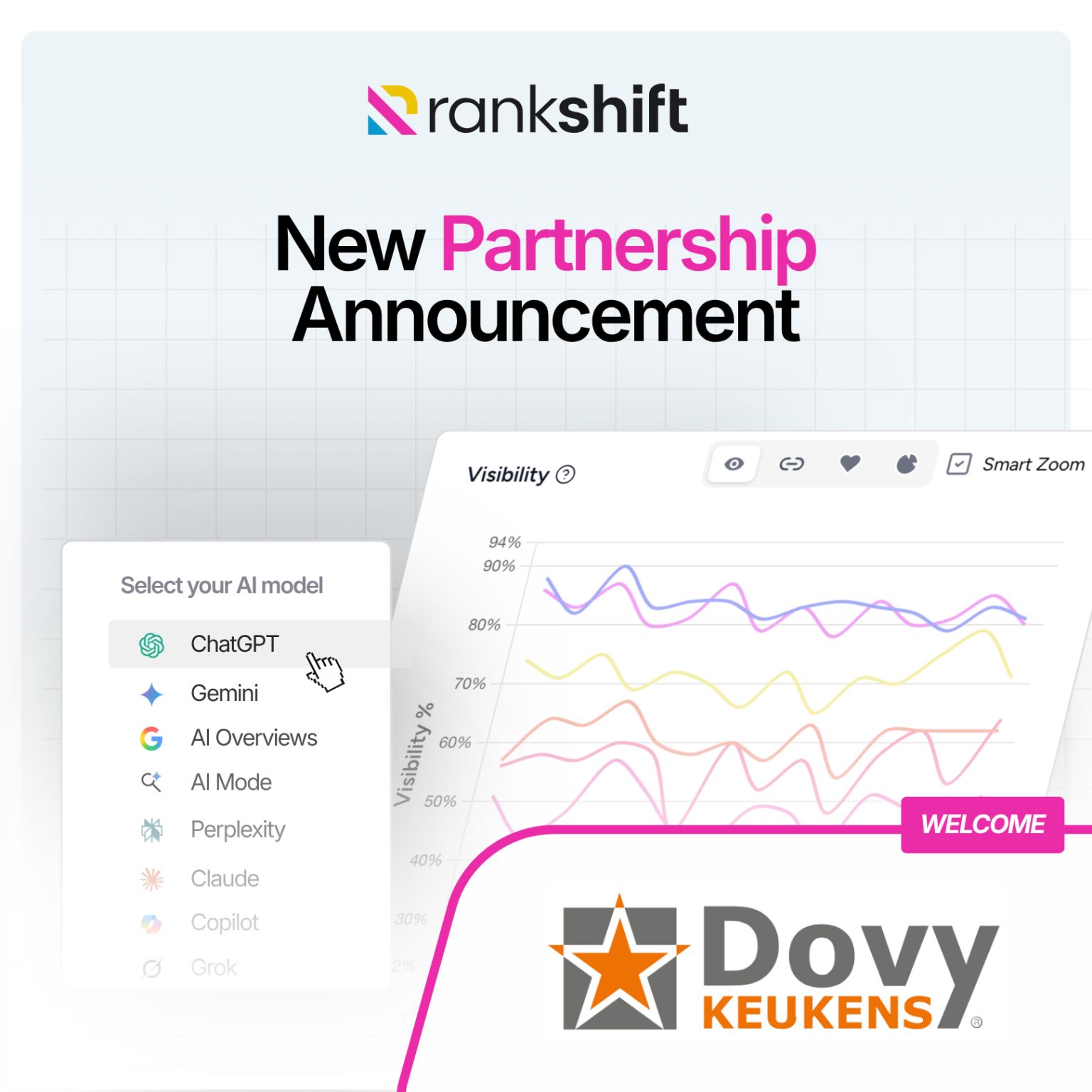
- We’re proud to work with some of Belgium’s most established and ambitious brands. Over the past few months, Dovy Keukens has been using Rankshift to monitor and improve its visibility across AI-generated answers. It’s great to see a leading Belgian consumer brand taking AI search seriously and actively exploring how people discover and compare brands through platforms like ChatGPT, Gemini and Google AI. A big thank you to the Dovy Keukens team for the trust, and for the valuable feedback that helps us keep improving Rankshift.
- One of the things I like most about these reports: they make it really easy to spot emerging brands in your space before they become obvious competitors. 😄
Related profiles


This page shows public professional information only, each fact cited. Is this you? send a correction, or ask for removal within 24 hours, no questions asked.