
Overview
Steven Backer is the founder and chief executive of Afriwise, a role he has held since January 2019, and is based in Brussels. He founded AW Consult Ltd at Afriwise and was its managing director from July 2014 to December 2018.
He chaired the board of the EU Chamber of Commerce and Industry in Southern Africa from August 2016 to August 2017, and chaired the board of the Belgian Chamber of Commerce for Southern Africa from March 2014 to March 2016. From April 2013 to April 2017 he was economic diplomacy adviser to Belgium at the Embassy of Belgium in Pretoria, and from April 2007 to April 2011 he was foreign trade adviser to Belgium at the Embassy of Belgium in Dar Es Salaam.
At Webber Wentzel he was director Africa and a partner in the Africa mining and energy projects practice from 2010 to June 2014. Between December 2003 and January 2010 he was a regional partner and founding partner at Mkono & Co Advocates, in association with Denton Wilde Sapte, and from 2001 to December 2003 he was an advocate at Freshfields Bruckhaus Deringer. He was a legal adviser in the corporate finance department of KBC Securities from 1998 to 1999, then internet projects and product manager for Bolero there until 2001, and was a visiting lecturer at Universiteit Gent from 1999 to 2004.
Backer completed a master in laws at Ghent University in 1999, studied business administration and management at KU Leuven, took international tax law at Robert Kennedy College and attended a summer programme at Vlerick Business School.
Career history

Insights & ideas
The through-line
Across these posts, Steven Backer keeps returning to one idea: that African legal information needs real infrastructure and real rigor, not shortcuts. He describes Afriwise's work as "years of figuring things out, changing course, adding content, products, customers and people" [1], and that history shows in how he talks about growth. Where his earlier framing (echoed in the 2020 survey work) was about documenting how far behind Africa was in legal tech adoption [16], his more recent posts shift toward building the actual connective tissue: architecture for legal AI [15], a rigorous verification process for legal data [14], a physical and professional meeting point for the continent's legal ecosystem [2][3], and a leadership team suited to that next stage of complexity [1]. The preoccupation has moved from proving the gap exists to closing it methodically.
On rigor in legal AI
Backer is sharply skeptical of AI shortcuts applied to African legal data. Recounting a compliance manager who dumps scanned laws into a folder and lets an AI system "interrogate the folders," he says flatly: "That is not legal intelligence. That is legal archaeology!" [13]. His answer is a discipline he calls the FACT process: "F — Find the law. A — Ascertain whether it is still in force. C — Check whether another law also applies. T — Talk to an in-country expert before assuming you got it right" [14]. He insists this isn't optional or a one-time step: "FACT needs to run continuously... No FACT, no trust?" [14], and frames skipping it as "not innovation, it is wishful thinking" [14].
This same insistence on structure over tools shows up in how he advises corporate legal departments. He reframes the common question "Which legal AI tool should we buy?" into "How should we design our legal AI architecture?" [15], and lays out a layered model, from document management through an enterprise AI layer to a legal AI workspace [15], arguing "There's not only one correct architecture" but that architecture, not tool selection, is what matters now [15].
On building the African legal ecosystem
Backer frames Afriwise's mission in explicitly ecosystem-building terms, not competitive ones. Describing plans for a physical gathering point, he writes: "This is about a place we want to help build in Africa. Not because we have to or it advances our business. But because we genuinely believe the African legal ecosystem needs a place where its different parts come together" [2]. He wants that place open to everyone, "no one too important to approach" [2], and pitches an upcoming Johannesburg event as more than a conference: "the place where Africa's legal ecosystem comes together, the whole value chain" [3], covering everything from legal tech vendors to regulators to in-house teams, because "software has no borders" [3].
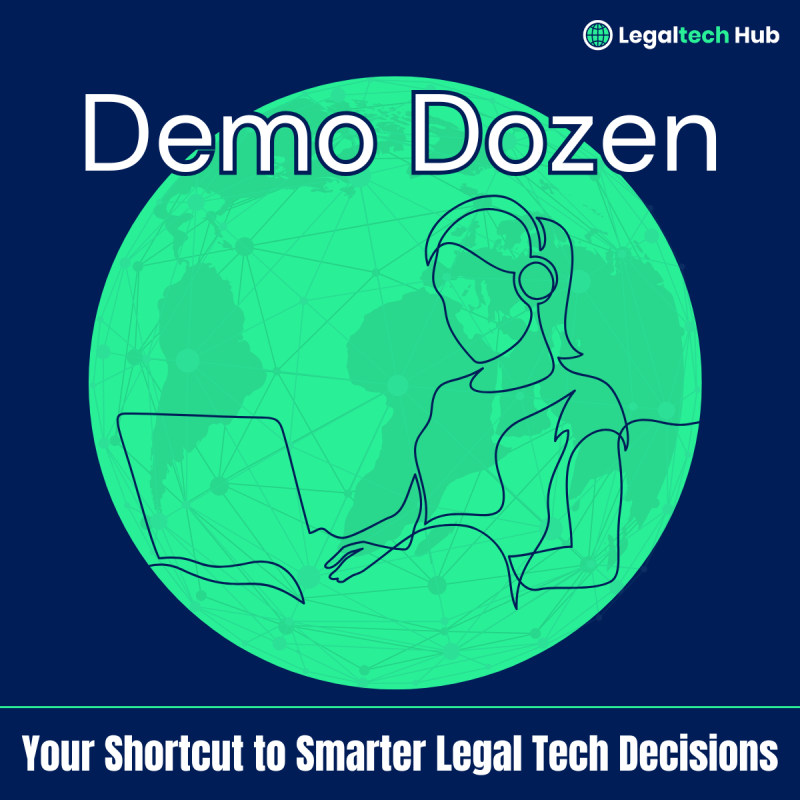
He extends the same logic to smaller-scale convening through Demo Dozen, justifying it by pointing to a market gap: "there simply aren't enough opportunities for legal professionals across Africa to see modern legaltech tools in action. Most vendor showcases are US-focused or Europe-first" [12]. He positions the event as "neither a trade show nor a sales funnel. It's efficient market exposure" [12].
On collaboration over isolation
Backer explicitly rejects a build-alone posture for African legaltech. Commenting on the sector's maturity, he writes: "The ecosystem is maturing. Next is for us not to build in isolation but to partner, integrate and learn from each other" [10]. He specifies the mechanisms he means: "Collaboration, whether through data contribution, API integration, or shared customers, is how we will really scale African legaltech" [10]. This same theme shapes how he talks about law firms navigating AI: at an Afriwise contributor townhall, he framed the strategic question for firms not as adopting tools but as "which firm are we trying to become, and which parts of the future legal value chain must we own to become it?" [8], introducing the pointed observation that "A law firm can remain legally indispensable while becoming commercially peripheral" [8].
On hiring for the next stage
Backer treats certain hires as signals of organizational maturity rather than simple headcount additions. Announcing a new CFO, he writes: "There are hires that fill a position. And there are hires that make you feel your company has reached another stage" [1]. He frames the appeal of the hire around range rather than narrow function: the new CFO "isn't interested in being the person who sits somewhere in Finance telling everyone else what the numbers sa[y]" [1]. Underlying this is a founder's admission of limits: "At a certain point, as a founder, you realise that what got you here won't necessarily get you where you want to go next" [1].
From the stage
In the ALT Network interview, Backer presents findings from a continent-wide survey he conducted in 2020 on legal tech adoption, focused on corporate commercial legal needs and the impact of COVID-19, which showed Africa "remains behind in legal tech adoption compared to other regions" [16]. This empirical, comparative framing of Africa's position relative to other regions is not something the written posts state directly; there he speaks in terms of gaps to close and ecosystems to build rather than citing adoption-rate findings.
Takeaways
- When evaluating legal AI claims, apply the FACT process (Find, Ascertain, Check, Talk to an in-country expert) and treat it as continuous, not a one-off step [14].
- Don't start by picking a legal AI tool; start by designing the underlying architecture across document management, enterprise AI, and a dedicated legal AI workspace layer [15].
- Scanning laws into folders and querying them with generic AI is "legal archaeology," not legal intelligence [13].
- Law firms should ask which parts of the legal value chain they must own, since a firm can stay "legally indispensable while becoming commercially peripheral" [8].
- Scaling African legaltech depends on partnering, data contribution, and API integration rather than building in isolation [10].
- Treat certain hires as evidence the company has reached a new stage, particularly when the hire brings range beyond their formal function [1].
Media & appearances
- Africa Legal & Tech NetworkYouTubeALT Network in conversation with AfriwiseSteven Backer discusses Afriwise, a legal tech platform that provides African organizations with access to updated legal information for African countries through partnerships with law firms across the continent. He presents findings from a continent-wide survey on legal tech adoption in the African legal sector conducted in 2020, which focused on corporate commercial legal needs and the impact of COVID-19, revealing that Africa remains behind in legal tech adoption compared to other regions.
- Steven De BackerYouTubeAfriwise intro
In the news
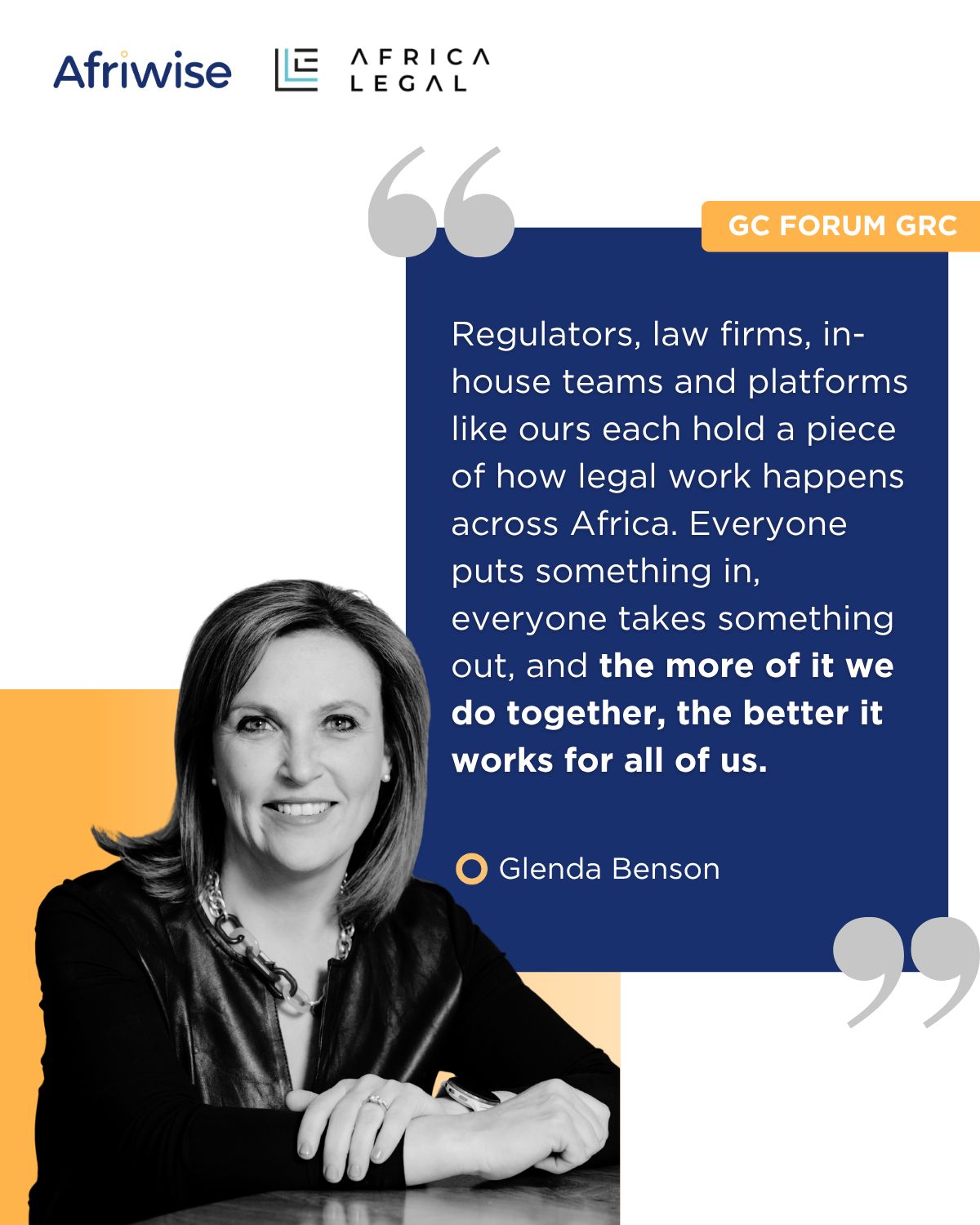
- Love this piece by Glenda Benson. Since the early 2000s I have been advocating for corporates to connect directly with in-country knowledge, rather than adding more layers in between. https://lnkd.in/ddzZD8YT
- Last year’s fireside chat lead by Glenda Benson, with lawyers from across the continent, was one of the highlights of the GC Forum for me, open, unscripted and refreshingly practical. So I’m very pleased this is happening again. There is enormous value in bringing in-house teams and leading in-country counsel from diverse African countries together and simply creating the space for a real conversation about what is happening on the ground across Africa.
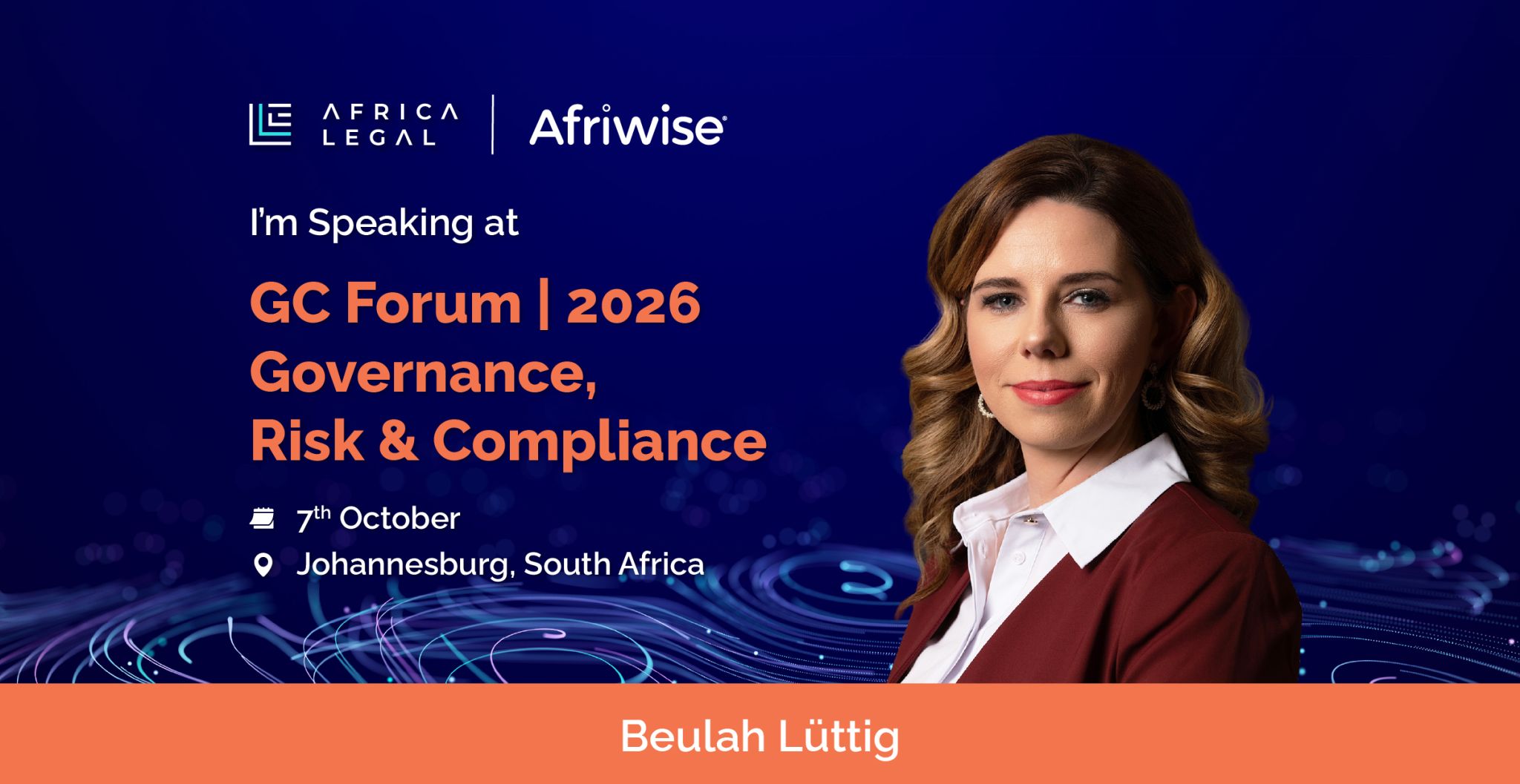
- Very proud to see Beulah Luttig taking this conversation forward. AI will change how legal and compliance teams work across Africa, no doubt about that. And at Afriwise we have the data layer to make this possible. But technology alone will not solve the complexity of 54 very different jurisdictions. In-country intelligence, regulatory experience, trusted relationships and editorial expertise remain essential. Beulah and the Afriwise Law Explorer team have helped some of Africa's largest companies moving from simply reacting to
- Sometimes you need to look up from the day-to-day grind and realise how far you have come. Today Afriwise provides: → AI-assisted research across 22 African countries and growing rapidly → Legislation and Monitoring by legal topic across 38 countries → In-Depth Regulatory Monitoring, powered by Sentinel, across 24 countries → Practical Guidance across 23 countries When we started, the idea that an African legal intelligence company could build this kind of breadth seemed rather ambitious. There is still a huge amount to build. And

- The African Legal Awards are back in Johannesburg tonight. Always a great evening for the African legal community and especially looking forward to seeing many Afriwise clients, partner law firms and friends in the room. I'm of course also pleased to see Afriwise once again shortlisted for an award, this time for the Best Use of Technology Award. Good luck to all the finalists. See you tonight!

- If a Belgian lawyer gave you a confident opinion on Tanzanian law without first researching Tanzanian law, would you rely on it? Trust me, I know what I talk about, it took me years to get around local law when practicing in Tanzania. There is a strange distortion in the legal-tech conversation at the moment: everyone is talking about the machine that produces the answer, and remarkably little about the research that makes the answer reliable. Legal research has never just been about producing an answer. It is about finding the
- It is September 1st, 2026. 🚨 While some corporate teams were sleeping, the regulatory landscape across Africa again just underwent some important simultaneous shifts, as is often the case at the start of a new month. Here is a sample of some developments hitting desks this morning: Botswana 🇧🇼: The new Employment and Labour Relations Act is now officially live. Outdated contracts mean immediate liability. Zimbabwe 🇿🇼: POTRAZ is commencing mandatory compliance inspections and assessments for all data controllers. South Africa
- Next week, 2 September: a new Demo Dozen, brought to you by Legaltech Hub and Afriwise - this time with a Corporate Legal Focus. 12:00–15:00 CET. One online session, twelve platforms: Harvey, Clio, Litera, Athennian, Cobblestone, Emma Legal, Saga, GC AI, ThoughtRiver, SpotDraft, Decipher IP and Afriwise. Your shortcut to seeing some of the most innovative legal tech products at work in one afternoon - not twelve separate demo calls you don't have time for. Sit in on what's relevant. Skip what's not. Still a chance to
This page shows public professional information only, each fact cited. Is this you? send a correction, or ask for removal within 24 hours, no questions asked.