Overview
Tibbe Verschaffel founded Planet B in Ghent, building a portfolio of sustainable consumer goods brands including WONDR (laundry and cleaning products) and KLAAAR. The company focuses on reducing plastic waste and carbon footprint in everyday household product categories.
Verschaffel was included in the Forbes 30 Under 30 list, recognizing his impact in the sustainability and consumer goods space at a young age. Planet-b represents the growing intersection of Belgian Entrepreneurship and sustainable FMCG, a category seeing increasing retailer and consumer adoption.
Career history

Talks about
- M&A
- Sustainability
- Entrepreneurship
- Radical Transparency
- Flywheel
- Branding
- Fundraising
- Buy-and-build
- Networking
Insights & ideas
The through-line
Everything Verschaffel says comes back to one proposition: that the fast-moving consumer goods industry can be rebuilt so that products are made for the human being who uses them, and that the lever for forcing that change is the shopping basket. Planet B was founded in 2018 as an answer to the phrase "there is no planet B," with the aim of creating harmony between people, animals and the planet through product development, marketing and sales [16]. The ambition is stated without hedging: "Wij willen met Planet B ook een FMCG company worden, maar dat wel onze producten zo gezond mogelijk maken: gezond voor mens, dier en planeet" [20]. The mechanism is the consumer: "Wij geloven heel hard dat de consument de catalysator is voor de verandering" [20], because mass adoption of small sustainable choices creates the political support that follows [20], and because "Every product you buy is a vote for a better world en every revenue we make is een enabler for impact" [19]. He restates it as "Jouw aankoop is een stem" [13].
What has shifted is the framing of the enemy and the vocabulary of the fight. Early on the argument is largely industrial and commercial: build a challenger to Unilever and Nestlé, get the price right, get into stores [20]. More recently the argument has become medical and openly activist. Microplastics "waren ooit een milieu- of oceaanprobleem, nu is het een gezondheidsprobleem" [13], and he compares the industry's posture to how asbestos and PFAS were once underestimated, with the pointed suffix "of wisten sommige dit al langer? 🤑" [13]. The willingness to be disliked hardens with it: "Dit is geen gemakkelijk topic, het is activistisch, het is negatief, het is iets dat we liever negeren en vooral cognitief van dissociëren. Maar zwijgen is geen optie bij Planet B" [10].
On taking the fight to the FMCG giants
The target is named and repeated. Planet B's strategy is to disrupt the twelve polluting FMCG multinationals with plastic-free, direct-to-consumer products [19], and the roll-call is specific: with Planet B he challenges Unilever, Procter & Gamble and L'Oréal directly [1], with a supporting brief that packaging accounts for roughly 36% of all plastic produced worldwide and about 40% of all plastic waste, and that the Break Free From Plastic Brand Audit has for six years running named Coca-Cola, Nestlé, Unilever, PepsiCo, Mondelēz, P&G and Danone as the biggest polluters [1]. Asked whether those companies could do it differently, his answer is a flat "Duhhh" [1]. Consumers, he adds, are asking sharper questions about what is actually in their products, and rightly so, pointing at the CeraVe lawsuit against L'Oréal [1].
His account of why the giants behave as they do is about margin rather than malice. FMCG groups optimise margins over health, using cheap and aggressive SLS in shampoo that causes dandruff and then selling a natural anti-dandruff product, seeking the legal limits of ingredients to maximise profit [20]. The same logic runs through the supply chain: the long supermarket chain forces everyone to take margin, which forces ultra-cheap production, which always means sacrificing health and sustainability, so cutting out the middle chain frees margin to invest in healthy, plastic-free products [19]. He is unsentimental about how small the challengers currently are, and about what that should mean for their behaviour: "De big boys die lachen in een klein hoekje... maar ondertussen hebben zij wel 99% van de markt met vervuilende producten en zitten wij voor dat één procentje tegen elkaar te concurreren" [19]. None of this makes him anti-business. "Business blijft de grootste competitiesport die er bestaat" [19], and the point of revenue is what it unlocks: "Money enables hè. Door geld te hebben kun je winkels beginnen openen, en als je winkels opent op de Meir dan word je bekender" [20].
On why sustainability is not a sales argument
He treats this as settled evidence rather than opinion. Studies put consumer priorities in a fixed order: price first, then what's in it for me, then sustainability [19][20]. The conclusion he draws is that making sustainable products price-competitive is the only way to make the sustainable choice the logical one [19]. Hence the flat statement of positioning: "Wij verkopen geen duurzaamheid. Duurzaamheid zit in ons DNA, maar dat is niet ons verkoopsargument. Wij gaan niet gaan zeggen: koop een shampoobar omdat het duurzaam is. Nee, we gaan een shampoobar verkopen van Wondr omdat het veel beter is voor jouw haar" [20]. Klaaar is sold the same way, on cheaper cost per wash [20].
The marketing copy follows the rule. POWR.care wash strips are pitched on working powerfully, being fully biodegradable and leaving no chemical BS on your clothes, at €9,95 for 40 washes, with "Beter voor jou & de planeet" arriving last [4]. POWR Liquids is pitched on smelling wonderful and on probiotics and enzymes, "wassen met de kracht van de natuur (powr of nature)", with the paper-recyclable bottle as the third bullet and the tagline "Hard on dirt, good for earth" [3]. The Planet B stamp itself is built on three promises in that order of consumer relevance: locally produced in Belgium, healthy and (micro)plastic-free, and priced as sharply as possible [14].
On brand architecture and radical transparency
Verschaffel treats brand architecture as an ethical position, not a marketing detail. Planet B deliberately chooses endorsed branding, tying WONDR care and POWR.care closely to the parent, rather than the house of brands model used by Unilever, P&G and Henkel [14]. His reading of why the giants do it the other way is blunt: big FMCG groups hide which brands they own so that if one brand gets a scandal they can kill it quietly while the other 2999 brands stay safe [19]. In his own words, with a house of brands "als er slechte PR is of erger dan steek je gewoon het merk in een doofpotje en beschadigt het de andere merken van de groep niet. Wij willen net het omgekeerde: een ecosysteem creëren voor gezonde care producten" [14]. Everything should visibly carry the "Made On Planet B" stamp [14].
What makes the structure hold together commercially is that impact is not a side department. "Dat impact rechtstreeks verbonden is aan ons businessmodel: elke euro omzet = impact" [14], the same claim he makes when he calls revenue "een enabler for impact" [19]. Seeing a first Planet B shelf header in retail he describes as beautiful and genuinely moving [14]. Within that ecosystem he wants distributed ownership: each brand should eventually get its own brand CEO who drives the brand, spots opportunities and connects the right people, as done with Kiko, the healthy kids' cookies [20].
On microplastics and funding the research nobody wants
The blood study is the clearest example of his method of forcing an issue into public view. Planet B arranged and financed, with Medilab, what he calls the largest European blood study into microplastics to date, and the reason he gives for doing it himself is uncomfortable: "Geen enkel bedrijf wil dit funden want het is tegen hun eigen winkel, wie gebruikt er nu geen wegwerpplastic?" [12]. He repeats his surprise that nobody wanted to fund it and explains the decision to act anyway with a line a friend gave him when he started Planet B as a student: "Een steen heeft zich nog nooit verlegd door ernaar te roepen" [10]. That, he says, motivates the refusal to wait for others [10].
The results are presented with method and with personal stake. 96% of all Belgians tested had microplastics in their blood [9][10]; he took the test himself and six particles were detected in a 100μl sample, two to three drops of blood, which he converts to 60 particles per ml [9]. He stresses that everything was measured, transported and analysed plastic-free with extensive precautions against contamination [9], and sets the finding alongside exploding disposable plastic production and 50% more plastic found in human brains between 2016 and 2024, with the inference that "als het in het bloed zit, dan zit het in el" [9]. He is open about the emotional weight: "Dit raakt mij keihard. Veel harder dan de gemiddelde mens denk ik" [10]. His public framing of the whole subject is deliberately double-edged: "I love plastic... I love plastics in mijn laptop, in mijn microfoon, maar niet in mijn lichaam" [13], and the question he wants to leave people with is "Je wilt toch geen plastic pop zijn?" [9].
On packaging, recycling and what actually has a business model
His materials analysis is economic before it is environmental. Plastic recycling has no business model: Belgium leads at 50% only because taxes subsidise it, against 13% in Europe and 9% worldwide, whereas recycled aluminium uses 95% less energy and actually gets recycled because it is profitable [19]. He also refuses the easy substitution: glass is not automatically greener than plastic given the energy needed to produce and recycle it, while aluminium is infinitely recyclable with a real business model behind it, which is why WONDR is building a refill system using aluminium refills in a premium glass jar [20].
The same reasoning drives his verdict on legislation. He welcomes the biggest reform of European packaging law in thirty years, taking effect 12 August 2026, with PFAS banned in food packaging, a technical dossier and EU declaration of conformity required for every pack, and strict limits on heavy metals, followed by a 2030 phase in which non-recyclable packaging leaves the market, plastic packaging must contain 10 to 35% recycled material, and certain single-use formats are banned outright [15]. His objection is that it stops short: "Maak alle verpakking die op de markt komt 100% gerecycleerd. Dan is het opgelost" [15]. The root cause he identifies is price. Virgin packaging, whether plastic, aluminium or cardboard, is often cheaper than recycled, and "iedereen jaagt op %'tjes marge, dus iedereen kiest het goedkoopste. Logisch that's business" [15]. In his own product line the answer is to build the alternative rather than argue for it: not everyone wants to use wash strips and there was no alternative to liquid detergent in plastic bottles, so POWR Liquids arrives in a paper-recyclable cardboard bottle [3], which he describes as a European first [8].
On collaboration, ego and the merger
The strongest recurring instruction is to stop competing with allies. His advice to entrepreneurs is to collaborate rather than work individually, and he argues that cooperation is Belgium's competitive advantage in business [16]. The merger with BRAUZZ was announced through a staged online beef, and the reason he gives for the merger itself is a single sentence: "Onze missie is gewoon groter dan onze ego's" [19]. The supporting proverb is "Alleen ga je snel, samen kom je ver" [19].
That principle extends beyond the merger. Faced with the gap in oral care, the choice was framed explicitly: develop in-house again, writing technical files, finding a lab, developing and testing formulations, developing packaging and probably spending another two years on R&D, or "je ego aan de kant zetten en samenwerken met mensen die het echt al goed ontwikkeld hebben, volledig in onze visie" [2]. The result is the Smyle x Planet B partnership, the first time Planet B launches a brand in Belgium that is not its own, under exclusive rights, with products they did not develop but stand behind completely [2]. The framing is the same as with the merger: "We kunnen met elkaar concurreren. Of we kunnen elkaar versterken!" [2]. The ambition it serves has been constant since day one, making your whole bathroom and home healthier: WONDR for skin and hair, POWR for laundry and home care, and now the mouth [2]. He applies the ego argument to himself as well: "Ik denk dat als ondernemer één van de belangrijkste zaken is jezelf kennen: waar ben ik goed in en waar ben ik niet goed in, en zo goed mogelijk je ego aan de kant zetten. De mensen rondom mij zijn daar miljoenen keren beter in en zonder hen zou ik niks zijn" [20].
On making noise: stunts, social media and being disliked
Attention is treated as a discipline with a design principle behind it. The fake beef worked because it let the audience articulate the message themselves: people spontaneously said the two startups should collaborate, which was exactly the merger announcement they wanted to land [19]. Social media is used as a cost-efficient marketing tool to tell the story of redefining the FMCG industry and to inspire people towards healthy, plastic-free products [18]. His personal approach is that of a natural sharer who documents wins and failures alike, TikTok matters as a platform for reaching large audiences, and his encouragement to others is to try social media without fear of judgement [18]. One controversial viral campaign generated job applications despite the backlash [18], and he answers criticism directly rather than retreating, as with the volume of comment on using AI for plastify.me, which prompted him to set out the reasoning publicly [5].
The stunts follow the same instinct. Told he would never get onto the roof of Unilever's head office, he was on it moments later [1], with a companion post reading simply "Sorry Unilever & L'Oréal 🤭" [6]. The supermarket marathon came out of a conversation about how to celebrate and make content from a genuine milestone run, from the development and launch of Brauzz and Klaaar through the merger into POWR to the paper-recyclable liquid bottle and a full shelf display in a supermarket [8]. A check confirmed nobody in the world had run a marathon in a supermarket, so Joren Van Dorpe, a triathlete and the internal representative for POWR to supermarkets, agreed to do it [8], and ran 3h17 over 153 laps of 276 metres with 1,377 sharp turns on Carrefour's slippery floors, passing each lap the POWR.care display he had sold to Carrefour himself [7].
On distribution: retail, pharmacies and the road to D2C
Retail is a means, not the destination. The long-term intent is stated by analogy: "Net zoals dat Nike wegtrekt uit de Foot Lockers en hun eigen winkels begint te openen, willen wij eigenlijk niet vastgeroest zijn in de supermarkten van deze wereld, maar ook direct to consumer verkopen op termijn. Dat is de goal" [20]. He is candid about why retail hurts: it creates a brutal working-capital gap, since Planet B pays suppliers before pickup while retailers like Delhaize pay on 70-day terms, so raised funding goes largely into R&D, stock and working capital, and marketing [20]. Flagship stores are held to a different standard entirely, needing only to break even, because their real value is street-level brand building for WONDR and Planet B in what is fundamentally a volume game on low-priced products [20].
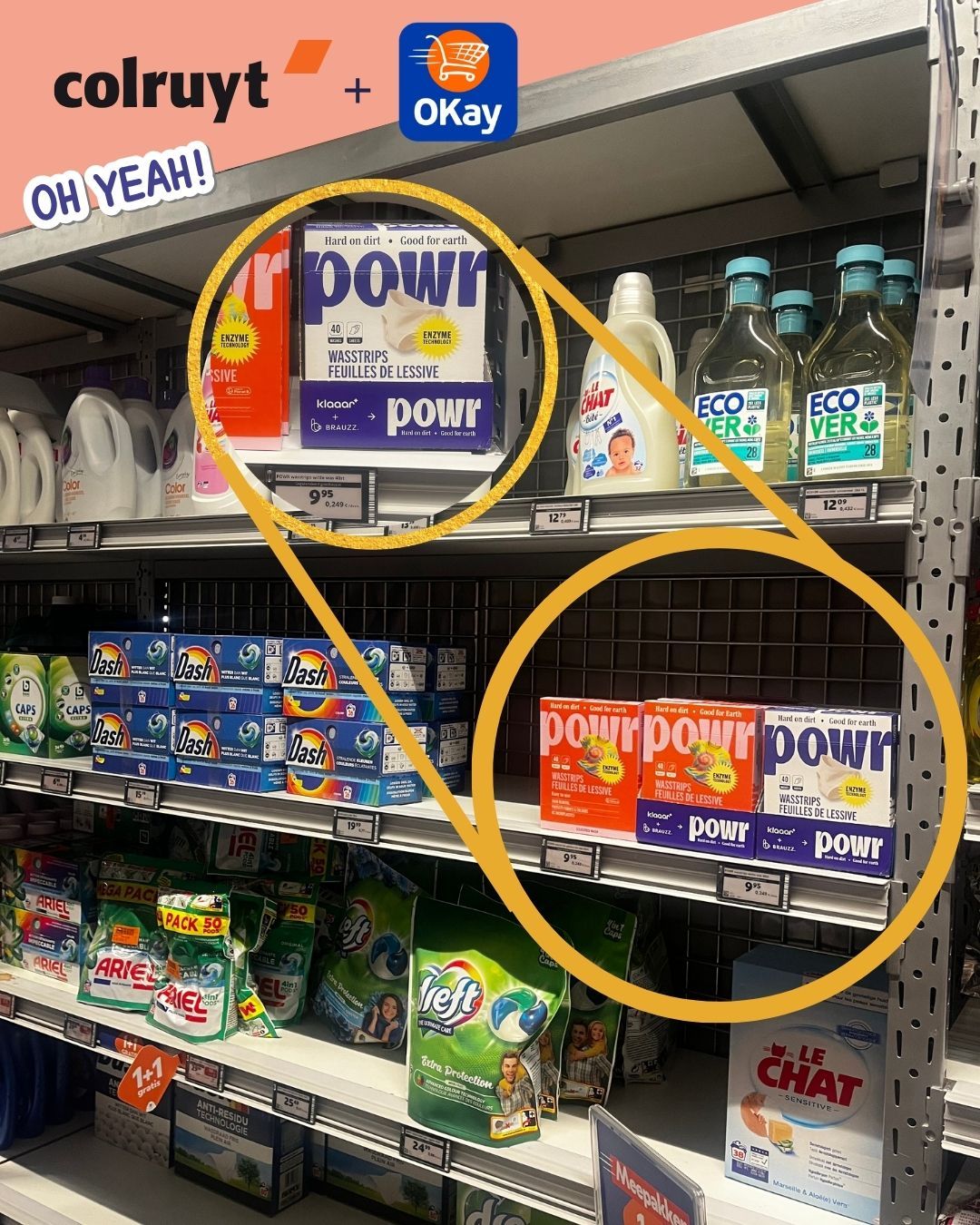
Channel choice is used as a credibility signal. Selling WONDR exclusively through pharmacies is a deliberate brand-building move, because pharmacists strictly validate ingredient health, so 600-700 pharmacies stocking the product signals that it is genuinely healthy rather than merely sustainable [19]. In grocery, the wins are tracked closely and gratefully: POWR is now in all Colruyt and Okay stores nationwide, the Klaaar wash strips are being quietly phased out as the shelves fill with POWR, and he notes from his local Okay that shoppers are picking them up often, with Colruyt Group a Planet B partner since 2020 [4]. The next pitch, taking POWR Liquids in its cardboard bottle to Colruyt Group's head office, is shared publicly while still unresolved [3]. Geographic expansion follows the same logic of concentration: rather than funding a full marketing mix across the Netherlands, saturate one city, he dreams of Utrecht, with the whole mix to create an "all over the place" network effect before expanding [20].
On how to build the company
The operating rules are few and repeated. "Een idee is eigenlijk niks waard. Execution is everything" [19], paired with "Ga niet bestaan niet" [19] and "Test it small en scale it when it works" [20]. He gives a concrete illustration of why testing beats instinct: making a sample 100% free attracts discount hunters who never buy, while charging even €1 filters for real prospects [20]. For starting entrepreneurs the priority is sales rather than marketing, because your time costs nothing and nobody sells your story better than the founder, every euro earned should be reinvested, and payment terms should be negotiated because cash is king [20]. He identifies the company's core strength as owning the product IP through in-house development with contract labs, which means dependence on no single production partner [20], and the R&D does not stop, with products continually improved after being first to market with wash strips through Brauzz [4].
The growth and the endgame are stated with the same directness. "Wij bijna verdriedubbelen in omzet jaar over jaar. Ons team verdubbelt ook jaar over jaar" [20], with 37 team members and manufacturing primarily in Belgium [16]. The ten-year plan is to strengthen the current brands until 2026, then raise funding to acquire strategic sustainable brands into the Planet B family, launch a crowdfunding so consumers own shares, and target a listing: "Ik heb nu de overambitieuze doelstelling om over 10 jaar een beursgang te kunnen maken. Dat is de goal waarvoor dat ik ga, omdat ik dan echt wel een bedrijf maak van de consumenten voor de consumenten" [20]. He knows how this sounds and owns it: "Ik ben wel een beetje crazy in the coconut, denk ik, en de juiste naïviteit erbij om te denken dat ik de wereld wel echt kan verbeteren" [20]. The instinct is long-standing, running from selling Christmas trees at thirteen to founding a kickbox club at sixteen [16].
Takeaways
- Never sell sustainability. Consumers buy on price, then on what's in it for me, then on sustainability, so lead with the product benefit and keep sustainability as DNA: "Wij verkopen geen duurzaamheid... we gaan een shampoobar verkopen van Wondr omdat het veel beter is voor jouw haar" [19][20].
- Choose endorsed branding over a house of brands. Hiding the parent lets a group bury a scandalous brand quietly while 2999 others stay safe; putting the parent front and centre forces radical transparency and builds one ecosystem [14][19].
- Judge materials by whether recycling has a business model, not by reputation. Plastic recycling survives on subsidy, Belgium at 50% against 13% in Europe and 9% worldwide, while recycled aluminium uses 95% less energy and gets recycled because it pays [19][20].
- Fix packaging at the source by mandating 100% recycled content, since virgin material is usually cheaper and "iedereen jaagt op %'tjes marge, dus iedereen kiest het goedkoopste" [15].
- Put the mission above the ego when a partner has already solved the problem: choosing the Smyle partnership over another two years of in-house R&D, and merging with BRAUZZ because "Onze missie is gewoon groter dan onze ego's" [2][19].
- Fund the uncomfortable research yourself when the industry will not, because it goes against its own shop; the resulting finding that 96% of tested Belgians carry microplastics in their blood put the issue in nearly every newspaper [9][10][12].
- Start with sales, not marketing, reinvest every euro, negotiate payment terms because cash is king, and plan for the 70-day retail payment gap that swallows working capital [20].
- Test cheap before scaling and charge at least €1 for a sample, because a 100% free sample attracts discount hunters who never convert: "Test it small en scale it when it works" [20].
Media & appearances
- WillYouTubeImpact through Social media Ep. 2: Tibbe Verschaffel, Planet B. Legendary or controversial campaign?Tibbe Verschaffel discusses how Planet B uses social media as a cost-efficient marketing tool to tell their story about redefining the fast-moving consumer goods industry and inspire people to adopt healthy, plastic-free products. He explains his personal approach to social media as a natural sharer who documents both wins and failures, and describes a controversial viral campaign that generated job applications despite the backlash. He also emphasizes the importance of TikTok as a platform for reaching large audiences and encourages others to try social media without fear of judgment.
- Intentif TeamYouTubeTibbe Verschaffel (Planet B) over caring leadership, ownership en impactTibbe Verschaffel discusses his early entrepreneurial ventures starting at age 13, including selling Christmas trees and later founding a kickbox club at 16. He explains how Planet B was founded in 2018 as a response to the phrase "there is no planet B," with the goal of creating harmony between people, animals, and the planet through product development, marketing, and sales across 37 team members, primarily manufacturing in Belgium. He advises entrepreneurs to collaborate rather than work individually, arguing that cooperation is Belgium's competitive advantage in business.
- #teamretail podcastYouTubeWONDR, New School Retail gaat over impact maken met Tibbe Verschaffel | Planet B #72
In the news
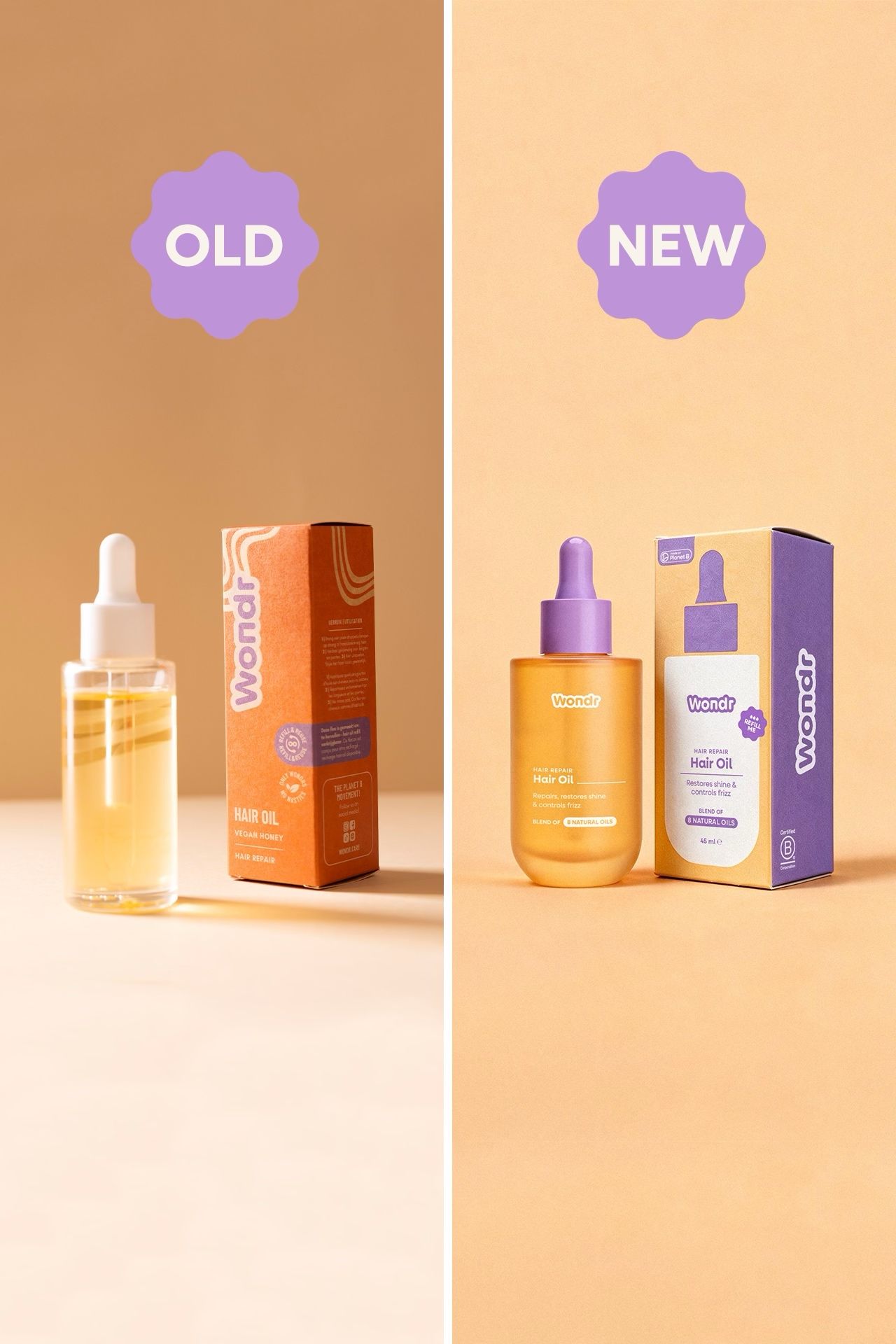
- De nieuwe WONDR branding.. Ik heb héél lang geweigerd om onze waves los te laten 😅 Zie foto: links = oude WONDR branding. Rechts = de nieuwe (vandaag gelanceerd) En ja ik moet toegeven 🤭 het verschil is behoorlijk groot🤯 We zijn momenteel bezig met een grote rebranding van WONDR care. Onze nieuwe Liquids die we gisteren lanceerden zitten al volledig in de nieuwe branding, en nu volgt ook onze Hair Oil. Maar deze switch was voor mij persoonlijk niet zo evident. Ik heb jarenlang heel hard vastgehouden aan de typische WONDR
- Hahaha te geweldig deze 😂 En enkel met mensen van ons eigen team + zoals alle content eigen creatie, props to Pieter Debois Sara Lammens Aline Bruckner 🤘
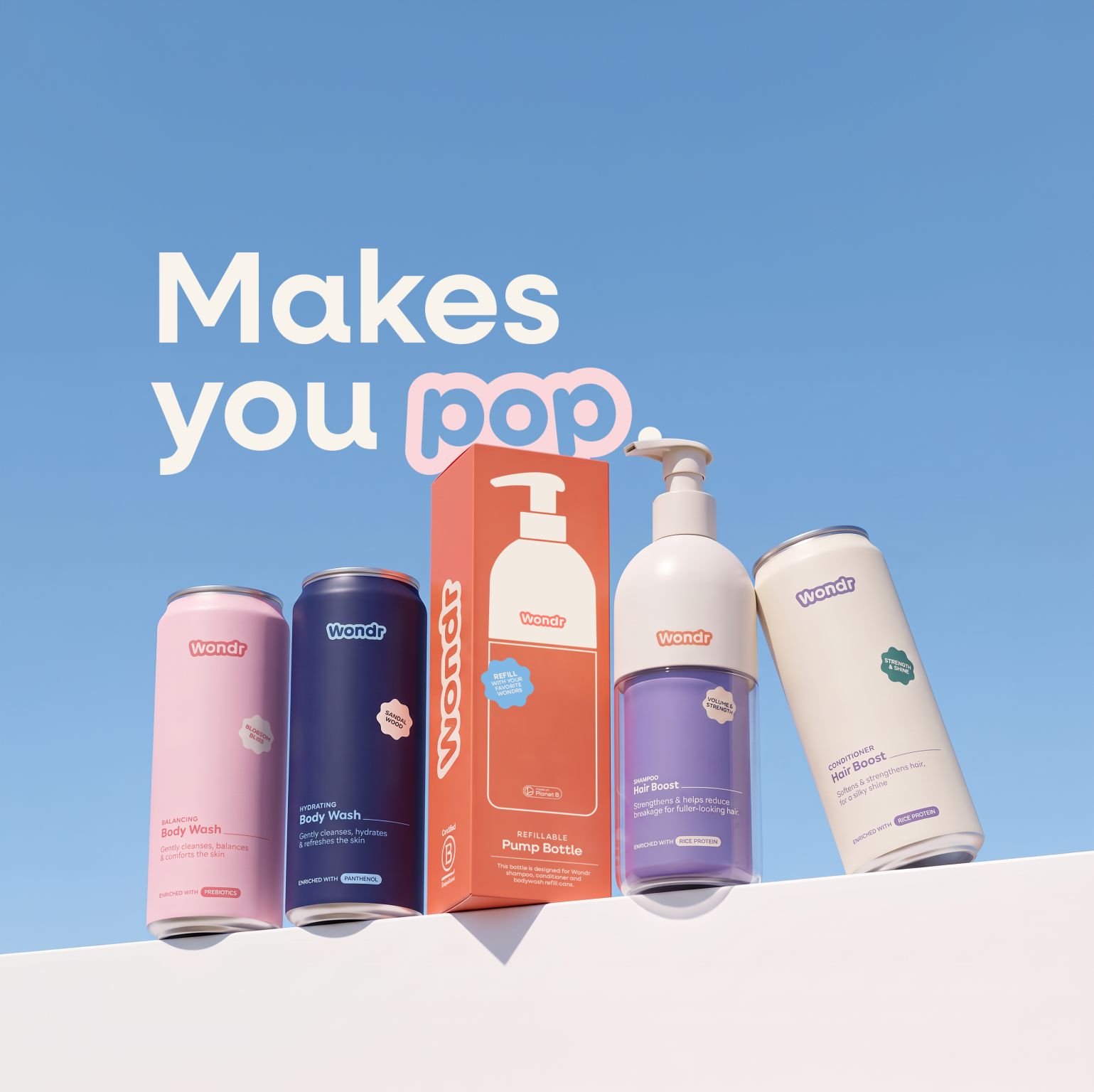
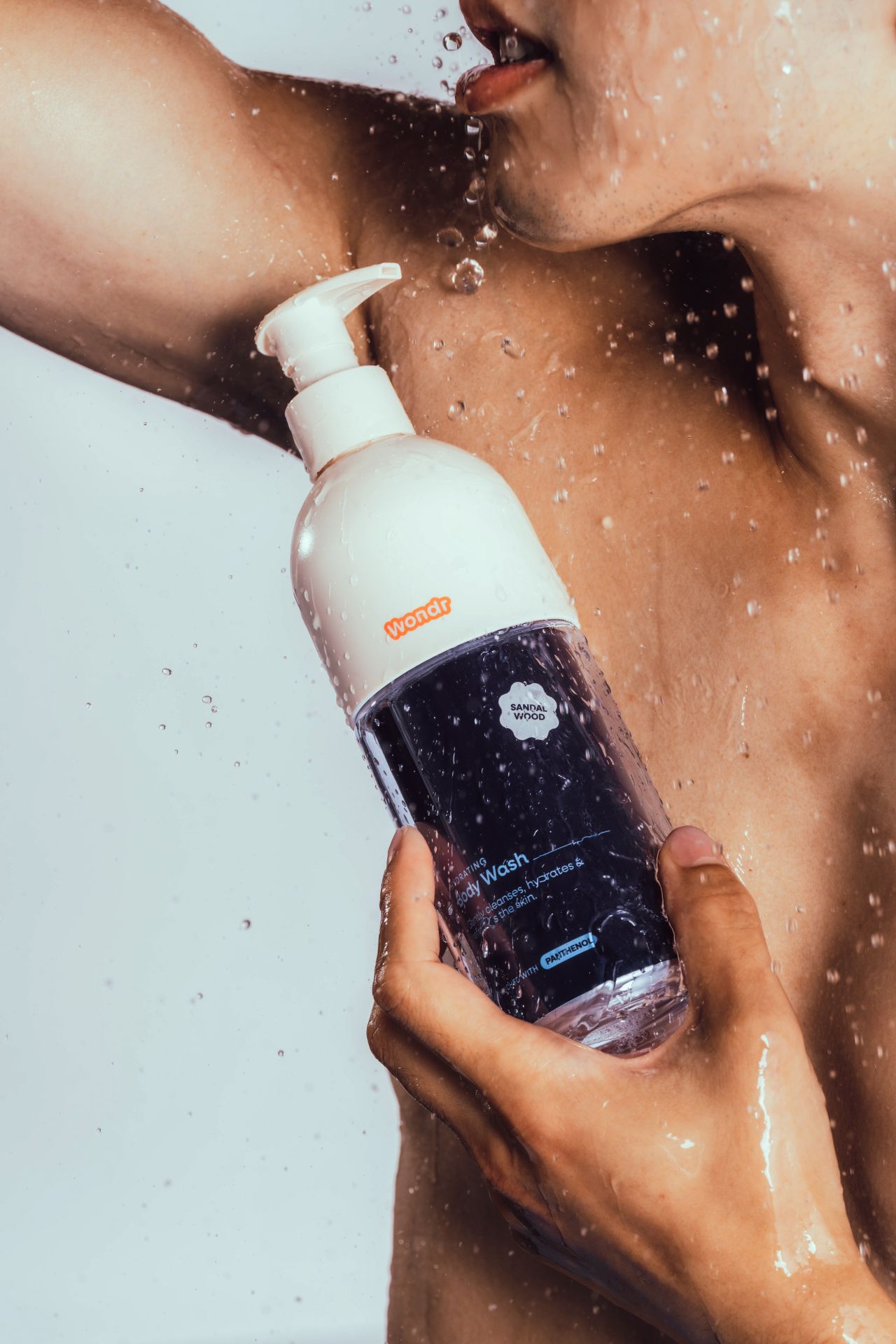
- Wauw 🥹 EIN-DE-LIJK!!! Onze nieuwe WONDR Liquids zijn live. Letterlijk meer dan een jaar aan gewerkt met het team 🤯 Gezonde shampoo, conditioner & body wash formulaties, met één herbruikbare fles en flinterdunne aluminium (POP) refills. Waarom aluminium voor de refills? ✅ oneindig recyclebaar ✅ super gegeerd om te recycleren ✅ gerecycleerd aluminium vraagt tot 95% minder energie dan virgin aluminium Prachtig materiaal dus als refill -> 1 bottle & Endless POPs ✨ It makes you & your bathroom POP ;-) En uiteraard: health &
- Merci voor het mooie artikel De Standaard ☺️ en PR manager Natascha Van Weereld 🤘 En tegelijk big shout out naar het team en mijn co-founders - niets zonder hen!
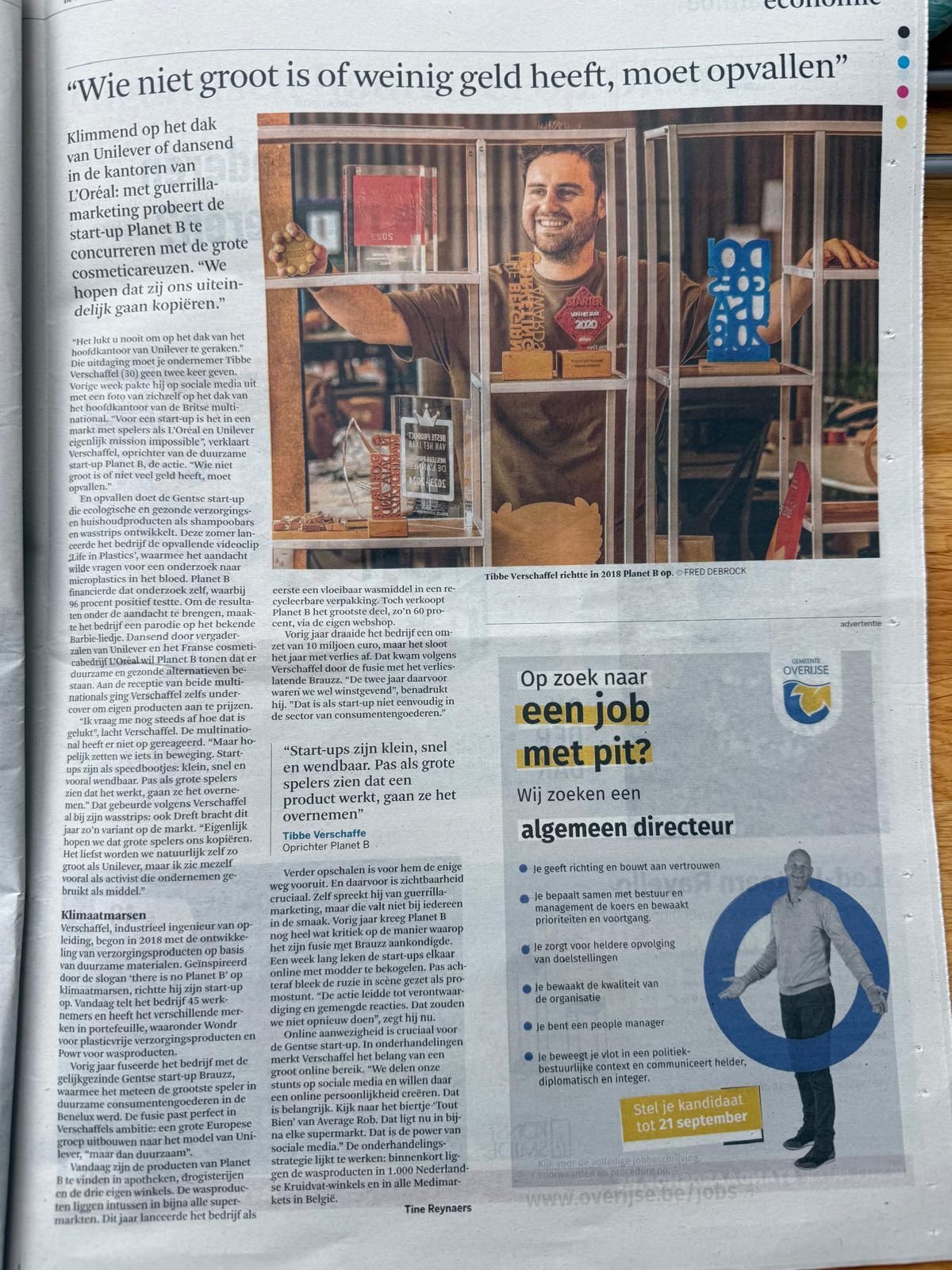
- Op het dak van Unilever 😅 "Dat lukt u nooit om op het dak van hun hoofdkantoor te geraken" ... a few moments later... 🤡 Met Planet B dagen we Unilever, Procter & Gamble, L'Oréal etc uit. We geloven in een toekomst waarin consumentenproducten gemaakt worden voor de consument, voor de mens, en niet ingeboet wordt op gezondheid (zowel die van ons, als vh milieu) Enkele feiten: - Verpakking is goed voor ~36% van alle plastic die wereldwijd geproduceerd wordt (UNEP), en zo'n 40% van al het plasticafval (OECD). - In de jaarlijkse

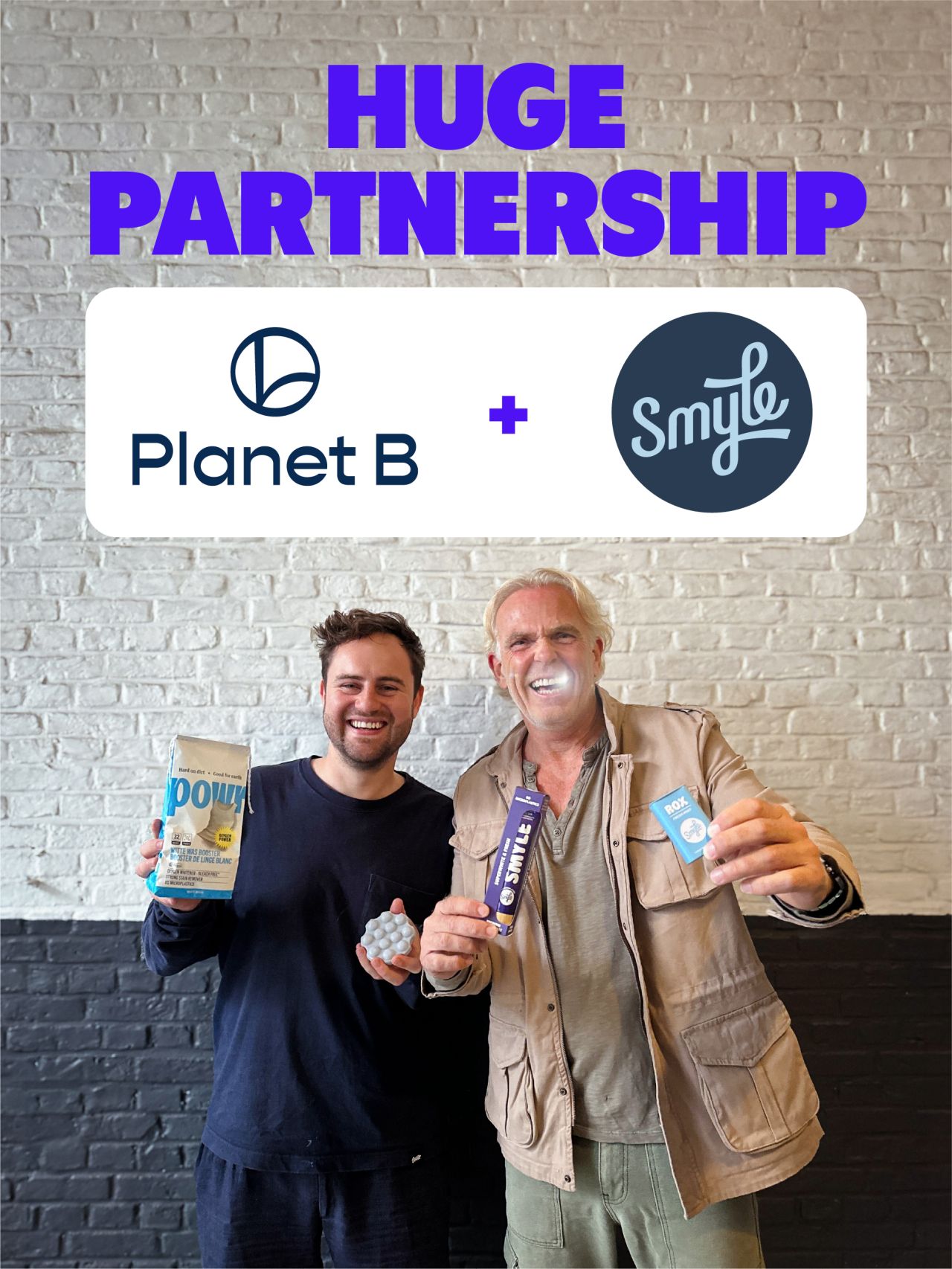
- We lanceren een nieuw merk!!!🤯 (Voor het eerst een merk dat niet van ons is 🤫 ) Smyle x Planet B. 🇳🇱❤️🇧🇪 Onze grootste partnership ooit! 🤯 Sinds dag 1 hebben we een behoorlijk absurde ambitie: jouw volledige badkamer en huis gezonder maken. WONDR voor huid & haar ✅ POWR voor was & home care ✅ Maar wat met je mond? We vroegen ons af: weeral zelf ontwikkelen? Technische fiches schrijven, labo zoeken, formulaties ontwikkelen, testen, verpakking ontwikkelen… en waarschijnlijk weer 2 jaar R&D. 😅 Of je ego aan de kant zetten en
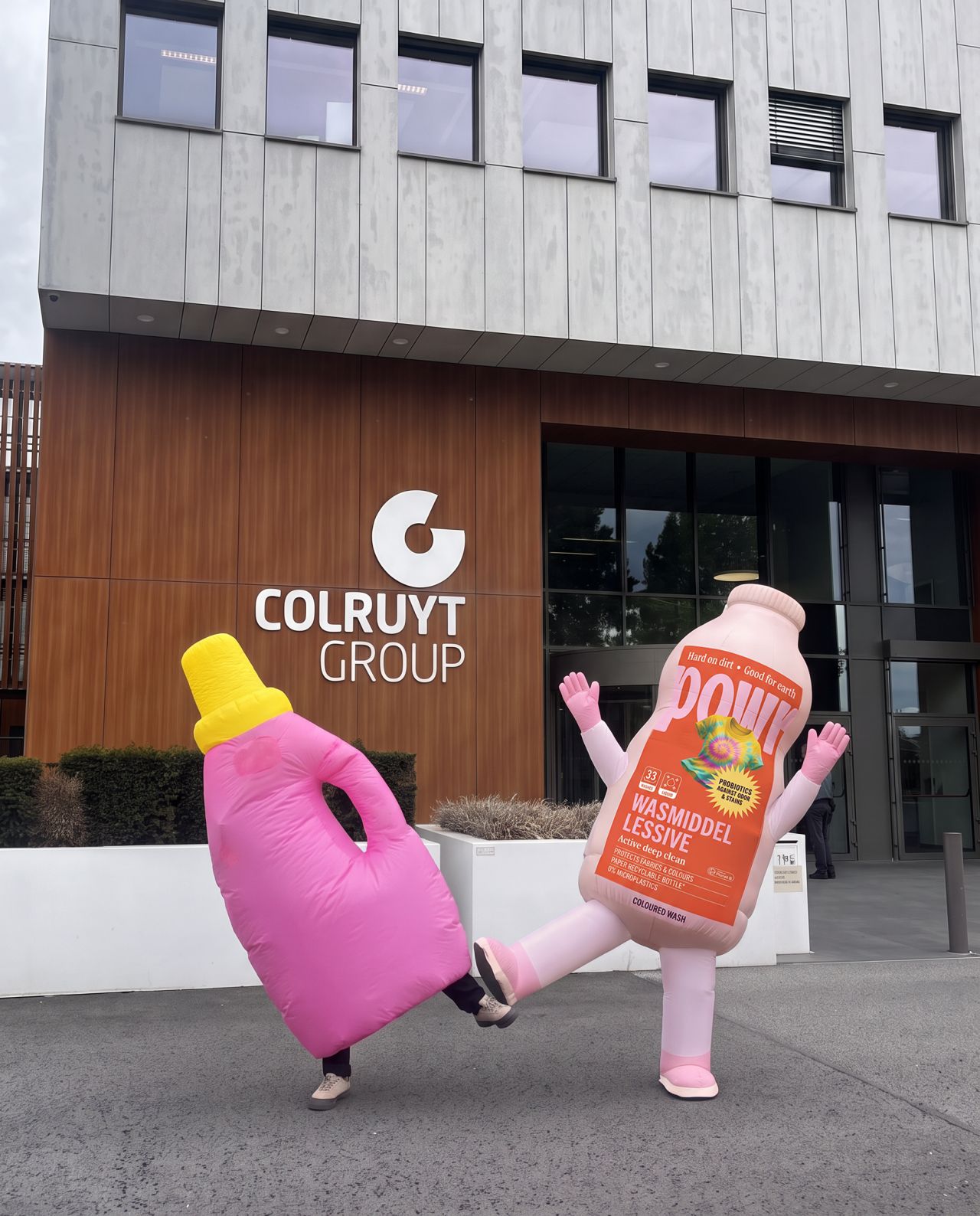
- Vandaag op hoofdkantoor bij Colruyt 👀 Vloeibaar wasmiddel in een kartonnen fles (papier-recycleerbaar), bij Colruyt Group lanceren?? Wish us luck 🤞 ☺️ Niet iedereen wilt wasstrips gebruiken, maar er was geen alternatief voor vloeibaar wasmiddel in plastic flessen. Wat maakt POWR Liquids dan zo uniek? ✅ Ruikt heerlijk ✅ Probiotica en enzymen = wassen met de kracht van de natuur (powr of nature) ✅ Papier-recycleerbare fles Hard on dirt, good for earth. Again: Wish us luck 😁 🤞 ☺️
- POWR in alle Colruyts en Okay winkels over het hele land, oh yeaah!! 😍 Gisteren zag ik in mijn lokale Okay winkel de POWR.care wasstrips shinen ✨ De Klaaar wasstrips zijn stilletjes aan uitgefaseerd en de schappen worden gevuld met POWR. De wasstrips vallen goed in de smaak want ik zie dat ze vaak meegenomen worden. 🥰 Mijn co-founders Lowie Vercraeye, Manush Barvar en Ruben Renaer 🫧 brachten als eerste (met Brauzz) wasstrips op de markt, ondertussen zitten we natuurlijk niet stil in R&D en blijven we onze producten verbeteren en
Related profiles
This page shows public professional information only, each fact cited. Is this you? send a correction, or ask for removal within 24 hours, no questions asked.