Talks about
Branding · Recruitment Tech
Career history

Insights & ideas
The through-line
Everything Tim Dhondt says circles one conviction: the biggest problems in the world are talent-allocation problems. "Ik geloof dat we de slimste mensen nodig hebben om de grootste wereldproblemen op te lossen" [16]. Too much of that talent disappears into what he calls, borrowing from Simon van Teutem, the "Bermuda triangle of talent", finance, consulting and law, when the same people redirected into health, climate and biotech would solve societal problems faster [16]. Compressed to one line, his pitch is that "building that future starts with the right people pointed at the right problems" [10], and Goodshift exists "to close the talent gap in the impact economy" so the best talents find high-impact opportunities faster [10].
What has sharpened over time is his sense that the obstacle is practical rather than motivational. People are willing, they just cannot see the options or answer the questions that stop them. Impact jobs are invisible [7], most employers do not publish pay [3], and the standard career conversation asks the wrong thing [9]. So the work has moved from conviction to infrastructure: a map, a jobs database, an AI companion, and eventually salary data.
On pointing the best people at the biggest problems
The redirection thesis is not sentimental. Tim's argument is that societal problems get solved faster when smart people work on them, and that the sectors doing the solving are commercially serious enough to absorb that talent, with biotech as his example of a field where moving over costs nothing in pay [16]. He frames entrepreneurship as "the most powerful vehicle to build a better world" [14], and reads the coming decade as one where the stakes rise sharply: "De AI race of wat er allemaal gebeuren gaat 10 keer sneller zijn en 10 keer groter dan de industriële revolutie" [16].
The target group follows from the thesis. Goodshift deliberately avoids students, because acquisition would have to restart with every yearly batch, and aims instead at professionals two to three years into their career, the moment when consultants start realising the path does not fit [16].
On the wrong career question
"Most people can describe the last four years of their career perfectly. Yet they still have no idea what the next four should look like" [9]. That gap is the founding observation. "When I started Goodshift I had no idea what to build. I only knew the career question everyone gets asked is the wrong one. Not 'what have you done'. But 'what do you want to do'" [9]. Clay, the AI career companion, is built on exactly that inversion: "He doesn't ask for your CV. He asks what you want from your work" [9], then matches against opportunities in climate, health and social equality [9], drafting a personalised shortlist so nobody has to doomscroll through more than a thousand open roles [8].
He is equally firm about what the answer is not. "'Follow your passion' is terrible career advice" [12]. The alternative he endorses, from So Good They Can't Ignore You, is that you build rare skills first and the freedom to choose where those skills land follows: "That freedom is what most people are actually after. Not passion. Not mission statements. The ability to point your skills at a problem you care about" [12]. Careers themselves no longer run in a straight line but in chapters that can be totally different from one another, and he notes he has done more jobs in his first five years than his parents did in their entire careers [16]. For the decision itself he uses regret minimization: ask whether at eighty you would regret not doing it, and move on 70 to 80% of the information, because you will never have all of it [16]. His own sabbatical during corona, resigning and sitting months without pay, was "the biggest gift" he gave himself, creating the space to deliberately choose early-stage ventures [16].
On status: less ladder, more compass
He expects the definition of status to change, and soon. "For years status meant a senior title, fancy company car, and a team to manage. The kind of things that looked great on LinkedIn, but didn't always feel great on the inside" [5]. In the decade ahead he believes status shifts to how you spend your time, the kind of impact you create, and whether your work reflects what you actually care about: "Not what you have. But how you live" [5]. The people admired most will not be the ones who chased the ladder but the ones who built a life aligned with their values, and "the real flex won't be what's on your business card. It'll be how close your calendar gets to the person you want to become" [5]. He states the mission plainly: "My goal is to help people rethink how we grow. Less ladder, more compass" [5].
On work you never need a holiday from
The personal version of the same idea is work-life integration rather than balance. "Je wil eigenlijk een leven waar je nooit vakantie van moet nemen. En dat is hetgeen wat ik nu heel bewust probeer te creëren voor mezelf" [16]. He has no patience for the busyness that usually accompanies startup life: "Te druk dat bestaat eigenlijk niet hè. Kunt niet te druk hebben hè. Dat is eigenlijk gewoon gebrek aan prioriteiten" [16]. He is similarly dismissive of credentialism as a constraint on what you are allowed to attempt: "Er zijn geen regels hè. Doe maar wat dat je wilt. [...] Ik had mijn diploma niet nodig om in early stage ventures dit te gaan doen. Ik heb niks over go to market geleerd in mijn opleiding" [16].
On the pay cut question
"'But do I have to take a pay cut?' By far the most asked question I get about impact roles" [3]. The assumption underneath it, he says, is that choosing impact means choosing less [3]. His answer today is partly evidential and partly honest about the limits of the evidence: 75 roles on Goodshift publish a salary range, which is only 7% of what is open, and "as long as the other 93% don't, we can't answer the question with confidence" [3]. He is waiting on Belgian pay transparency rules to change that, and intends to publish salary insights once there are more datapoints [3]. What he will already assert from experience is that in sectors such as biotech there is no pay cut at all [16].
On making impact jobs visible
"Most impact jobs are invisible, so we decided to change that" [7]. The Goodshift Impact Map is an interactive view of impact jobs in climate, health and social equality covering over 275 Belgian companies and their open vacancies, built by Maurits in only a few working days [7]. Most of those companies are hiring right now, 70 in Brussels, 60 in Ghent and 22 in Antwerp [4], and the platform as a whole carries over a thousand open impact jobs, 134 of them added while everyone was on holiday [8]. Coverage is explicitly a work in progress: he keeps asking people to send in companies working on climate change, global health or social impact that are still missing [4][7]. The same visibility instinct runs through the Shifting Careers podcast, where conversations with people like Aretha, Chief People Officer at Planet B, cover what you can expect from an impact job and what matters if you want to apply there [15].
On building with early users
"Go-live days make me a little nervous. Not because things break. They always do" [6]. What makes him nervous is finding out what people actually think [6]. Since the Impact Map went live the feedback has been instant, requests for features and for missing companies, and he treats that as the point rather than the noise: "Early stage startups are built by early users. Because if you don't get any, you're probably building the wrong thing" [6]. Website traffic hitting an all-time high is read the same way, as evidence that visitors are discovering hidden gems in their own city [4].
He gives first customers the same weight. Karomia said yes "at day zero", when "there was no product yet, and I barely knew what to build" [2]. His reading of that: "Early customers take the risk before the proof exists. And they shape what gets built by being there first" [2]. Only a handful of companies said yes then; a few months later the product exists and he is still helping all of them build their teams [2]. Behind the willingness to start from nothing sits founder fit. Good ideas are easy to generate, he argues, and what matters is having a specific reason why you personally must execute this one, something he only felt with Goodshift [16]. The ambition attached to it was set early: "Tim, heb geen zin om hier kleine KMO te bouwen. Ik wil iets over Europa opschalen. En toen dacht ik van oké goed, let's go" [16].
On go-to-market as scalable sales
Go-to-market, in his model, is three blocks, marketing, sales and customer success, and keeping oversight of all three is what makes the growth engine work [16]. The unifying idea is that "marketing moet je een beetje zien als schaalbare sales" [16]. Early stage starts extremely sales-driven, cold email and cold calling, and every subsequent step should push toward marketing-intensive selling at scale, with Drip now close to selling a machine through the website with no human involvement [16]. He treats founders' personal brands as a channel with measurable returns: after two years of intensive social selling on LinkedIn, one in four of Drip's deals came in through it [16].
Visibility is pursued the same deliberate way. Being selected as a Startup of Tomorrow and taking the stage at Love Tomorrow is described as "the visibility, network, and momentum we need to scale our impact" [14], and pitching there felt different from the countless other pitches because of the energising shared belief that a better future is possible [10]. He works events for talent, impact entrepreneurs and early-stage investors alike, sending out invitations in advance and posting his QR code publicly for anyone open to a chat [13], and turns up at matchmaking formats like The Impact Circle for the same reason [11]. Award nominations get treated as another lever: when Goodshift was nominated for Startup of the Year at the HRtech Awards, he asked directly for votes, since voting decides who makes the finals [1].
On the business model and why nobody likes agencies
The commercial thesis starts from a complaint: "Recruitment agencies vragen belachelijk hoge fees hè. En eigenlijk wil niemand met de agency werken" [16]. Goodshift is structured as a marketplace where candidates "pay" with data that trains the AI matching model, while revenue comes from companies of 10 to 50 employees, past the phase where they can hire from the founders' network, through no-cure-no-pay placement fees far below agency rates [16].
The matching philosophy is the other half of it. The best hires often do not match the vacancy on paper: Drip's best salespeople studied linguistics and speech therapy and would never have found the vacancy or been targeted by it [16]. His conclusion is that matching on person and values beats matching on skills [16], which is exactly why Clay asks what you want rather than what you have done [9].
On running a startup as an operating system
He advocates structuring the company as an operating system in Notion and Google Drive so documentation is searchable in the way you would search the web [16]. The test he applies is blunt: "De stagiair moet op zijn eerste dag het kunt terugvinden. Als dat niet het geval is, hebt dat op de verkeerde plaats gezet" [16]. At Drip this meant new people could be onboarded without starting from zero [16].
Takeaways
- Ask candidates the forward-looking question, not the backward one: "Not 'what have you done'. But 'what do you want to do'" [9].
- Skip "follow your passion". Build rare skills first, because the freedom to point them at a problem you care about is what people are actually after [12].
- Expect status to move from titles and cars to how you spend your time: "how close your calendar gets to the person you want to become" [5].
- Only 7% of open impact roles on Goodshift publish a salary range, so the pay cut question cannot yet be answered with confidence; pay transparency rules are the unlock [3][16].
- Treat marketing as "schaalbare sales" and push every early-stage sales motion toward selling at scale; two years of founder social selling produced one in four of Drip's deals [16].
- Hire on person and values rather than skills on paper: the best salespeople came from linguistics and speech therapy and would never have matched the vacancy [16].
- Ship early and court the complaints, because "early stage startups are built by early users. Because if you don't get any, you're probably building the wrong thing" [6].
- Document everything so an intern can find it on day one; if they cannot, it is in the wrong place [16].
- Decide career pivots with regret minimization at 70 to 80% of the information, and remember "te druk" is really a lack of priorities [16].
Media & appearances
- Ben's MentorsYouTubeWork-Life Integration: Een Leven Waar Je Geen Vakantie van Wilt!Tim Dhondt discusses how his experience at a previous startup (Drippel) revealed to him the personal satisfaction that comes from creating positive impact, which became a driving motivation for his career choices and his current work with Good Shift. He shares his career journey from studying at a business school, working at Mars in a corporate multinational environment, and realizing that path did not align with his values, which led him toward starting impact-focused ventures.
In the news
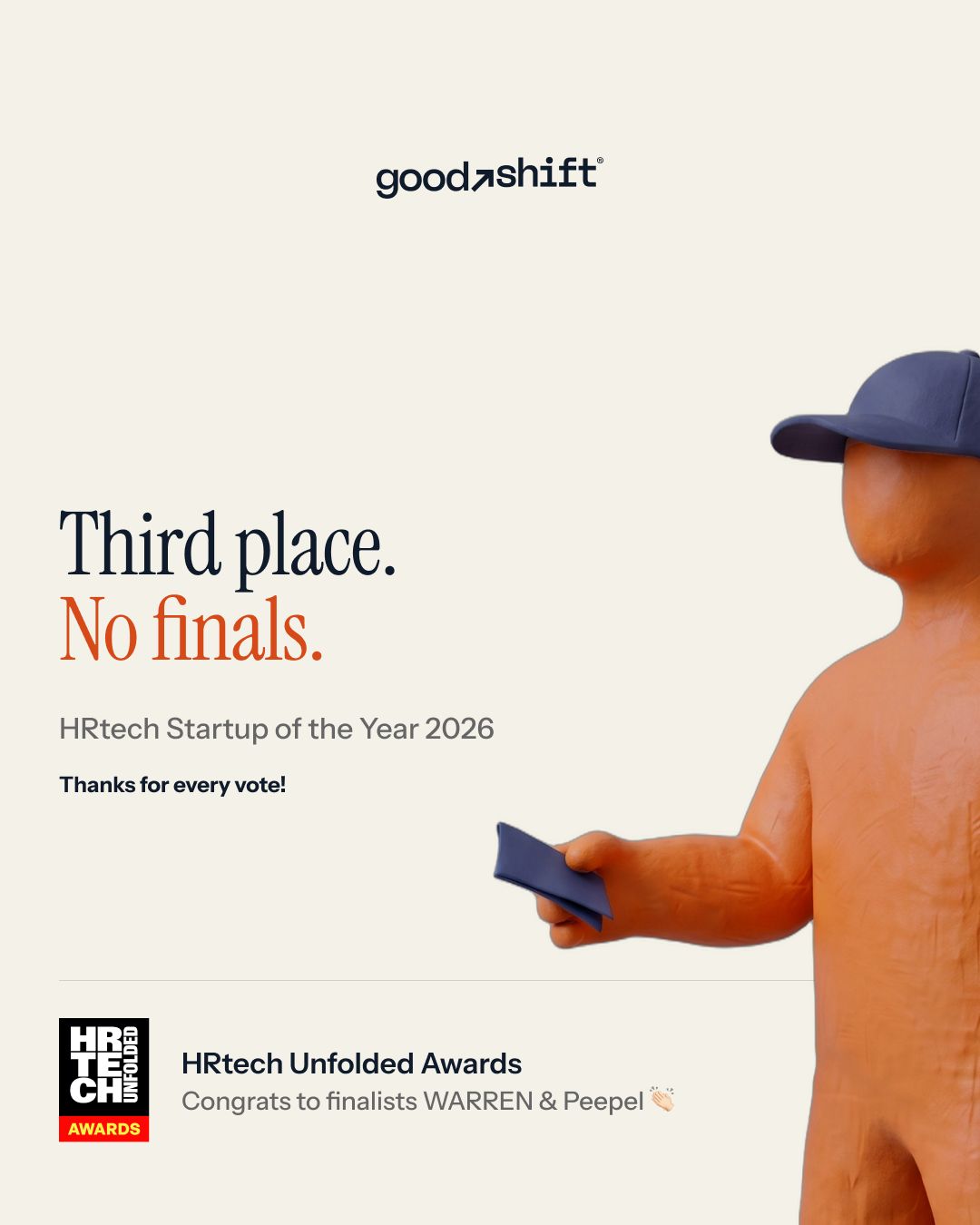
- Not gonna lie, I was very disappointed when I heard the news. Two weeks ago I received the results from the HRtech Awards: 'Out of the 12 nominees, you're in third place. Unfortunately, only the top two startups will go through to the final.' Needless to say, it's not what I hoped for. But I'm not surprised to see WARREN and Peepel reach the finals, congrats 👏🏻 Massive thanks to everyone who voted for us, I really appreciate it. Still figuring out the 'winning awards' skill. I'll get there one day.
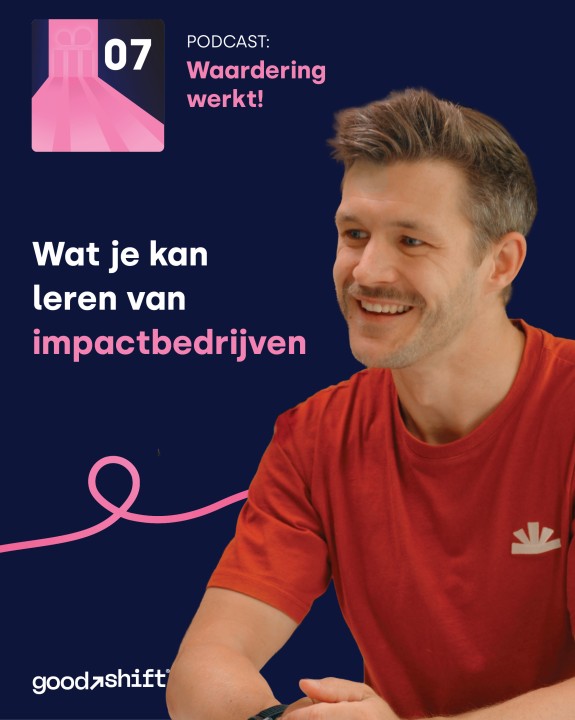
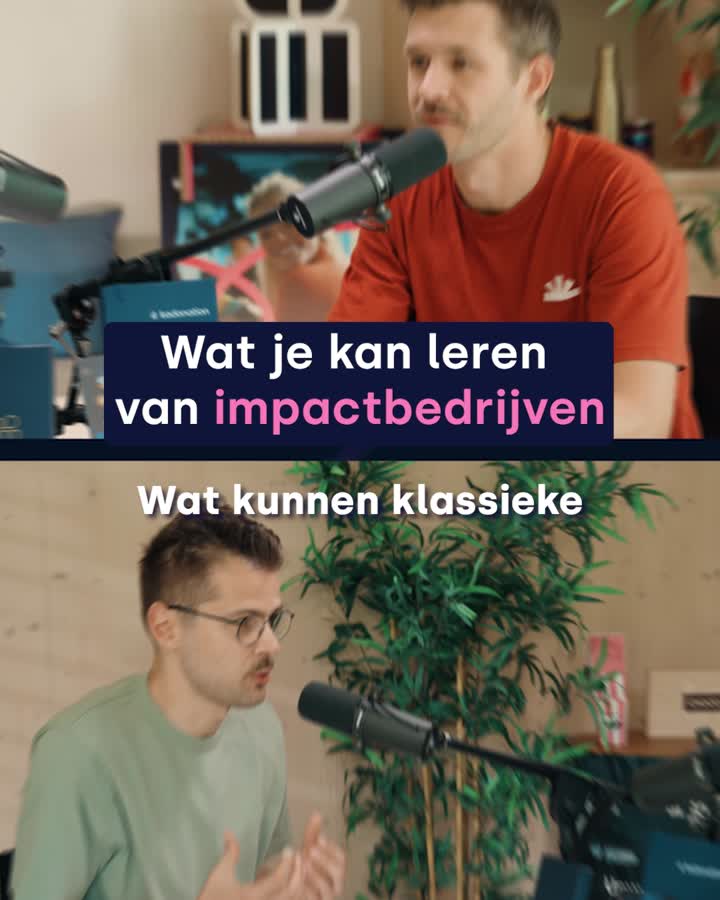
- Wat kunnen klassieke bedrijven leren van impactorganisaties? Volgens Tim Dhondt van Goodshift: zet je missie voorop. Want als je medewerkers elke dag zien welk stukje van de puzzel zij leggen, wordt werken zoveel meer dan gewoon… werken. 🎙️ Ontdek het volledige verhaal in de nieuwste aflevering van Waardering Werkt. 🔗 Link in de comments.
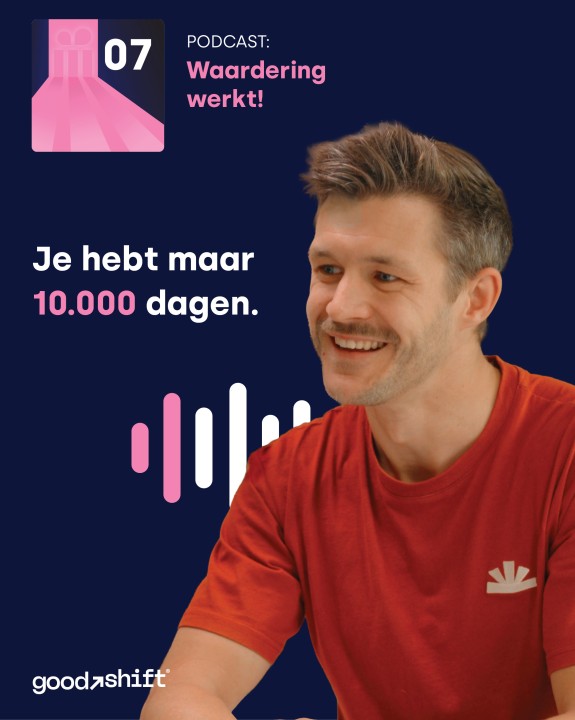
- Een gemiddelde carrière bestaat uit 10.000 werkdagen 🗓️ En ondertussen heb ik er persoonlijk al meer dan 2.000 gespendeerd. Zelf ben ik altijd heel bewust geweest over hoe ik m'n werktijd invul. En met Goodshift probeer ik anderen te inspireren om hetzelfde te doen. Thanks Pieter-Jan voor het leuke gesprek in de 'Waardering werkt' podcast van Kadonation!
- Didn’t see this one coming… My co-founder Tim Dhondt at Goodshift was invited on the podcast 'Waardering werkt' of my former company Kadonation. Full circle. Great to see two worlds collide. Fun conversation busting some myths of the impact sector. Getting into why people switch or what holds them back, and what it’s like to work for a de facto mission driven company.
- In my early career, I used to work in video marketing. Back then, making a 30s explainer video required at least a 5 person team. Now, Maurits created the first Goodshift explainer video in just a few hours. Building an AI-native startup means leveraging the technology in every possible way. And also, we don't have budget for a motion designer, copywriter and sound engineer. If this is what a few hours gets us now, I can't wait to see what's next 👀 Curious to hear about the first impressions in the comment section!
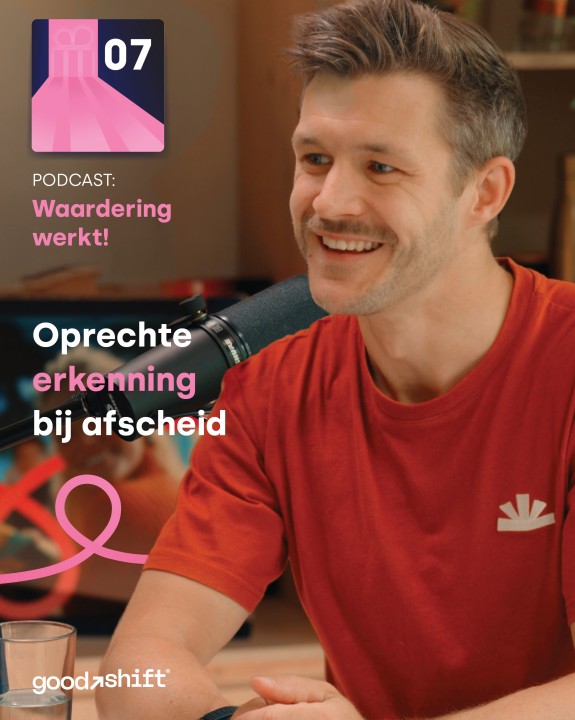
- Sommige momenten worden een hero moment. ❤️ Voor Tim Dhondt was dat het afscheid van Dripl. Een video vol persoonlijke anekdotes. Een boek vol herinneringen. En vooral: het besef hoeveel mensen en momenten één hoofdstuk uit je carrière kunnen kleuren. Een afscheid is het einde van een hoofdstuk. Maar maak jij er een moment van om te herinneren? 🎙️ Luister naar onze nieuwste aflevering van Waardering Werkt met Tim Dhondt van Goodshift. 🔗 Link in de comments.
- Climate change is becoming more visible every day. And many people want to be part of the solution. But the impact economy still has a talent gap, that's why we're building Goodshift. Loads of companies solving global warming can't find the right people for their mission. We're building Goodshift to close that gap. So the right people point their careers at the right problems. If that's you: go talk to Clay on our website.

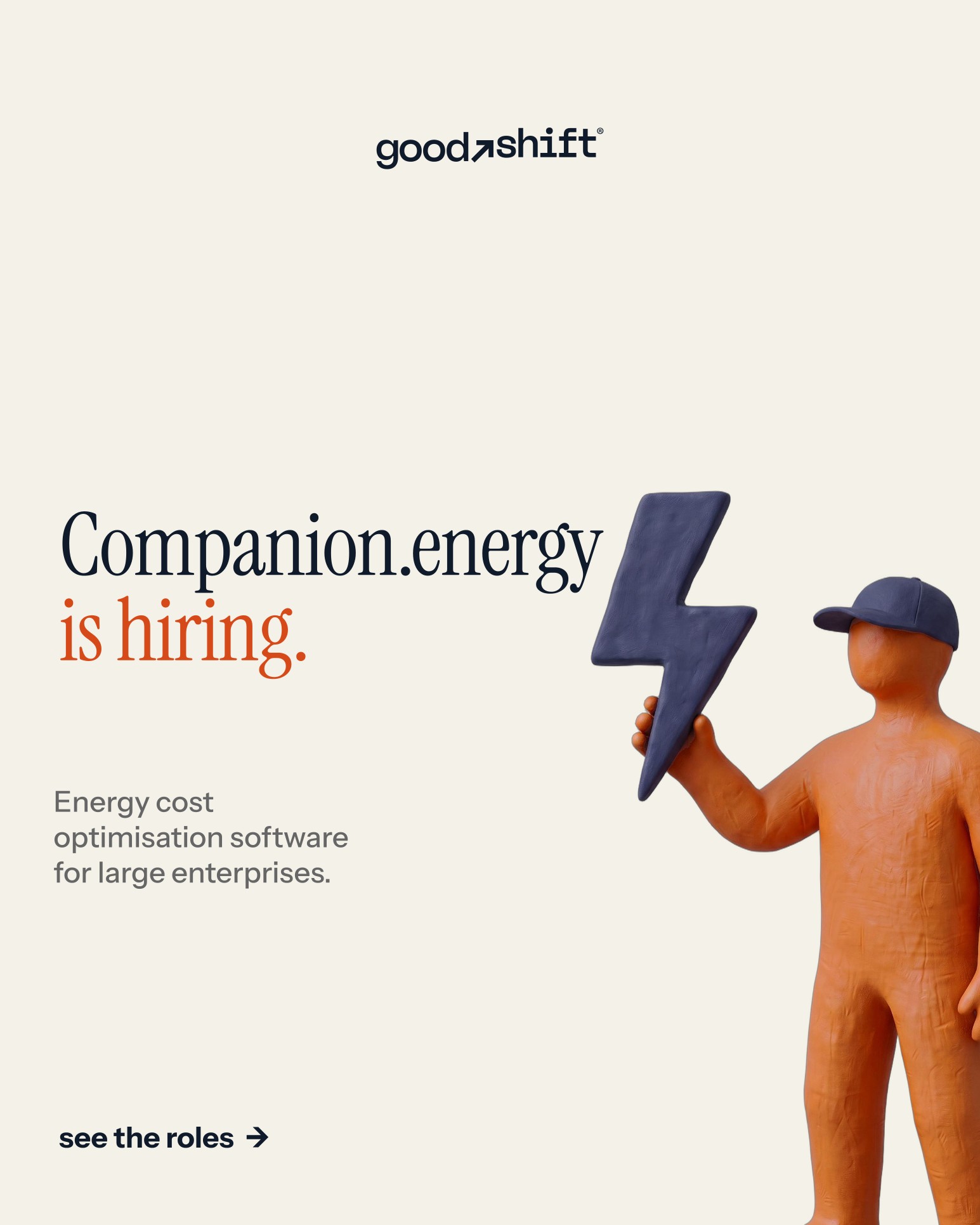
- Companion.energy is hiring ⚡️ After raising €7,8 million this Ghent-based scale-up is looking for new talent. We're helping them find a Solutions Engineer, Product Engineer, and Data Scientist. You can find these 3 open roles - and over 1.000 other impact jobs - on Goodshift.
Related profiles
This page shows public professional information only, each fact cited. Is this you? send a correction, or ask for removal within 24 hours, no questions asked.