
Overview
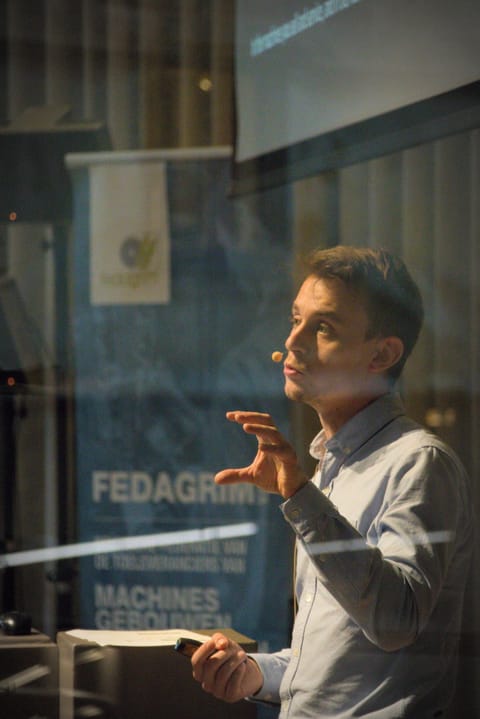
Tom Staessens is a co-founder of Leap Technologies, a role he has held since August 2022. He is based in Gent.
From September 2018 to March 2023 he was a researcher and PhD candidate at Ghent University, and during the first two years of that period he also served as treasurer of Engage (Engineering Alumni Ghent). Earlier he completed an internship at Vintecc in the summer of 2018, an internship at JECRC University from July to September 2017, and a student job at LVD in August and September 2016.
Staessens studied electromechanical engineering at Ghent University, taking a bachelor's degree between 2012 and 2016 and a master's degree in control engineering and automation in 2017 and 2018. In 2016 he also obtained a master's degree in the same field at the Universitat Politècnica de València.
Career history

In the news
- Best moment of the live demo when you make a typo, but the AI still detected the “platns” perfectly. Failing forward, as they say.
- Best moment of the live demo when you make a typo, but the AI still detected the “platns” perfectly. Failing forward, as they say.
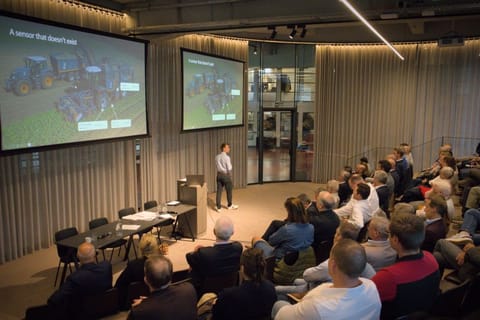
- The data science part had an interesting choice in this case. Two models were actually competitive on this project. One was a "simple model" (logistic regression) working from many features, some hand engineered, some extracted automatically. The other was a black box model that started from the raw data and extracted its own features. When studying the most important features of the simple model, these made physical sense compared to what an engineer looks at in the signal. That was a good validation and the interpretability
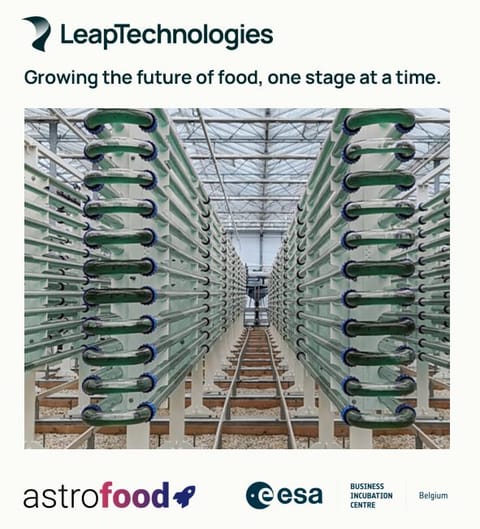
- One giant leap for ... No okay, we're not quite up and running in space yet. But it's been an honor helping build the groundwork for space-grown food. Excited for what's next.
- The real AI advantage in industry isn't always the algorithm: it's often the people who know the process better than anyone else. Our co-founder Tom Staessens shared his take with Agoria on the future of industrial AI in Belgium. Check it out below👇
- Thanks Agoria for the invitation to share my thoughts on the future of AI in Belgium. My personal takeaway from this fragment: the people in the industry with years of process knowledge are untapped gold for industrial AI applications. As we often say when starting a project: if we don't sit together with your team on what the data means, we'll happily write the walls full of conclusions your people probably already knew. In practice, that domain knowledge pays off best when it meets people who also have a sense of what AI can and
- The last slide claims that intuition on machine tuning is usually more capturable than it looks. Let's be more precise about that, because it looks quite different from one machine to the next. Sometimes the decision reduces to a set of rules. When this condition shows up, take that action. That works mostly when the conditions involved are limited, and once the rules are written down they can be tested and argued about instead of trusted. Often it is closer to a lookup. Years of human experience arise from having seen this
- In Belgium, we won't build the next ChatGPT. For that, we miss the infrastructure and the capital. What we do have, is a combination of world-class companies 'on the size of a handkerchief' as we would say in Dutch. The data that's required to apply AI in the industry does not exist online: it lives in the machines and production lines of those companies. If we capture that data and transform it into applications, we have the resource to become pioneers in 'physical AI': where AI has real impact on machines. Belgian companies are
Related profiles

This page shows public professional information only, each fact cited. Is this you? send a correction, or ask for removal within 24 hours, no questions asked.