Overview
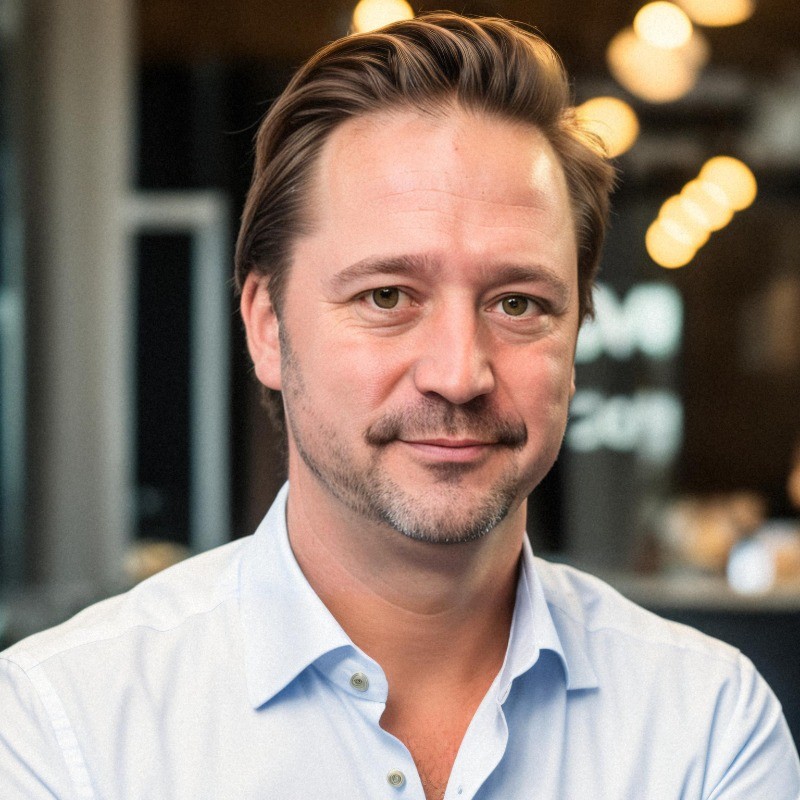
Vincent Defour is co-founder and CEO of Trendtracker, a Ghent company that operates a strategic intelligence platform for trend foresight. He founded the company, incorporated as Trensition, in October 2019 together with Mike Vanderroost and Mathias Colpaert. Colpaert serves as CTO. The platform monitors hundreds of millions of online publications and applies AI to detect, score, and forecast trends for strategy, risk, innovation, and foresight teams, with features including Strategy Brief, Trend Board, Trend Radar, and AI Analyst. Customers include Siemens, PepsiCo, P&G, PwC, Arthur D. Little, and Ageas, and the company has published customer stories with BNP Paribas Fortis, Roularta Media Group, and the Geneva Association. The startup joined the Start it @KBC accelerator in 2020, with insurance group Ageas already a client at that point. In July 2023 Trensition raised €1.8 million from Ageas and the Capricorn Digital Growth Fund. In December 2025 the company announced a $7 million Series A round led by Armilar with participation from Capricorn Partners, earmarked for expansion in the United States and the Middle East and for further AI and product development. The company has offices in Ghent and New York.
Career history

Insights & ideas
The through-line
Across Vincent Defour's posts, one preoccupation keeps resurfacing: change no longer arrives as a single force that a company can absorb into its existing structure, but as several forces compounding at once, and that compounding is what actually breaks old operating models [4][5]. Early material frames this in general terms, but as the year progresses it sharpens into a specific claim about where the decision moment itself is moving, from a person in an aisle or a patient in a clinic to an AI agent or platform sitting between them and the choice [3][10]. The other constant is a bet on foresight as infrastructure rather than a one-off report: Defour repeatedly pitches "real-time strategic intelligence" and shared evidence bases against "static reports and slow strategic cycles" [9][7].
On compounding shifts
Defour's core diagnostic move is to insist that forces reshaping an industry "no longer arrive one at a time" and that "each is manageable alone" while "together, they rewrite the operating model" [4]. He argues the hard part was never spotting individual shifts, since "most leaders already can," but reading "how they combine, and decid[ing] where to act first" [5]. This is the explicit premise behind the Food and Beverage work: "Nine forces, scored, and where to act first" [4][5], and the same framing recurs for FMCG and retail, where he describes "nine shifts compounding at once" [3].
On AI moving the decision moment
A second theme is that AI is not just speeding up existing processes but relocating the point where decisions get made. In commerce, he notes "an agent does the comparing and filtering first, sometimes the buying too, before a person is even in the loop," which means "the moment of influence" no longer "belong[s] to the shopper" but to "whatever system the shopper delegates to" [3]. In pharma and biotech, he makes the parallel claim that "the commercial decision moment... is quietly moving to platforms, retail health and AI agents" [10], and describes AI becoming "the operating infrastructure that runs R&D, manufacturing and commercial at the same time" rather than merely accelerating discovery [10].
On institutional memory
Defour treats forgetting as a competitive weakness. Using the discontinued Berkshire Hathaway parametric travel product as his example, he argues that when "the pilot ends," "the insight disappears with the budget line" and "the next wave of strategists inherits the same blank page" [8]. His conclusion: "institutional memory is a competitive advantage most companies don't know they're losing" [8].
On building foresight capability
Beyond diagnosis, Defour frames his own work as building durable capability rather than delivering one-off deliverables. Describing the Business Upper Austria partnership, he says the goal was helping "an entire industrial region move away from scattered, time-consuming research toward a shared evidence base" so teams "can align earlier and act with more confidence" [7]. He states the wider mission as wanting to "redefine how strategy is done with AI" and move "beyond static reports and slow strategic cycles toward real-time strategic intelligence, dynamic decision-making, and actionable foresight" [9]. This same logic drives his hiring posts, which look for people who can turn "scattered information into clear, structured output" as junior members grow "into more senior analyst or advisory roles" [2], and who seek a "Senior Expert, Strategy and Foresight" [1].
From the stage
In the Trendtracker interview with Leander Mombalio of Lassus, Defour explores AI's role in football strategy specifically, a domain his written posts do not touch. The discussion covers Lassus acting as "a bridge between sports and technology sectors," and applies his usual AI-and-decision-moment lens to a new setting, examining how AI delivers faster, deeper insight for sports organizations and shapes both on-field performance strategy and business decisions such as fan engagement and sponsorships [11].
Takeaways
- Map compounding forces rather than single trends when advising a client, since "several converging at once" break operating models that survive isolated shifts [4][5].
- Watch where the decision moment migrates in your category: agents and platforms are increasingly doing the comparing, filtering, and sometimes buying before a person is involved [3][10].
- Treat AI in R&D-heavy industries as infrastructure running R&D, manufacturing, and commercial simultaneously, not just a discovery accelerator [10].
- Build a mechanism to retain what pilots and experiments teach even after the pilot ends, or the organization relearns the same lessons repeatedly [8].
- When building foresight capability, prioritize a shared evidence base that lets teams "align earlier and act with more confidence" over ad hoc, scattered research [7].
- Hire for the ability to convert scattered information into structured, client-ready output, with a clear path from junior analyst into advisory roles [2].
Media & appearances
- TrendtrackerYouTubeWhat You Didn’t Know About AI in Football StrategyVincent Defour introduces his guest Leander Mombalio from Lassus consulting agency and discusses how AI-powered strategic intelligence is reshaping football strategy across European leagues and clubs. The conversation covers Lassus's role as a bridge between sports and technology sectors, their integration of AI to deliver faster and deeper insights for sports organizations, and applications of AI in both performance strategy and business decisions like fan engagement and sponsorships.
In the news
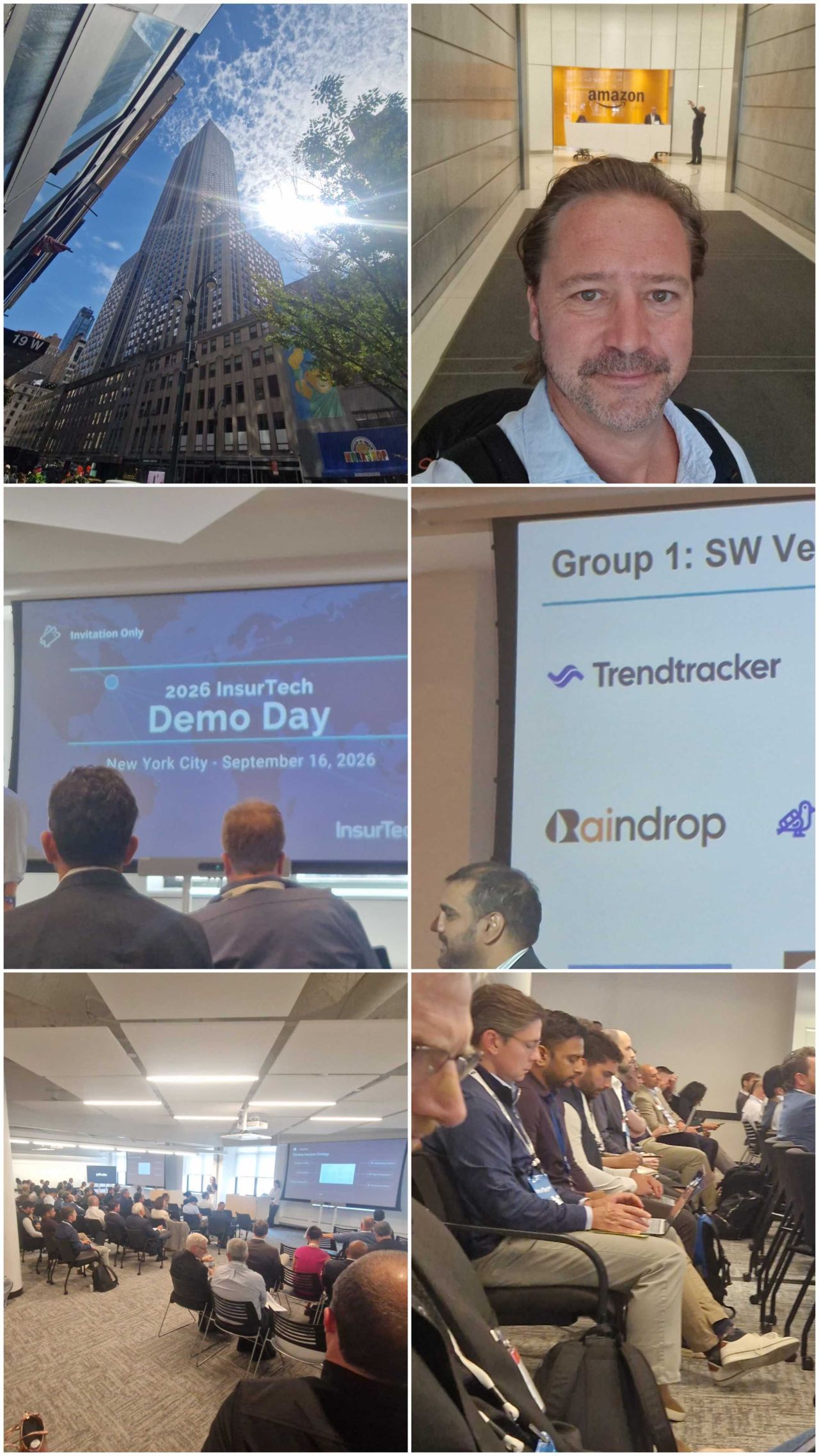
- Two days at InsurTech NY's Match Days for our CEO, Vincent Defour. Demo Day, then a full day in the room with carriers, investors, and founders shaping where the insurance ecosystem is headed next. His take on what stood out, below. Thanks to InsurTech NY, Tony Lew, Aaron Caton, and Roi H. for having us. Looking forward to 2027. #InsurTechNY #Insurance #NYC #Trendtracker
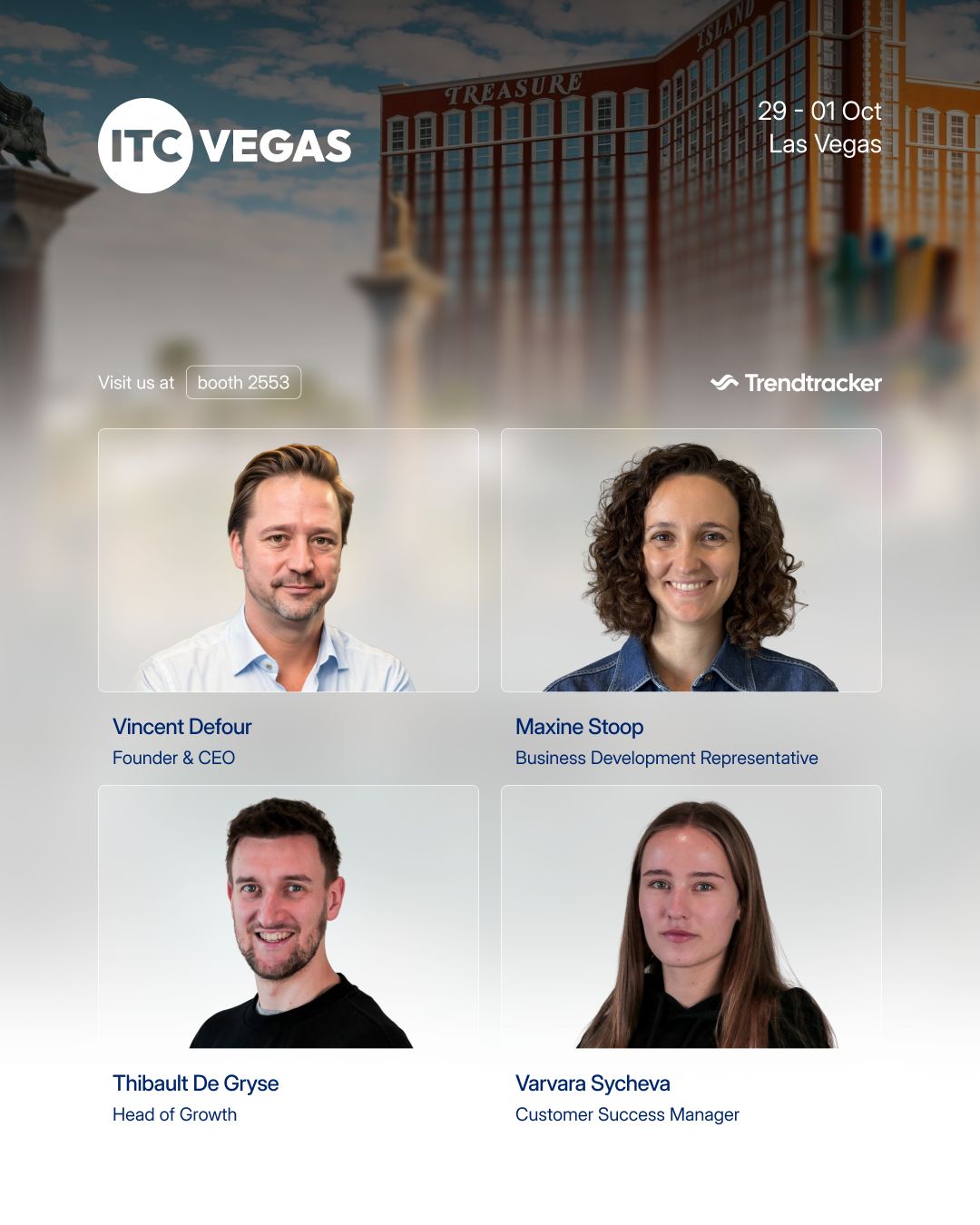
- Vegas, we're on our way. 🎲 Vincent Defour (CEO) is leading the team at ITC Vegas, September 29 to October 1, alongside Thibault De Gryse, Maxine Stoop and Varvara Sycheva. Over 9,000 insurance leaders, insurtech founders, and investors will be on the floor at Mandalay Bay. All circling the same question: what's actually going to reshape this industry next, and who's ready for it? If you'll be there too, we'd love to meet up. Send us a message or book some time before the event: https://lnkd.in/eUF_63km #ITCVegas #Trendtracker
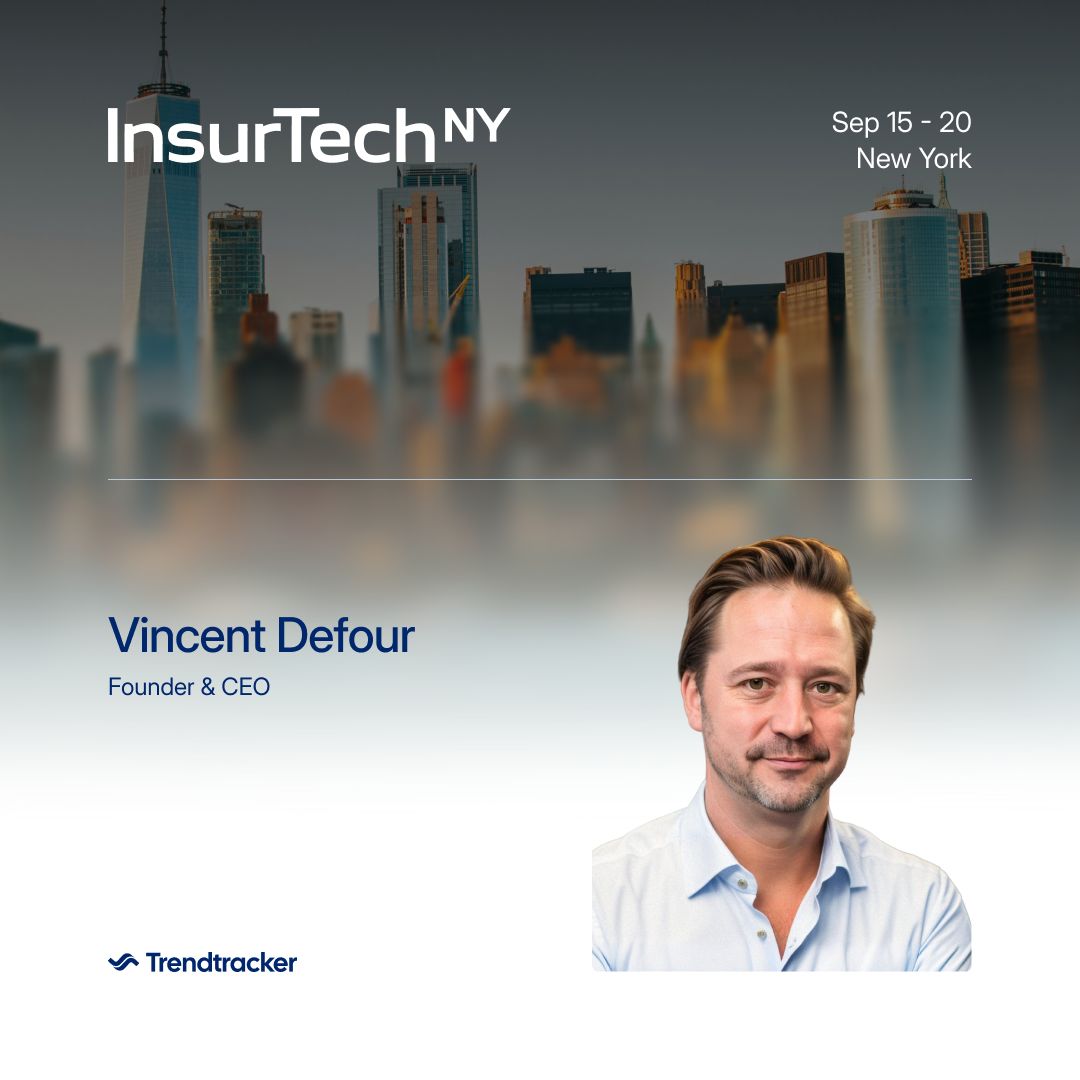
- Event season is back, and New York's up first. 🗽 Vincent Defour, our CEO, is heading to InsurTech NY from September 15 to 20. On September 17, he'll be at Match Day, meeting with carriers, VCs, and founders exploring where the next partnership might come from. If you're heading there and want to talk through the trends shaping the future of insurance and what they mean in practice, he's the right person to find. Before that conversation, warm up with our Megashifts in Insurance report, which covers nine of the shifts already
- We're hiring a Senior Expert, Strategy and Foresight. Submissions end 5/08!
- We're hiring a Junior Business and Foresight Analyst! Join our Customer Success and Professional Services team and get hands-on exposure to trend research, client work, and foresight strategy from day one. What you'll do: - Research trends across industries and support the curation of our platform's trend database - Help build client-ready reports, trend deep-dives, and playbooks - Support platform onboarding and technical questions from clients - Work closely with senior foresight colleagues, with room to grow into more senior
- By 2030, up to $385 billion of US commerce spending could run through AI agents. What sits behind that number is a shift in who's making the decision at checkout. A purchase used to come down to brand pull and a person standing in an aisle or scrolling a feed. Increasingly, an agent does the comparing and filtering first, sometimes the buying too, before a person is even in the loop. That changes what retail media and loyalty programs are actually competing for. The moment of influence used to belong to the shopper. Now it may
- For decades, scale won in Food and Beverage. Biggest portfolio. Lowest cost. Widest reach. That logic is breaking. The forces reshaping the industry no longer arrive one at a time. A consumer rewired by health. Trust moving from claims to proof. Tariffs that hit margins a year late. Machines entering the buying decision. Each is manageable alone. Together, they rewrite the operating model. For large companies, that's the hard part. One shift absorbs into the structure you have. Several at once expose where it was never built for
- 𝗧𝗵𝗲 𝗴𝗮𝗽 𝗯𝗲𝘁𝘄𝗲𝗲𝗻 𝗹𝗲𝗮𝗱𝗶𝗻𝗴 𝗮 𝘀𝗵𝗶𝗳𝘁 𝗮𝗻𝗱 𝗰𝗵𝗮𝘀𝗶𝗻𝗴 𝗶𝘁 𝗶𝘀 𝗴𝗲𝘁𝘁𝗶𝗻𝗴 𝘄𝗶𝗱𝗲𝗿 𝗶𝗻 𝗙𝗼𝗼𝗱 𝗮𝗻𝗱 𝗕𝗲𝘃𝗲𝗿𝗮𝗴𝗲. The forces reshaping the industry are no longer arriving one at a time. They are compounding, and that is what changes what it takes to compete. A single shift looks manageable. Several converging at once do not. The hard part was never spotting them. Most leaders already can. The advantage belongs to whoever reads how they combine, and decides where to act first. That is what
Related profiles
This page shows public professional information only, each fact cited. Is this you? send a correction, or ask for removal within 24 hours, no questions asked.