Overview
Xavier Lombard is the cofounder and chief executive of Leexi, a company he has led since October 2021. He is based in Brussels.
Before Leexi, Lombard cofounded Yago and served as its chief executive from September 2015 to July 2021. Earlier, he founded Dalkia and was its chief executive from May 2002 to July 2013. He worked at Honeywell from July 1999 to February 2002, first as a project manager dispatched from EDF and then as sales and engineering manager for Europe. He had joined EDF in August 1993 as a project manager and researcher, following a period from September 1991 to August 1993 at Hydro-Québec on assignment from EDF.
Lombard studied at Lycée Sainte-Geneviève from 1987 to 1988 and took a master's degree in electrical and mechanical engineering at Grenoble INP - Ense3 from 1989 to 1991. In 2016 he followed insurance programmes at the Baloise Academy, in distribution management, and at the P&V Academy.
Career history

Insights & ideas
The through-line
Across Xavier Lombard's posts and interviews, one preoccupation dominates: building Leexi as proof that a European tech company can grow fast, stay profitable, and refuse the standard startup playbook. He repeats the same facts in different framings across months (5M€ ARR [6], year 2025 in the green [7], 10M€ target for 2027 [5][7]), each time tying the numbers back to a thesis about independence, family, and execution over fundraising. Alongside this business narrative runs a second, more geopolitical thread: AI sovereignty, regulation, and the risk that concentrated power over AI infrastructure (whether shareholders, states, or foreign robotics platforms) can quietly capture value from the people who built it [1][2][8][13]. Over time the tone shifts from purely operational ("look at our growth") toward more overtly political commentary on AI governance, robotics import bans, and papal encyclicals on AI ethics [1][2][14], suggesting a broadening from company-builder to industry commentator.
On growing without investors
Lombard treats the absence of external funding as a deliberate strategic choice, not a constraint. Leexi hit "5 millions € d'ARR" while doing "tout le contraire de ce que l'écosystème startup recommande" [6], with a structure where he and his family founded the company with "25% des actions chacun" and "plus de 80% des employés actionnaires" [6]. He frames this explicitly as proof that "il est encore possible de construire une société tech ambitieuse sans levée de fonds, en restant focalisés sur l'exécution, la valeur produit et la confiance client" [7]. The ambition is stated plainly: to become "La référence européenne de l'IA conversationnelle, face aux géants américains" [5].
On shareholder risk and control
Lombard is wary of minority shareholders gaining operational influence. Using the Gemplus case as a cautionary tale, he lays out a seven-step playbook by which "un actionnaire minoritaire peut te voler ta boîte," starting with someone entering "avec une petite participation, parfois 3, 4 ou 5%. Jamais plus de 10," who then "obtient le droit de placer quelqu'un dans l'opérationnel. Avec un poste suffisamment élevé pour influencer les décisions, genre COO" [8]. This concern connects directly to his insistence on founder-majority ownership at Leexi, where the CEO founder retains control and shares are extended to employees rather than outside investors [6].
On meeting notes as infrastructure, not a sales tool
He argues that AI note-taking has been wrongly pigeonholed as a sales department tool. At Leexi, "les équipes commerciales représentaient les premiers adopteurs" but "elles représentent désormais moins de 20% de nos clients" [3]. His analogy is direct: "On ne choisit pas à qui on donne accès à l'email selon le nombre de mails envoyés dans la journée. Pour la prise de notes en réunion, on est en train de vivre exactement le même changement" [3]. He extends this to a broader claim about organizational blind spots: "Les réunions sont probablement l'un des plus gros angles morts des entreprises," where decisions and information get lost right after they're made [15]. The real strategic shift, he says, is that companies must move from just participating in meetings to being able to "capter, structurer et réutiliser l'information qui en sort" [15].
On European digital sovereignty
Lombard positions Leexi within a sovereignty argument about where meeting data actually lives. In conversation with Luxembourg's ambassador, he notes that "des milliers de réunions professionnelles avec leurs décisions, leurs engagements, leurs informations stratégiques transitent chaque jour par des serveurs américains ou chinois, souvent sans que les entreprises le sachent vraiment," even though "il existe des alternatives européennes, sérieuses, certifiées, capables de rivaliser techniquement" that remain "trop peu connues des décideurs publics" [13]. This sits alongside his commentary on US robotics import bans, which he frames as ambiguous between "sécurité nationale" and "protectionnisme," warning of the "effet pervers possible" of slowing R&D at labs dependent on foreign platforms [1].
From the stage
In interviews, Lombard gives detail on Leexi's technical scope that his posts don't cover: the product has "over 300 features" and can populate CRM fields automatically with extracted information like company names and deal amounts [16]. He also states his view of startup fundamentals directly: successful startups require "proper timing, a strong team, money, a sales person, and technical expertise" [16]. On his own path, he describes founding a renewable energy company in biogas central heating that he built over eleven years before its acquisition by EDF Énergie Nouvelle in 2013, and explains that he started that company in 2002 after being laid off by an American company in Brussels [17][18].
Takeaways
- Leexi grew to 5M€ ARR without external investors, with founders keeping 25% each and over 80% of employees holding shares, as a deliberate anti-playbook strategy [6].
- Watch for the seven-step pattern by which a small minority shareholder can gain operational control and later extract value, illustrated by the Gemplus precedent [8].
- AI meeting-note tools are shifting from a sales-department niche to company-wide infrastructure, comparable to universal email access [3].
- The strategic value of meetings lies less in attending them and more in capturing, structuring, and reusing what comes out of them [15].
- European alternatives for handling sensitive meeting data exist and are technically competitive, but remain underused by public decision-makers relative to US and Chinese servers [13].
- Successful startups need timing, team, money, a salesperson, and technical expertise together, not any one factor alone [16].
Media & appearances
- Jean MarotYouTubeXavier Lombard (Leexi) : de l’énergie au digital, l’IA au service du courtageXavier Lombard describes his career trajectory from spending 10 years working in renewable energy at EDF, followed by expatriations to Canada and the United States, to eventually founding his own renewable energy company in biogas in 2002 after being laid off by an American company in Brussels. He presents himself as a serial entrepreneur who transitioned from large corporate energy work to creating his own business ventures.
- JobloomYouTubeWIP Club Épisode #1 : Xavier Lombard, Fondateur de LeexiXavier Lombard discusses founding Leexi, an AI-powered note-taking tool created about four years ago with his sons and wife after he sold a previous insurtech company. He also shares his entrepreneurial background, including founding a renewable energy company specializing in biogas central heating that he built over eleven years before it was acquired by EDF Énergie Nouvelle in 2013, and describes how his family structure works within the business with different family members taking on various roles.
- WikipreneursYouTubeIl crée une startup qui défie les GAFA : le secret de Leexi !Xavier Lombard discusses how he and his sons created Leexi, an AI-powered SaaS platform that automatically generates meeting notes, action lists, and emails from recordings of sales calls and meetings, with over 300 features that can also populate CRM fields with extracted information like company names and deal amounts. He explains that Leexi competes with major tech companies by offering advanced functionality beyond basic note-taking tools, and he emphasizes that successful startups require proper timing, a strong team, money, a sales person, and technical expertise.
In the news
- C'est fait. Après plusieurs semaines de teasing, on peut enfin lever le voile : Leexi One est disponible dès aujourd'hui. Jusqu'ici, Leexi était votre AI Notetaker. Un outil pour ne plus rien perdre de vos réunions. Aujourd'hui, Leexi One est votre suite complète de 13 outils IA, pensée pour accompagner tout le cycle de vie de vos réunions et transformer votre entreprise en organisation AI-first : 👉 Préparer & capturer : briefing automatique avant chaque rendez-vous, transcription et résumés illimités, capture terrain via l'app

- Pour moi, l'IA, c'est l'apéro. Le vrai plat de résistance arrive après : les robots. Je sais, dit comme ça, ça fait film de science-fiction. Mais réfléchissez deux minutes à ce qui se prépare : un robot qui s'occupe de vos enfants mieux que vous ne le faites, qui leur apprend une langue, qui cuisine, qui les materne. Vous n'avez pas forcément envie de ça. Mais si vous ne le faites pas, vous prenez un retard que vous ne rattraperez pas. Alors vous le ferez quand même. Il y a peu, une prof me racontait que ses élèves
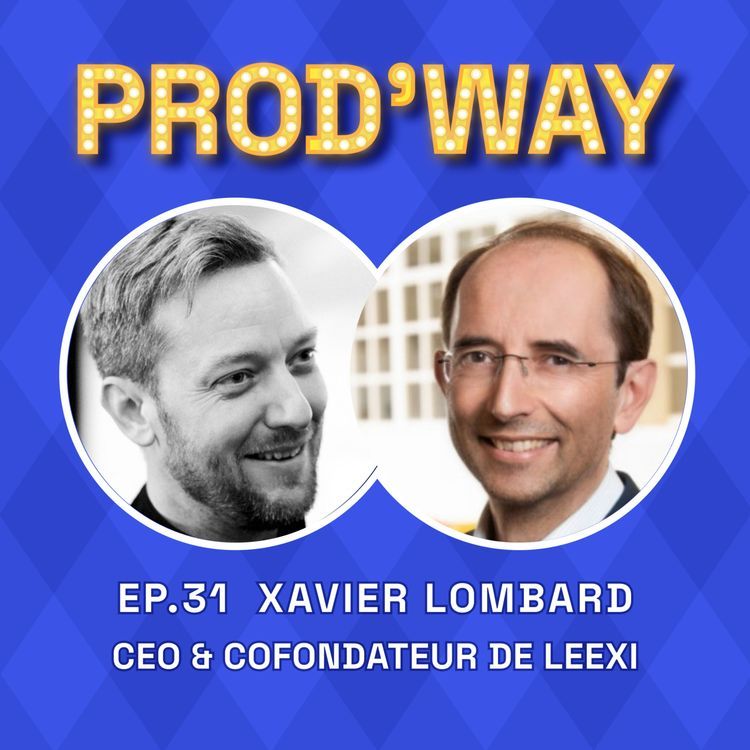
- Je vais être 100% honnête : si je publie sur LinkedIn, c’est surtout pour promouvoir mon entreprise Leexi. Je m’appelle Xavier Lombard, j’ai 58 ans et je suis entrepreneur. J’ai créé ma première boîte en 2002. Je l’ai revendue à EDF 11 ans plus tard. Ensuite, j’ai créé Séraphin (aujourd’hui Yago), le premier courtier en assurance en ligne en Belgique. Petit à petit, mon épouse et mes fils ont rejoint cette aventure entrepreneuriale pour leur premier job. Puis il y a 4 ans, j’ai créé Leexi, un AI Notetaker, avec mon épouse et mes
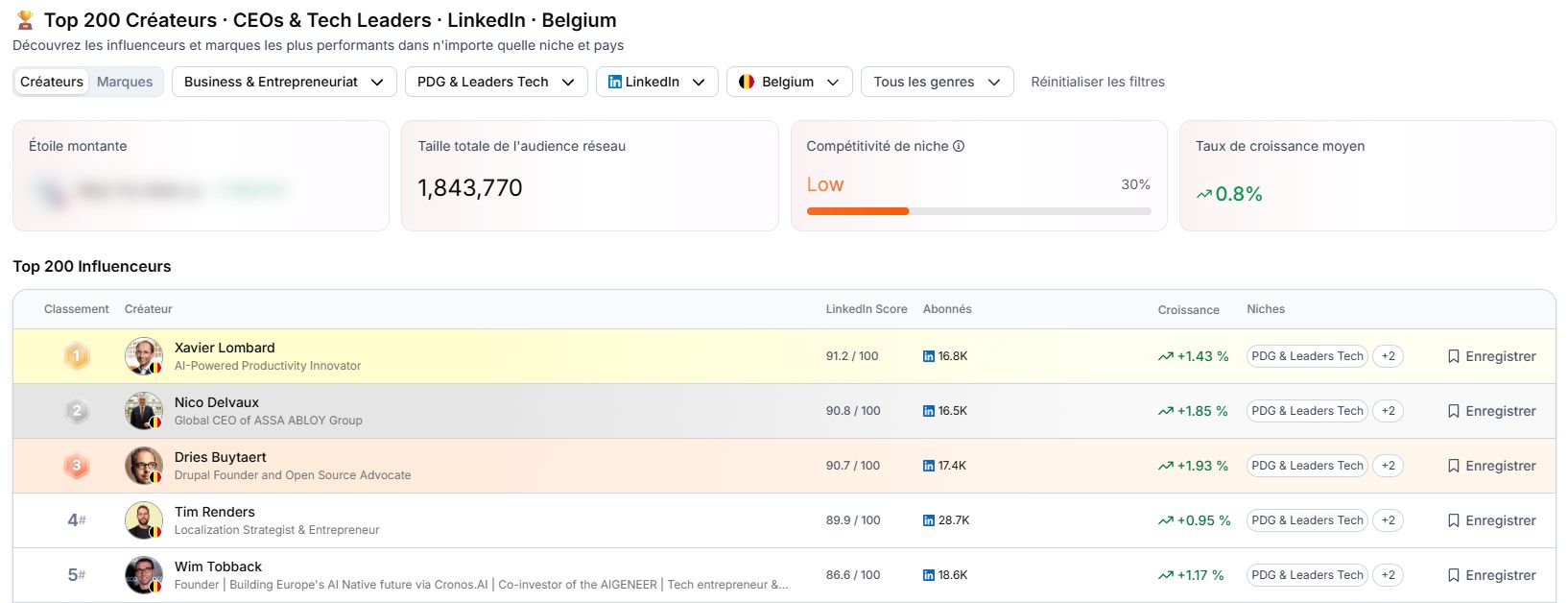
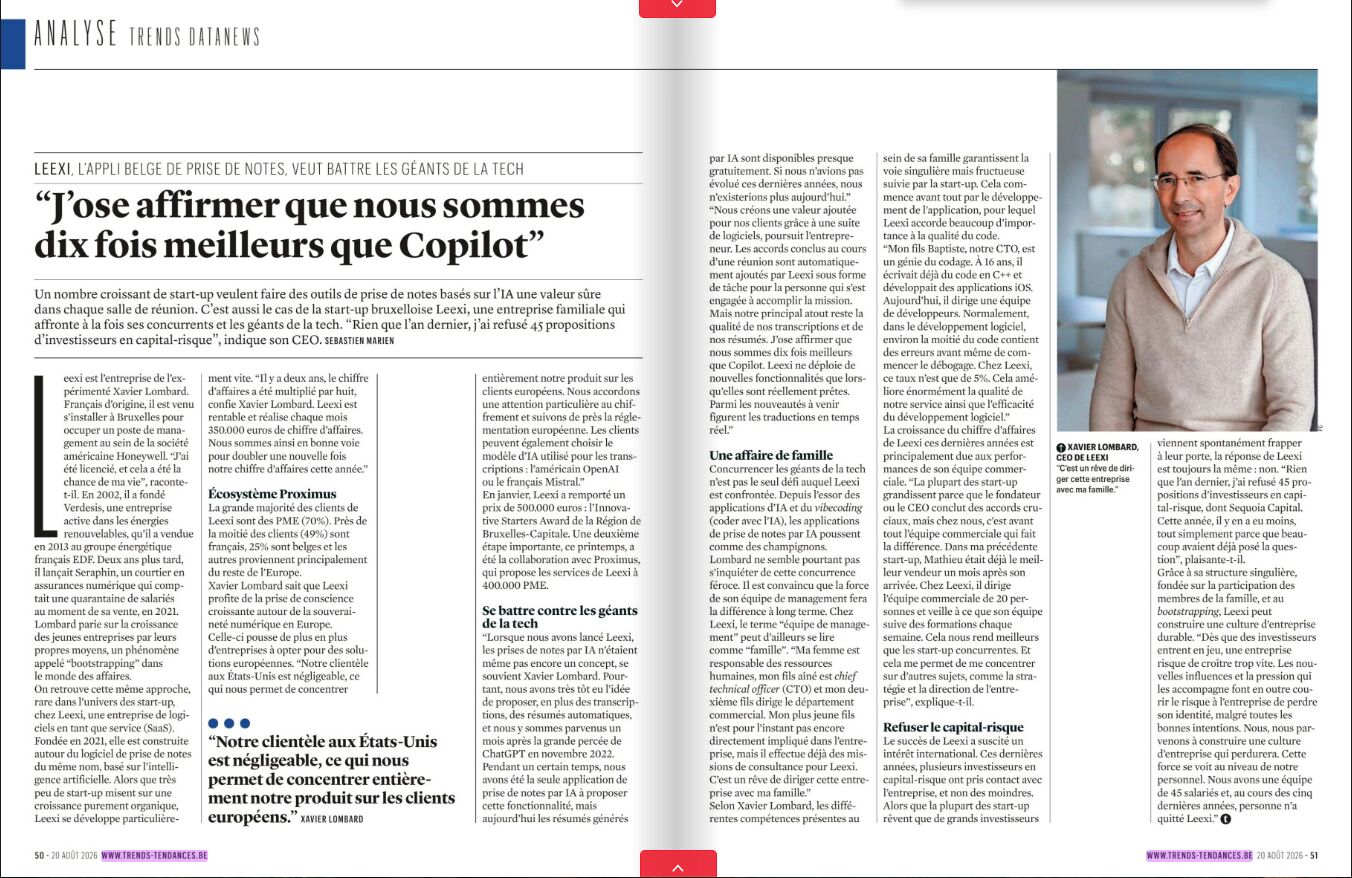
- 45. C'est le nombre de propositions d'investisseurs en capital-risque que j'ai refusées l'année dernière. Dont Sequoia Capital. Oui, vous avez bien lu. Pendant que la plupart des start-up rêvent qu'un grand fonds vienne frapper à leur porte, chez Leexi on répond la même chose depuis 4 ans : non merci, on bootstrappe. Le résultat ? ➡️ CA multiplié par 8 en deux ans ➡️ Le cap des 10 millions de revenus récurrents pour 2027 ➡️ Rentables ➡️ Objectif : doubler à nouveau cette année Ce n’est peut-être pas le chemin le plus spectaculaire.
- Pendant les vacances, je décroche... surtout si on me sert une glace au soleil. Mais apparemment, même en pleine campagne française, on reçoit des signaux pour nous ramener sur le bon chemin : direction la Licorne 🦄 On peut chercher l’innovation loin des open spaces, mais parfois elle se cache dans une coupe de glace. Qui aurait cru que le leadership avait un goût de vanille-arc-en-ciel ? Preuve que la quête de la licorne, qu’elle soit entrepreneuriale ou gustative, elle peut se vivre en mode slow life 🍨☀️
- Les USA suivent les leçons de la saga de la guerre des étoiles Sécurité nationale ou protectionnisme ? Les États‑Unis viennent d’interdire l’importation de « dispositifs robotiques avancés » fabriqués à l’étranger. Une décision qui vise prioritairement les robots humanoïdes chinois. 👉 Raison affichée : réduire un risque jugé inacceptable pour les infrastructures et la sécurité nationale (capteurs, connectivité, modèles embarqués). 🔍 Effet recherché : protéger et relancer une industrie nationale encore en retard sur la production

- Le nouveau pape élu en 2125 a choisi le nom de Léon XV et il annonce qu’il préparera une encyclique “dans le sillage” de Magnifica Humanitas. Un geste lourd de sens : cela reconnaît que, depuis sa parution, les intuitions de “Magnifica Humanitas” (publiée en 2026 par Léon XIV) ont façonné un siècle de débats éthiques, politiques et techniques. Voici 5 intuitions de Magnifica Humanitas qui, au fil des décennies, ont le plus nourri la réflexion publique et la politique mondiale : 1️⃣ L’IA n’est pas « neutre » : il faut la

- Pendant longtemps, les outils de prise de notes IA ont été perçus comme des outils pour les sales. C’est une erreur. La bascule qu’on voit aujourd’hui est beaucoup plus profonde. Chez Leexi, les équipes commerciales représentaient les premiers adopteurs. Elles représentent désormais moins de 20% de nos clients. Dès qu’une entreprise comprend la valeur du sujet, elle ne veut plus équiper seulement une équipe. 👉 Elle veut équiper tous les collaborateurs qui passent leur temps en réunions. En fait, c’est assez simple : On ne choisit
Related profiles
This page shows public professional information only, each fact cited. Is this you? send a correction, or ask for removal within 24 hours, no questions asked.