
Overview
Yuri co-created the Fight the Average methodology alongside Dries Henau, aimed at helping companies define and own a bold market position. He is based in Flanders and brings brand strategy to life through keynote speaking and consulting.
As co-author and keynote speaker, Yuri evangelizes the Fight the Average approach, working with companies and audiences on brand positioning and differentiation strategy.
Talks about
- Branding
- Retail & hospitality
- Entrepreneurship
- Networking
- Storytelling & public speaking
- Hospitality Industry
- Customer Experience
- Exits
- Future of work
- Belgian tech ecosystem
- Founder mindset
Insights & ideas
The through-line
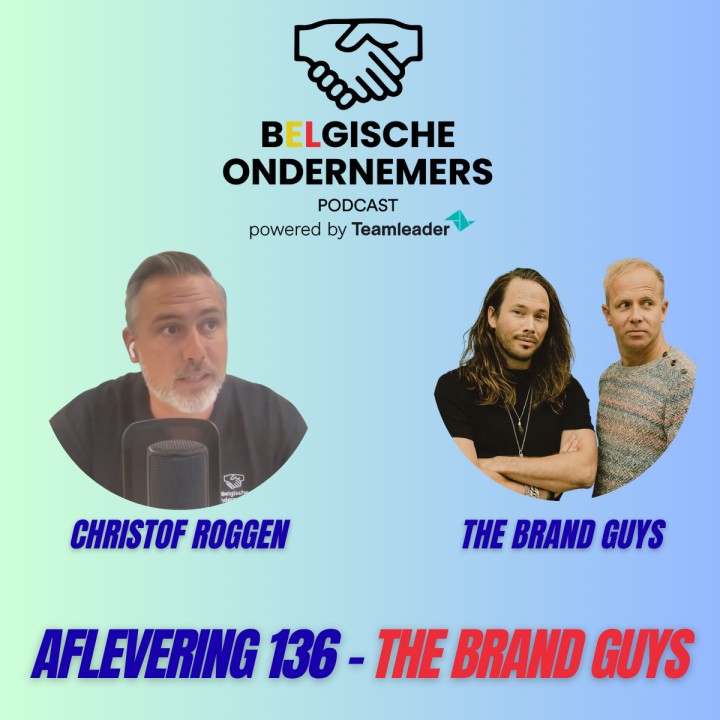
Everything here runs back to one conviction: a business is not sold on its product but on the feeling around it. "Eigenlijk verkoopt die die kleine niet, eigenlijk verkoopt een gevoel." [3] That insight, formed while building Chez Claire, is why the brand, the interior, the packaging and the communication were treated as the real work while the éclair itself was outsourced to a production partner [3], and it is the same premise carried forward into concept creation for other companies, first as De Jongens [4] and then as The Brand Guys, where emotional connection, niching, a brand framework and community building are the stated route to a memorable brand [2].
The second constant is a tolerance for being thought foolish. "Toen dat wij Wasbar gestart zijn heeft letterlijk iedereen ons zot verklaard, en dat is eigenlijk dat we met de Brand Guys een beetje proberen in beweging te brengen: dat iedereen het risico durft nemen om zich te laten zot verklaren." [2] Scepticism functions as fuel rather than a warning: "Hoe meer mensen die zijn vooral dat je nooit werken, dat je nooit werken, hoe meer energie dat ik hier om ze te gaan bewijzen dat er zeker wel iets in zat." [3] The trajectory over time is from operating their own concepts to recognising they are concept creators rather than operators [4], and then to packaging that method for others as a framework, a practice and a fifth book, Fight The Average [2].
On selling a feeling rather than a product
The product is the least defensible part of the offer. With Chez Claire the conclusion was explicit: you are not selling an éclair, you are selling a feeling, which is why brand, interior, packaging and communication mattered more than the item on the counter [3]. The general form of this is that unforgettable, unaverage brands are built through emotional connection, niching and community, rather than through product superiority [2]. Wasbar, Embassy and hotel concept work are the reference points for that method [2].
On details as the concept
Emotional brands are not vague; they are made of specifics. "Belangrijk zijn de details die het concept maken." [4] That means no compromise on recipes, execution or service, and it means accepting that confrontation with staff over what look like small things is unavoidable, because the concept comes before the comfort of avoiding the conversation [4]. The economics of that discipline are stated plainly: "Het kost evenveel moeite voor iets goed te doen dan om het niet goed te doen." [4]
On brand strategy as an operating system
A clear brand strategy is not a communications asset, it is a management tool. When employees understand the why, decisions stop being escalated upward and the organisation becomes self-steering [2]. The effect reported by clients goes further than efficiency: absenteeism fell once people knew why they came to work [2].
On building brands that can be sold
Brands are designed from day one to be scalable and sellable, and that intent shapes structural choices [3]. Chief among them is refusing to make the founders the brand. Wasbar was deliberately never a founder-brand, and for Chez Claire a fictional persona, Claire, was created as the face of the business so it never depended on the owners being visible in the shop [3]. Exit is not treated as a clean break either: against a friend's advice to sell fully or not at all, a small equity stake in Wasbar was retained, and that turned out well because it keeps them emotionally invested in the brand's continued success [3].
On money, investors and pricing
Outside capital is not free and not neutral. Investor money is not a gift, and the pressure to deploy it pushed Chez Claire to launch in March instead of September, costing a winter in which the brand could have established itself before hot weather collapsed éclair sales [4]. The opposite error is just as costly: declining Philip Cracco's early investment in Wasbar was a mistake born of youth, losing both the capital for extra locations and the chance to learn alongside an experienced entrepreneur [3]. On the revenue side, underpricing in the early years forced a volume treadmill purely to survive; raising prices deliberately created room to serve fewer clients better and pulled in the bigger projects that had never previously come their way [4].
On perception and how long it sticks
Media exposure should be judged on framing, not on the sales it produces in the week it airs. The Topstarter television appearance mattered little for immediate revenue but shaped perception for years, to the point that people still call them "de jongens van WASBAR" [4]. The lesson is that the label attached to you early is durable, so it is worth caring which one it is.
On how they work
Concentration is a structural matter rather than a willpower one. Six months on Aruba served as a reset, and the time difference meant all client communication stopped by noon local time, which produced hyper-focused afternoons and, by their account, more intense output for Belgian clients than they managed from Belgium [4]. That period also produced the clearest self-diagnosis of the pair: they are concept creators, not operators [4]. The current work continues under The Brand Guys, with an open invitation to talk about it [1].
Takeaways
- Treat the product as the substrate and the feeling as the offer: with Chez Claire the éclair was outsourced while brand, interior, packaging and communication carried the value [3].
- Being declared crazy is a signal you are off the average; the explicit mission is to get people to dare to be declared crazy [2].
- Write the brand strategy so employees can act on it alone; understood purpose produces self-steering teams and, in client cases, lower absenteeism [2].
- Keep founders out of the brand: build a Claire, so the business is not hostage to the owners standing in the shop [3].
- Take the smart early investor. Refusing Philip Cracco cost both locations and mentorship, while investor pressure later forced a mistimed March launch [3][4].
- Raise prices to buy focus: underpricing forces survival volume, higher prices bought fewer, better clients and larger projects [4].
- Hold the line on small details, including with staff, because "Belangrijk zijn de details die het concept maken" and doing it badly costs the same effort as doing it well [4].
- Judge press on the frame it leaves behind rather than the sales it triggers; years on, they were still "de jongens van WASBAR" [4].
In the news
- Hopsakee! Voor in je oren tijdens je commute 🕺🏻
- Een geweldig team en brand om mee te mogen werken. 🕺🏻
- What we've been up to lately? Check out the video, and the website! Questions? Let's talk!
Related profiles
This page shows public professional information only, each fact cited. Is this you? send a correction, or ask for removal within 24 hours, no questions asked.