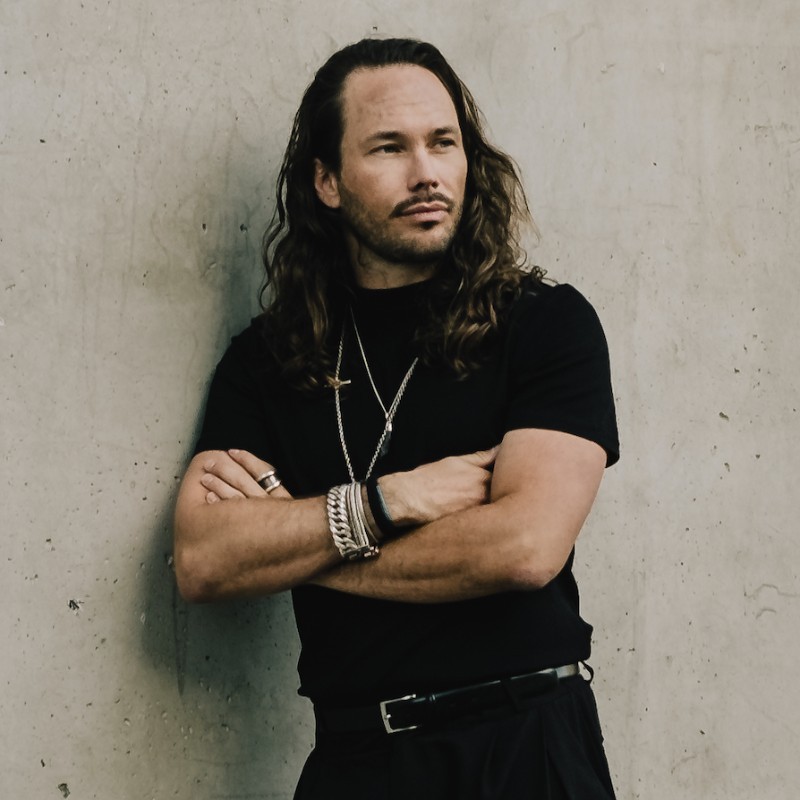
Yuri Vandenbogaerde
Yuri co-created the Fight the Average methodology alongside Dries Henau, aimed at helping companies define and own a bold market position. He is based in Flanders and brings brand strategy to life through keynote speaking and consulting.
As co-author and keynote speaker, Yuri evangelizes the Fight the Average approach, working with companies and audiences on brand positioning and differentiation strategy.
Insights & takeaways
Yuri Vandenbogaerde's thinking centers on one consistent conviction: brands succeed or fail on emotion and detail, not on the product itself. Reflecting on Chez Claire, he puts it plainly, "eigenlijk verkoopt die die kleine niet, eigenlijk verkoopt een gevoel" 3 — you are not selling an éclair, you are selling a feeling. This is not a throwaway line but the organizing principle behind how he and Dries Henau built Chez Claire's brand, interior, packaging and communication while outsourcing the actual production 3. The same logic shows up years later at The Brand Guys, where the pair explicitly teach founders to build "unaverage" brands through emotional connection and niching rather than product differentiation 2.
A second recurring theme is his comfort with being doubted. On starting Wasbar he recalls that "letterlijk iedereen ons zot verklaard" 2 — literally everyone called them crazy — and frames The Brand Guys' mission as pushing others to take the same risk of being called crazy 2. This willingness to look foolish pairs with a stated belief that effort is effort regardless of outcome: "het kost evenveel moeite voor iets goed te doen dan om het niet goed te doen" 4, so there is no excuse for cutting corners. That conviction translates into an operational hard line: never compromise on concept details, because "belangrijk zijn de details die het concept maken" 4 — recipes, execution and service are the concept, and confrontations with staff over "small things" are unavoidable and worth having 4.
His thinking about money and control has visibly evolved through concrete missteps he's willing to name. He calls declining Philip Cracco's early investment offer in Wasbar a mistake born of youth, one that cost them not just capital for expansion but the chance to learn from an experienced entrepreneur 3. Conversely, he and Henau deliberately kept a small equity stake in Wasbar against a friend's advice to go all-in or all-out, and he's glad they did, because it keeps them emotionally invested in the brand's success 3. He's also learned that investor money "is not a gift": pressure to deploy capital pushed Chez Claire to launch in March instead of September, costing them a winter to establish the brand before summer heat collapsed éclair sales 4. Pricing is another area where his view shifted concretely: underpricing early forced them into volume work just to survive, while deliberately raising prices later created room to serve fewer clients better and attracted bigger projects that previously never came 4.
A structural insight he returns to across ventures is that a brand should never depend on its founders being visible. Wasbar was deliberately never built as a founder-brand, and Chez Claire's face was the fictional persona 'Claire' rather than the owners themselves, so the business wouldn't hinge on their personal presence in the shop 3. This same instinct for durable structure appears in his point about strategy and culture: when employees understand the "why" of a brand, they don't need to escalate every decision upward, and he cites clients who saw reduced absenteeism once staff understood why they came to work 2. He also takes a clear-eyed view of media exposure, noting that the Topstarter TV coverage mattered less for immediate sales than for how it permanently shaped public perception, since people still call them "de jongens van WASBAR" years later 4.
The clearest practical takeaway from his own account is about focus and constraint. Working remotely from Aruba, the time difference meant Belgian client communication effectively stopped by early afternoon, and he found this produced more intense, focused work for those clients than being physically in Belgium ever had 4. Combined with his other positions, this points to a broader operating philosophy: constraints, whether time zones, small equity stakes, or higher prices, aren't obstacles to work around but tools he actively uses to sharpen focus and commitment. Across Wasbar, Chez Claire and now The Brand Guys, the pattern in his own words is building things designed from day one to run on emotional connection, disciplined detail, and structures that don't depend on any single person being in the room.
- Clear brand strategy enables self-steering organizations: when employees understand the 'why', they don't need to escalate decisions — and clients even saw reduced absenteeism once people knew why they came to work.
- Underpricing early on forced them into volume work just to survive; deliberately raising prices created room to serve fewer clients better and attracted bigger projects that previously never came to them.
- The Topstarter TV exposure mattered less for immediate sales than for lasting perception: years later people still call them 'de jongens van WASBAR', showing how long media framing sticks.
- Never compromise on concept details — recipes, execution, service — because the details are what make the concept; confrontation with staff over 'small things' is unavoidable and the concept comes first.
- Investor money is not a gift: pressure to deploy capital made Chez Claire launch in March instead of September, missing a winter to become an established brand before the hot summer collapsed éclair sales.
- Working from Aruba, the time difference meant all client communication stopped by noon local time, giving hyper-focused afternoons; they got more intense work done for Belgian clients remotely than from Belgium.
- They deliberately kept a small equity stake in Wasbar against a friend's advice to sell fully or not at all, and are glad they did because it keeps them emotionally invested in the brand's success.
- Declining Philip Cracco's early investment in Wasbar was a mistake born of youth: they lost not just capital for extra locations but the chance to learn from an experienced entrepreneur.
- Chez Claire's core product insight: you're not selling an éclair, you're selling a feeling — so the brand, interior, packaging and communication mattered more than the product itself, which was outsourced to a production partner.
- They deliberately never made Wasbar a founder-brand — they created the fictional persona 'Claire' as the face of Chez Claire so the business never depended on the owners being visible in the shop.
Career
- THE BRAND GUYSConcept & Brand CreatorSep 2022 – Present
- THE BRAND GUYSCreative DirectorDec 2021 – Present
- WasbarFounder2012 – Present
- CHEZ CLAIREFounderMar 2018 – Mar 2019
- De JongensBrand BuilderMar 2017 – Sep 2025
- AMBASSYCo-Owner2015 – Mar 2017
- Luxottica RetailAccount Manager D&GAug 2011 – Apr 2012
- Think Media MagazinesBrand Activation ExecutiveAug 2010 – Apr 2011
- Make Them TalkCo-OwnerOct 2009 – Feb 2015
- DaDancer / DanceteacherFeb 2005 – Feb 2012

From public career histories · 11 entries
Media & appearances
3- 2podcastBen's Mentors · 28 May 2025
The Brand Guys (Dries Henau & Yuri Vandenbogaerde) explain how to build unforgettable, 'unaverage' brands through emotional connection, niching, their brand framework and community building, drawing on WASBAR, Embassy and hotel concept work as their fifth book 'Fight The Average' launches.
- 3podcastBlackBird Business Events · 08 Jun 2023
Wasbar and Chez Claire founders Dries Henau & Yuri Vandenbogaerde explain how they build brands designed from day one to be scalable and sellable, and how they now apply that concept-first approach at The Brand Guys.
- 4podcastConnexi · 17 May 2021
Yuri Vandenbogaerde and Dries Henau (the 'WASBAR guys', now concept creators at De Jongens) recount building and selling WASBAR and Chez Claire, learning they are concept creators rather than operators, and resetting during six months on Aruba.