Overview
FlockScore transforms supplier performance management with collective intelligence. The platform offers peer-driven supplier scorecards, AI insights, and risk signals to strengthen procurement decisions.
Key people


In the news
- Last week Matthew Spencer took the startup stage at DPW Amsterdam, in the direct material sourcing session. DPW never disappoints. A room full of people transforming procurement, sharp questions, and a real appetite for tools that change how the work is done. Matthew's three minutes came down to one point: most sourcing events start from a shortlist nobody is fully confident in. You know who quoted last time, who's on the approved list, who a colleague mentioned. You rarely know who the best-performing supplier for that category

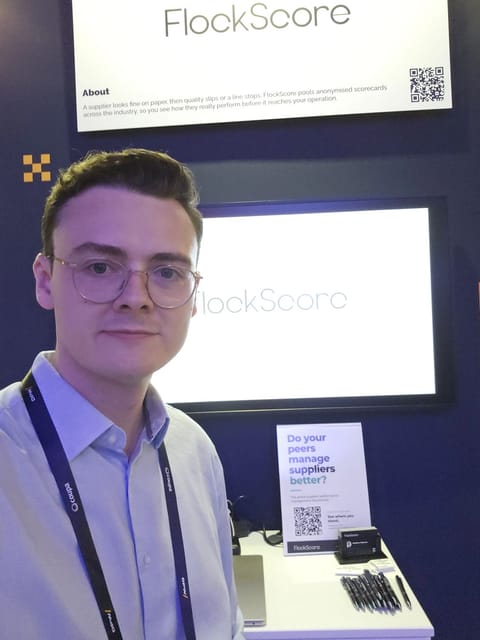
- At DPW Amsterdam today representing FlockScore. We're booth S23. If supplier performance is a priority for you right now, come and find me. Whether that is getting more confidence before awarding a new supplier, finding better alternatives, or simply making better use of supplier performance data. Happy to show you what we are building and exchange on the challenges you are seeing in your own organisation.
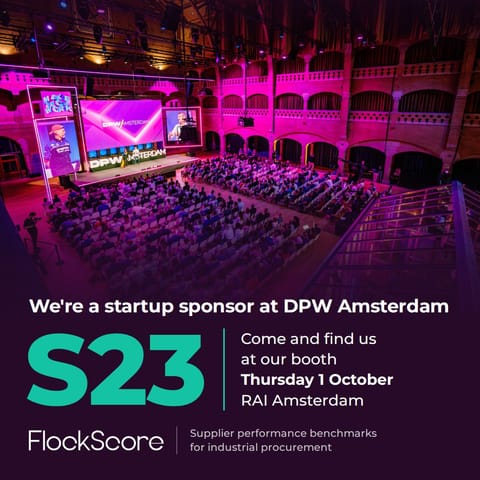
- We’re heading to DPW Amsterdam on 31st September - you’ll find FlockScore at booth S23 on Day 2. If you work in direct procurement and finding alternative suppliers that can improve cost without compromising performance is a priority right now, come and find us. We’re helping members of our network identify and benchmark alternative suppliers faster, with more confidence, and at a scale that simply wasn’t practical before. If that sounds relevant, let’s book 15 minutes to discuss 1to1. See you in Amsterdam 👋
- See our conversation with Art of Procurement as part of the Startup of the Week feature!
- Your supplier says their on-time delivery is 99%. Your scorecard says 94%. It’s surprisingly possible that both are right. There is no universally agreed definition of On-Time Delivery. Even major standards disagree on whether you should measure against the date you requested or the date the supplier confirmed. And that distinction matters. One simple thing worth trying: → Measure OTD against your requested date → Measure it again against the supplier’s confirmed date → Look at the gap One tells you whether you got what you

- Supplier scorecards get criticised for being backward-looking reporting tools. Often, fairly. But a study covering almost 9,000 audits of Rome’s electricity grid shows what can happen when supplier performance actually influences future business. Compliance rose from around 25% to more than 80%.. before the new scoring system had even been used to award a contract. The interesting part wasn’t the scorecard itself. It was making the score matter. Our latest Knowledge Hub article looks at what procurement teams can learn from the

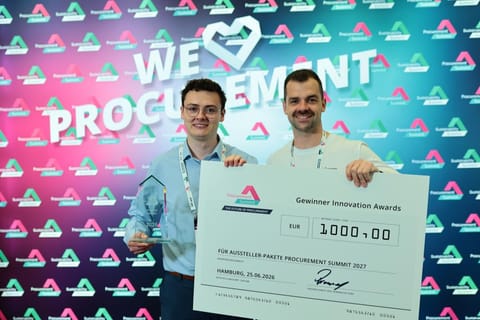
- Read about our experience at the Procurement Summit Hamburg and watch our pitch here: https://lnkd.in/e2TwMhez It was the pitch that won us the Startup Innovation Awards, but one part of the demo is particularly relevant to where procurement technology is heading. We gave an AI sourcing agent a sourcing requirement and asked it to find and recommend suppliers. Then we gave the same agent access to FlockScore supplier performance data and ran it again. AI is already getting very good at finding suppliers, gathering information and
- A sourcing project can start for a lot of reasons. You need a supplier for a new material or service. An existing supplier isn't performing. Or you want another source to reduce dependency. Finding possible suppliers isn't necessarily difficult, but it can take a lot of time. The harder question is which of them are actually likely to perform against what you need. Today that normally gets worked out through a combination of existing team experience, supplier documentation and certificates, followed by increasingly
Related profiles
Something wrong or missing? Send an update. Fixed within 24 hours.