
Overview
Founded in 2026 in Ghent as a spinoff of imec, Spatial Dynamics develops a virtual reality platform for recruitment. The platform enables companies to give job candidates immersive previews of workplaces, roles, and company culture through VR experiences, addressing the information asymmetry between employers and candidates in the hiring process.
The application of spatial computing to recruitment sits at the intersection of two high-investment areas: the broader HR tech market and the maturing VR platform ecosystem. As headset hardware becomes more accessible, enterprise applications for VR that go beyond entertainment and training are gaining credibility.
As an imec spinoff, Spatial Dynamics benefits from access to one of Europe's premier semiconductor and digital research organizations, located in the Ghent-Leuven corridor.
Key people

In the news
- The future of logistics starts with recognising and developing people’s potential. Proud to contribute to Magazijnhelden van Morgen with Spatial Dynamics, alongside partners bringing digital learning and assessment into the warehouse. Our contribution? Inclusive, language-independent VR assessments that help uncover people’s skills through practical tasks. By making abilities visible, we help organisations make more informed decisions about onboarding and development. Together, the project brings VR assessments, virtual safety
- Talent in logistics isn’t always reflected in a CV, or in how fluently someone speaks the local language. Meet logiScan, one of Spatial Dynamics’ assessment solutions for blue-collar workers. Through practical VR tasks, we help companies map the competencies that matter in logistics. Our approach is inclusive, language-independent and data-driven, designed to reduce bias and give people the opportunity to demonstrate their abilities through action. By using consistent tasks and performance data, we help employers make more

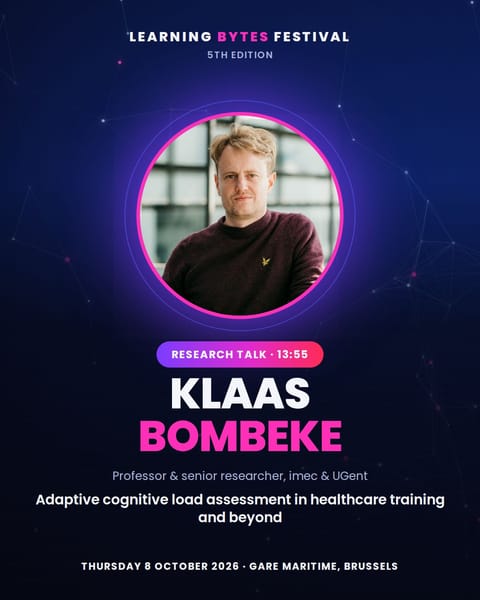
- Join us at Learning Bytes Festival on 8 October in Brussels. Tickets 👉 https://lnkd.in/efCqA3aH What if your training knew you needed help before you did? 🧠 Klaas Bombeke (imec-mict-UGent, co-founder of Spatial Dynamics) shows how VR combined with gaze and hand tracking predicts when a trainee is about to ask for help. This is adaptive learning, for real. ⏰ 13:55 · Research talk 📍 Gare Maritime, Brussels · by imec & Edtech Station at HRTech Unfolded #LearningBytesFestival #edtech #education #HRTechUnfolded
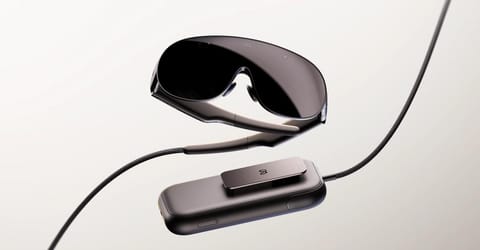
- As a former cognitive neuroscientist and behavioral psychologist, this is the kind of evolution that gets me genuinely excited, and makes all the work and investment we’ve put into Spatial Dynamics feel very worthwhile. With the new generation of Meta VR Glasses, spatial computing is becoming lighter, more natural and increasingly capable of capturing how people look, move and interact in 3D environments. That is exactly the direction we believed in when we started building our own technology stack: connecting spatial computing
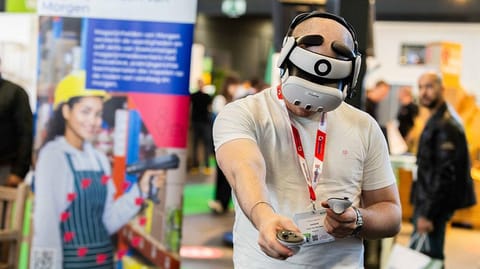
- Kan een VR-bril je helpen om je volgende job te ontdekken? 🥽 Journaliste Ella Van Eynde kwam het onlangs zelf uitproberen bij Spatial Dynamics, voor De 5, de podcast van De Tijd. Ze zette de bril op en ging aan de slag met onze VR-taken. Op basis van de competenties die we tijdens haar sessie inschatten, verkenden we via het matchingplatform van VDAB welke jobs bij haar zouden kunnen passen. Een leuke, concrete manier om te laten zien wat we doen: mensen hun talenten laten ontdekken door wat ze in VR doen, en die inzichten

- It’s not always easy to bring developers and non-developers together in a natural and effective way. Within our team, we’ve learned that alignment doesn’t happen by default, it needs a wonderful team and a good structure. Our experience design document has become a crucial cornerstone in how we work. It brings together user testing results, client insights, and the technological possibilities and constraints from XR and backend development, alongside input from HR specialists. By connecting thes

Related profiles
Something wrong or missing? Send an update. Fixed within 24 hours.