Overview
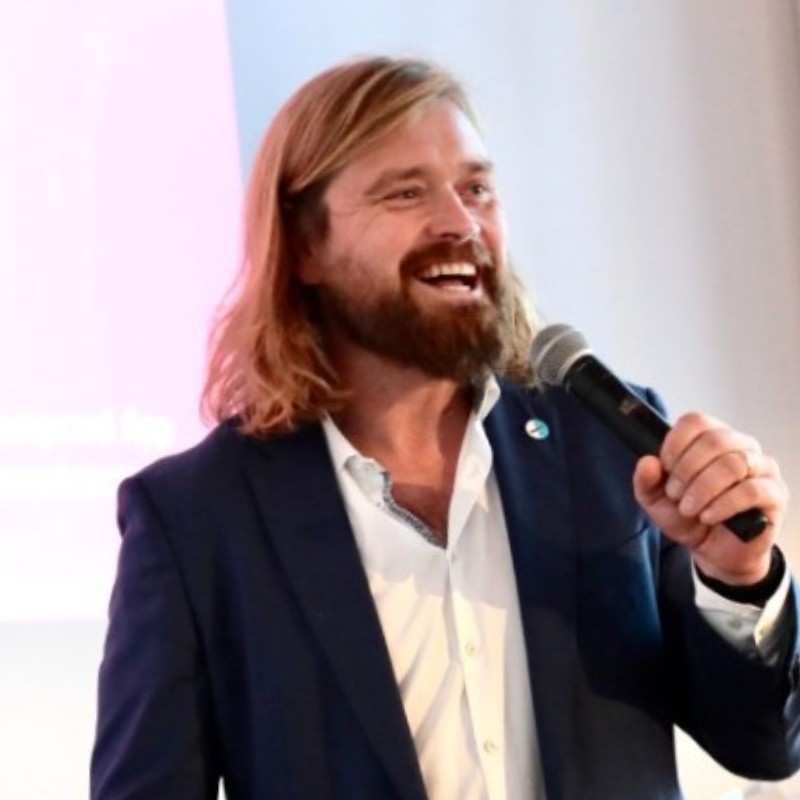
Jelle Demanet is co-founder and CEO of Spatial Dynamics, a Ghent-based imec spinoff building a VR platform for immersive recruitment experiences.
Jelle Demanet is co-founder and CEO of Spatial Dynamics, which he started in December 2024, and is based in Ghent. Since September 2024 he has been a senior business developer at imec, Ghent University and imec-mict-UGent, and in November 2025 he took up the role of chief innovation officer at ENT.A - Entertainment Associatie. He founded Apollo8 in May 2019 and remains its managing partner, and in October 2021 he co-founded XR Valley, where he sits on the board and directs relations with schools, universities and research bodies. He has advised the board of PNI Therapeutics since March 2022 and joined the board of Stereopsia in August 2024.
From July 2019 to September 2024 he managed the HIT lab at Hogeschool West-Vlaanderen, following a period as research and development manager at Profacts. He founded Impulse Research in October 2016 and was its managing partner until November 2018. Demanet studied at Ghent University, where he was a doctoral student from 2006 to 2010 and then a postdoctoral researcher until October 2016, and was a guest professor there from 2016 to 2022. He spent the winter of 2014 to 2015 as a visiting researcher at the Bernstein Center for Computational Neuroscience.
Talks about
Career history
Insights & ideas
The through-line
Everything Jelle Demanet says about technology runs through one question: what does this do to attention, and how fast does the brain absorb it. He reviews hardware as a cognitive psychologist rather than as a gadget buyer, and the verdict on the Meta Ray-Ban Display is double edged. It is the moment the category arrives, and it is also "eigenlijk uw smartphone op speed hè. Dus je krijgt alles constant zonder filter" [4][5]. The second half of his position follows from the first: if these devices are going to be worn all day, someone has to design the interface around how human attention actually works, and he does not think that someone has to be American.
That leads to the other recurring theme, an insistence that Europe and specifically Flanders build rather than merely observe or legislate. The dismissal of the defeatist line is flat: "Zijn veel mensen die zeggen dat we te laat zijn, maar dat is geen waar" [4][5]. His day-to-day work sits in the same place, connecting research, start-ups and established players so that innovative ideas become economic and societal impact [3].
On why this is the breakthrough moment for smart glasses
The Meta Ray-Ban Display is, in his reading, the point where the category becomes real, because the form factor and a six to seven hour battery finally make all-day wear acceptable, and because it combines a visual and a verbal interface to AI in one object [4][5]. He frames it against a long wait: "Mensen die ermee bezig zijn, dachten al 10 jaar: dit is het moment dat het allemaal gaat samenkomen. En dit is voor mij nu echt het moment" [5]. That is not the same as saying it is finished. "Voor mij is dat we zijn er nog niet helemaal, maar het toont wel al aan: het gaat niet meer weggaan" [4][5].
He is precise about what the device is not. It captures an image only on explicit request rather than continuously, unlike Google's Android XR demo, which limits the privacy exposure but also caps what it can do: real mixed reality needs depth sensors and a constant understanding of the world around the wearer [5]. Live translation runs into a hard floor of roughly two seconds of latency, and not for want of processing power, because in some languages the verb arrives at the end and the system has to wait for the sentence to finish [4][5]. The buying advice that follows is sober. For an ordinary consumer the €300 to €400 premium over the standard Ray-Ban Meta is not worth it yet, and the Display is for people who want to experiment with where the interface is going [4][5].
On attention, multitasking and the danger of the notification
The cognitive objection is the sharpest thing he says about the product. "Wij kunnen niet multitasken hè. Onderzoek heeft dat aangetoond. Wij kunnen switchen tussen taken, maar wij kunnen onze aandacht maar op één iets houden" [4][5]. A notification that appears inside the visual field while someone is driving or holding a conversation is therefore a genuine cognitive hazard, not an annoyance, and the consequence is a design obligation: the timing and the placement of messages have to be rethought for this medium rather than inherited from the phone [4][5]. This is the direct counterweight to the unfiltered stream he describes when he calls the glasses a smartphone on speed [4][5].
On brain plasticity and interfaces that become intuitive
The flip side of the attention risk is how quickly adaptation happens, and he offers himself as the evidence. "Ik had zelfs na een paar dagen als ik een berichtje voelde binnenkomen op mijn GSM dat ik al rechtsonder begon te kijken zelfs als ik mijn bril niet aan had" [4]. He reads that as a demonstration of how flexible the brain is, and as the reason these devices could end up more intuitive than smartphones rather than merely faster [4][5]. It also underlines the open problem: there are no UI and UX standards for smart glasses yet, so the conventions being laid down now are the ones brains will wire themselves around [5].
On regulating after the experiment, not before it
His line on European rulemaking is unambiguous: "Vanuit de wetgeving gaat er nooit geen innovatie komen. Dus je moet wel de grenzen verleggen in use cases" [4][5]. The sequence he wants is experimentation first, then critical thought about the dangers, with the European AI debate as the cautionary example of legislating first and choking innovation in the process [5]. That position sits alongside, rather than against, his concern for protection of creators: shielding the intellectual property in your creations, insights and inventions is, he argues, a very important theme in the age of AI [2].
On building sovereign European hardware
Rather than trying to move first, he proposes a deliberate second-mover strategy. Let the Americans launch and iterate, watch which use cases actually work, and then "We kunnen stelen met onze ogen en iets beters maken die beter past bij wat dat wij echt willen dat die devices kunnen" [4][5], producing a compliant, sovereign version [5]. The industrial argument underneath it is that the foundations are already here: "Als je beseft dat de meeste grote techbedrijven eigenlijk draaien op basiskennis die in Leuven door IMEC ontwikkeld is, dan zitten we toch in een ideale positie om ook hier in Europa hardware te beginnen ontwikkelen" [4][5]. What is missing is capital appetite, and he says so bluntly: "In plaats van allemaal in vastgoed investeren en aan een appartement, misschien moeten wij eens meer overwegen om ook op hardware start-ups te durven investeren" [5].
On Flanders as an experience innovation cluster
He makes a specific regional claim rather than a generic one. Flanders can be a world leader in experience and entertainment innovation because of the density of the weave: roughly 16 research centres, a start-up network, and globally known names including IMEC, Barco, Kinepolis, Stageco and Tomorrowland all sitting close together [4][5]. His enthusiasm for the work of connecting them is undisguised, describing it as a top job to work with the cream of innovative, entertaining Flanders to turn innovative ideas into economic and societal impact, with a top team [3]. The same instinct shows in the settings he champions, such as bringing an intellectual property programme with major speakers to the Lab of Tomorrow buildings a stone's throw from De Schorre in Boom [2].
On mapping technical talent
Alongside the hardware argument sits a quieter interest in people and skills. He points maatwerkbedrijven and regular companies alike toward the skillscan project run with Spatial Dynamics as a new way to map technical talent, explicitly covering both lower-skilled and higher-skilled workers [1].
Takeaways
- Judge smart glasses by attention, not features: humans cannot multitask, only switch, so notification timing and placement in the visual field must be redesigned or they become a real danger while driving or talking [4][5].
- The Meta Ray-Ban Display is the arrival of the category rather than its finished form: six to seven hours of battery and an acceptable form factor mean "het gaat niet meer weggaan" [4][5].
- Skip the Display as an ordinary consumer; the €300 to €400 premium over the standard Ray-Ban Meta is only worth it if you want to experiment with the future interface [4][5].
- Two seconds is the practical floor for live translation latency, because languages that put the verb at the end force the system to wait for the sentence to end [4][5].
- Europe should be a deliberate second mover: let the Americans launch, watch the use cases, then "stelen met onze ogen" and build a sovereign, compliant version on IMEC's chip foundations [4][5].
- Regulation follows experimentation: "Vanuit de wetgeving gaat er nooit geen innovatie komen" [4][5], while intellectual property protection becomes more important, not less, in the age of AI [2].
- Redirect investment appetite from property to hardware start-ups if Europe wants its own devices [5].
- Flanders' cluster of about 16 research centres plus IMEC, Barco, Kinepolis, Stageco and Tomorrowland is the concrete basis for global leadership in experience innovation [4][5].
In the news
- Kan een VR-bril je helpen om je volgende job te ontdekken? 🥽 Journaliste Ella Van Eynde kwam het onlangs zelf uitproberen bij Spatial Dynamics, voor De 5, de podcast van De Tijd. Ze zette de bril op en ging aan de slag met onze VR-taken. Op basis van de competenties die we tijdens haar sessie inschatten, verkenden we via het matchingplatform van VDAB welke jobs bij haar zouden kunnen passen. Een leuke, concrete manier om te laten zien wat we doen: mensen hun talenten laten ontdekken door wat ze in VR doen, en die inzichten
- Amai. 😂 Ik heb mij letterlijk even aan de kant van de weg moeten zetten van het lachen. Wat een fantastisch voorbeeld van hoe interacties met AI nog altijd compleet uit de hand kunnen lopen. Tegelijk informatief, absurd én vooral verschrikkelijk grappig. Dank aan Steven Latré en Kobe Ilsen voor dit pareltje. 😄 Maar achter de hilariteit zit ook een serieuze boodschap: AI wordt een ongelooflijk krachtige technologie. Net daarom zal het goed harnessen ervan — AI ontwerpen, sturen en begrenzen zodat ze doet wat we écht willen — alleen
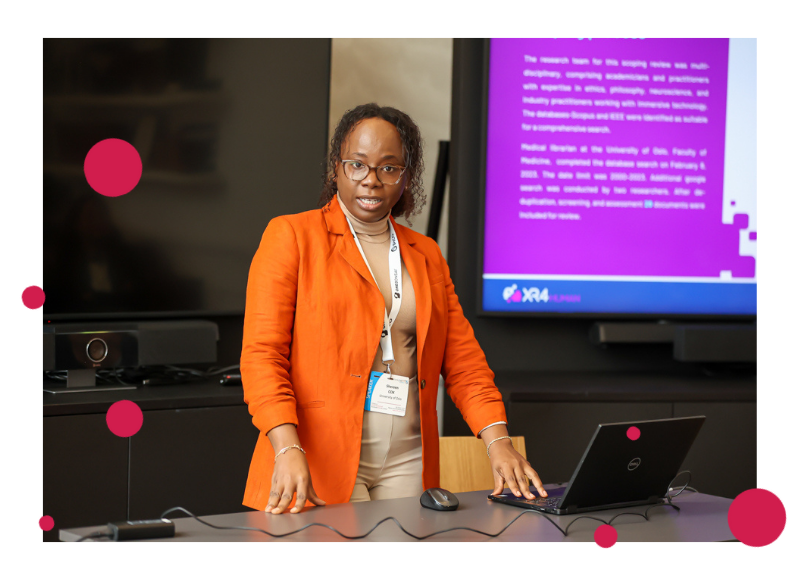
- Calling all XR researchers! Oliver Schreer and I are excited to co-chair the Scientific Conference at UnitedXR Europe 2026 taking place on 8 December in Brussels. We’re looking for researchers working on VR, AR, MR, spatial computing, human behaviour, interaction, haptics, tracking, embodiment, immersive learning and other XR-related topics to share their latest work. No full paper required! Submit your work for an oral or poster presentation and bring your research directly to the wider European XR ecosystem. 👉 Submission
- Shout-out naar de bedrijven/KMOs/Startups een service, product of technologie uitbouwen die relevant zijn voor de culturele sector. Dit project kan jullie helpen om the future of culture in Vlaanderen mee vorm te geven. Contacteer zeker Dimitri Schuurman als je interesse hebt of meer wilt weten.
- We kijken erg uit naar ons volgende ENT.A Café op 14 september. En de locatie kan moeilijk symbolischer: het iconische Jan Breydelstadion. Club Brugge staat op een bijzonder kantelpunt. Na decennia in Jan Breydel komt een nieuw stadion dichterbij, en daarmee ook de kans om een volgende stap te zetten in publieksbeleving en fan engagement. Hoe ziet die fanbeleving van morgen eruit? Welke rol kan technologie daarin spelen? En welke kansen liggen er vandaag al? Thomas Rypens van Club Brugge legt die uitdaging voor aan onze community
- Wat een top project om bij betrokken te zijn met Spatial Dynamics! Ben je een maatwerkbedrijf of regulier bedrijf dat nieuwe manieren zoekt om technisch (lager- en hogergeschoold) talent in kaart te brengen? Bezoek dan de website van #skillscan project https://lnkd.in/e2-PdzqJ of www.spatialdynamics.eu voor meer informatie.
- Een erg belangrijk thema in tijden van AI! Hoe scherm je het intellectueel eigendom af van je creaties/inzichten/uitvindingen. Een mooie samenwerking met Lab of Tomorrow en met enkele grote namen op programma! Echte de moeite om te komen kijken. Op een steenworp van de Schorre in Boom in de sprankelende gebouwen van Lab of Tomorrow en Tomorrowland.
- Wat een topjob! Samen kunnen werken met het kruim van innoverend, entertainend vlaanderen om innovatieve ideeën om te zetten naar economische en maatschappelijke impact! En dat met een topteam! 🤹 Dries De Roeck Imane Badrani Lukas Declercq Martijn Bal Carmen Van Acker Luc Delrue
Related profiles
This page shows public professional information only, each fact cited. Is this you? send a correction, or ask for removal within 24 hours, no questions asked.