Overview
At Wintercircus in Ghent, Prime Minister Bart De Wever and Prince Constantijn van Oranje-Nassau (special envoy of Techleap), moderated by Jeroen Lemaire (In The Pocket) and Hilde Schuddinck, discuss how to build an ambitious European tech ecosystem. De Wever contrasts failed large government ICT projects (like iPolice) with Antwerp's in-house police software success, and argues the Benelux could pioneer a deeper integrated digital market like Schengen did, since the EU-27 moves too slowly. Constantijn warns Europe cannot wait 5-10 years for a capital markets union while quantum and AI companies are outfunded 20-50x by American rivals, and argues Europe must hold capacity in every layer of the AI stack. Both agree Europe should aim for indispensability ('made in Europe, slimmer than the rest') rather than copying autarkic US/China models, while Lemaire stresses that applying existing AI technology offers decades of innovation opportunity. The session ends with the presentation of the Wintercircus Tech Manifest to the PM.
Talks about
Insights & ideas
The through-line
Across everything he says, one argument keeps returning: Europe is not short of intelligence, quality of life or invention, it is short of scale, capital and nerve. "Wij belonen niet de mensen die groot denken en we belonen zeker niet degenen die durven mislukken" [3]. The consequence is a continent that generates breakthroughs and then rents them back, which he compresses into two lines he uses as the diagnosis for everything else: "We exporteren kapitaal, we importeren technologie. Dat is onhoudbaar" [3], and "Wij zijn dus eigenlijk huurders geworden in het digitale huis van iemand anders" [3].
His answer is not autarky and not patience. It is indispensability, and it is coalitions of the willing moving before the EU-27 can agree. "We moeten onmisbaar zijn. We moeten slim zijn. Slimmer dan de rest. Dat is het enige dat we kunnen" [2]. He tempers the urgency with a sense of the timescale involved, "Europa is geen sprinter hè. Dat is een marathonloper" [2], while insisting that the individual steps, from a Benelux single market to a Commission roadmap, be delivered within weeks rather than years [2][3].
On why Europe invents and America commercialises
His central exhibit is the self-driving car, which he treats as a European achievement that Europe threw away: the Prometheus project's Mercedes vehicles drove autonomously at 130 km/h on Paris highways in 1994, without GPS, and it was DARPA's comparatively simple 2004 Grand Challenge that set the line running to Google and Waymo [3]. "Een Europese doorbraak werd een Amerikaans businessmodel" [3]. He has ridden the descendant of that invention himself and recalls the terror plainly: on the Antwerp quay, "Hij vroeg op de Antwerpse kaai: 'Is this a straight road?' Ik zeg: 'Ja, de road is straight.' Hij duwde dan op een knop en draaide zich 90 graden naar mij om het gesprek verder te zetten. Doodsangsten" [3].
The gap, on his reading, is precisely two things, scale and capital, not knowledge and not living standards [3]. Europe holds only 5% of global venture capital against roughly half in the United States, and much of that American pool is European money [3]. Regulation compounds it: in the EU twice as many workers implement rules as do innovative research, 3.9% in compliance against 1.7% in future technology, which is why one in three European unicorns relocates when it scales, mostly to the US [3].
On exporting capital and importing technology
The Belgian version of the problem is a balance-sheet one. Some €302 billion sits on Belgian savings accounts while Belgian institutions and households hold €108 billion in American securities, financing the US economy rather than European innovation [3]. He reads that as a structural absurdity rather than a preference, and pairs it with the ambition on the other side of the ledger: "De beste technologie die op de wereld bestaat, die naar eh ons land gaat komen" [1]. The people who can close that gap are, in his framing, the new aristocracy: "Wie talent heeft, innovatie beheerst, dat zijn de nieuwe koningen. The Kings of Tech" [3].
On digital sovereignty as indispensability
He is explicit that sovereignty does not mean building walls or trying to be the biggest. "Het moet altijd zijn made with Europe. Niet per se made in Europe, maar with Europe" [3]. The point is to occupy positions in global value chains that nobody can route around, because Europe's model is deliberate mutual interdependence [2][3]. The vulnerability is concrete: only 15% of European data sits on European servers while big American players handle around 70%, which is tolerable while the landlord thinks like a market and dangerous the moment it thinks like an empire [3].
Against that he warns hard about the version of strategic autonomy that turns into expensive protectionism, what he calls false cargo sailing under the sovereignty flag, with French vertical value chains as the example [2]. His objection is blunt and personal: "Ik ga niet binnen 10 jaar in Parijs papa zeggen" [2]. He also holds out the possibility that the race is still winnable, citing Arthur Mensch of Mistral: the technology race is a hurdle race rather than a sprint, frontrunners can fall, and laggards with the right infrastructure and talent can leapfrog [3].
On the internal market and the Benelux as a core
The barrier he considers most scandalous is the one Europe built itself. "Als u digitale services levert heeft Europa barrières tussen lidstaten die gelijk staan met een tarief van 110%. Hè, 110 hè. Is Trump een lachertje tegen" [2]. Since twenty-seven member states will not dismantle that quickly, his proposal is to let smaller groups go first, integrating capital, services and goods markets among themselves: "Ik denk als de Benelux dat doet zoals wij Schengen zijn geweest voor Schengen dat wij de cockpits en de Core of the Union kunnen zijn" [2].
He applies the same demand for specifics to the 28th regime, the pan-European company form sold as a European Delaware. He finds the idea attractive but notes that nobody has explained how it works on labour law or bankruptcy law, and he wants those answers before the March 19 European Council [2]. The Alden-Biesen summit his government requested is meant to produce, within two weeks, a Commission roadmap for deeper integration on digital infrastructure, capital and energy [3].
On why government IT projects fail
He has a standing account of the pathology, and iPolice is his case study: "Die raket vliegt. Er worden enorme budgetten uitgegeven. En die raket komt nooit aan op geen enkele planeet" [2]. The causes are systematic. Governments lack internal competence, define enormous projects, outsource them to large vendors, then change the requirements in mid-flight [2]. His counter-model is what he ran in Antwerp: "Wij hebben altijd bescheiden projecten klaar gedefinieerd. Wij hebben competentie in huis en wij hebben met lokale KMO's gewerkt en wij hebben een enorm succesratio" [2].
On risk, failure and daring
Silicon Valley celebrates and even mythologises failure, treating it as a war wound, and Europe does the opposite [3]. He names the Ghent Netlog mafia as the exception that proves it can be done here [3]. His instruction to entrepreneurs is unadorned: "Als u vooruit wil, dan moet u durven. Durven investeren, durven uitbreiden, durven vernieuwen" [3].
On public resistance and using the tools
He treats popular anxiety about technology as a political problem that nobody has solved, and offers to join whoever does: "Dus als u een kamp hebt dat Angry Boomers kan geruststellen, dan schrijf ik mij in" [2]. His own posture toward the tools is unceremonious. Asked to engage with a manifesto, his method is: "Ik ga het manifest downloaden in ChatGPT en dan vragen om het mij uit te leggen" [2].
Takeaways
- The competitiveness gap with the US is scale and capital, not knowledge or quality of life: Europe holds 5% of global venture capital against roughly half in the US, much of it European money [3].
- Belgium finances someone else's innovation: €302 billion on savings accounts alongside €108 billion of American securities held by Belgian institutions and households [3].
- Intra-EU digital services barriers amount to a 110% tariff, which makes them a bigger problem than external trade politics [2].
- When the 27 cannot move, smaller clusters should: a Benelux integration of capital, services and goods markets, playing the role Schengen played before Schengen [2].
- Government ICT succeeds with modest, clearly defined projects, in-house competence and local SMEs, and fails with megaprojects, big vendors and shifting requirements [2].
- Sovereignty should mean being impossible to route around, "made with Europe. Niet per se made in Europe, maar with Europe" [3], not protectionist vertical value chains [2].
- Only 15% of European data sits on European servers while big American players handle about 70%, a dependency that becomes strategic the moment the provider stops behaving like a market [3].
- Europe's failure to commercialise its own inventions is documented, not theoretical: autonomous Mercedes vehicles at 130 km/h on Paris highways in 1994 without GPS, and Waymo owns the market [3].
In the news
- Met communautaire hervorming in het vizier zet De Wever zich opnieuw af van de kookwekker van Vlaams BelangBart De Wever (N-VA) verwacht een ‘heel interessant punt in de communautaire geschiedenis’. De premier denkt dat de komende sanering van 10 miljard euro de laatste is vóór een nieuwe institutionele hervorming. 'De oplossingen van de N-VA zijn niet de onze', klinkt het binnen Arizona.
The post Met communautaire hervorming in het vizier zet De Wever zich opnieuw af van de kookwekker van Vlaams Belan
Knack · 16 Sept 2026
- De motor mag niet gaan sputteren? Nul % groei en steeds meer belastingdruk. Dan is ‘gaan sputteren’ niet langer de situatie. We zitten al in de fase waar de motor niet meer aanslaat, we nodeloos op start blijven drukken, verwelkomd worden door een zuchtend “hnnn-hnnn-hnnn-hnnn-plop” en de vingers kruisen of de motor terug zal starten in de volgende minuut, ofwel we hem helemaal verzuipen. Het overheidsbeslag mag niet stijgen, goede woordkeuze. Want daarmee is niet gezegd dat de belastingdruk niet zal groeien op diegene en datgene
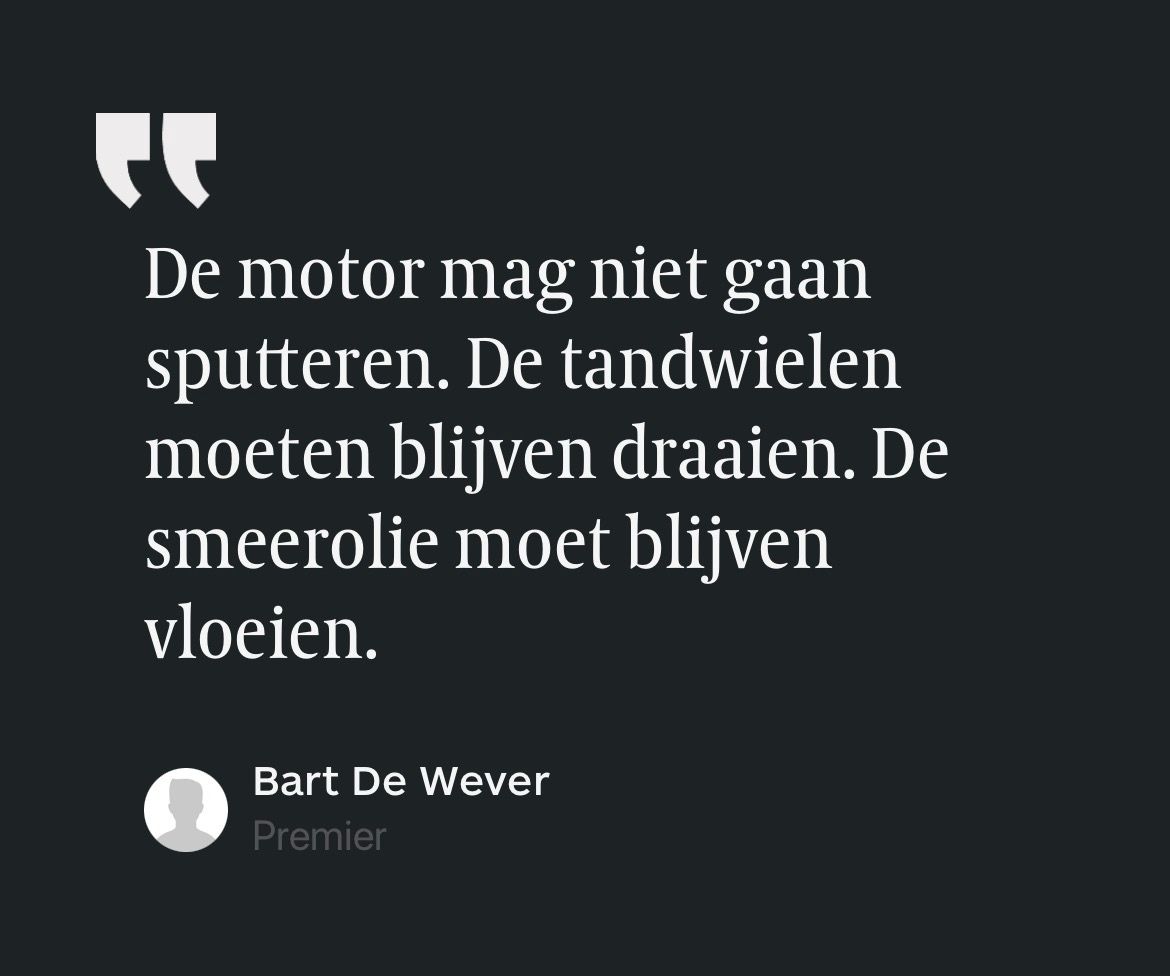
- Bart De Wever: ‘Begrotingsinspanning mag motor van welvaart niet doen sputteren’Volg hier alle updates over de federale regering.
The post Bart De Wever: ‘Begrotingsinspanning mag motor van welvaart niet doen sputteren’ appeared first on Knack.
- Kan Bart De Wever Vooruit aan boord houden? ‘De partij mag haar huid echt duurder beginnen te verkopen’Premier Bart De Wever (N-VA) zoekt 10 miljard euro voor de begroting. Drastische saneringsmaatregelen zijn onvermijdelijk. Maar hoeveel kan Vooruit nog slikken? ‘De partij heeft zich te snel tevreden gesteld met symbolische maatregelen.’
The post Kan Bart De Wever Vooruit aan boord houden? ‘De partij mag haar huid echt duurder beginnen te verkopen’ appeared first on Knack.
- Moet de Vlaamse regering het begrotingsprobleem van Bart De Wever oplossen?De regering-De Wever is op zoek naar tien miljard euro. Door de deelstaten mee te laten betalen aan de bijdrage voor de Europese Unie, hoopt de Wetstraat een smak geld te vinden.
The post Moet de Vlaamse regering het begrotingsprobleem van Bart De Wever oplossen? appeared first on Knack.
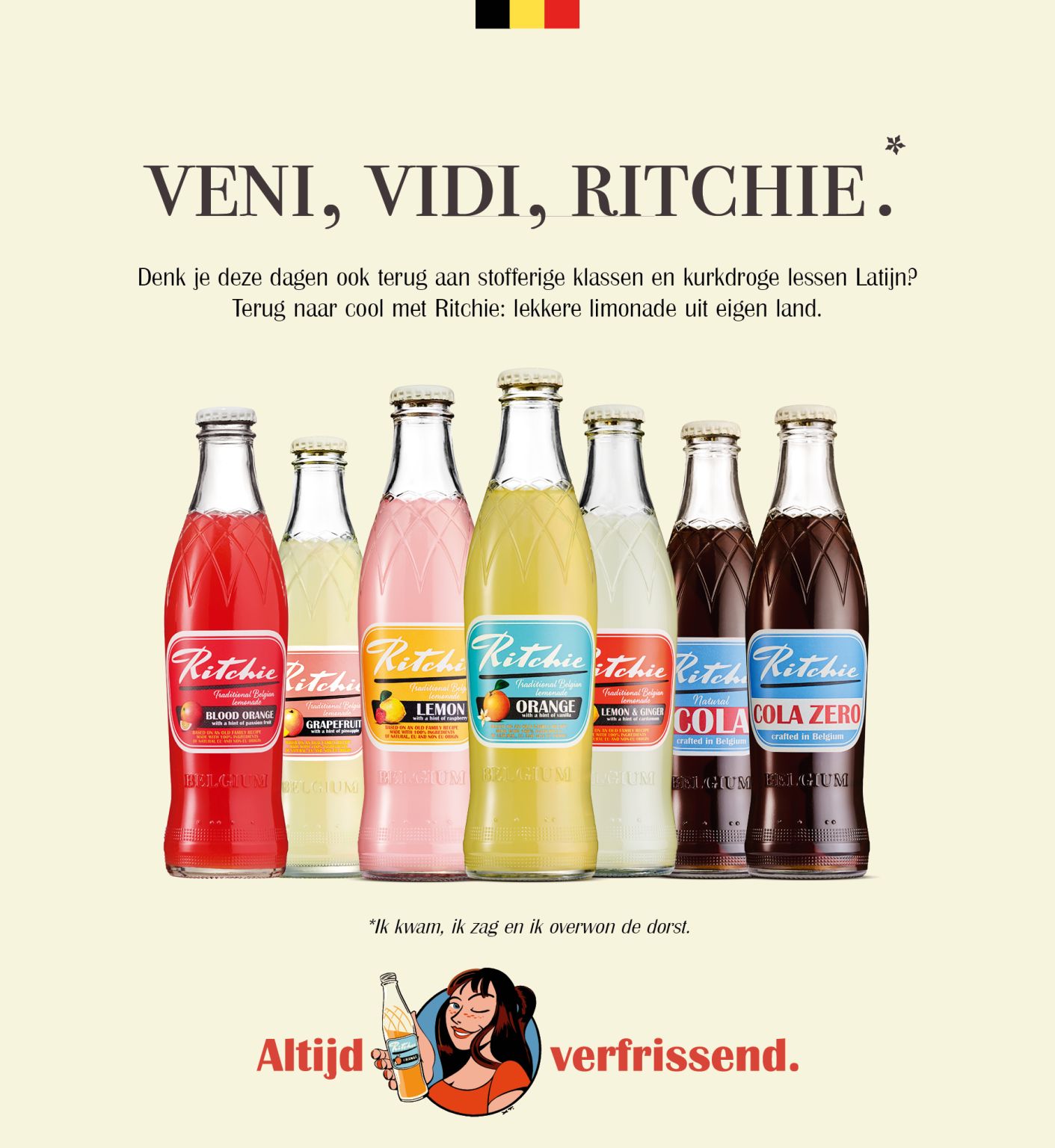
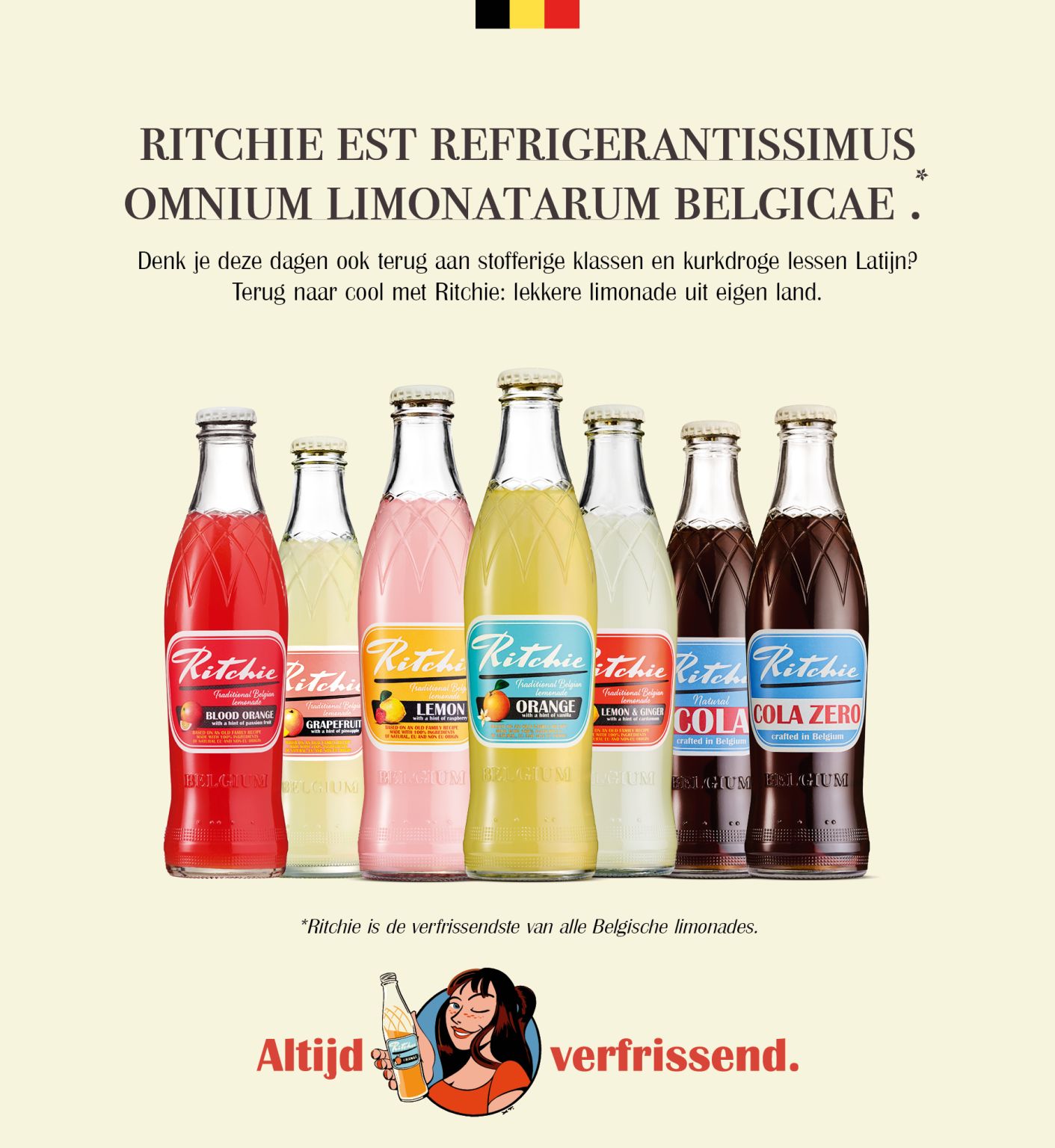
- Het is waarschijnlijk geen kwestie van algemeen belang maar ik heb dringend je input nodig. Laat ons eerlijk zijn: wat is er nu belangrijker dan een strategische beslissing over de toekomst van de Belgische limonade? Dit weekend lanceerden we onze nieuwe krantencampagne, met een subtiele knipoog naar de ‘back to school’-periode. Heb je de advertentie gemist? Geen nood: hier is de link: https://lnkd.in/eCrP4GQZ (en ja ik weet het, er staat een grammaticale fout in de Franstalige advertentie 🤦♂️ ) De advertentie voor
- Proud and happy to achieve this strategic milestone with our partner Kalyani Strategic Systems Limited for the development of FN Herstal on the Indian market. Thanks a lot to #BabaKalyani, Amit Kalyani and Neelesh Tungar for their trust in our company. Bart De Wever Theo F. Adrien DOLIMONT, PhD Pierre-Yves Jeholet FN Browning Group #Defence #Partnership #IndustrialCooperation
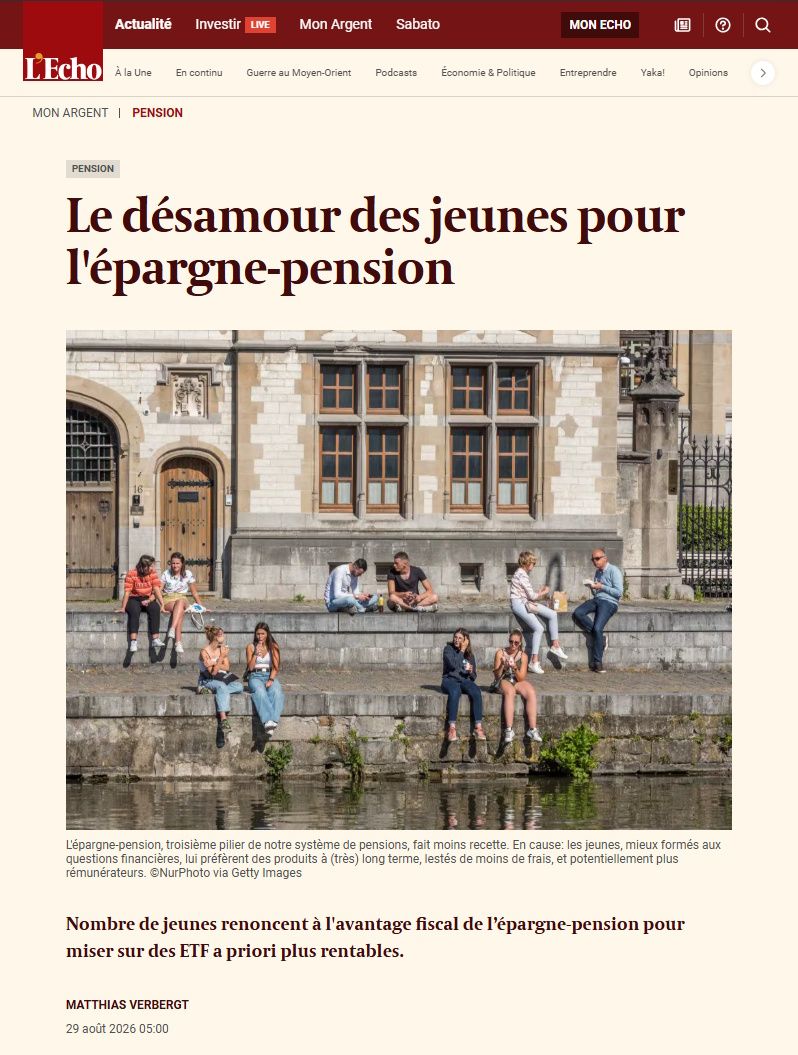
- Le problème du 3e pilier belge, ce sont ses contraintes d’allocation. Pas le plafond fiscal. Pas les frais. Aujourd’hui, la loi limite fortement l’investissement en actions hors Europe et en ETF. Résultat : l’épargne des Belges est orientée vers l’Europe, alors que l’essentiel de la croissance boursière des 20 dernières années est venu des États-Unis. Il n’est donc pas étonnant que beaucoup préfèrent investir librement dans un ETF MSCI World plutôt que dans une épargne-pension fiscalement avantageuse mais avec un rendement
Related profiles


This page shows public professional information only, each fact cited. Is this you? send a correction, or ask for removal within 24 hours, no questions asked.