Overview
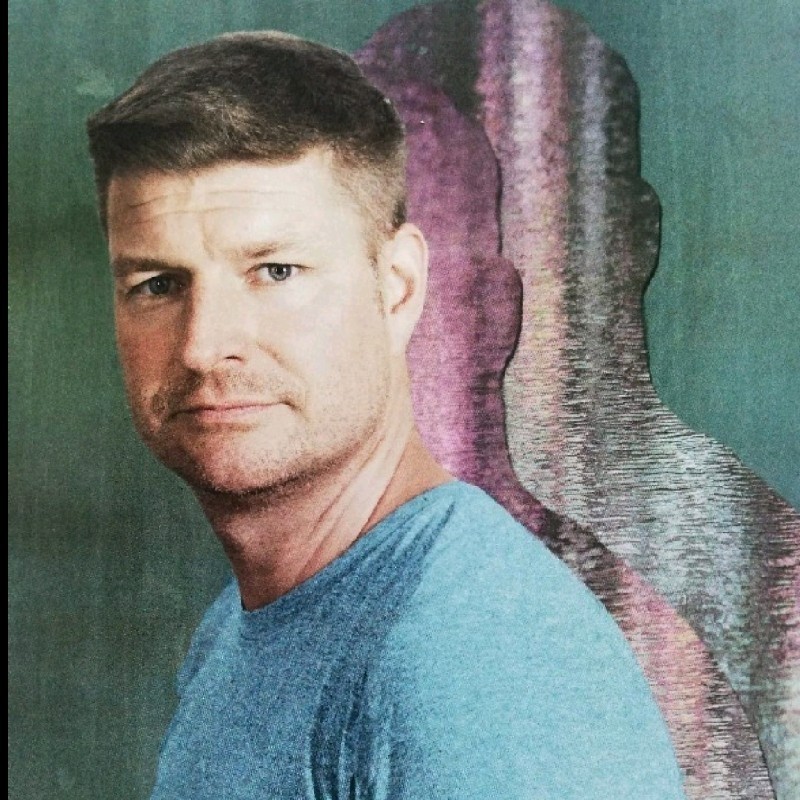
Ingmar Nopens is the CEO of Earth Plus, a role he took up in January 2026. He is based in Gent, and states his expertise as building world class teams, team management, research and development, holistic thinking and problem solving. He has also been managing director of C-biotech since November 2022 and a senior researcher at Capture since September 2014.
Between September 2020 and September 2024 he was chief advisor at Cobalt Water Global. At AM-Team he was scientific advisor from January 2017 to September 2019 and then COO until November 2022. His academic career was at Ghent University, where he was a PhD student from 1999 to 2005, a post-doc from December 2005 to September 2008, associate professor at BIOMATH from October 2008 to September 2018 and full professor there from October 2018 to January 2025. He held a post-doc position at Lund University in late 2005.
He studied bio-science engineering, environmental technology at Ghent University from 1994 to 1999, following KA Lokeren.
Career history

Insights & ideas
The through-line
Across these posts, Ingmar Nopens keeps returning to a single frustration: that climate response is too slow, too narrow, and too reliant on future technological fixes rather than present structural change. Early posts frame this through concrete disruptions, droughts halting inland shipping [11], wildfires and low river levels shutting down power plants [12], peat fires exposing soil vulnerability [6], and ask why these were not anticipated [10][11]. Over the run of posts this hardens into a conceptual argument: he introduces and repeats the idea of "carbon debt," the cumulative, compounding cost of delaying action until 2040 or 2050 [5][7][9], and increasingly criticizes technologies like DACCS and CCS as expensive, energy-hungry distractions that let the existing fossil system persist rather than transform it [2][8][12][13]. The through-line shifts from documenting climate symptoms to naming the systemic and financial logic, carbon debt, adaptation limits, insurable risk, that he thinks is being ignored.
On carbon debt
Nopens treats carbon debt as the missing frame in net-zero discourse: "the carbon debt we are accumulating while waiting for 2050" [7], driven by the fact that "the atmosphere responds to cumulative emissions — the area under the curve — not to the date at which a company eventually reaches net zero" [7]. He explicitly rejects the sequencing logic of "first reduce, then compensate," arguing instead that "reduce and compensate should happen in parallel" [7], since every serious roadmap already admits some emissions are unavoidable for years [7]. He extends this with "compounding interest" feedback loops, where warming itself degrades the forests, soils and water systems meant to absorb carbon [5], and frames Beyond Value Chain Mitigation (BVCM) as acting "in parallel, on top of" reduction, not as a substitute for it [5]. He has also flagged that the term itself is contested, asking "who can explain what carbon debt actually is" because "many people use the term differently" [9].
On net-zero technology skepticism
He is pointed about DACCS and CCS as the "net zero bet of politicians and investors… The silver bullet. Not." [13]. His objection is both physical and financial: DACCS is "technologie van de toekomst" pursued while "too little too late" solutions are available now [8], and "data centers and the DACCS will even require more energy than we need today" [12]. He compares it to the Haber-Bosch process, saying it "wastes tons of energy for nitrogen" and that "the math regarding energy and cost just does not hold" [13]. On CCS specifically, he questions whether it is "financing the decarbonisation of the existing system — or financing the transition to a different one," warning that requiring a high carbon price "add[s] another vulnerability" since "projects get delayed or cancelled, while our #carbondebt continues to accumulate" [2]. His preferred alternative is nature-based and biological: "reduce fossil carbon use," cycle carbon through CCU, and replace fossil carbon with biogenic carbon by letting "plants capture" it [2], pointing to "natural process intensification just like we did with biological wastewater treatment that already purifies our water for over a century" [13].
On soil health and ecosystems thinking
Nopens argues soil and carbon discussions have been too narrow. He likes "#SoilHealthBoundaries because of its clear resemblance to #PlanetaryBoundaries," criticizing how "the soil discussion has focused heavily on SOC, carbon sequestration and carbon credits" while ignoring "water retention, biology, nutrients, structure, resilience" [6]. The Belgian peat fire is his proof point: "the immediate vulnerability wasn't a lack of carbon — peat is extremely carbon-rich," it was "drought and loss of soil moisture that made that carbon vulnerable to fire," showing "measuring carbon alone doesn't tell us whether an ecosystem is healthy or resilient" [6]. This connects to his broader "#ecosystems" framing at Cordeel Group, where he argues problems like PFAS pollution should not be "regarded as an individual problem to solve" but linked across "a pollution angle and a soil health angle" [14][15].
On adaptation limits and urgency
He is skeptical that adaptation alone can keep pace with a shifting baseline: "the 100y storm" and "100y hot summer" standards will keep being "replaced by new, more severe 100y standards," so "we can't keep adapting because at some point it is impossible. And too expensive" [1]. He points to insurance as the pressure point, insurers "demand" adaptation because "they are paying the bills and see the risk on their balance sheet" [1], and predicts uninsurability: "we krijgen dit niet verzekerd... de omvang zal te groot worden" [10]. He repeatedly asks why, given projections that "25% of the summers will even be hotter than the 2026 one," we are "still not acting massively" [3], and criticizes both governments and corporate targets as reactive rather than dynamic: "het enige dat dynamisch is is de vele doelstellingen... die niet gehaald worden en dan maar naar beneden worden bijgesteld" [8].
Takeaways
- He argues carbon reduction and compensation should run in parallel now, not sequentially after 2050, because atmospheric impact depends on cumulative emissions, not net-zero dates [7].
- He is explicitly skeptical of DACCS and CCS as central net-zero strategies, citing their energy cost and the risk they simply prolong the existing fossil system [2][8][12][13].
- He treats "carbon debt" and its potential "compounding interest" feedback loops as the concept missing from mainstream net-zero and BVCM discussions [5][9].
- He wants soil health assessed through multiple factors (water, biology, structure, resilience) rather than carbon/SOC metrics alone, using the Belgian peat fire as evidence [6].
- He sees insurance markets as an early signal of adaptation limits, predicting some climate risks will become uninsurable [1][10].
- He frames construction, agriculture, pollution and soil health as linked "ecosystem" problems that should be solved together rather than in isolation [14][15].
In the news
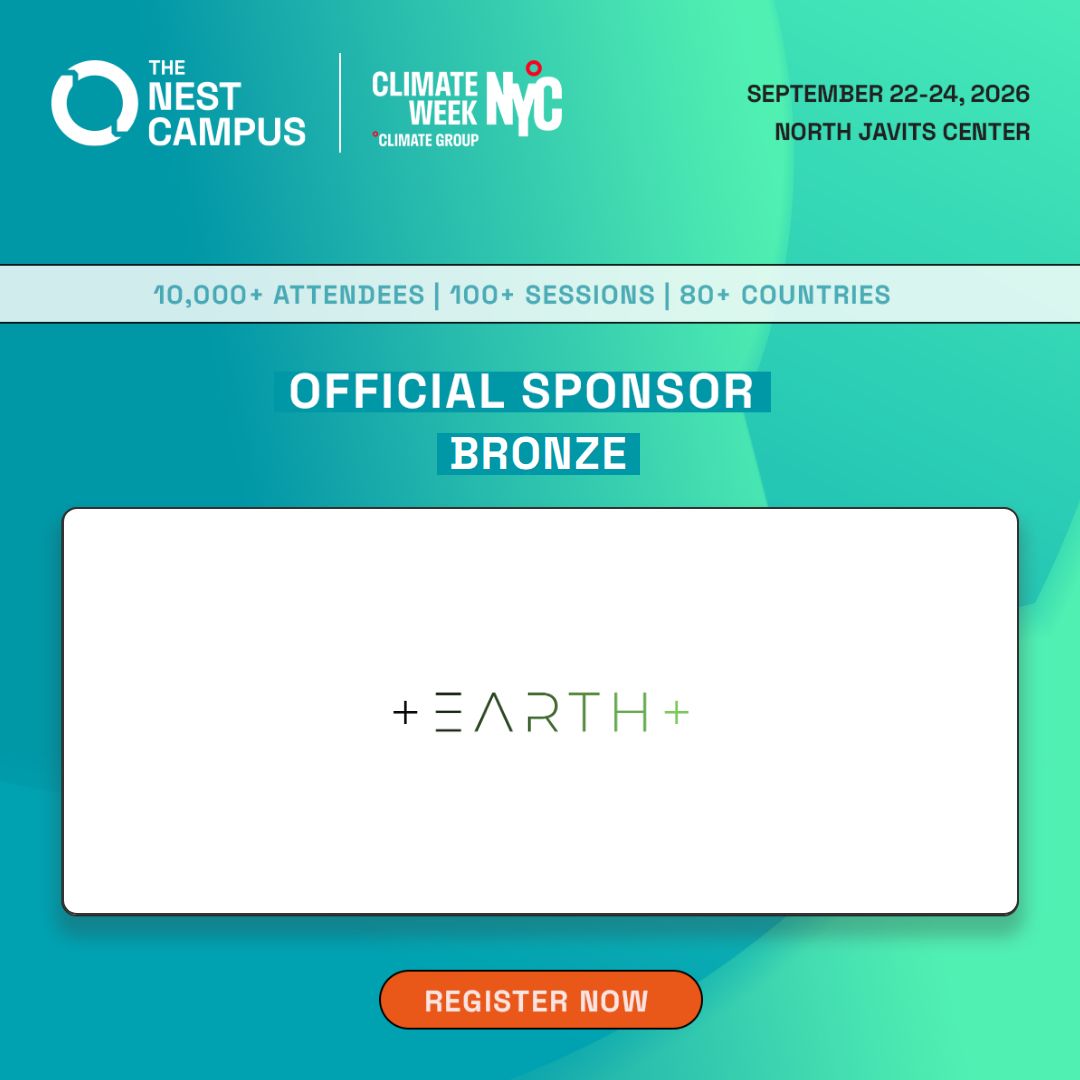
- This September, Earth+ is sponsoring The Nest Campus - New York Climate Week's largest gathering of corporate leaders, innovators, and investors building the resilience economy. We're proud to support decision-makers across energy, infrastructure, AI, supply chains, and finance all in one place to move from conversation to execution. Be part of the movement defining the next decade of effective resilience. The room is filling fast! Guarantee your spot - Register now: https://lnkd.in/eUp7uVPt #TheNestCampus
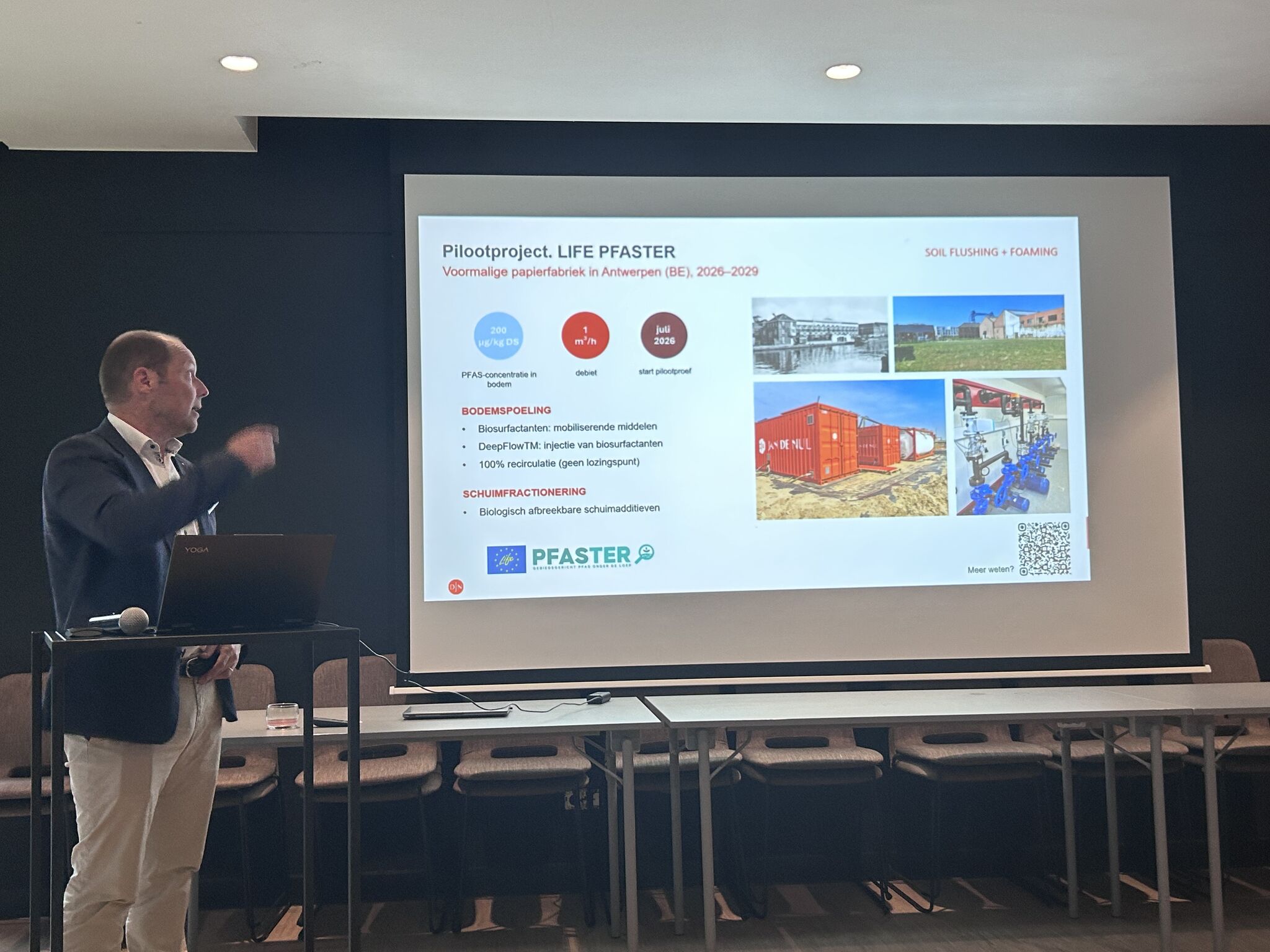
- It was a pleasure to talk about our regenerative framework of solutions for #pfas in soils, ranging from detection (using plants as soft sensor), over treatment (in situ and ex situ phytoremediation with industrial hemp) to biomass destruction (pyrolysis) or reuse (safe material production). We bring this together under the flag of Fytolutions Hope that I could inspire people and set up some projects in 2027 to put it in practice.
- Mooi artikel in de tijd van Louis De Jaeger. Leestip De laatste alinea vat het voor mij als generalist zeer mooi samen: “Onze hele maatschappij lijkt erop gericht symptomen te bestrijden in plaats van oorzaken.” Kunnen we dat laatste aub eens meer gaan doen en daar in investeren? In plaats van kort door de bocht politiek en redeneringen die enkel een doekje voor het bloeden zijn en totaal geen lange termijn systeemverandering beogen.
- On priorities
- The high level summary: The falling ceiling, the rising floor and the bet on #cdr of unproven technologies to stay in between.
- I see a lot of concerned reactions to the #climatechange triggered events we are witnessing around us. And rightly so. But there is also something very simple we can do: act on our own emissions. A flight. A holiday. A BBQ. Or simply our annual footprint. #Emissions already made that cannot be reduced anymore. The average European is responsible for several tonnes of CO₂ emissions every year. We cannot eliminate all of that overnight. But we can avoid what we can, reduce what we can, and take responsibility for what remains. I
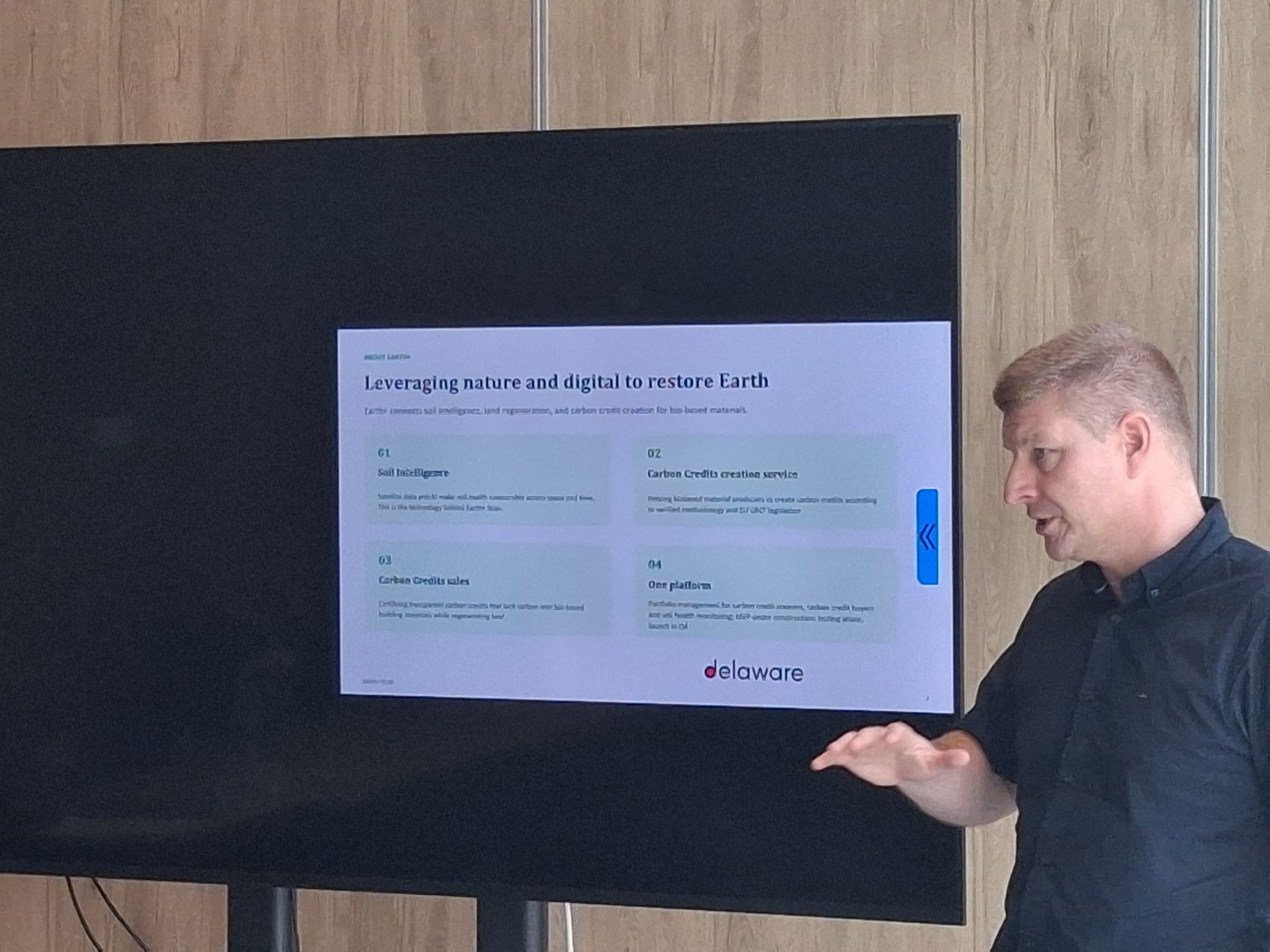
- Last week I presented to the PROFARMED farming consortium how Earth Plus in general and more specifically our Earth+ scan solution can be a game changer in monitoring #soilhealth for farmers. The current way of mixed point sampling is insufficient to get a good high resolution picture of the status a parcel's soil health. It assumes to be representative, yet due to heterogeneity of indicators this could lead to poor decision making. Hence, to cure this Earth+ scan is a high resolution remote sensing + #AI decision support tool. This
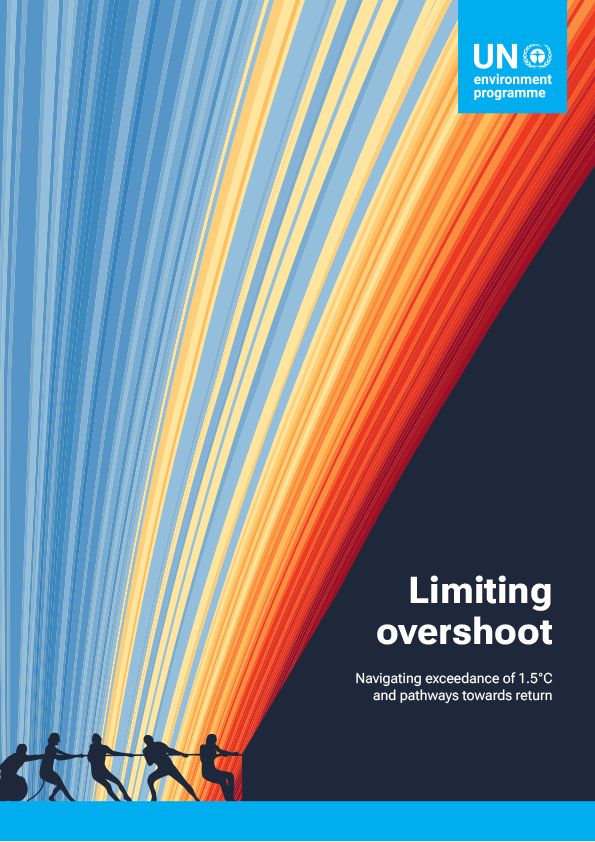
- Our carbon debt keeps increasing due to slow action and actions that only can materialise in the future. We need to pick the low hanging fruit and not wait for silver bullets that might never come to be or are just too expensive
This page shows public professional information only, each fact cited. Is this you? send a correction, or ask for removal within 24 hours, no questions asked.