Overview
Dezwaef's academic work at Ghent University's Department of Experimental Psychology focused on implicit measures in pricing research: a 2019 PLOS ONE article on automatic price evaluations, a doctoral thesis in 2020, and a 2022 EMAC conference paper on reaction times and mouse tracking.
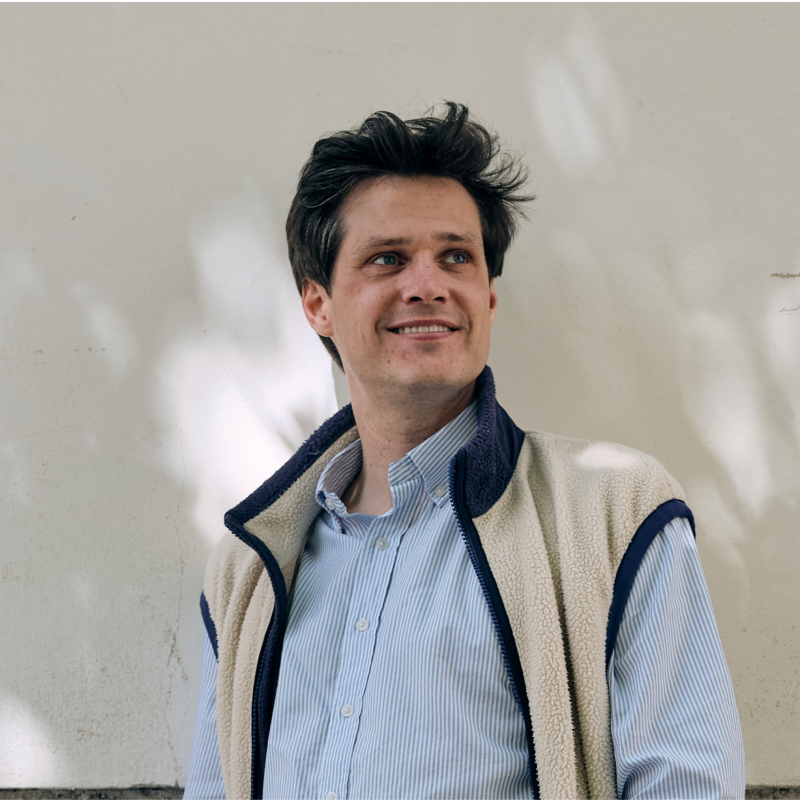
Jasper Dezwaef is co-founder and CEO of Wenite, a Ghent software company he started with Emiel Cracco (CPO) and Robin Vannieuwenhuijse (CTO). Wenite BV was registered on 6 October 2020. The company works from Sint-Michielsplein 8A in Ghent and has had its registered address at Stationsstraat 37 in Nazareth-De Pinte since 1 January 2025. Its most recent annual accounts list 4 FTE. Wenite describes itself as the workbench for people and organisation (P&O) consultants. Wenite states it works with more than 25 P&O consulting agencies, covering more than 500 client organisations and 3.3 million data points on the effectiveness of HR interventions. Rewire, Flourish and BDO are among the companies named as supporters. Data is processed within the EU and the company targets ISO 27001 certification in Q3 2026. The name stands for "WE unite": bringing employees, employers and consultants together around objective data. Dezwaef obtained his PhD at Ghent University's Department of Experimental Psychology in 2020 with the thesis "Investigating the potential of implicit measures in pricing research". He co-authored a 2019 PLOS ONE article on implicit estimation of consumers' willingness-to-pay and a 2022 EMAC conference paper on reaction times and mouse tracking in pricing research.
Career history

Insights & ideas
Dezwaef's core insight is that HR consulting fails not at diagnosis but at measurement [1][3]. He identifies a specific failure mode in SMBs: organizations run surveys, act on results, then stop tracking, creating "a gap between good intentions and measurable outcomes" [3]. He argues measurement must be repeated, trust is not a single score but "a trend" [1], yet most small and mid-sized firms never reach "evidence" because the habit is too expensive to sustain [3]. This creates a circular trap: without proof of impact, there is no budget for measurement; without measurement, there is no proof [3].
The cost of this gap extends to consultants themselves. Dezwaef observes that HR consultants fear not losing clients but having their work "disappear into a report nobody opens" [2]. Once a project concludes without embedded follow-up systems, the consultant has "no reason for the client to call him back" [2]. The professional incentive structure punishes closure without lasting infrastructure.
Dezwaef also recognizes a gap between stated sentiment and actual behavior. Immediate post-intervention scores are "almost always positive" and "almost always meaningless," driven by gratitude rather than genuine change [7]. The real measure emerges only at six months, when follow-up is absent and people's behavior reveals whether anything actually shifted [7]. This mirrors broader human patterns: "what people say they want and what they actually do are two different datasets" [7].
His company Wenite emerged from confronting this problem directly. After two years as an engagement platform, Dezwaef realized "the organisations we worked with had almost never capacity to act on what the data told them" [6]. He shifted focus from generating insights to ensuring action happens after data arrives, recognizing that "the data was never the issue. What happened after the data was" [6]. His mission centers on giving HR consultants "the ability to prove what they do. Not with gut feeling. With data" [8].
In the news
- Most independent HR consultants do not lack the desire become big. They lack a system. They know roughly what got the last three clients in the door. Nobody wrote it down, nobody repeats it on purpose, and nobody notices when it quietly stops working, because there is no system watching it, only memory. Growth does not stall because the well of ideas runs dry. It stalls because there was never a repeatable way to turn one good client relationship into the next one, and the next one after that. Give a consultant a system for that, and
- 2025 was the hardest year we have had at Wenite. We were mid pivot, which meant almost every resource had to go into product. That left us thin on the commercial side, right when we also needed to raise money and keep selling. What got us through was not a plan. It was engineers taking sales calls. Product people helping write investor updates. Nobody staying inside their job title for very long. We still grew ARR meaningfully that year. Because the people we had stopped treating their function as a fence and pushed the company
- Most software companies pick a customer and go deep. We are building for two very different ones on purpose. The solo HR consultant who is buried in delivery and has no time left for sales. And the ten person firm that has plenty of sales, but struggles to make every consultant deliver the same quality. It would be simpler to pick one. It would also be short sighted, because in this market the two of them are often the same person, five years apart. The solo consultant becomes the ten person firm. Whatever works for her today still
- The best client relationships we see rarely have a renewal conversation at all. Not because nobody brings it up. Because by the time a contract is up, the client has already watched the number move for months, one small update at a time. There is nothing left to convince anyone of. Trust like that does not get built in a single meeting near a deadline. It gets built all year, in short touchpoints that nobody thinks of as marketing. We rarely think about renewals as a topic on their own. That is usually the surest sign that a
- Our best customers do not have the same size, the same team, or the same client base. One is a solo HR consultant who finally has time to sell because the reporting runs itself. One runs a team of twelve and finally has one consistent way of showing impact, no matter which consultant is on the account. What they share is smaller than that. They both log in to Wenite every single week, not because we ask them to, but because the number they see there is the number they now use to run their business. Different problems. Same habit.
- A ten person HR consultancy told me their biggest risk is not losing clients. It is that not every consultant delivers the same quality. One consultant reads the data brilliantly and builds a plan around it. Another, just as experienced, still runs the same workshop she has run for five years, data or not. At three people that difference is invisible. At thirty it is the whole business, because the client does not experience the firm's philosophy. She experiences whoever showed up that month. Bigger firms do not need more ideas.
- When we told our first investors we were narrowing from enterprise HR to independent consultants, nobody clapped. Smaller deals. Smaller checks. A market that, on paper, looked less impressive in every spreadsheet. What the spreadsheet could not show was how fast that market moved, and how much they needed something nobody was building for them. Two years later, that unglamorous pivot is the entire company. Sometimes the right decision looks like a downgrade until it is not. #HRconsulting #PeopleAnalytics #HRtech
- A consultant sent me something rare last week. The same engagement survey, run with the same client, exactly one year apart. Nothing dramatic happened in between. No big program, no reorg. Just consistent, small interventions, tracked every quarter. The one year gap showed a double digit improvement in one specific team, and almost no movement everywhere else. That is what a real result looks like. Not a before and after slide. A full year, with the boring middle included. #HRconsulting #PeopleAnalytics #SMB
This page shows public professional information only, each fact cited. Is this you? send a correction, or ask for removal within 24 hours, no questions asked.