Overview
Jennick Scheerlinck is the founder and chief executive of Hoplr, which he started in October 2014. He is based in Belgium.
Before founding Hoplr, he worked as a .NET consultant at IT-flex NV from November 2013 to September 2014. He spent the preceding years at Wolters Kluwer, first as a developer with Wolters Kluwer Financial Services' FinArch from February 2010 to March 2013, then in sales engineering at Wolters Kluwer - Financial Services Solutions from April to November 2013.
He studied at HOGENT, completing a bachelor in industrial sciences in computer science between 2006 and 2009 and a master in industrial sciences in computer software engineering in 2009 and 2010. During 2008 and 2009 he also took electives in computer software engineering at Ghent University.
Career history

Insights & ideas
Scheerlinck sees neighbourhood connection as infrastructure that requires sustained design attention, not episodic activity. His core concern is that digital platforms often fail at their stated purpose because they conflate reach with belonging [3]. He distinguishes sharply between broadcasting to people and creating conditions for them to recognize and trust each other locally. A neighbourhood platform succeeds when residents can follow events, request help, and see their input reflected back, not when it maximizes audience size [5].
Trust in local communication depends on channel design and consistency, not just message quality [6]. When municipalities broadcast through attention-driven feeds designed for speed and emotion, "shared facts become harder to protect" even if the message itself is correct [6]. Neighbourhood-level digital spaces should operate differently: protected from bots and automation, grounded in real residents and local governments, and built for human relationship-building rather than viral reach [7].
Participation should be reconceived as ongoing civic infrastructure rather than a project phase. Residents build confidence through repeated, recognizable interactions where they can identify what is being asked, respond realistically, and observe what happens with their input [4]. He emphasizes that "stronger neighbourhoods are not built through one-off moments of engagement" but through sustained local dialogue [4]. Engagement infrastructure must work for people with varying digital confidence, assistive technology needs, and time constraints, accessibility is foundational to social cohesion, not an add-on feature [9].
Emergency communication reveals these principles in practice. The BE-Alert storm case showed how identical messages treated as spam created delays, while local delivery through neighbourhood networks achieved faster notification and actual engagement with residents [1]. Multiple channels matter, but only if grounded in local context and recognisable to the people receiving them [1].
The underlying argument is that digital democracy fails when platforms prioritize reach over recognition. Neighbours need to "recognize each other as people who live nearby" [7], understand local context, and see themselves as part of a continuous community conversation [2]. When those everyday weak ties fade, communities lose their early-warning systems for need and their capacity to welcome newcomers or support vulnerable residents [2].
In the news
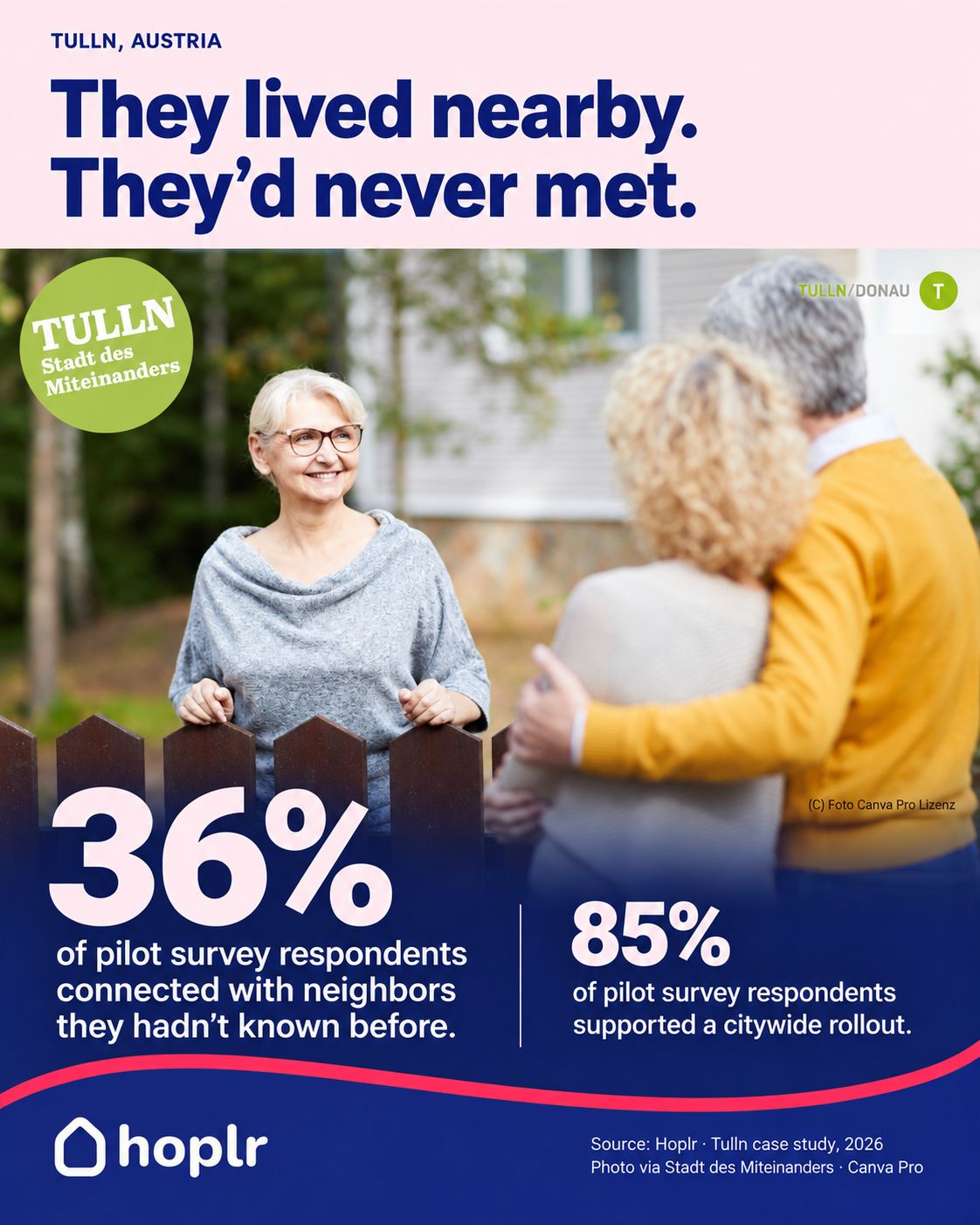
- They lived in the same neighborhood. They had never met. Then one of them asked on Hoplr whether anyone felt like going for a walk. A neighbor replied. They arranged to meet at a bus stop and headed out together. This happened in Tulln, Austria. And it captures something that can be surprisingly difficult to achieve: helping people connect beyond the circle they already know. Tulln had tried other online platforms, but conversations often stayed within existing groups. The city wanted to make it easier for residents to find
- Burenhulp met een paar extra pk’s. Dat krijg je als Putte Hoplr lanceert. 🎉 Sinds 1 september kunnen inwoners van Putte via Hoplr hun buren leren kennen, hulp vragen, spullen delen en ontdekken wat er in de buurt te doen is. Om dat bekend te maken, maakte de gemeente drie korte video’s met Puttenaren in de hoofdrol. Met veel humor en herkenbare situaties uit het buurtleven. Deze wilden we jullie niet onthouden. Het begint met iets heel gewoons: iemand heeft een lift nodig. Een buur wil helpen. De rest zie je in de video. In de
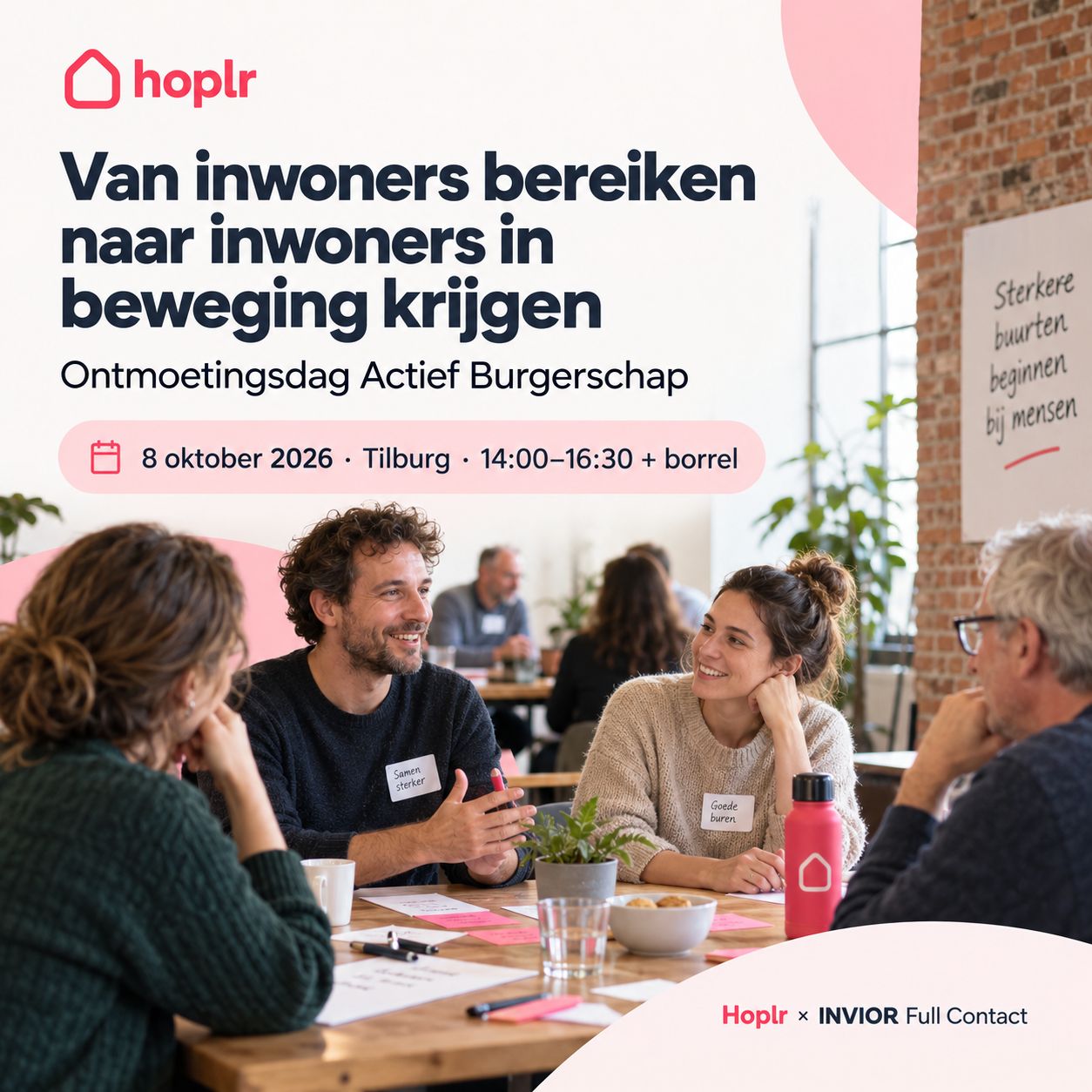
- Schrijf je in voor onze Ontmoetingsdag Actief Burgerschap op 8 oktober in Tilburg. Hoe krijg je inwoners niet alleen betrokken, maar ook écht en duurzaam in beweging? Op 8 oktober brengen Hoplr en INVIOR full contact professionals uit lokale besturen en maatschappelijke organisaties samen voor een inspirerende namiddag rond actief burgerschap. 👉 Gratis inschrijven: https://lnkd.in/e-qAeduY We gaan onder meer aan de slag met vragen als: • Welke triggers zetten mensen aan tot actie? • Hoe bouw je bereik, vertrouwen en sociale
- More than 450 residents have now joined Hallo Leende. That is a milestone worth celebrating. What stood out in the Eindhovens Dagblad article were the everyday examples of why a digital neighbourhood network can make a difference: helping a local association find a new chair, swapping plants, or simply meeting someone for coffee. None of this sounds spectacular. But that is exactly how stronger neighbourhoods are built. A question reaches the right person. An unused item gets a second life. A local club finds someone willing to
- A second life for an object can also be a first connection between neighbours.” A recent VRT NWS article about giving second-hand items away mentioned Hoplr. It is a small reference, but it points to something bigger. An object changes hands. But something else happens too. A neighbour meets a neighbour. A useful item stays in circulation. A local connection becomes a little stronger. This is why sharing items cannot be reduced to a sustainability feature only. At neighbourhood level, it is active citizenship in its most
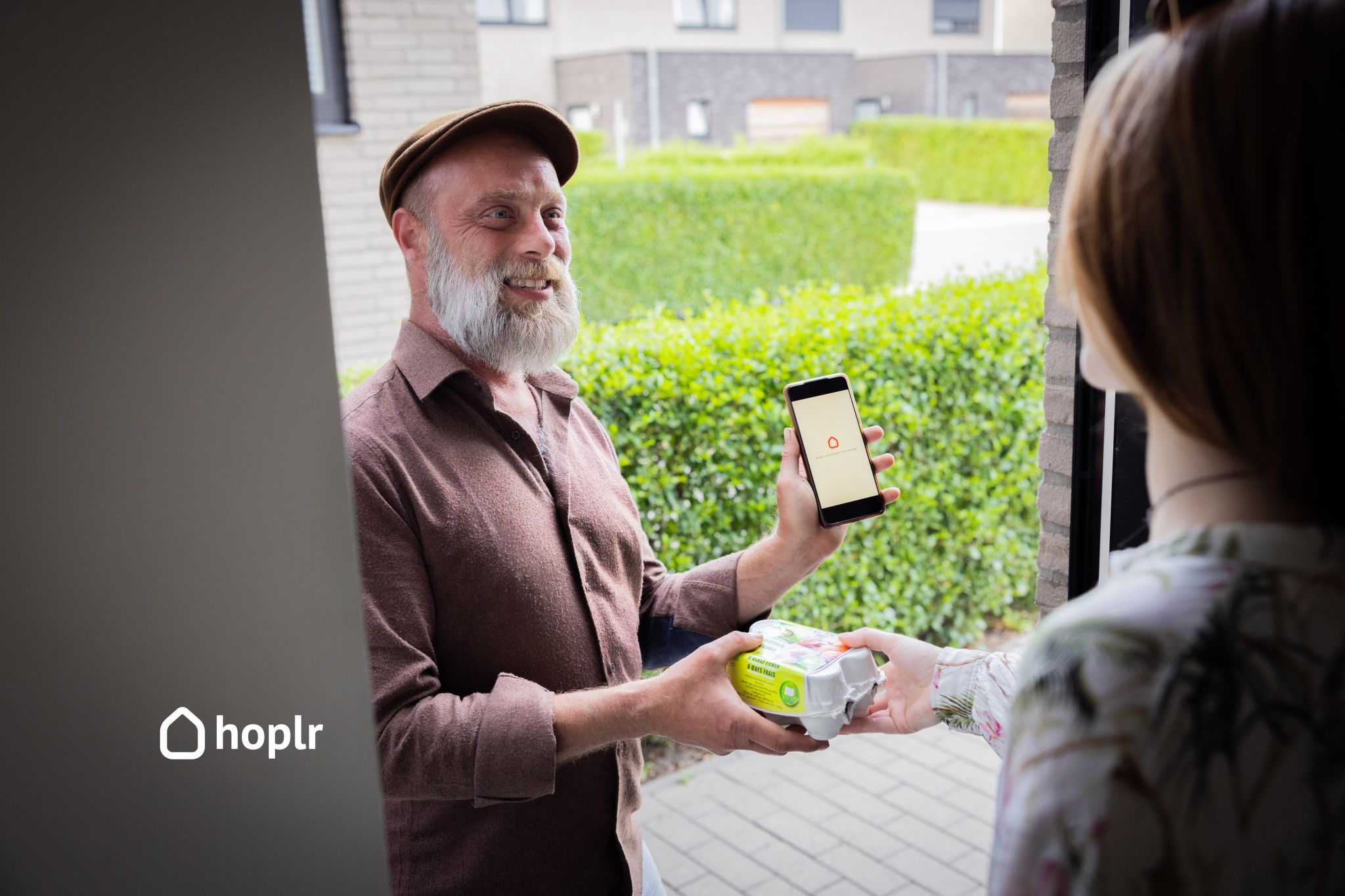
- Emergency communication should never depend on one route alone, but local contextual delivery matters! That is why the BE-Alert storm case from Friday is such an important signal for local governments. Several media reported that BE-Alert e-mails were delayed because mail providers treated the large volume of identical emergency messages as possible spam or phishing. In some cases, residents received the warning hours later, when the storm had already passed. At the same time, the BE-Alert messages distributed through the new Hoplr
- It is possible to live closer to people and feel further away from them. A recent Axios article drawing on AEI data about declining neighbour contact. Full article here: https://lnkd.in/e5yZAnzv Fewer casual conversations with neighbours may sound like a small social change. But at local level, small interactions carry a lot of weight. They help people recognise each other. They make it easier to ask for help. They create weak ties that can become very strong when something happens in a street, building or neighbourhood. When
- Social media can still reach people, but reaching people is not the same as helping them belong. When social media becomes more like television, neighbourhood connection needs a different kind of place. This is the main takeaway from John Laurenson's BBC Worklife article, “How social media ceased to be social”. Full article here: https://lnkd.in/exURJmYu The article describes a shift many people recognise: feeds that were once built around friends, comments and everyday updates are increasingly filled with entertainment,
Related profiles
This page shows public professional information only, each fact cited. Is this you? send a correction, or ask for removal within 24 hours, no questions asked.