Overview
Coppens explains how China mirrors Apple's approach: skipping massive capex in favor of on-device, vertical, hardware-linked AI, leveraging its position as factory of the world. He describes China's 'Fosbury flop' innovation model — starting from capacity and quantity, launching imperfect products fast, and building reputation through rapid improvement (BYD, Xiaomi, Shein) — the opposite of the Western idea-first approach. He argues China's real power comes bottom-up from hyper-competitive private entrepreneurs rather than the state, that automation preempts its demographic decline, and closes with three 'red pills' for European CEOs: fear BYD not Beijing, understand China's decentralized 'directed autonomy', and watch the Gen Z generation of 250 million young Chinese.
Talks about
- Autonomous vehicles
- Robotics
- Geopolitics
- Future of work
- Artificial intelligence
- European competitiveness
- Humanoid Robotics
- Personal development
- Facial Recognition
Insights & ideas
The through-line
The recurring argument is that the West keeps looking at China through the wrong lens and therefore keeps being surprised by it. The threat, on this reading, is not the government but the companies: "Het grootste gevaar komt waarschijnlijk niet uit Peking, maar uit BYD en uit CATL" [2][1]. The state's role is to build the plumbing, name the priority sectors and then organise the chaos that thousands of private firms rush into, which is why the warning runs "De schrik die we moeten hebben is niet van de loodgieters, maar eigenlijk van het water die erdoorloopt" [1][2]. Western media misreads all of this as top-down command when the real force is a hyper-competitive bottom-up entrepreneurial market [2]. The self-description is deliberately broader than the label usually attached: "Ik krijg wel af en toe het label van China Expert, maar ik kijk naar de hele wereld, maar vaak vanuit een Chinese lens" [4].
The second constant is that nothing stays still: "De enige constante is de verandering in China" [1][2]. Between early 2025 and late 2025 the emphasis shifts from explaining a single shock, DeepSeek, to a fuller theory of why such shocks keep happening, built around inverted innovation, cheap hardware, deployed-data learning and the choice European firms now face: "Je moet keuze maken tussen uw reputatie of de dood. Dat zo simpel is het" [1][2].
On the inverted innovation model
The core mechanism is a reversal of the Western product cycle, described as a kind of Fosbury flop. Rather than beginning with a unique idea and scaling it, Chinese companies begin with capacity and quantity, launch an imperfect product immediately, learn from the market and add creativity at the end of the cycle [1][2]. The consequence for brand-building is stated cleanly: "Wij bouwen een reputatie op van dag één en dan proberen we die te houden. Zij proberen eigenlijk een product te bouwen van dag één en dan bouwen ze aan hun reputatie" [1][2]. This is only viable because a market of 1.4 billion people always contains someone willing to try the unfinished thing [1].
The targeting follows from the same logic. Where Tesla and Apple sell first to early adopters, Chinese brands aim at laggards and the middle market with low prices, which produces enormous consumer feedback loops; a €4,000 Vision Pro never generates that kind of learning [1][2]. Consumers forgive flaws as long as the brand visibly improves [2]. The speed this produces is the thing Western manufacturers should study: "De Porsche Tayan met vol opties is $270.000. De Xiaomi met full option is een derde van de prijs. En ze hebben die hele fabriek op 18 maanden neergeplant. En ze hebben nog nooit een wagen ervoor gebouwd" [1][2]. The product experience itself has moved category: "Als je in een Chinese wagen stapt, ja, dan is het alsof dat je in uw GSM stapt en een game aan het spelen bent" [1][2]. Only a handful of firms are currently at the level to serve the whole of Europe and America, and they are named: "En dat is een BYD, dat is een Xiaomi, dat is een XPeng, dat is een Nio" [2].
On decision speed and who carries the risk
Speed is traced back to how risk is allocated rather than to political system as such. In China big decisions are frequently taken by one or two trusted individuals with collective backing, which concentrates risk in a few people [1][2]. Western democracies lose years not because they are democracies but because everyone insists on sharing the risk, so decisions dilute and stretch out [2][1]. The eighteen-month factory built by a company that had never made a car before is the concrete expression of the difference [1][2].
On AI: DeepSeek, talent and the on-device bet
DeepSeek was never a bolt from the blue to anyone watching China; it already ranked as the seventh most performant LLM in China by May 2024, a year before it shocked Western observers [3][4]. Its efficiency comes from a mixture-of-experts architecture that routes a prompt to the right specialised model instead of asking every teacher every question, plus memory optimisation and reinforcement-learning fine-tuning [4]. The famous cheap number needs qualifying: the founder ran a hedge fund with its own cloud services and large chip capacity, so pre-training optimisation happened on existing infrastructure and only the final training cost $5.5M [3]. What actually deserves attention is the team: "Het meest indrukwekkende is dat het allemaal gebeurd is met ingenieurs die minder dan twee jaar werkervaring hebben" [4], roughly 100 to 150 of them, funded without commercial pressure, run like an AI laboratory [3][4]. The censorship story also needs correcting: the model itself is not censored, the restriction applies to servers inside China because of Chinese law, and deployments outside, on Azure for instance, run without it [3][4].
Behind DeepSeek sits a decade of national mobilisation. AlphaGo's 2017 defeat of China's Go champion is described flatly: "Dat was een spoetnik moment voor China" [4], triggering a plan to lead in AI by 2030 through universities, research institutes and big tech, and producing more than 200 government-approved foundation models [3][4]. The talent base is structural: "Er wordt gezegd dat één op twee AI-ingenieurs in de wereld Chinees zijn" [3], many of them living in Silicon Valley. Chip restrictions have hardened the approach rather than blunted it: "De Chinezen hebben zoiets van: als wij de chips niet kunnen krijgen en wij geen controle kunnen zelf hebben over onze eigen toekomst, dan bouwen wij eigen dingen en dan bouwen wij het open source" [3]. The open-source risk debate is not really a China-versus-America question, since any actor can now build on the model for cancer research or for jet fighters and drone swarms, which is the inherent danger of open source [3]. The strategic bet is to skip hyperscaler capex and go vertical: domain-specific, on-device AI optimised for hardware, partly from necessity and partly from pragmatism, on the belief that the practical AI race is winnable as long as AGI is not reached, and it is the same road Apple appears to be taking [1][2].
On robots, dark factories and demographics
Cheap hardware is treated as a data strategy. Unitree-style robots at $14,000 against a $20,000 American Neo means hundreds of thousands more households reached, and therefore vastly more training data; the factory of the world can improve its products through deployed data instead of asking rich early adopters to subsidise the learning [1][2]. Beijing's real ambition under 'New Quality Productive Forces' is to build as many dark factories as possible, fully robotised plants without human workers [3][4]. This explains a much-misunderstood behaviour: "Het is daarom ook dat de Chinezen zo weinig geïnteresseerd zijn om onze fabrieken in Europa over te nemen, want ze hebben die mensen niet nodig. Ze hebben alleen een doos nodig waar dat ze robots kunnen insteken" [4][3].
Demography drives the whole push. The population falls by roughly 1.4 million a year with no labour immigration, so automation is a productivity problem being solved pre-emptively [1][2][3][4]. The sting in the tail is aimed at Europe: once factories are automated, missing hands stop mattering, so the West will face competition from plants where the demographic problem has been converted into an employment and meaning problem rather than a production problem [1][2]. And the labour advantage has not gone anywhere yet: "Dan heb je nog altijd 500 miljoen Chinezen die nog altijd keihard willen werken. Dus de combinatie is wel lethal" [1][2].
On where China is actually selling
The assumption that Chinese firms are coming to take the European market is only half right. They come to Europe and the United States chiefly for reputation, for margin and to learn from the world's most demanding customers [1][2]. The real growth market is the Global South: Asia, South America and the BRICS, home to 80% of the world's population [1][2], and in AI specifically the roughly 6 billion people who want affordable, practical, hardware-linked products rather than a replacement for ChatGPT in the West [3][4]. That is the market that saved Huawei after the Western bans [4].
On what European companies should do
The sourcing era is described as finished. The biggest opportunity is no longer cheap production in China but incorporating Chinese technology, innovation and trends into your own products, using the country as a laboratory market and a source of knowledge, inspiration and talent [1][2]. The worked example is Porsche building its first R&D centre outside Germany in Shanghai, not for the Chinese market but to sit close to the fastest market, its innovations and its talent, in order to develop tomorrow's products [1][2]. The alternative is put as a binary: "Je moet keuze maken tussen uw reputatie of de dood. Dat zo simpel is het" [1][2].
On mindset: profit versus cost-cutting
The sharpest cultural gap is in how AI is framed. Per an Accenture survey, 92% of Chinese business leaders see AI as a route to new profit and new industries, while Europe frames AI and robots mainly as cost-saving that eliminates jobs [3][4]. The optimism is contagious in the reporting of it: "Elke week zie ik ergens zo een aankondiging uit China dat ik zeg van wauw, als dat lukt dan is het klimaatprobleem opgelost" [4][3]. The generational picture supports rather than undercuts this: China's Gen Z, born after 1995 and 250 million strong in the workforce by 2030, increasingly mirrors Western youth on creativity, purpose and sustainability, but combines it with more respect for elders and more collective working [2].
On trust, geopolitics and the cost of not cooperating
Distrust of China is diagnosed largely as cultural familiarity bias: we trust America because we consume its content and its products, even though with AI-driven products like TikTok users often have no idea what sits behind them [4]. Because AI merges every industry, any technology can be reframed as a military risk, which blocks cooperation even in humane domains such as climate and healthcare [4]. The regret is explicit: "Ik vind het soms spijtig dat we in die geopolitieke spanning zitten, want als we zouden samenwerken dan zouden we er nog vijf keer vlugger geraken" [3][4]. There is also a note of vindication in how China now presents itself after DeepSeek: "Kijk, jullie willen niet naar ons kijken. En nu moet je naar ons kijken, want iedereen kan het nu zien" [3][4]. The scale of the ambitions being pursued in parallel is illustrated by fusion and the lunar programme being linked: the search for Helium-3 on the moon exists because Earth does not have enough of it for fusion energy [4].
Takeaways
- Stop watching Beijing and start watching the firms: "Het grootste gevaar komt waarschijnlijk niet uit Peking, maar uit BYD en uit CATL" [2], with Xiaomi, XPeng and Nio the only others currently able to serve the full Western market [2].
- Invert the product cycle if you want their speed: build the product on day one and earn reputation afterwards through visible, rapid iteration, rather than protecting a reputation built in advance [1][2].
- Sell to laggards and the middle market, not early adopters; low prices generate the consumer feedback loops that a €4,000 Vision Pro never produces [1][2].
- Read cheap robots as a data play: $14,000 units reach hundreds of thousands more homes than $20,000 ones and therefore learn faster from deployment [1][2].
- The right lesson from DeepSeek is organisational, not computational: 100 to 150 engineers with under two years of experience, no commercial pressure, run as a laboratory [3][4].
- Treat China as a laboratory and a talent pool rather than a low-cost factory, following Porsche's decision to put its first non-German R&D centre in Shanghai to stay close to the fastest market [1][2].
- Reframe AI internally as a source of new profit and new industries; 92% of Chinese business leaders already do, while Europe still counts it as headcount savings [3][4].
- Do not expect Chinese buyers for European plants: "Ze hebben alleen een doos nodig waar dat ze robots kunnen insteken" [3][4].
In the news
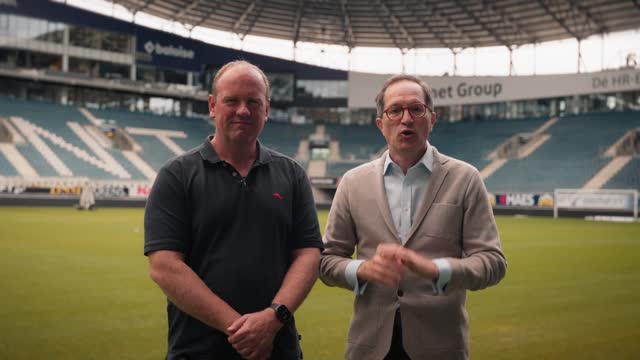
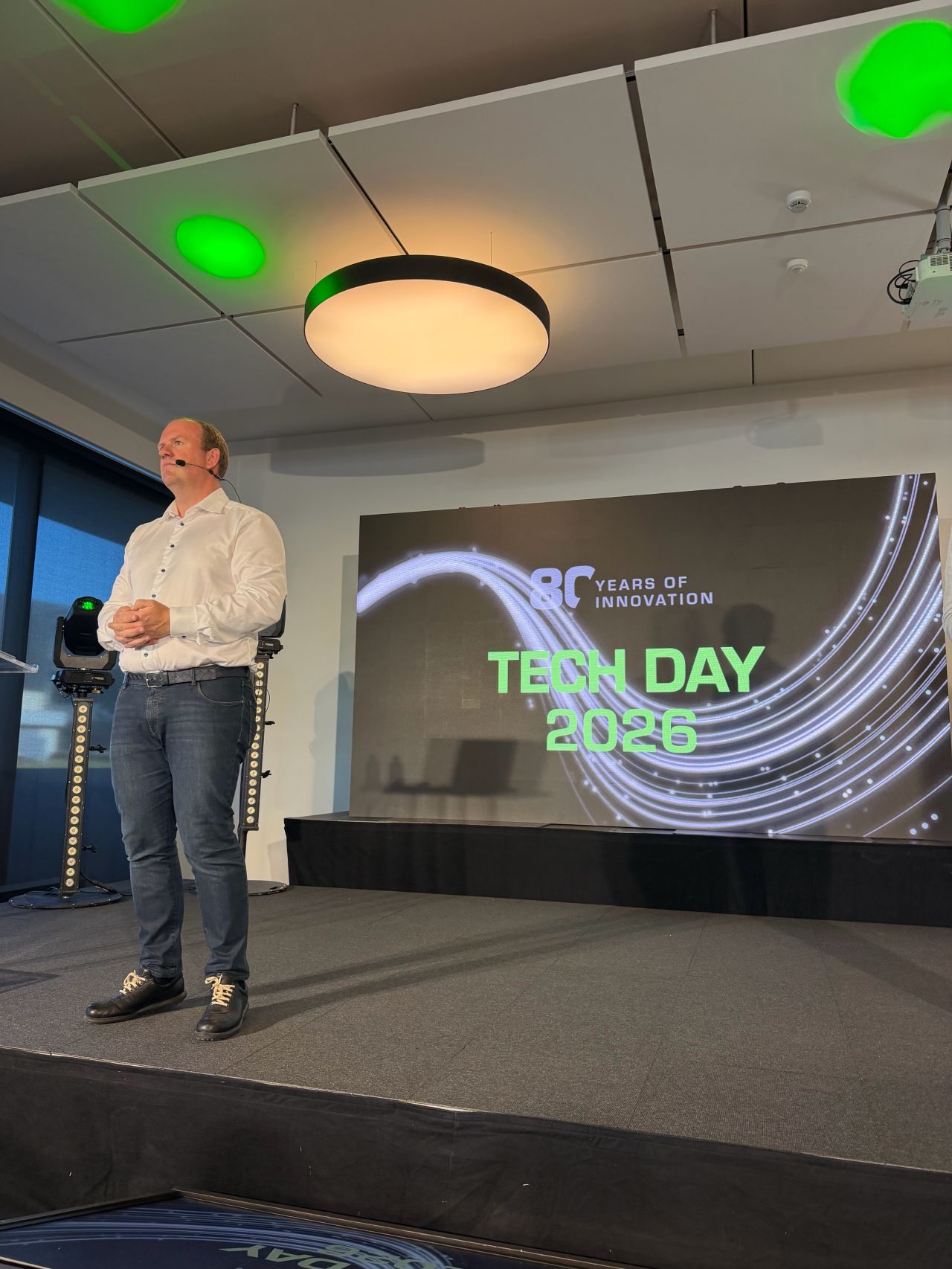
- Yesterday we celebrated 80 years of Televic, mission-critical technology in both hardware and software. With innovation as one of its core values, celebrating through a Tech Day and cross-team hackathons was exactly right! Open your lens onto the world said Steven Van Belleghem after convincing us once again of investing deeply in deep loyalty with your customers. (Not that we needed convincing ;)). Pascal Coppens made us understand China better, offering us a hopeful lens onto the world and make us see Chinese culture from an
- What will your organization look like in 2040? What will customer experience look like in 2040. I'm working really hard on a view on the future of customer relations and happy to share those new insights in our brand new nexxworks masterclass. We won't just look at customers in 2040, we will also explore tech, China, Geopolitics... In just one day, you will get a full view on the future to prepare your organisation for the day after tomorrow. On December 4th, I'm organizing the 2040 Masterclass with nexxworks, alongside Peter De
- This summer I met one of the greatest storytellers in my life: Massimo Bottura. Massimo is one of the best chefs in the world. The secret of his success: amazing storytelling. When he presents a dish, it's not about the ingredients, it's about a memory of his childhood, a great piece of art that inspired him... His hotel, Casa Maria Luigia, where they have about 30 rooms is one big storytelling paradise: from the gym (with his car collection) to the garden, to his balsamico vinegar... it is all story based. I love this quote:
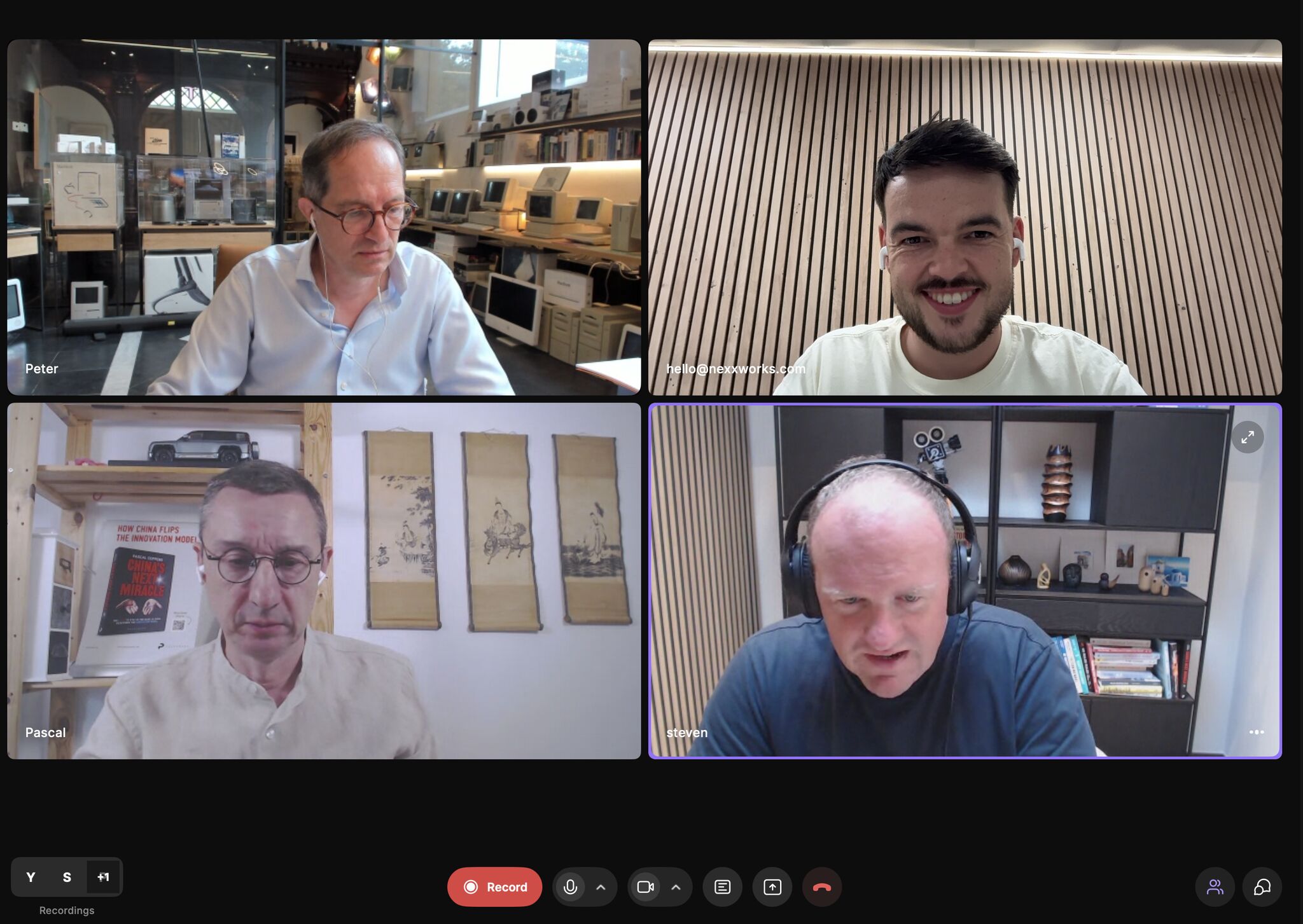
- We just finished our recording of a new episode of RADAR. Back after our summer break. As always: good times and great conversations with Peter Hinssen and Pascal Coppens
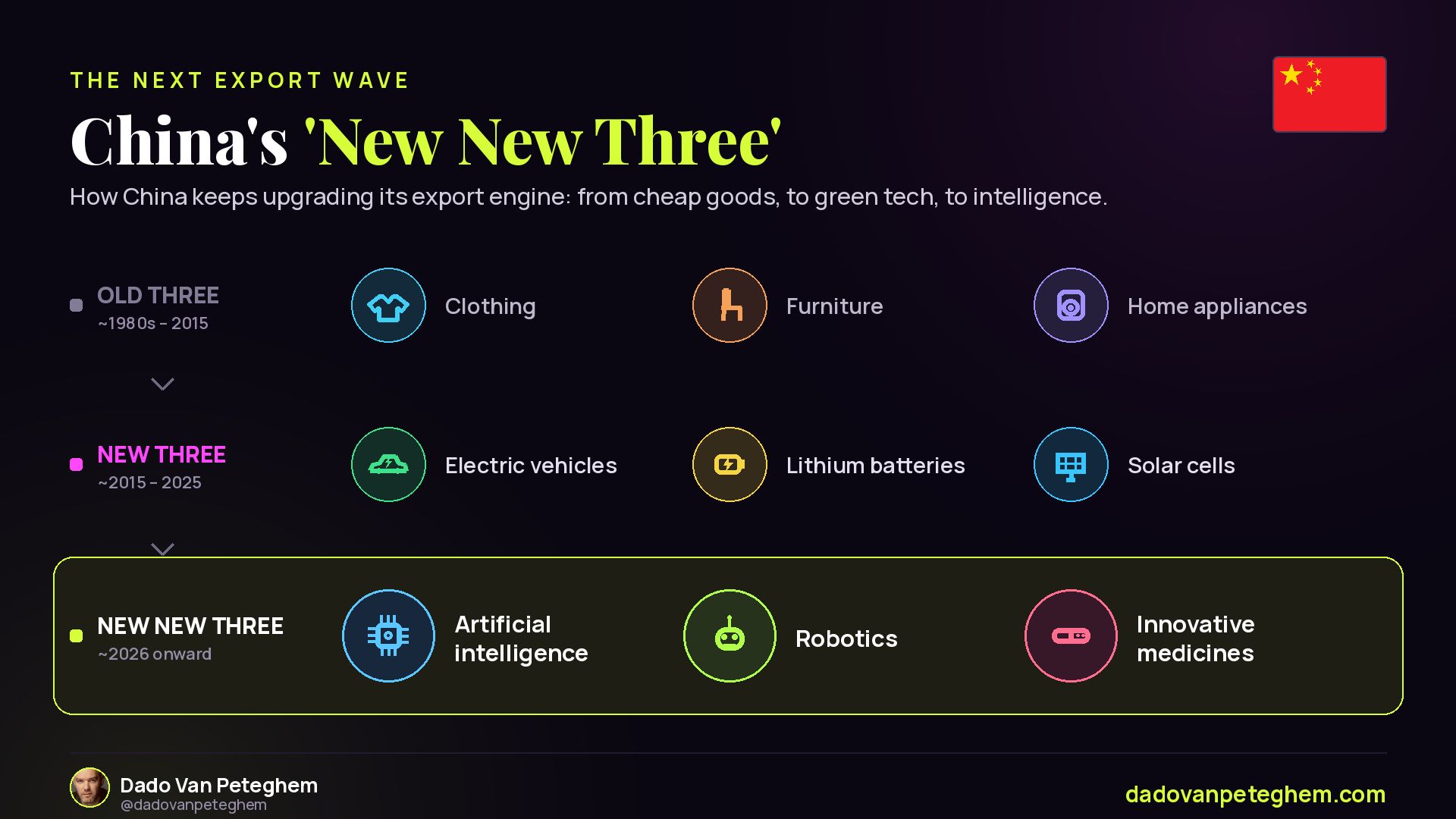
- Old Three, New Three, and New New Three are China’s successive export “calling cards.” They mark a shift from cheap labor to green manufacturing to innovation-driven capability. 📺 Old Three (老三样): Clothing, furniture, home appliances Rough period: 1980s–mid-2015s (still large in volume today) China became the world’s factory for apparel, furniture, and white goods by scaling low-cost production, land, and energy. By the 2000s they were the stable backbone of exports: China became the top furniture exporter around 2006; home
This page shows public professional information only, each fact cited. Is this you? send a correction, or ask for removal within 24 hours, no questions asked.