Overview
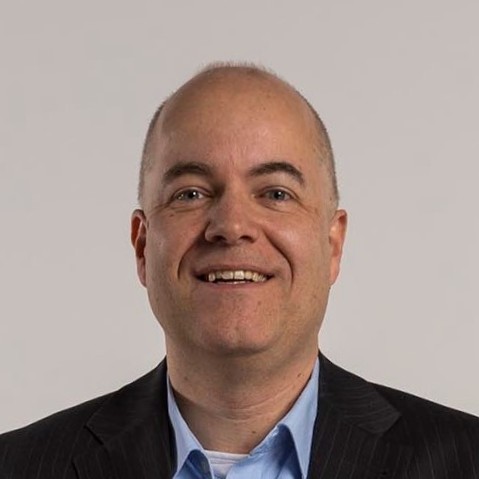
Peter Hinssen has built one of the most distinctive careers in European business thought leadership. He co-founded Nexxworks in 2015 with Steven Van Belleghem and Rik Vera, creating a platform that combines innovation advisory, keynote speaking, and executive education.
Before Nexxworks, Peter founded and sold two technology companies. His first, Porthus, was sold to Belgacom. His second, n-side, was sold to Alcatel-Lucent. These exits gave him the founder credibility that underpins his advisory work. He also served as Entrepreneur-in-Residence at McKinsey.
He has authored six books on technology and business strategy, including "The Day After Tomorrow," which argues companies must simultaneously optimize for today and build for an exponentially different future. With 188K+ LinkedIn followers, he operates at a scale few Belgian voices reach.
Talks about
Insights & ideas
The through-line
Peter Hinssen's whole argument rests on a single reframing: what most executives experience as turbulence is not weather but climate. "Wat als dit geen storm is? Maar eigenlijk het nieuwe klimaat." [1] From that premise everything else follows. If change is permanent, then the instruments built for stable periods stop working, waiting stops being prudent, and uncertainty stops being a threat to be absorbed and becomes raw material. "Hoe meer dat je als ondernemer dat ziet als een wapen, hoe meer dat you can weaponize uncertainty," he says [1], and in the same spirit: "In plaats van daarover te jammeren en over te zagen en te hopen dat het weer eens normaal gaat worden, laat ons dat gebruiken. Laat ons dat als brandstof zien." [3]
The tone is consistently forward-leaning. He calls himself "een soort pathologische optimist" [2][3] and holds that "technologie ons niet slechter gaat maken, maar beter gaat maken. Dat we die wereld beter gaan maken door innovatie. Maar dan moeten we wel durven en het omarmen." [1] What has sharpened over time is the near-term realism inside that optimism: he now expects a year of disillusionment before the payoff, and he is markedly more worried about Europe than about the technology.
On the never normal and the cost of waiting
The economics of the moment, as he reads them, have inverted. "We leven in een wereld waar the cost of doing goes to zero. En in die nevermal is wachten. The cost of waiting is catastrophic." [1] The reason waiting still feels rational is a genuine dilemma he keeps returning to: "Hoe langer je wacht, hoe duidelijker het signaal is. Maar hoe langer je wacht in een wereld die snel verandert, hoe minder opties dat er zijn." [2][3] Clarity and optionality trade off against each other, and companies have to consciously rebalance that trade rather than default to more evidence.
His recipe for operating under those conditions is a holy trinity: anticipate, by keeping roughly 10% of your time open to new things; agility and adaptability; and resilience [1]. The pace justifies the urgency. Adoption S-curves that used to run 20 to 30 years, following Carlota Perez's slow-fast-normal pattern, now compress into two or three, driven by capital flywheels, with ChatGPT reaching 10% of the world's population inside three years [2][3]. Not every curve moves at that speed, self-driving cars took 14 years to travel from "wow" to normal [3], but the overall shift is one he sizes bluntly: "Het gaat 10 keer sneller en 10 keer harder dan de industriële revolutie." [3] He would not trade back. "Stel dat ik nu met wat ik nu weet zou moeten teruggaan naar 2002, I would probably die from boredom." [2][3]
On killing the budget and rediscovering scenario thinking
The annual budget takes the heaviest fire. "Het budget, dat is het meest archaïsche instrument ooit geweest... heel veel fake news in Excel." [2] Enormous organisational energy goes into building a 2025 budget in November 2024, and by March 2025 it belongs in the bin [1][2][3]. His replacement is scenario thinking, which he treats as a recovered capability rather than a new one: Peter Schwartz's team pioneered it at Shell during the 1970s oil crisis, and companies now need to rediscover it as a weapon against uncertainty [1].
Scenario thinking has a precondition most leaders skip. Ring-fence 10% of your time, about five hours in a fifty-hour week, for "the day after tomorrow": reading and exploring outside your own echo chamber and comfort zone. Without that input you simply never pick up the weak signals that scenarios are built from [2][3]. He also frames the governance gap itself as commercial territory. Large companies cannot cope with constant change and lack the tools to govern it, which is precisely where the entrepreneur's opportunity sits [1].
On AI as gold rush, and the disappointment coming first
He reads the tech elite's relentless positivism as a function of incentive rather than insight: they know this is the land grab. "Dit is the Gold Rush and we can become incredibly rich if we find a way to leverage this." [2] The flip side of that sentence is the harder one: "But if you're not the 0.1% you're a peasant." [2][3] Against that, doomers like Harari are overly negative; the truth sits in between and both camps deserve to be taken seriously [2]. His sense of the money involved is deflating by design: a sum that sounds enormous in a European context is "probably what Sam Altman spends on aftershave" [2][3].
Near term, he predicts a reckoning. 2026 will be characterised by disappointment, because companies are trying to "buy their way into a more productive future" with Copilot licences while their information housekeeping, skills and competences are not in order [2][3]. His deflating principle: "Het is ook maar een IT technologie en in IT is er maar één regel en dat is garbage in, garbage out." [3] That is a forecast about implementation, not about the technology's ceiling. Even if the AI bubble bursts, he expects the market to recover far faster than after the dotcom crash, which took seven to nine years [1]. And on the long arc he is unambiguous: "In mijn ogen zitten wij in de eerste drie jaar na de gebruders Wright. En wat wij nog gaan zien in de volgende 63 jaar en zal misschien zelfs korter zijn is nothing short of spectacular" [1], noting that only 66 years separated the first flight in 1903 from the moon landing in 1969 [1].
On using AI yourself
His advice to anyone who feels behind is deliberately small: take a Claude subscription from Anthropic at 20 to 30 euros a month and start experimenting, because that is the fastest way to catch up [1]. He practises it. He wrote his sixth book with Claude and ChatGPT as two sparring partners, saved an estimated 20 to 30% of the time, and says he would never write a book without AI again [1]. On the vendors, he rates Anthropic's enterprise focus above OpenAI's stretch from B2C into B2B, on the simple logic that free ChatGPT prompts burn compute money while enterprise customers build significant revenue [1].
He also resists the blanket dismissal of AI output. "AI slop" will develop nuances and dimensions: some of it is dangerous disinformation, but tools like Sora also act as a creative amplifier for witty, funny people who could never draw or produce anything before [2][3].
On scaling intelligence instead of headcount
The structural change he thinks matters most is how growth gets measured. Intelligence-native companies no longer count full-time equivalents; they count how they scale intelligence, and agents let a company grow without growing headcount [1]. This is the mechanism behind his claim that AI-native, smaller, faster firms win. It sits alongside a geopolitical variant of the same logic: China's push into humanoid robots, automation and AI is driven by a long-term Nordstar, since the demographic aging caused by the one-child policy forces the country to capture knowledge for the next generations [1].
On behaving like a venture capitalist, not private equity
Established companies, in his view, reason like private equity when they should act like venture capitalists: dare more, experiment more, ruthlessly kill what doesn't work, and pile resources onto the home run [1]. The corollary is that big bets are only worth making if you intend to harvest them. Xerox PARC invented the mouse, the PC, the graphical user interface, Ethernet and the laser printer, Xerox commercialised none of it, and Steve Jobs hired 70% of its people [1]. Moonshots you don't use are dangerous.
On Europe
Europe's problem is emphatically not talent. Top AI scientists are Europeans, they just work for Google, Amazon and Microsoft [2][3]. The failures are fragmentation, a habit of debating rules while others play full offense, and a capital market unwilling to take big bets [2][3]. The result is an ambition ceiling he finds unacceptable: "De grootste hoop van een Europese scale-up vandaag de dag is to be acquired by a US big tech. En dat zou niet mogen zijn." [2][3] The DeepSeek moment is his emblem of the missed chance, since training a model as good as OpenAI's with far fewer resources could equally have come out of Mistral in Paris, and would have given Europe much greater élan and drive [2][3].
Underneath sits a governance concern. Technology can no longer be quarantined as a nerd topic; it now merges with politics, society, psychology and geopolitics into one connected discussion, and there are far too few policymakers who understand what is actually happening [2]. He also flags the sector where the curve has not yet bent: healthcare still lags, despite being potentially the biggest disruption of our lifetime if AI, digitisation and data are genuinely deployed there [2][3].
On entrepreneurship, selling and hanging in there
When he invests in startups, one criterion decides it: can the founder sell? That commercial instinct cannot be studied for [1]. He learned it himself from his mentor Luc Osselaer, a communications entrepreneur, who taught him as an engineer how to sell, including how to stretch the truth to win clients before you have any references [1]. The founder's life is not romanticised. "You get fired from your own company" is stated flatly as part of the experience [1]. So are the dark stretches: "Er zijn zeker momenten, zeker als ondernemer waar het ongelooflij zwart zit. Waar je denkt: 'There is no way out.' Wel, als ik één ding geleerd heb, there is always a way out. Blijven proberen. Hang in there because I think there is always a silver lining." [1]
For the decade ahead he names one skill above the rest: curiosity, paired with critical thinking to stay grounded [1].
Takeaways
- Treat volatility as the new climate rather than a passing storm, and convert it into an asset: "hoe meer dat je als ondernemer dat ziet als een wapen, hoe meer dat you can weaponize uncertainty" [1].
- Retire the annual budget as a steering instrument. It is "heel veel fake news in Excel" [2], built in November and worthless by March [1][3]; replace it with scenario thinking of the kind Peter Schwartz's team developed at Shell in the 1970s [1].
- Protect 10% of your time, roughly five hours a week, for "the day after tomorrow" outside your echo chamber, because without that input you never collect the signals scenarios require [2][3].
- Resolve the timing dilemma deliberately: the longer you wait the clearer the signal, but the fewer options you retain, and in a world where the cost of doing goes to zero "the cost of waiting is catastrophic" [1][2][3].
- If you feel behind on AI, start with a 20 to 30 euro monthly Claude subscription and experiment; he wrote his sixth book with Claude and ChatGPT as sparring partners and saved 20 to 30% of the time [1].
- Expect 2026 to disappoint companies that tried to buy productivity with licences, because "in IT is er maar één regel en dat is garbage in, garbage out" and data hygiene, skills and competences come first [2][3].
- Measure growth in scaled intelligence rather than full-time equivalents; agents let a company expand without expanding headcount [1].
- Run innovation like a venture capitalist rather than private equity: more experiments, ruthless killing of failures, resources piled on the home run, and remember Xerox invented the mouse, PC, GUI, Ethernet and laser printer and commercialised none of it [1].
- When backing founders, weight one thing above all: whether they can sell, an instinct that cannot be studied for [1].
In the news
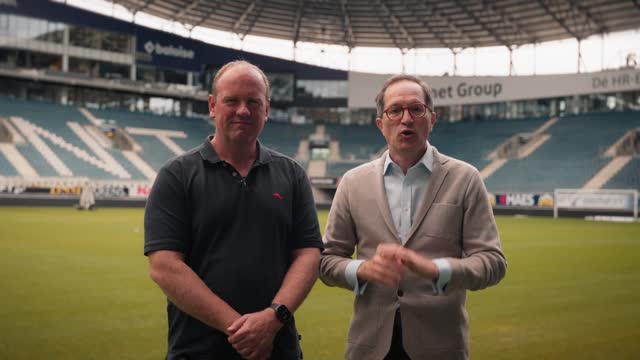
- What will your organization look like in 2040? What will customer experience look like in 2040. I'm working really hard on a view on the future of customer relations and happy to share those new insights in our brand new nexxworks masterclass. We won't just look at customers in 2040, we will also explore tech, China, Geopolitics... In just one day, you will get a full view on the future to prepare your organisation for the day after tomorrow. On December 4th, I'm organizing the 2040 Masterclass with nexxworks, alongside Peter De
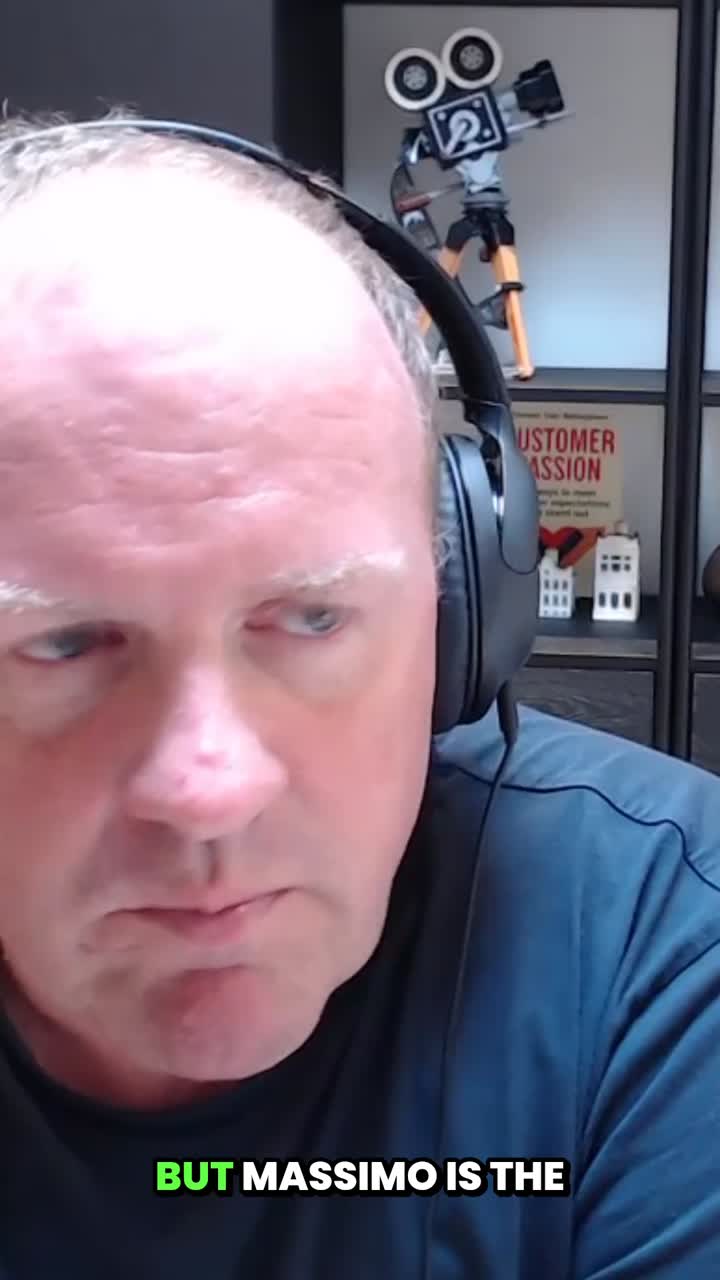
- This summer I met one of the greatest storytellers in my life: Massimo Bottura. Massimo is one of the best chefs in the world. The secret of his success: amazing storytelling. When he presents a dish, it's not about the ingredients, it's about a memory of his childhood, a great piece of art that inspired him... His hotel, Casa Maria Luigia, where they have about 30 rooms is one big storytelling paradise: from the gym (with his car collection) to the garden, to his balsamico vinegar... it is all story based. I love this quote:
- Bijna niet te geloven hoe snel de tijd vliegt. Ik zie ons, terug in 2013/2014, nog altijd starten met ons eerste echte NLP- en machinelearningproject. Het doel was toen om uit wetteksten en verslagen van rechtbanken automatisch gestructureerde informatie te distilleren en op basis van patronen voorspellingen te doen. Vincent, do you remember? Vandaag denk je: één upload, een goede prompt of een API-call, en je bent al een heel eind onderweg. Toen was dat meer dan 100 mandagen werk. En, voor het jonge CROPLAND niet
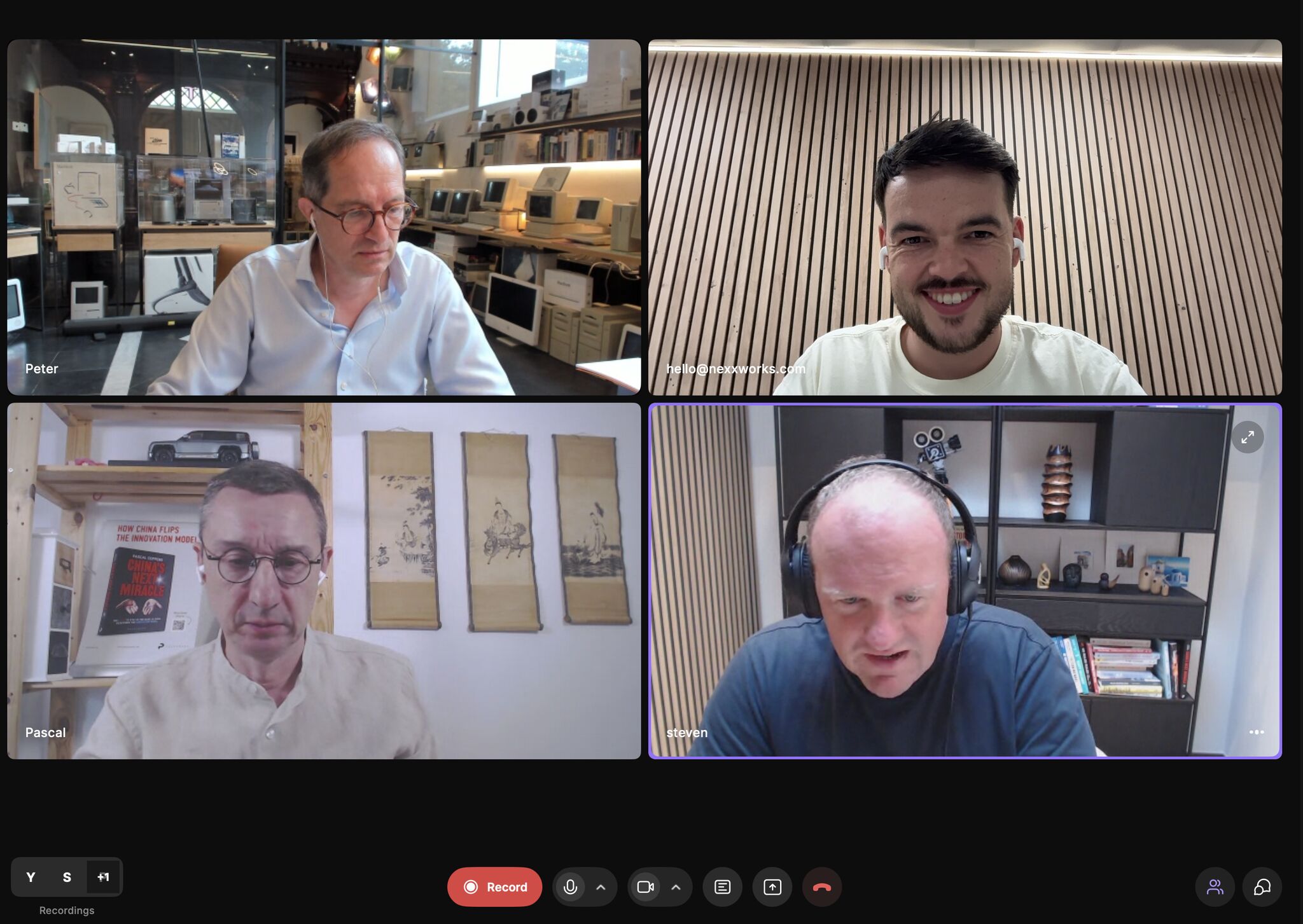
- We just finished our recording of a new episode of RADAR. Back after our summer break. As always: good times and great conversations with Peter Hinssen and Pascal Coppens
- Balance is not a destination Peter Hinssen calls it "the never normal": we are not going back to an old normal. There is no resting point anymore. In a recent episode of our podcast, Geert Vromman Vromman and Lara Snauwaert (partner at VGD ) turned that statement into something concrete. Many people and organisations search for balance, but treat it as a fixed point they will one day reach. Balance is really a skill: the ability to move along with the waves that keep coming. For organisations working with AI, that is a useful
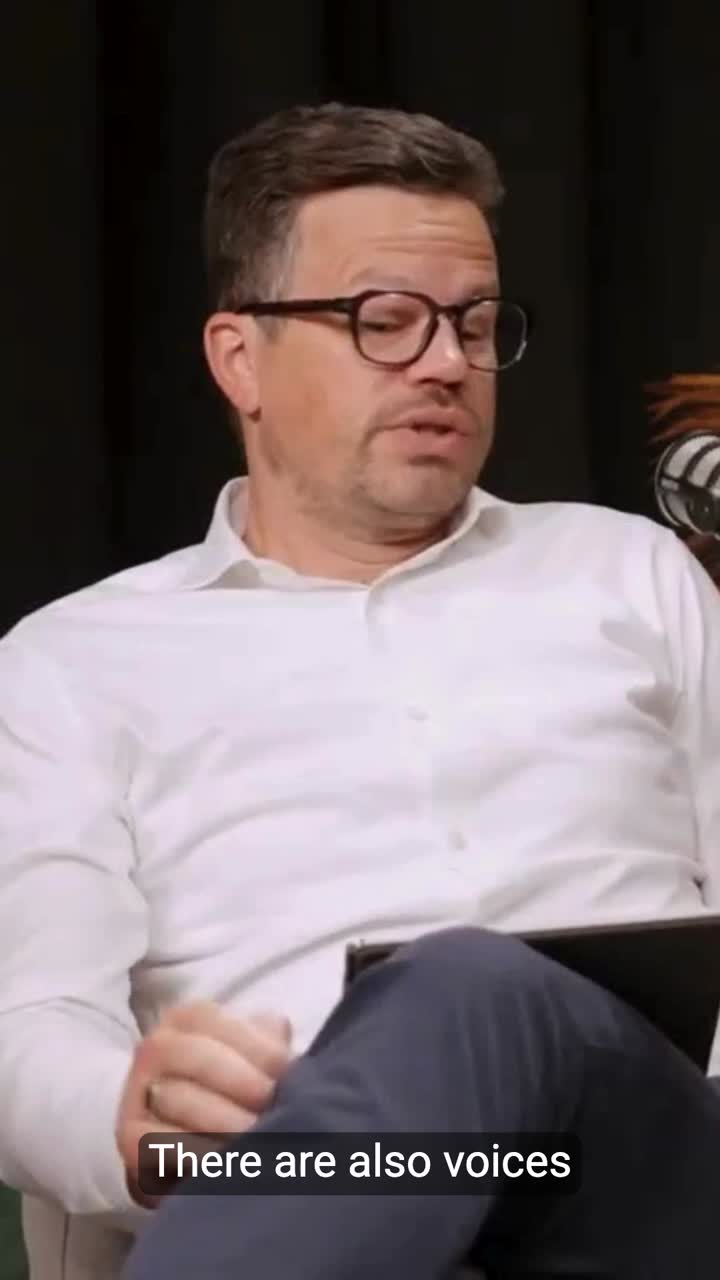
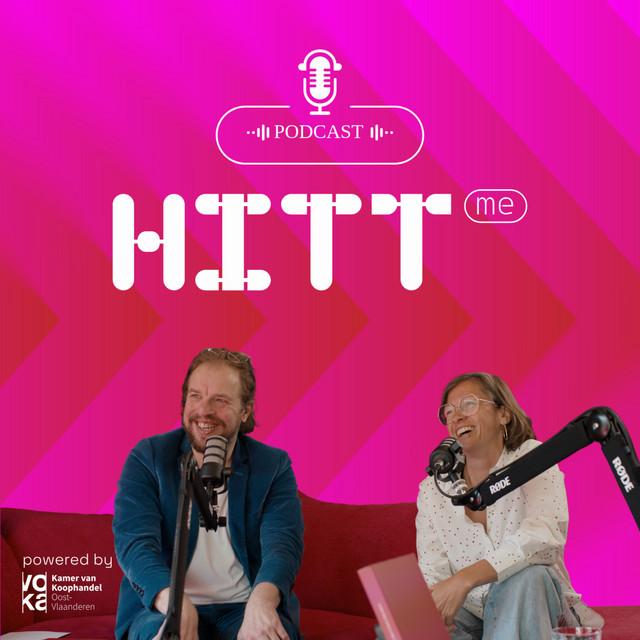
- Proberen te behouden wat er is, brengt je nooit de oplossing voor de toekomst. Daarom een gloednieuwe podcast waar we in 8 afleveringen de toekomst bekijken voor Gent & Oost-Vlaanderen: HITT ME met Jan Jaap en Hilde. Oost-Vlaanderen is vandaag een van de meest competitieve regio’s van Europa. Maar dat was niet altijd zo. In de jaren vijftig was onze provincie zelfs de armste van België. Wat zorgde voor de ommekeer? En vooral: wat kunnen we daaruit leren voor de komende 25 jaar? Geert Moerman trapt af met een korte economische
Related profiles

This page shows public professional information only, each fact cited. Is this you? send a correction, or ask for removal within 24 hours, no questions asked.