Overview
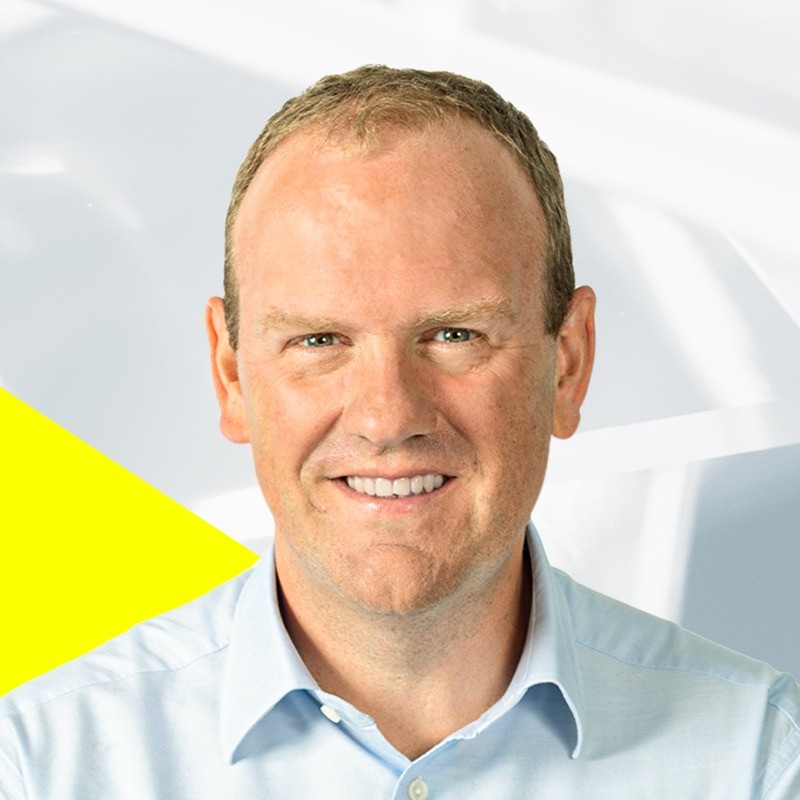
Steven Van Belleghem co-founded Nexxworks in 2015 alongside Peter Hinssen and Rik Vera, positioning himself as the customer experience and AI voice within the trio. He is based in the Ghent area (Aalter) and holds a professor position at Vlerick Business School.
He has delivered more than 1,000 keynotes across 40+ countries, making him one of the most traveled Belgian speakers globally. His book "A Diamond in the Rough," published in 2024, was ranked the Forbes #1 must-read business book of that year.
Steven's content focus sits at the intersection of AI adoption and customer-centricity, a position that resonates strongly with enterprise audiences navigating Digital Transformation.
Talks about
- Entrepreneurship
- Silicon Valley
- Customer Experience
- Artificial intelligence
- Autonomous vehicles
- Future of work
- Disinformation & deepfakes
- Smart Cities
Insights & ideas
The through-line
Everything Steven Van Belleghem argues comes back to one claim: the thing companies compete on in customer experience is about to change hands, and most of them are preparing for the wrong contest. Good service used to be scarce, and scarcity created value; AI removes the scarcity, so "de core van wat dat AI doet in customer service is goede service veranderen in een commodity" [8]. He reaches for analogies from earlier commoditisations, the film roll of 12, 24 or 36 shots where each holiday picture was chosen and printed, against the thousands of near worthless photos on a phone today, and the shift from snail mail to email [4]. The conclusion is blunt: "Good customer service will no longer be a differentiator. It is becoming hygiene" [4]. What replaces it is deep loyalty and community, customers feeling proud to belong to a brand, and experiences "that feel truly individual, relevant and valuable" [4][8].
The shift over time in his own thinking is one he names openly. When *When Digital Becomes Human* appeared, people said they would rather have no empathy at all than programmed empathy; ten years later, "vandaag zijn wij allemaal klaar, zeggen wij van: geef ons maar een vriendelijke computer boven een onvriendelijke mens" [9][10], and studies now show consumers often find ChatGPT more empathetic than human agents [10]. Around that reversal he keeps a steady counterweight: the human ingredients of culture, leadership behaviour and generosity, which no amount of automation supplies. He is also candid that none of this was a plan. "Als ik kijk naar mijn carrière, dat is allemaal eigenlijk een opeenstapeling van toevalligheden. Alles is toevallig gelopen. Het is niks gepland geweest" [8].
On why AI makes service a commodity and loyalty the battleground
The argument has a clean sequence. Frictionless service becomes achievable for everyone, which means achieving it stops earning anything; it becomes a hygiene factor [4][8]. The next era of CX, on his account, is not about managing interactions and touchpoints at all [7], and companies are stuck repeating the same loop while AI transforms the ground under them [7]. What comes after commodity service is deep loyalty: customers who are proud to belong, and community as the differentiator [8]. He is watching the tooling side of this closely, following ElevenLabs since visiting them in Silicon Valley and noting how fast they are moving in customer service [6].
He also flags a mismatch between what companies say AI is for and what people use it for. The updated HBR study on LLM usage by the average human shows the paradox plainly: "companies talk only about efficiency in their AI discussion, customers mainly go for emotional use cases" [2]. That gap is the same gap his loyalty argument exploits.
On agentic AI and the end of apps
Agentic AI is the shift he treats as categorical. "Agentic AI is een AI tool die in jouw naam acties kan uitvoeren" [9][10]. The distinction from a chatbot is doing rather than talking: selecting, buying, booking, paying with your credit card. "Het is niet meer communicatie. Het is handelen in jouw naam en dat is een stap verder" [9]. The ChatGPT moment for acting agents has not happened yet, and he places it in 2025 to 2027 [9][10]. Further out: "Ik zie binnen 10 jaar de rol van apps vervangen door Agents" [9][10], a financial agent instead of a banking app, a travel booker instead of booking.com, driven by voice commands of the kind you would give an employee [9][10]. He does not pretend the trade is costless. "Je legt uw leven in handen van een algoritme" [9][10].
On the 99/1 moments
His framework for human contact is arithmetic. In 99% of interactions customers want nothing but efficiency, and that can be automated; the remaining 1%, the complex, emotional and high-stakes moments, is where trust is built and business is won [9][10]. Hence the line he repeats: "De frequentie van menselijk contact tussen een klant en een bedrijf gaat enorm zakken, maar die paar momenten dat het nog menselijk is gaan enorm in belang toenemen" [9][10]. The operational consequence is severe, because every traditional service-centre KPI and training programme was designed for high-volume, low-stakes contact and should be thrown out [9][10]. The same logic drives his elevator attendant versus doorman test: automate the roles that only push buttons, but keep and invest more in the doormen whose presence adds welcome, safety and advice. Companies that automate both will regret it, as Klarna did [8].
On the gap between technical possibility and real adoption
He is a forecaster who distrusts forecast dates. "Het is niet zo moeilijk om de toekomst te voorspellen. Het is heel moeilijk om de timing ervan te voorspellen" [9][10]. Automating nearly all customer service has been technically possible for two years, and almost no company has taken a big step, because organisations need time and people to implement, and real-world adoption runs far behind Silicon Valley timelines [9][10]. The variable that best predicts a company's speed is whether the CEO personally uses and loves the technology, the same pattern he saw with Facebook advertising in the 2000s [9][10]. What Silicon Valley does supply is urgency: "Dat niveau van urgency is 3000 keer hoger dan hier in België. En dan worden de mensen zot en gaan ze naar huis en beginnen ze eraan" [8]. And his own read on the current moment is unambiguous: "Je voelt van this is the big one, hè. Hier is er heel veel aan het gebeuren en het is nu en we zitten op de eerste rij" [8].
On the 95/5 rule and hunting friction
The most practical part of his customer-centricity work is a correction of a cognitive bias. At most 5% of customers are unreasonable, but the brain overweights them, so companies write rules and procedures to protect against that 5% and end up punishing the 95% who are perfectly normal; the fix is to mentally accept the 5% and design for the 95% [8]. The same preference for the small and continuous shows in friction hunting: removing hundreds of tiny frictions a year beats one big transformation project, because it costs little, has immediate effect, and installs a win-after-win culture of attentiveness to customers [8]. He rejects the reflex that customer-centricity means giving things away. People will pay more for good service, extra services can be paid for, and simply offering them is already customer-centric [8]. He is equally against the instruction to say no more often, which starts a negative race to the bottom; the goal is the mindset and capacity to say yes more than today without saying yes to everything [8].
On leadership, employees and the first crisis moment
Culture change is 70 to 80% a leadership matter, decided in micro-communications and micro-decisions rather than programmes [8]. The mechanism he describes is unforgiving: employees will always choose an angry customer over an angry boss, because the customer leaves and the boss stays, so unless leaders visibly prioritise the customer relationship at the first crisis moment, employees optimise for pleasing the boss forever afterwards [8]. Underneath sits a simple dependency: "Klanten kunnen niet gelukkig zijn als medewerkers ongelukkig zijn" [8]. The real test he puts to leaders is whether the commitment survives cost: "Ben je bereid jezelf pijn te doen op de korte termijn om vertrouwen te kweken op de lange termijn? Customer first without compromise" [8]. And the standard is lower than most companies fear, because "een klant verwacht geen perfectie, hè. Een klant verwacht positieve intentie" [8].
On being micro-ROI negative and how good ideas die
Individual acts of generosity look like pure cost on a spreadsheet and pay back through leveraged word of mouth: Taylor Swift's personalised gifts to 50 fans, Stanley replacing a customer's burned car [8]. Being micro-ROI negative is a deliberate posture, and it has a known killer inside organisations. Meetings extrapolate risk until the idea dies, and the phrase that signals death is familiar: "Ik ga eventjes de advocate of the devil zijn. Als iemand dat zegt, dan weet je: het is game over voor het idee" [8]. He treats hesitation itself as decisive: "Op het moment dat je twijfelt, twijfel je eigenlijk niet meer. Dan ontbreekt je gewoon de durf om de volgende stap te zetten" [8]. The same nerve applies to downturns. Marketing budgets are cut first in a crisis, which is precisely when investing stands out most, and Airbnb and Uber were both born out of the 2008 crisis [8].
On running a big company that can still improvise
He does not accept that a large company can simply behave like a startup. You need both kinds of cook: Michelin chefs, the process-driven operators who run the machine reliably, and street food chefs who improvise, and the combination is what produces dependable delivery alongside innovation [8]. Startups get customer-centricity for free by using their own product relentlessly and spending deep time with early customers, the way Brian Chesky slept months a year in listings on his own platform, Airbnb [8]. Toyota's Woven City is his flagship case of day-after-tomorrow thinking with real budget behind it: one of the world's largest carmakers designing a future city with no room for the classic car, a playground for mobility innovations before exporting them to Tokyo or Osaka [9][10].
On work, jobs and purpose after automation
He treats AI job panic as a rerun. Women entering the workforce and the arrival of the internet added economic capacity and new jobs rather than displacing work one for one, and AI will do the same through a productivity leap and new company formation, including tiny teams building large companies and the possibility of one-person unicorns [9][10]. Culturally he pushes further: "Wij zijn opgegroeid dat het allerbelangrijkste in uw leven is uw werk. Ik vraag mij af of dat purpose per definitie gelinkt is aan werk" [10]. A hundred years of automation, from the dishwasher to ChatGPT, has moved time from what we must do to what we want to do, and AI is the next phase of that [10]. New safety perceptions form quickly too: in San Francisco many women prefer a driverless Waymo to a taxi with a strange driver [10].
On the books and the conversations around them
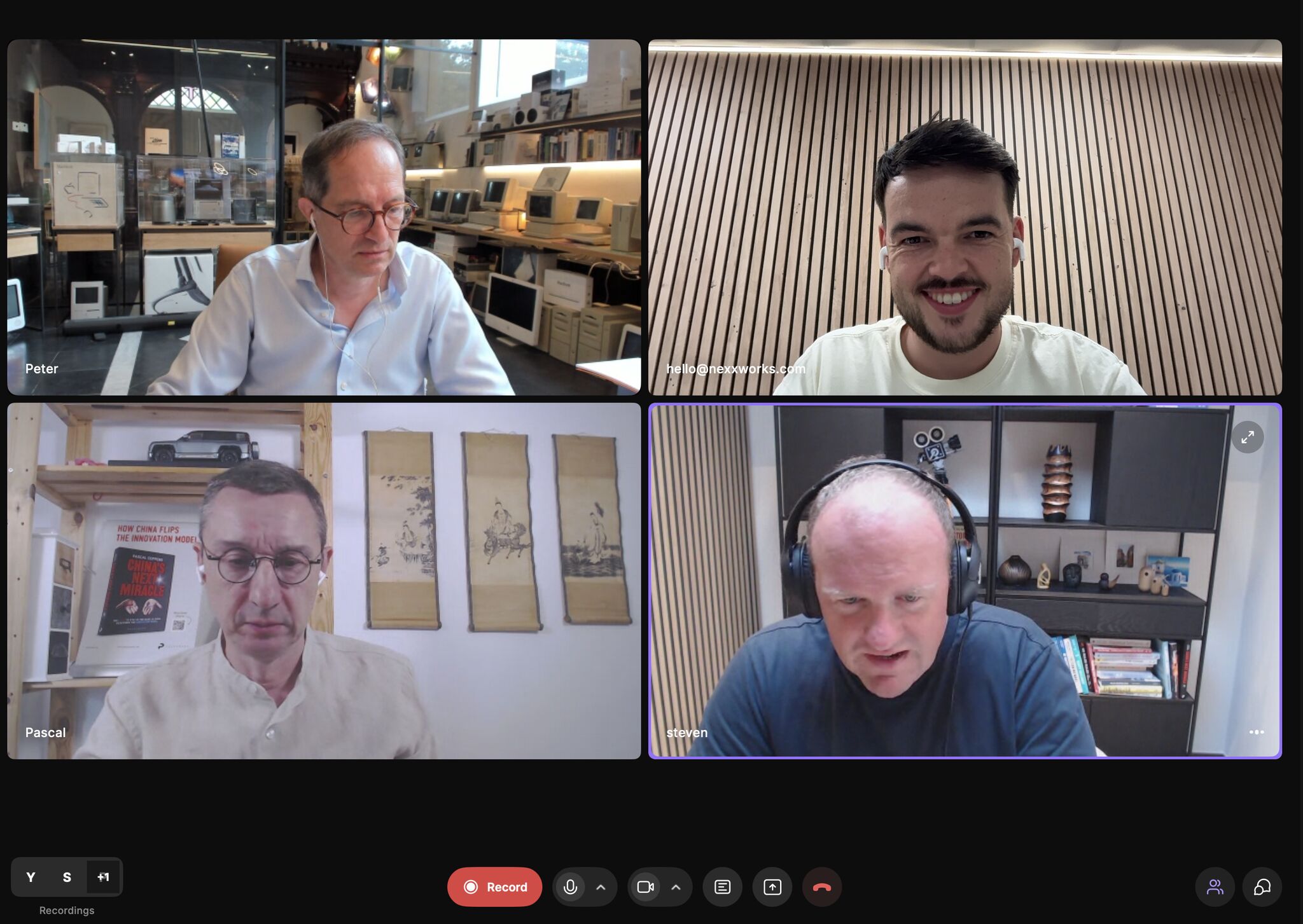
His 2026 output is three deliberately unlike books: the youth thriller *Take-Over*, fiction for children and teenagers sold through classic channels and his own site [1][5]; *Deep Loyalty*, on customer experience and AI, out at the end of October [1]; and a practical book on customer culture made with Uitgeverij LannooCampus, which began as an international remake of *De Ruwe Diamant* and ended up 70% new cases on customer-centric culture with 30% recognisable from the original, Dutch edition first and international versions to follow [1]. He calls it his most practical book [1]. Alongside the writing runs the monthly RADAR podcast with Peter Hinssen and Pascal Coppens, which reached its 50th episode after five years of conversations about the day after tomorrow, made with nexxworks, Julie Vens - De Vos and Laurence Van Elegem [2][3].
Takeaways
- Treat frictionless service as hygiene, not advantage: AI removes the scarcity that made good service valuable, so plan now for deep loyalty, community and pride of belonging as the differentiator [4][8].
- Design for the 95%: at most 5% of customers are unreasonable, and rules written to contain them punish everyone else [8].
- Hunt hundreds of small frictions a year rather than launching one big transformation; it is cheap, immediate, and builds a win-after-win culture [8].
- Automate the elevator attendants, keep and invest more in the doormen; companies that automate both regret it, as Klarna did [8].
- Rebuild service KPIs around the 99/1 split: 99% of contacts need only efficiency, and the 1% that are emotional or high-stakes now carry the whole relationship [9][10].
- Expect agentic AI, tools that act in your name rather than converse, to have its ChatGPT moment between 2025 and 2027, and to start displacing apps within ten years [9][10].
- Judge a company's AI speed by whether the CEO personally uses the technology; the same signal predicted Facebook advertising adoption in the 2000s [9][10].
- Be willing to be micro-ROI negative, and treat "I'll play devil's advocate" as the sound of an idea dying [8].
- Show employees in the first crisis moment that the customer relationship outranks the boss's comfort, or they will optimise for the boss permanently [8].
In the news
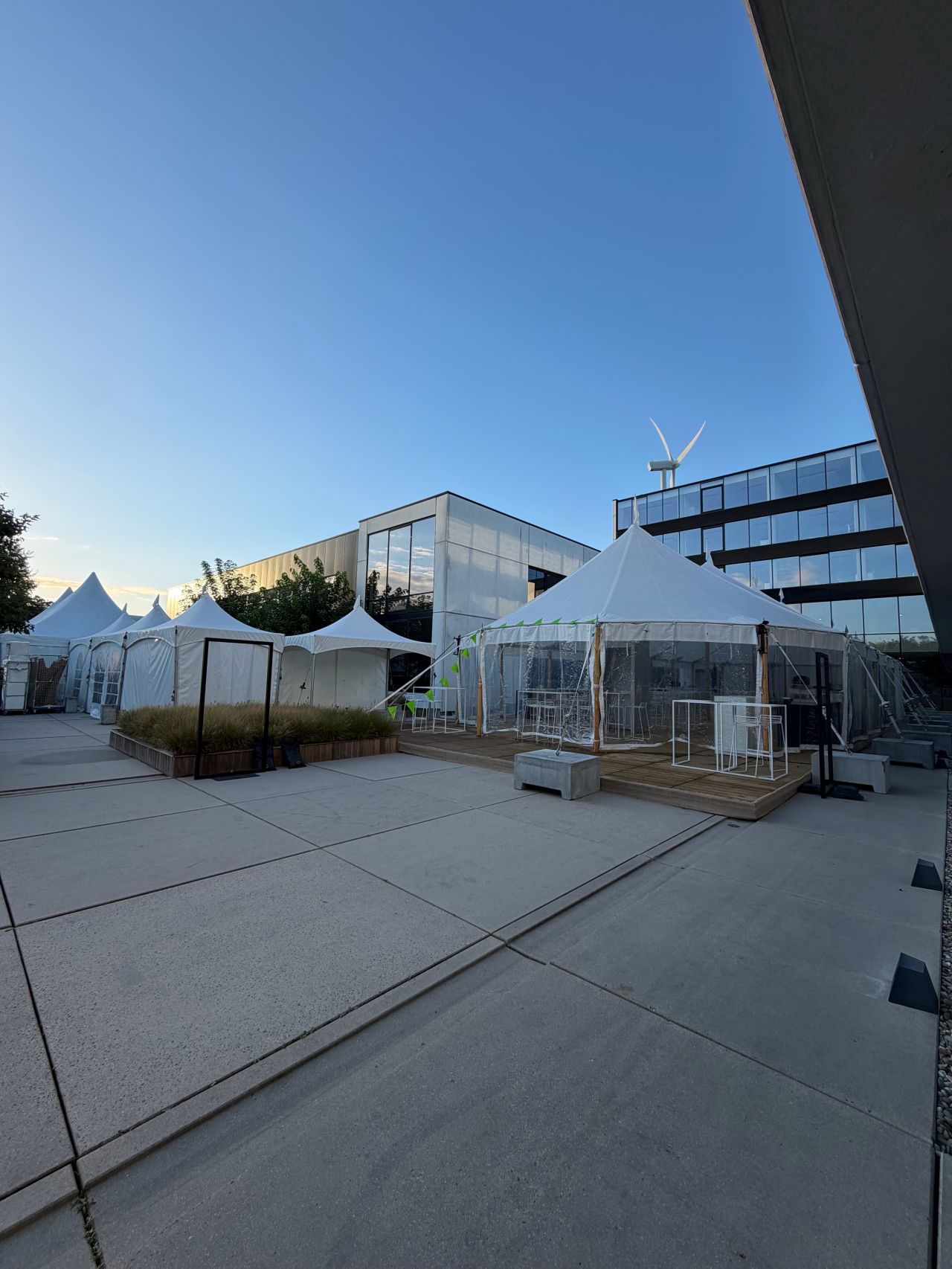
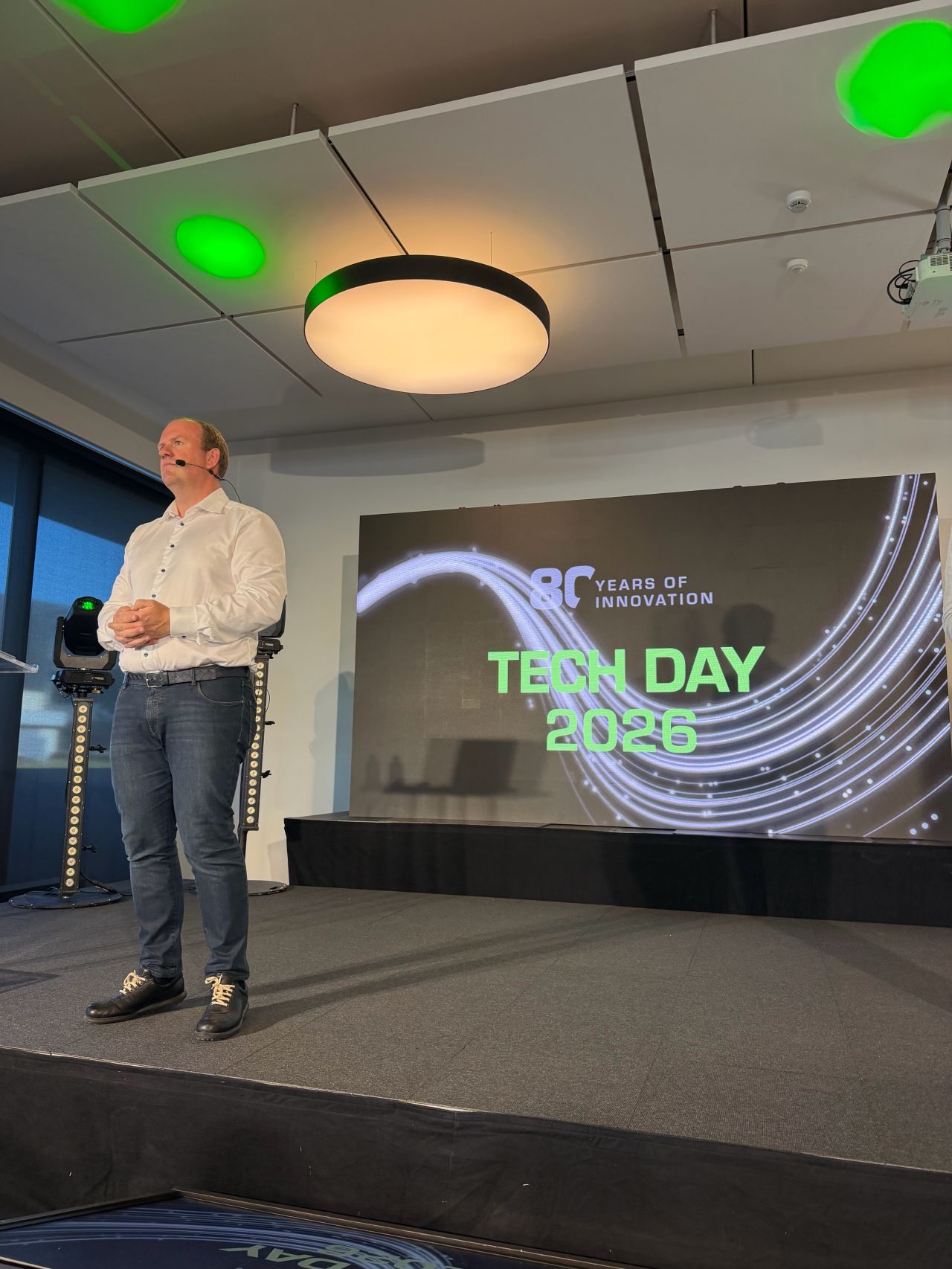
- Yesterday we celebrated 80 years of Televic, mission-critical technology in both hardware and software. With innovation as one of its core values, celebrating through a Tech Day and cross-team hackathons was exactly right! Open your lens onto the world said Steven Van Belleghem after convincing us once again of investing deeply in deep loyalty with your customers. (Not that we needed convincing ;)). Pascal Coppens made us understand China better, offering us a hopeful lens onto the world and make us see Chinese culture from an
- What will your organization look like in 2040? What will customer experience look like in 2040. I'm working really hard on a view on the future of customer relations and happy to share those new insights in our brand new nexxworks masterclass. We won't just look at customers in 2040, we will also explore tech, China, Geopolitics... In just one day, you will get a full view on the future to prepare your organisation for the day after tomorrow. On December 4th, I'm organizing the 2040 Masterclass with nexxworks, alongside Peter De
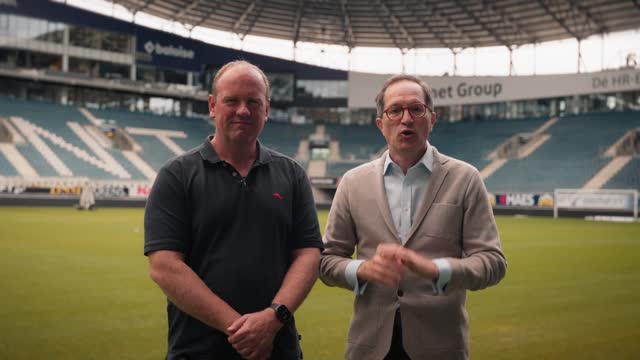
- This summer I met one of the greatest storytellers in my life: Massimo Bottura. Massimo is one of the best chefs in the world. The secret of his success: amazing storytelling. When he presents a dish, it's not about the ingredients, it's about a memory of his childhood, a great piece of art that inspired him... His hotel, Casa Maria Luigia, where they have about 30 rooms is one big storytelling paradise: from the gym (with his car collection) to the garden, to his balsamico vinegar... it is all story based. I love this quote:
- Some CX observations after almost four years of AI focus. 1. We are all talking about personalisation, but my feeling is that relationships are becoming more and more impersonal because of that personalisation. 2. Companies see AI as a tool to make customer journeys more efficient, whereas customers use AI for companionship, expertise and advice. 3. Buying journeys are changing rapidly because of new customer behaviour, but most organisations are still mainly focused on the internal possibilities of AI. 4. AI is making content and
- Many companies have lost the ability to make decisions based on intuition. Of course, it is smart to use data and all relevant information before making an important decision, but in certain moments, it's okay to use intuition. There is a chance that you will always choose the safe path if you just rely on data. The same goes for customer experience: you can have the best processes in the world, but now and then it's okay to leave those processes to help a customer if the context requires it. Leaving space for intuition in a

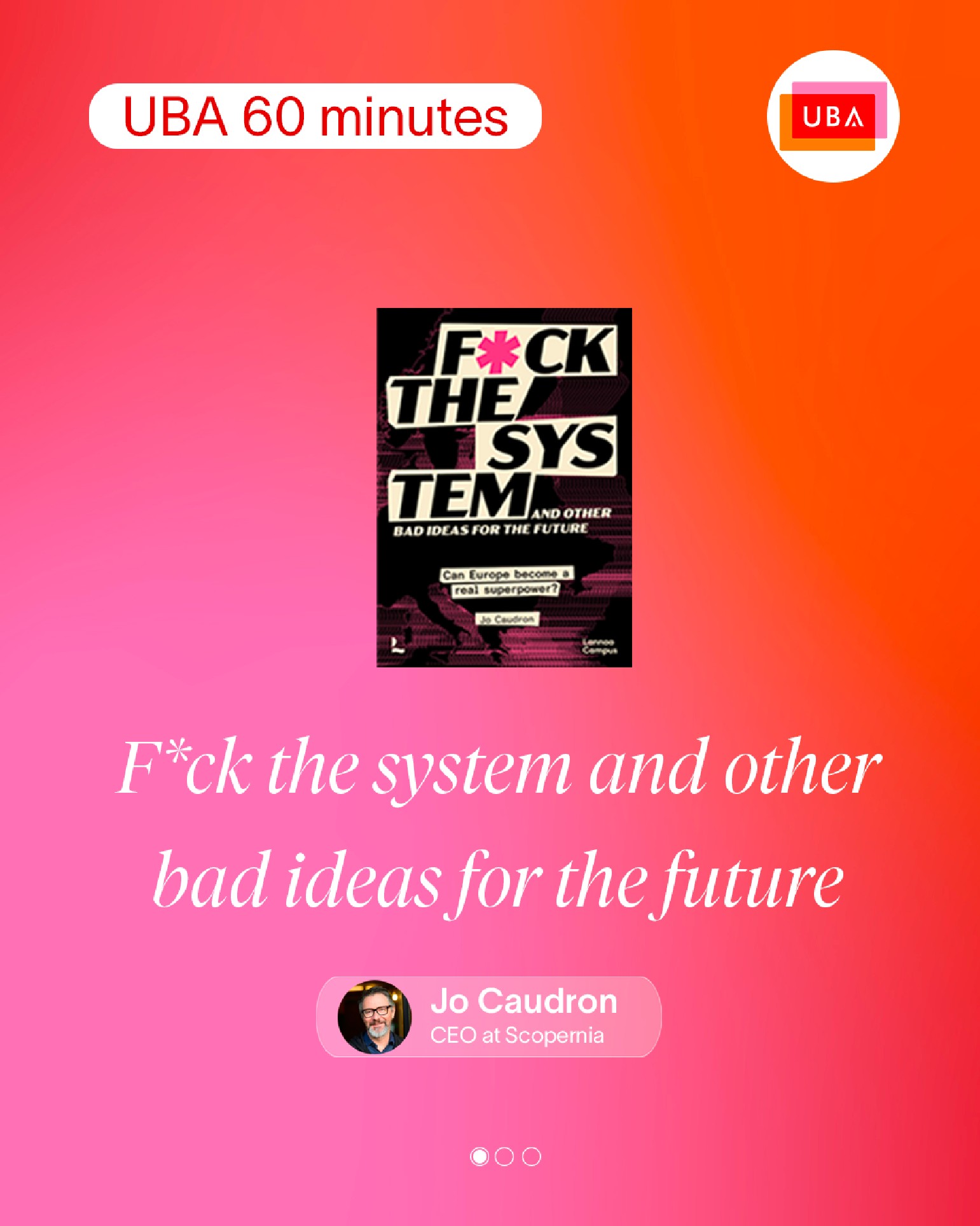
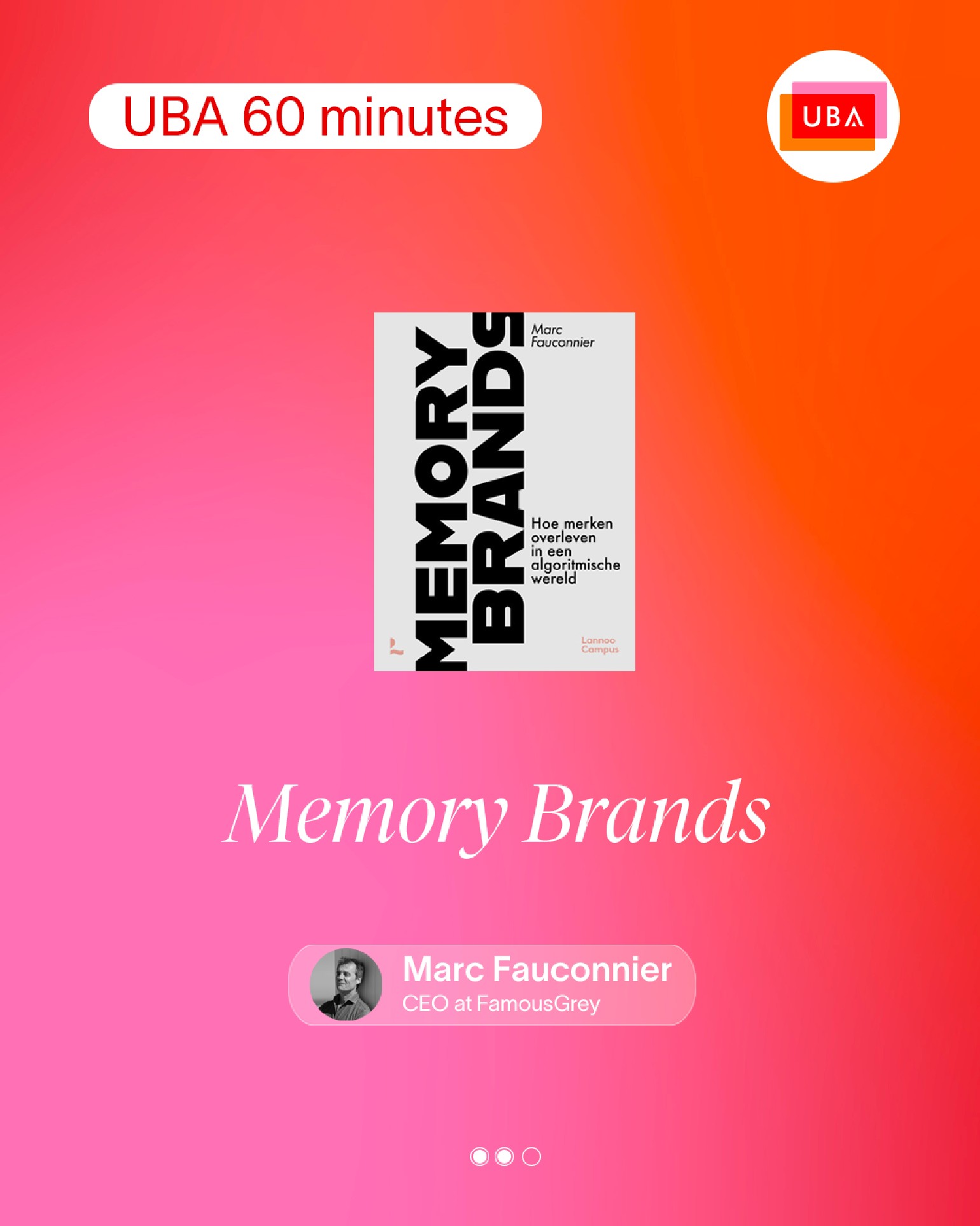
- Happy to kick this UBA Belgium book presentation series off. Curious to see how advertisers look at the current global turmoil and how Europe should act. Other October sessions by Marc Fauconnier and Steven Van Belleghem
- We just finished our recording of a new episode of RADAR. Back after our summer break. As always: good times and great conversations with Peter Hinssen and Pascal Coppens
- Does your company have non-scalable rituals or actions towards customers? And if you do, do you cherish those even if you can't really measure the concrete results of these rituals? That's a question I ask more and more during CX AI sessions. If everyone is so obsessed with automation and efficiency, it can be an opportunity to also move in the other direction. All automated processes will become very similar and thus more average. Average is forgettable for the customer, even if the process goes really well. Non-scalable
Related profiles


This page shows public professional information only, each fact cited. Is this you? send a correction, or ask for removal within 24 hours, no questions asked.