Overview
Van Eeckhout joined Easi in 2006 and was named co-CEO in 2019 by founder Salvatore Curaba. He has spoken publicly about the company's ownership culture and has contributed to the management book "De Gouden Tip van Ownership" about Easi's employee-shareholder model.
Van Eeckhout oversees the Flemish operations of Easi and shares strategic responsibility for software, cloud, and security services with Jean-François Herremans.
Talks about
- Leadership
- Company culture
- Employee Ownership
- M&A
- Scaling
- Artificial intelligence
- Work-life balance
- Succession
- Hiring & talent
- Exits
- Co Ceo Model
- Servant Leadership
Career history

Insights & ideas
The through-line
Everything Thomas Van Eeckhout says circles back to one conviction: growth is a people problem before it is a market problem, and the main obstacle to growth is usually the person at the top refusing to let go. "Wij zijn er echt heel erg van overtuigd dat het de mensen zijn die het verschil maken" [2]. From that follow the positions he repeats in every register: control does not scale, a CEO's job is to build context rather than answer every question, managers are grown internally rather than bought, and ownership is transferred to the people doing the work. He is blunt that companies of 15 to 20 people are usually braked by their own owner, whose ego is too large or whose grip too tight, because you cannot manage many people on the basis of control [3], and that this is why so many firms stall around 30 employees [1].
What has shifted is the scale at which he applies the same idea and how far into the future he pushes it. The early framing is personal and biographical: trust given to him by founder Salvatore Curaba, a surfer's theory of luck, ambition as something a company should cultivate rather than punish [3]. Later the same convictions come back as operating machinery: hiring 100 graduates at a time before the work exists, screening 4,000 CVs to do it, use-case-based AI adoption with measurable ROI, and acquisitions judged not on the deal but on the integration [1]. The other constant is his own exit. He has said for years that leadership must eventually step aside, first as an Exco agreement to leave at 52 [3], later as a personal ten-year horizon: if he does the job well, the company will outgrow his competencies [1].
On letting go of control
He treats control as a mathematical limit rather than a style preference. A manager can steer perhaps 10 to 30 people directly, and beyond that the only way forward is structure and context [1]. "Een organisatie neerzetten, dat betekent vaak ook de controle loslaten. Super belangrijk. Controle schaalt niet goed" [1]. The cost is accepting imperfection: "Ik geloof dat het beter is om los te laten, om te aanvaarden dat het soms 80 of 90% zal zijn in plaats van 100%. Maar door op die manier te werken gaan mensen veel meer voldoeningen halen uit hun job" [1]. A CEO who supplies an answer to every question is not being helpful, he is demonstrating a lack of trust in his own organization; the real role is creating the context in which people can be happy and successful [3].
The structural expression of this is deliberate flatness. There are never more than two layers between any employee and the CEO, team lead and manager, then Exco [1]. It also shapes how he spends his own week: 60 to 70% of his time goes to acquisitions, strategy and integration, because internal growth runs as business as usual without him [1]. The proof he offers is that he takes four weeks off every summer and is never called [1]. And he puts the challenge back on owners who resist: "Als ge dat nu niet wilt of niet durft, dan moet je misschien eens nadenken over: vertrouwen die mensen dan wel echt?" [2].
On never hiring external managers
Easi has filled every management position internally, a policy dating from a single failed external sales manager hire in 2009 that clashed on values and trust [2][3]. His reasoning is that you only really get to know people when things get difficult, so the company would rather grow slower than import someone unproven: "Liever trager vooruit gaan met de juiste waarde dan af en toe de sprint kunnen maken maar achteraf de schade moeten opkuisen" [2]. Seventeen years in, the entire management team has grown from within, with the side effect that leadership behaviour is copied from mentors rather than learned from a handbook [1].
Promotion into management is deliberately de-risked and reversible. A high potential first hires and coaches one junior, then a second, then joins management meetings, and only builds a team large enough to justify a management seat once they have discovered whether they actually enjoy the work, with a way back always available [1][2]. He rejects the single sales manager with 25 reports living in Excel; five managers each coaching five people produces better guidance, growth and end results, and those managers must keep selling themselves, 10 to 15 client meetings a month [2]. Once in the seat, managers are judged on growing the business, the team and their people [1]. The one concrete productivity habit he names for anyone hoping to be promoted is preparing every meeting consciously the evening before, since most meetings otherwise end in "we need more data" follow-ups that kill organizational speed [1].
On employee ownership
Roughly 100 of 400 employees are shareholders, a model that began pragmatically in 2011 when the founder sold shares to key employees using common sense rather than expensive consultants, and has been professionalized with each larger transaction [2]. Shares are bought with employees' own money, a minimum of €25,000, often borrowed from family, transferred from existing shareholders including the founder, never gifted as bonuses or options [1][2]. The commitment must sting: "Het is geen spaarpot, het is geen spaarrekening. We willen echt dat het een bewuste keuze is" [2]. There is a three-year stand-still, and candidates must score a minimum on company values [2]. Exco plus the founder retain around 70 to 75% so decision-making stays fast [1].
He is precise about what ownership does and does not buy. Shareholders get no extra rights, only more duties, and Easi is strict that there is no visible difference between shareholders and everyone else: "Ze hebben niet meer rechten, hebben meer plichten dan de andere" [2]. An early assumption that shareholders would stay longer turned out to be wrong, so the agreement was changed to require immediate sale on departure, keeping ownership with active employees only [2]. The real return is behavioural: 100 ambassadors who stop complaining at the coffee machine and spread positive behaviour, which he says is exactly as contagious as complaining [2]. And the sequence matters. Culture came first and the shares confirm it, rather than the shares creating the culture [2].
On hiring at scale and hiring for values
The growth engine started when a director proposed hiring 30 to 40 people at once before there was work for them; today it is 100 at a time, on the understanding that not hiring creates the problem a year later [1]. Recruiting 100 seniors in this market is close to impossible, recruiting 100 school-leavers is not, and the accepted trade-off is too-high turnover in the first two years when people chose the employer brand rather than the actual job [1]. The process is run on data: roughly 4,000 CVs screened per 100 hires, with 80% of offers accepted when it is done properly [1].
What is never traded away is values. "Wij gaan niemand aannemen als we niet overtuigd zijn dat die de juiste waarde heeft" [3]. Diplomas, by contrast, he treats as a filter that destroys value, eliminating a huge category of candidates and causing companies to miss gigantic potential in a tight labour market; Easi hired Belgium's best pizzaiolo without a relevant degree and he excelled [3]. He also wants ambition surfaced rather than hidden. Candidates are often ashamed to admit it in interviews, when in fact ambitious people who go on to realize their ambitions are almost always good for the business [3], and the way to keep them for decades is to align their personal ambitions with the company's, as when he led acquisition talks at 27 [2].
On career plans and the job-hopping myth
He does not accept job-hopping as a generational trait. It is created by employers who fail to offer perspective: high potentials need a proactive two-to-three-year career plan with transparent earnings prospects, and "als wij geen carrièreplan maken, dan zal onze concurrent het tonen" [1]. The same logic runs upward through the organization. Telling a 22-year-old they would have to wait 30 years for his seat offers no perspective at all, which is part of why he caps himself at roughly ten years as CEO [3].
On engagement, the office and removing friction
He names five fundamental human needs behind engagement: recognition, freedom and trust, transparency, mission and career planning, and love, meaning a personal connection with your manager. Happiness has to reinforce performance rather than be traded against it [1]. Some of this is deliberately physical. Everyone greets every colleague by hand each morning, which takes 10 to 15 minutes, and candidates who demand fully remote work are filtered out because the demand signals a different view of what a company is [1]. Friction is removed the way a football club shields players so they only focus on the next match: car washing, haircuts at the office and warm meals as paid services, compensating for genuinely hard work [3]. The results he points to are 11 consecutive Best Workplace awards and 97% employee satisfaction [1].
On acquisitions and integration
Buying is the easy half. "Iedereen kan bedrijven overnemen. Dat is niet zo moeilijk. Je hebt geld nodig of je hebt een bank nodig die dat u volgt of je hebt een goede case nodig. Maar het integreren is het echte werk" [1]. Every acquisition has a specific rationale, sales strength, installed base, domain maturity or regional access, and always ends in full integration of teams, tooling and branding within 12 to 24 months [1]. Letting an acquired company keep its own tooling buys short-term calm and builds a long-term inefficient organization; he says he made mistakes on every one of these trade-offs before learning to embrace the complexity [1].
Culture is read before the deal and defended after it. You cannot talk to every employee, but a conversation with the founder gives a reliable read on culture [3]. What keeps acquired people on board is being consistent, sincere and authentic in the 12 months following the deal [3].
On the co-CEO model
Two CEOs relativize the role and lower the pressure. It is an admission that nobody has to be able to do everything alone, and it stops the company depending on a single individual [2]. With Jean-François Hermans it works because neither has a big ego and the profiles are complementary, one analytical and internal, the other external and focused on acquisitions. They arrived there by explicitly dividing roles, after an initial period of pressuring themselves to copy each other's strengths [1].
On AI and the automation of mediocrity
He is dismissive of AI adoption that consists of buying Copilot licences for everyone. Easi works use-case by use-case, in legal, HR and sales, so ROI and business impact can actually be tracked, while the CEO's job is to make people curious about the five-to-ten-year horizon [1]. He is also wary of confident predictions about what people will never do, citing the argument that nobody would type email on a touchscreen: "Ja, kijk 6 miljard mensen doen het vandaag, hè" [1].
His conclusion for individuals is not to chase the frontier but to be genuinely good at something people need. "Wat voor mij het belangrijkste is, dat is de middelmatigheid gaat eruit. Omdat de middelmatigheid zal geautomatiseerd kunnen worden" [1]. Being the best plumber in the region beats chasing the big idea, crypto or influencer dreams [1].
On luck, mindset and hard work
His theory of luck is a surfing metaphor. The waves are outside your control, "je kan de beste surfer ter wereld zijn, die ga je nooit in de hand hebben", but "ik denk wel dat je meer kans hebt op een goeie golf als je als eerste in het water ligt en tot laatste in het water blijft liggen", which he applies to business opportunities and recruitment alike [3]. Intent shapes the outcome: setting out on a 20km run he completes it comfortably, setting out on 5 or 6km his body quits at kilometre four, and he sees the same effect in how companies approached the COVID crisis [3]. Ambitions have to be converted into something operational: "Dat mogen eigenlijk geen dromen zijn, dat moeten plannen zijn. En dat is het grote verschil tussen een droom en een plan" [3]. He also advises measuring evolution rather than status, since looking at where you stand today produces either complacency or frustration, while asking where we were last year, where we are now and where we want to go forces deliberate organization [3].
On what actually creates a successful company, the idea ranks fourth. Organization, hard work and the right people with the right values come first: "Als je die drie zaken hebt, dan kunnen wij lampen verkopen en dan ben ik ervan overtuigd dat we heel succesvol kunnen zijn in verkoop van lampen" [3]. He is equally deflationary about the role itself. "Mensen denken dat dat een glamouruze job is, hè. Maar eigenlijk is dat niet, voor mij is dat geen glamouruze job. Dat is gewoon hard werken" [1], and "er zijn altijd wel wat shortcuts, maar ik denk de zekerste weg naar succes is toch de weg van efforts en hard werken en uzelf in vraag stellen" [1]. His single tip for aspiring entrepreneurs is to delete TikTok from their phone [1]. Success, when it arrives, looks effortless from outside: watching Messi play it seems to go by itself, and he counts it as success that parts of his own company now feel that way [3].
On stepping aside
He has built his own obsolescence into the plan. Exco members agreed to step out at 52, taking a pay cut and selling their shares, on the logic that if you want people to grow you must eventually move out of their way [3]. He wants a maximum of ten years as CEO, to roughly age 50, believing that if he does the job well the company will outgrow his competencies, after which he intends to serve Easi in whatever role is useful rather than ever work elsewhere [1][3]. The satisfaction has already shifted: "Ik wil vandaag meer voldoening halen uit het succes van anderen dan uit mijn eigen succes" [3]. Nor does he see any pull toward founding his own thing: "Waarom zou ik nog op mijzelf beginnen? Ik zie absoluut geen reden om het te doen. Met alle dromen die dat ik nog heb, die kan ik bij deze realiseren" [2]. Underneath it is the belief that got him there in the first place: "Ik zat hier, ik heb mijn lot in eigen handen, en als ik het wil, dan is het een kwestie van tijd vooraleer dat ik kan geraken waar dat ik eigenlijk wel wil geraken" [3].
Takeaways
- Control caps out at 10 to 30 direct reports, which is why companies stall near 30 employees; accept 80 or 90% instead of 100% and people take more satisfaction from the job [1][3].
- Never buy managers from outside. One failed external hire in 2009 led to a policy of exclusively internal promotion, tested by having high potentials coach one junior, then a second, with a way back always open [1][2][3].
- Employee shares must cost the buyer real money, a €25,000 minimum from their own pocket with a three-year stand-still, and must be sold on departure; shareholders get no extra rights, only extra duties [1][2].
- Hire in batches ahead of demand and run it on data: 4,000 CVs screened for 100 graduate hires, 80% offer acceptance when the process is right, at the price of high turnover in the first two years [1].
- Job-hopping is an employer failure. Give high potentials a two-to-three-year career plan with transparent earnings prospects or a competitor will [1].
- Anyone can buy a company; the work is integration. Every acquisition should end in full integration of teams, tooling and branding within 12 to 24 months, and letting acquired firms keep their own tooling only buys short-term calm [1].
- Roll out AI use case by use case in legal, HR and sales so ROI is measurable, rather than handing everyone a Copilot licence [1].
- Drop diploma requirements and surface ambition in interviews; requiring specific degrees eliminates a huge category of candidates and companies miss gigantic potential [3].
In the news
- Ready, set, go! 2 jaar is het geleden dat we onze BlackBird Buy-and-Build Class lanceerden. Morgen opnieuw, full house met zo’n 120 deelnemers. 👊 Ik heb hier zoveel zin in! In 4 dagen geven we ondernemers een crashcourse in bedrijven overnemen, samen met Toon Bossuyt, Korneel Verhaeghe, Michiel Pouillon, Thomas Van Eeckhout en Maxim Sergeant. Let’s go!

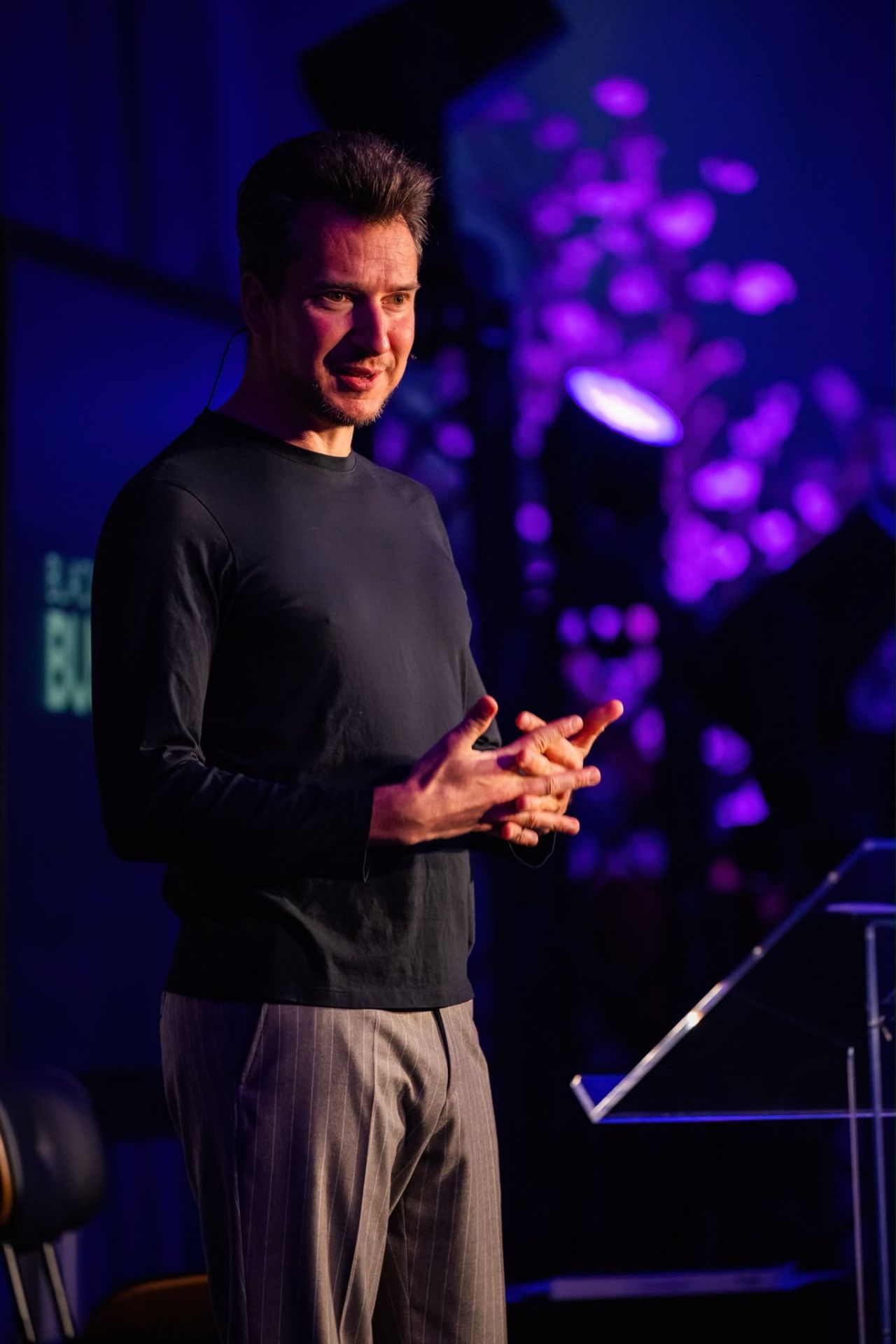
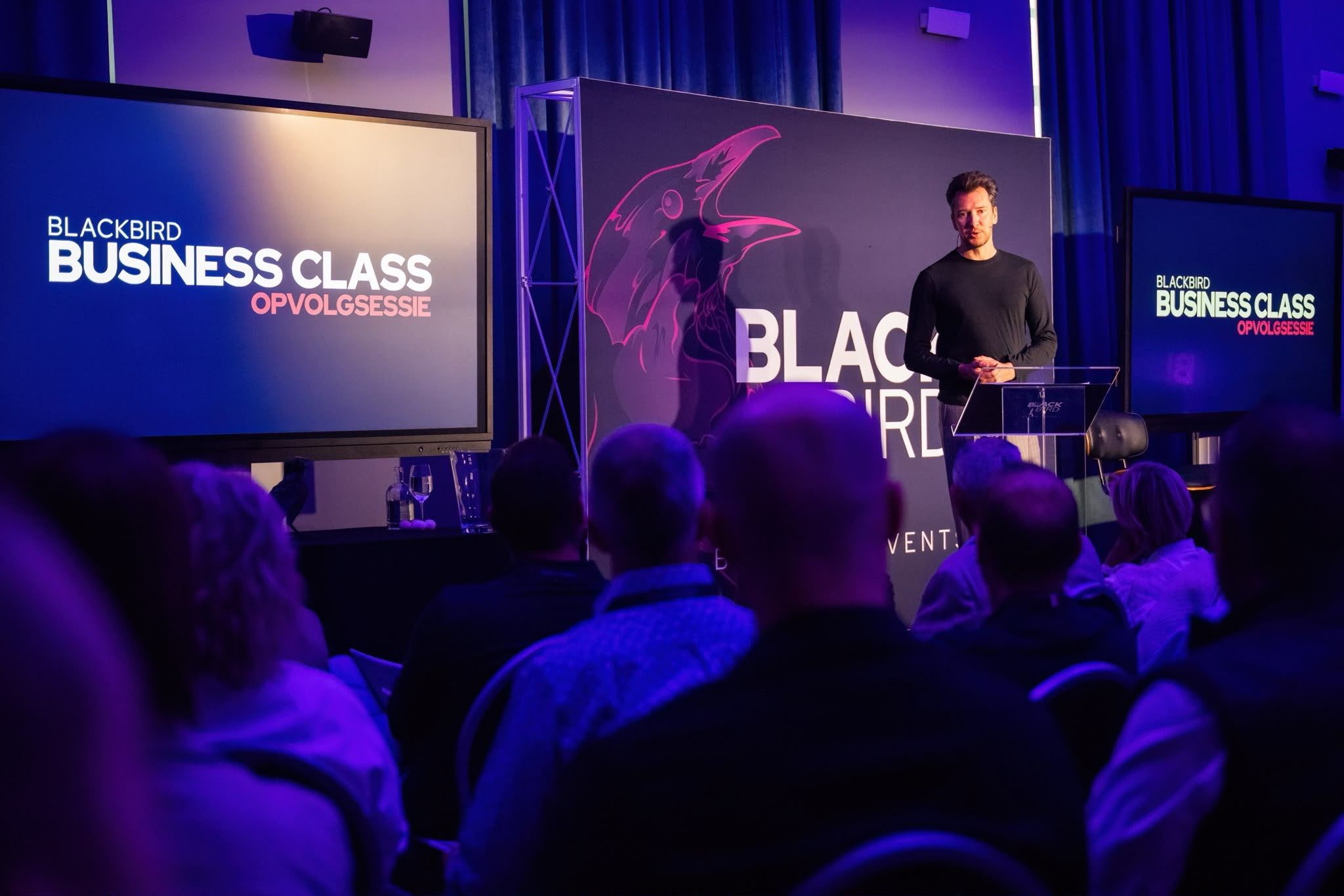
- Vandaag zag ik een groep ondernemers terug die in mei samen onze BlackBird Business Class volgde. En zo’n weerzien doet toch iets. Je hoort welke stappen ze intussen hebben gezet, welke keuzes resultaat opleverden en waar nieuwe uitdagingen zijn ontstaan. Maar vooral: je voelt dat de verbinding er nog steeds is. Ze kennen elkaars verhaal. Ze durven doorvragen, geven eerlijke feedback en delen hun kennis en ervaring zonder terughoudendheid. Tijdens deze opvolgsessie gingen we verder waar we in mei waren geëindigd. We werkten rond
- What changes when employees don’t just work for a company, but actually own part of it? Our CEO Thomas Van Eeckhout sat down with Stijn Fockedey from Trends DataNews, to discuss a model we’ve been building at Easi for over 25 years: giving employees the opportunity to become shareholders. Today, around 160 Easi employees are shareholders, but ownership is about much more than shares. It’s about creating the trust, transparency and responsibility that make people think and act like owners. We strive to create a company that people
Related profiles

This page shows public professional information only, each fact cited. Is this you? send a correction, or ask for removal within 24 hours, no questions asked.