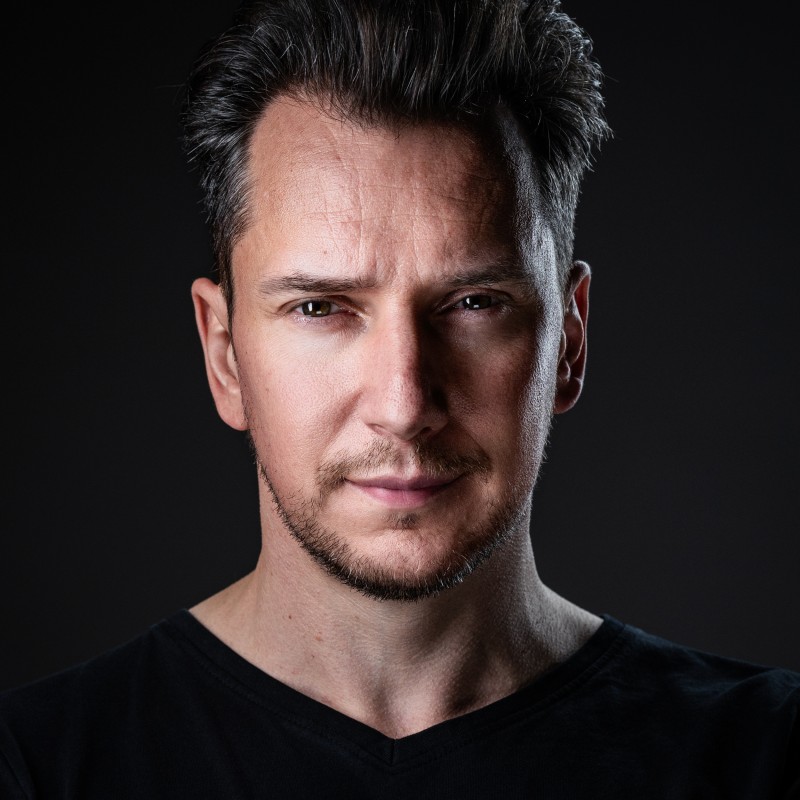
Talks about
- Entrepreneurship
- Belgian tech ecosystem
- Scaling
- Family business
- Exits
- M&A
- Buy-and-build
- Fintech
- B2B SaaS
- Robotics
- Hiring & talent
- Pricing strategy
Insights & ideas
The through-line
Almost everything Andy Coomans says returns to one idea: the company you have built is an asset, and most entrepreneurs never treat it as one. They treat it as a job, a salary source, or a baby. He puts the consequence bluntly, that eight in ten owners of a successful SME never manage to decouple themselves from it [56][60], and that the moment you hold a company number you have simply swapped your old boss for a new one, your own business [49]. From that follows the rest of his catalogue: exit strategy begun a decade early rather than two years before you are tired [48][51], A-player hires financed rather than avoided [19], systems and dashboards instead of everything living in the founder's head [19], acquisitions instead of vacancies [70], a smaller slice of a much larger pie [19][63], and a hard rational distance from a business people are too emotionally fused with to improve [54][65].
The second, louder strand is public and political, and it has grown sharper over time. He argues that entrepreneurs in Flanders are losing the benefit of the doubt from society at the exact moment they most need it, and that policy keeps confirming it: escalating budget arithmetic [6], a capital gains regime that misdefines who counts as an entrepreneur [12][13], job-application leave paid by the employer you have already left [14], and sick days that reliably fall inside the twenty days of holiday [15]. The two strands connect. His answer to a hostile climate is not lobbying alone but competence: know your numbers, structure your company, and stop being the single point of failure.
On exit as something you build, not something that happens
He rejects the fantasy version outright: "Ik zat op mijn terras met een gin tonic, mijn telefoon rinkelde en ineens, poef, had ik mijn bedrijf verkocht. Ja, zo werkt dat dus niet, hè" [55]. Selling a company is not flipping a house [8], and the optimal exit strategy "begint niet op de dag dat je beslist om je bedrijf te verkopen, het begint vele jaren vroeger" [75][73]. Most entrepreneurs only meet the concept near retirement or once they are sick of the business, and even the ones who start two or three years out are far too late [48]. His preferred trigger point is different: begin preparing the moment the business becomes bigger than yourself [51]. The reason the timing matters is that an exit can be forced on you, as it was for the owner who had to sell within months of a terminal diagnosis [63], and because you never know when a golden opportunity knocks or your own career turns [51].
The consolation is that the work is not exit work at all. Preparing a company for a successful sale is exactly the same job as building a healthy, profitable, growing SME or getting fundable for a capital round, so it pays off long before any transaction [51]. What he sees instead is years of neglect converted into money at the last minute, money you do not receive because the valuation comes in lower, and a founder glued to the chair for another twelve to twenty-four months because without him the operation stands "zo stabiel als een pudding" [8]. The same neglect shows up as an information problem: no one ever bothered to put the important company data in one place, so a buyer's request for due diligence starts a clock that runs for days, weeks, sometimes months [7].
He is equally sceptical of outsourcing the preparation. Advisers can tell you what your company is worth or whether it is financeable; making it valuable and financeable is the entrepreneur's job, and more than nine in ten fail at that step [66]. Advisers also carry their own agendas: an accountant may lose a good client the day you sell, and a broker on a one-year exclusivity contract has an incentive to push a deal through at the end of the term whether or not it is your best path [66]. An accountant's duty is fiscal correctness, not entrepreneurial advice, and if he could give brilliant strategy advice he would be running a private equity fund [36]. The deal itself runs on four parallel tracks, financial, fiscal, legal and emotional, and the emotional one is usually the hardest [61]. When you are in a process, block fixed slots in your agenda for the deal and spend the rest of your time running the business, because being consumed by the biggest transaction of your life is dangerously tempting [74]. He also warns against blind acceptance: an unsolicited offer is a reason to pause and review, which in one case took a sale from €1M to over €3M [71], and if a large acquirer seems to know your numbers better than you do, that is not a deal to sign on the spot [63].
Two structural points recur because they destroy value late. Distinct activities belong in separate legal entities well in advance: because a portal site sat inside his existing company, a €1.1M share deal turned into a €750k asset deal that would have netted roughly €350k after corporate tax and withholding tax, and splitting within two years of a sale carries fiscal repercussions [19]. Real estate inside the operating entity has the same effect, forcing a buyer onto a seven-year share-acquisition loan instead of a fifteen-year property loan and often killing the deal [21]. The alternative is grim: eight in ten Flemish SMEs end in liquidation rather than a sale, which means an asset deal, 25% corporate tax plus 30% withholding tax to get the money out, firing your staff, and discovering the meaning of "sociaal passief" [36].
On getting yourself out of the equation
"Dus het mooiste compliment dat een ondernemer aan zijn eigen kan geven is thuis zitten in verveling en zeggen: nu hebben die mij compleet niet meer nodig deze week" [19]. Company value only begins to be built when the founder removes himself from the equation [19], and the real strategy behind any exit is growing and structuring the business until it matures into an SME that no longer depends on the founder's constant presence [48]. He is unsentimental about how few get there: the majority of Belgian businesses are solo or micro operations whose owners lead very risky existences and plan continuity least of all [62]. Take the butcher out of the butcher's shop and there is no butcher's shop [62].
The mechanism is delegation plus structure. A founder can steer personally up to roughly ten to fifteen employees; beyond that you need systems, structures, processes and dashboards, or everything must live in your head, which is how ninety percent of SMEs with five to fifteen staff actually operate [19]. He argues founders should push through the operational layer within five to seven years by investing early in a leadership team, and he did it himself, hiring a CEO while scaling back from eighteen to twelve people and giving up the CEO title at twenty employees; founder-CEOs who stay on top of large companies are rare exceptions requiring near-inhuman breadth [35]. The number one reason a hired CEO fails is that the founder mentally stays CEO and walks in front of the new one's feet, which makes the role untenable [58]. The line he keeps in circulation from those he talks to is that operational management is the biggest killer of entrepreneurship, and that it only gets fun once the company works for you [35]; the child can only grow once the parents are willing to let go [58]. What starts for most entrepreneurs with passion and product ends with people and management [60].
There is also a rejection of accountability-avoidance as the hidden cause of stagnation: the unwillingness of founders to be answerable to anyone is the single biggest reason so many companies stay small [39]. And he treats frustration as usable fuel. A disastrous return from holiday became the trigger to restructure his own company into something self-steering rather than to sell it, and that restructuring is what made a multi-million euro sale possible years later, even though selling was not the goal at the time [67]. He also pushes back on the fear of what comes after: many entrepreneurs dread the black hole following a sale without realising they have been sitting in one for years, no longer working on what they are passionate about [75].
On A-players, systems and data
His most concrete operational argument is about the first hires. Taking on cheap school-leavers as your first employees is an expensive mistake; hires two through five should be triple-A players who bring the experience you lack, and "I can't pay them" is a financing question rather than a fact, because capital and debt make them affordable [19]. He has run the experiment on himself: "Op 2,5 week hebben wij 12 van de 18 mensen ontslagen" [19], replacing twelve juniors with six experienced profiles averaging thirty to thirty-five years old, which produced forty percent more revenue the following year with a smaller and more expensive team, and a dramatic profitability improvement after one loss-making transition year [19]. The observation behind it is that the average company carries about fifteen percent too much personnel [56]. And teams that got you here will not get you there: "Those that get you from A to B will never get you from B to C" [19].
Data is what makes letting go survivable. Breaking every client job into time-budgeted phases and having people log to the minute produced objective ground for profitability analysis, pricing arguments and promotions; nobody ever asked for a raise without data again, and it gave him the comfort to release control [19]. On sequencing he is clear that you move fast on systems, accounting, marketing, structure centralised across a group, and slowly on people, and that acquired brands keeping their own identity may not need the same culture at all [40]. With average tenure at three years, the strategic goal becomes anchoring knowledge inside the company and shortening onboarding from a year to three to six months, so you actually benefit from the talent you hire [33]. Ownership is part of retention: if your best key employee leaves to become a direct competitor because you never gave them equity, you lose twice, the human bond and a major force in the business [58].
He is also against perfectionism as a brake. Eighty percent good is good enough to take the next step as an entrepreneur [40], and difficult conversations are cheaper now than later: have them tonight or have much harder ones in six months [72].
On buy-and-build and the succession gap
"In deze tijden is het spel in vele sectoren heel simpel: overnemen of overgenomen worden" [11]. He teaches buy-and-build to more than 120 entrepreneurs at a time precisely because it is misunderstood as a game for the big boys, which it is not; SMEs can apply it perfectly well [11][70]. The framing he repeats is a question of appetite: do you want to eat other fish or be eaten [63], and is it better to own 100% of something turning over a million or 40% of something turning over ten million [63].
His first argument for it is talent. Entrepreneurs struggle to hire because they all run the identical recruitment strategy, posting vacancies, while acquiring a competitor or a smaller regional player brings in a coordinated team plus the revenue that repays the acquisition itself [70][63]. Rather than advertise for nine months, buy the team [63]. His second argument is demographic. A very large share of Belgium's SME fabric stops for lack of succession [22], only one in three family businesses survives a generational handover [59], and eight in ten small construction entrepreneurs simply liquidate at pension, so the play is to approach them three years before retirement, pay them, keep them on through the transition, and inherit a functioning team, revenue and client base [19]. After every good crisis comes a consolidation wave, and babyboomer retirements are thinning the market of small businesses at the same time [62]. The best companies to buy are not in the shop window [29]. Around thirty employees is often the critical point where inorganic growth has to reinforce organic growth [24].
He also insists the emotional and human side is where deals live or die, and that acquisitions arrive as a promise of the truth on day one and a moment of the truth during integration, when the buyer has to prove what was promised [30]. Sellers overestimate the difficulty of starting the conversation: cold-called acquirers agreed to talk immediately and the discussions went smoothly, because people are far more open to acquisition talks than entrepreneurs expect [30]. Knowing when to jump on something is as much entrepreneurship as knowing when to stop [30], and criticasters deserve gratitude rather than defensiveness [29].
On the size of the pie
He has made a settled choice about ownership percentage. "Ik heb liever vandaag 30% van een taart die 50 miljoen waard is dan dat ik 100% heb van een bollenwinkeltje dat misschien 3 miljoen waard is" [19], and "Dan bouw ik liever een hele grote berg waar ik een stuk eigenaar van ben dan dat ik de koning van de molshoop moet zijn" [19]. The evidence he cites is that entrepreneurs who dilute their shareholding systematically build the largest absolute equity wealth, while those clinging to 100% own the highest percentage of smaller companies, so the recipe for the biggest pie matters more than the slice [19]. The original fork in the road was the same one: stay self-employed and temper your ambition, or build something bigger than yourself [16]. Owners fixate on dilution and ignore that an acquisition adds revenue, profit, people and clients [63]. Dividing the pie is one of the most important qualities in entrepreneurship, on condition that you bake it first and make it big enough to share [28]. Someone may well be happier as number three on a bigger, more stable ship than as captain of their own little growth curve [41].
The practical expression is the phased sale. Most entrepreneurs treat selling as a binary yes or no and only think about it when they are done; smarter ones activate their share value early through regular transactions [47]. Those transactions do several jobs at once: strengthening the shareholder structure, bringing key employees into the equity, onboarding investors at strategic moments, and securing part of the accumulated wealth privately [47]. Crises come round roughly every seven to ten years, which is why waiting decades to take anything off the table is reckless [47]. Selling shares is also one of the few ways a Belgian entrepreneur can extract value from a business without heavy taxation, which is the argument for learning to transact with your shareholding early [61]. Most entrepreneurs treat the company purely as a salary source and forget it is an asset they could transact on, like leaving millions untouched in a savings account [69].
Shareholder structure has to be documented before it is tested. In rooms full of mature SME entrepreneurs with co-shareholders, roughly half have no shareholders agreement because they avoid the difficult conversation, when it may be the best €200 ever spent on a lawyer if things go wrong [42]. Between lions the torch is not handed over with a high five [73].
He also has a rule about knowing your number. Keep a note with your calculated company value, updated yearly, and define in advance the exact amount you need on your bank account to sell, so that when an offer exceeds the envelope the decision is rational rather than emotional [19]. The question that punctures greed at the margin is what you could have done with six million that you could not do with five [64]. And underneath it: "It has never been about the money. Geld is altijd een consequentie geweest van de dingen waar dat we echt ons in energie zijn gaan insteken" [19].
On banks, cashflow and financial literacy
"Een bank financiert geen dromen" [52]. Banks finance cashflow, and certainly not cashflow craters, so an entrepreneur must know exactly when and for what objective he approaches a financing partner [52]. Most have neither a cashflow plan nor a budget for strategic investments, which is why they turn up at the bank far too late, out of necessity instead of from a position of opportunity [52]. His counsel is to use external financing while things are going well, protecting cash reserves so they are still there when conditions turn, because a bank much prefers to step in while the company is healthy [52]. Treat your banker like your best investor and send quarterly reports as you would to a VC, since the bank is often the first party to step into the risk with you [19]. When the bank says no, do not blame your sector: either you failed to sell it, or it is you, your figures or your file [26]. And the best banker is not in a bank but at the table where a company is bought or sold [26]; the best bank robberies, as he puts it, happen at the negotiating table in company transactions [71].
The literacy gap underneath this is systemic. Most entrepreneurs can read a balance sheet but cannot compute a current ratio, one of the first things a bank calculates on a credit application [61]. Owners who know revenue and profit often cannot answer a question about debt ratio or equity versus debt, without which they cannot responsibly plan an investment or judge how much extra debt the business can carry [37]. An accountant and a CFO are two entirely different things, and entrepreneurs should at minimum master ROA, current ratio, liquidity and debt ratio to hold a decent conversation with financial advisers [30]. When he asks rooms of a hundred entrepreneurs whether their accountant ever explained basic remuneration optimisation, salary against dividend, roughly ninety percent say they never heard it [20]. Many owners guard the front of the business, sales, staffing, revenue, and neglect the cost structure, and since early 2024 many Belgian SMEs have burned through their reserves, removing the margin for error and pushing more of them to hire financial profiles [37]. Revenue without profit is risk [17][27].
On funding a venture in the first place, he holds that you get one chance to choose the level at which you enter a market, and starting undercapitalised locks you into a small organic trajectory, which is why BlackBird raised around €500K at the start against a €380K cash burn in six months [34]. If you only need money, solve it with debt first and take investors for network and professionalism [44]. Founders systematically underestimate: the build budget they imagine typically needs to double for ongoing development and quadruple once commercialisation is included, so someone putting in €100k of savings often needed €300k for the venture to be viable [43]. Heavily funded companies tend to treat capital as free money and spend loosely, while bootstrappers guard every euro and can end up too frugal to spend on the marketing that would grow them [43]. Technical founders who fear sales stay too long in development and blow their cash burn before knowing whether the product has a market, a pattern common to any long lead-time sector [43]. And hourly billing is, in his view, the worst business model in any sector [32].
On the wealth sitting inside one company
He poses this as a thought experiment: if your banker phoned tomorrow and proposed putting ninety percent of your savings into the shares of a single company on the stock exchange, what would you do with that banker [53]. That is exactly the position of most entrepreneurs, with seventy to ninety percent of personal wealth concentrated in the shares of one vulnerable SME [53]. He has watched entrepreneurs dismiss diversification as something for ten years' time and then lose seventy percent of their built-up company value inside a year to a sector shock [31]. Building wealth and preserving wealth are two different sports [57], and he remembers a wealthy man telling him he had no money, it was all invested [57].
The most uncomfortable version is mortality. Behind the statistic that 25,000 Belgians refused an inheritance sits a higher rate among the families of entrepreneurs, who take large risks in life and can leave a heap of financial misery behind when they die suddenly [10]. They know exactly who picks up which project tomorrow and which invoices must be paid, and have no plan at all for their own disappearance and what it means for the company and the family [10]. The comforting assumption that the business is worth a decent sum for the family does not survive contact with the fact that nine in ten SME owners do not know what their company is worth [10]. This is why business growth and personal wealth building belong together, and why he describes combining them as the logical next step in his own plans [2].
On less drama, more Spock
"De beste beslissingen in uw ondernemerschap, die neemt ge vanuit een rationele positie. Voor de Star Trek-fans onder ons: minder drama, meer Spock" [54]. He argues that this detachment protects entrepreneurial passion rather than killing it [54]. The obstacle is the baby metaphor: entrepreneurs who see the company as their child become too emotional about changes as small as a rebrand, and that attachment is the single thing preventing them from building the best version of the business [65]. Seeing the company as an investment instead unlocks faster progress for the business and for the person [65]. The same emotional block is what makes founders unable to imagine themselves out of the company, which is why they could not fix it in advance and cannot handle the sale when it comes [8].
He extends the rationality argument to what you should actually be optimising. Focusing on more revenue, more profit, more freedom or more employees is misplaced; scaling before the core structure and fundamentals are right produces negative profit and stagnating results [50]. Growth for its own sake gets too much airtime as well, since the fastest growers making the quick money are rarely making the most durable money [21].
On looking outside the business
"Teveel ondernemers zijn expert van hun vak en eigenlijk moeten ze veel meer expert worden van hun sector" [19]. The average entrepreneur works sixty hours a week and spends under one hour looking outside the business at where the sector is going, yet that outward view decides whether the company is still relevant in five years; marketing agencies needed three crucial pivots in eighteen years [19]. Entrepreneurs who consistently make timely decisions are the ones keeping a strong focus on their market and on what happens outside the company, which requires delegating the operational work inside it [36]. Markets move faster than owners expect, with alcohol turning into the new cigarette almost in real time as one example of a consumption shift [25]. A company robust enough to land punches while the market is taking them is a rocket once the economy recovers [23].
This is also his answer to the skills question. Durable skills are not platform skills such as SEO, ads or AI tools, which change constantly, but the ability to read a market, sharpen a concept and find product-market fit, and that transfers to any business format [19]. It is why an entrepreneur who took twenty years to build a company of a certain size can often rebuild the same thing in a new sector in two to four years, because the knowledge between their ears travels with them [38]. Absorbing knowledge never stops, and the day it does you may as well hand your company number back [42]. Openly sharing knowledge instead of hoarding it against competitors brought his own business far more attraction and more knowledge back in return [38].
Coming out of marketing, he is pointed about what marketing can and cannot do. No company grows because it finally has a good social campaign or a good website [45]. His own resolution was to stop selling marketing services by the hour and only apply those skills to companies he holds equity in, turning unscalable hours into a potential thousandfold return on a stake [42]. The biggest multiplier on invested capital is not the money but the knowledge, expertise and network you can layer on top of it [42].
The recurring obstacle to all of this is timing bias. Entrepreneurs wave away leveraged buyouts, share transactions and diversification as "not for me yet", and the most common feedback after the course is that they should have done it ten or twenty years earlier; you miss opportunities because you judge them with yesterday's perspective [42][31].
On culture, honesty and the "not my job" award
He wants no candidates for the "f*ck it, that's not my job" award [9]. Clear roles and responsibilities matter and stay a work in progress in his own organisation, but above them sits attitude and purpose, and at events there is one holy rule: you see it, you can do it, do it [9]. The photograph of a president dragging a sofa himself instead of delegating is the image he holds up for it [9]. Culture is the stable base that lets the offer move: the more stable the culture, the more the offer is allowed to wobble [24].
Inside a founder team, he treats disagreement as the productive material. Entrepreneurs wrongly assume you build a top company by always agreeing with each other, when in fact you build one by being willing to name and speak out what is wrong and merge the views into something stronger than what you started with [5]. That means periodic high-level sessions where the team is radically honest about what is working, what is not and what has to change, so everyone is aligned before pushing forward [5]. He describes entrepreneurship itself as generative mess, with the entrepreneur creating chaos and the manager shovelling in it [42], and notes that sales is very often the smelly little hole in a company [42].
Family and partnership boundaries get the same structured treatment. Entrepreneur couples survive on strict mandates: separate operational end-responsibilities, no work talk from dinner until after breakfast with ideas parked in a notebook, and scheduled me-time against we-time; the greater divorce risk is when one partner entrepreneurs and the other does not [19]. You only get eighteen summers with your children [68]. On succession within families he is against both extremes: parents who force it on their children are acting from their own dream, and parents who hated their career and forbid it entirely are equally wrong [39]; continuity is secured through transparency, dialogue, family charters, advisory boards and planning succession in time [59].
On the political and social climate for entrepreneurs
He thinks entrepreneurship is losing its public licence at the worst possible moment. Real entrepreneurship does not sell, and at a time when entrepreneurs feel almost no public support for taking risk, building companies and sticking their necks out, when social media is red with incomprehension, wealth taxes and bile from the aggrieved, another television programme feeding envy, even served with a bag of popcorn, is the last thing needed [4]. Entrepreneurship is creating a reputation problem for itself by being presented in far too rosy a light [46], and there is a persistent discrepancy between ambition and patience [41].
On policy he keeps a running ledger. The budget gap tripled in roughly six months, from three to four billion in February 2026 to ten billion by late July, and he asks how entrepreneurs are supposed to take the exercise seriously when finance managers making those leaps in a cashflow plan would be shown the door [6]. He comes out of marketing and is trained to read how things are communicated, which is part of what he objects to [6]. On the capital gains tax he welcomes reduced complexity but keeps pressing for entrepreneurial-mindedness, and his specific target is the arbitrary threshold that treats a partner with under 20% as a passive investor rather than an entrepreneur, ignoring the real risks they carry; the damage this does between shareholders trying to build strong growth companies is in his view a more pressing economic problem than the items being repaired first [12][13]. On job-application leave he accepts the original intent, since an employee did not choose entrepreneurial risk and guiding someone from job to job can be part of decent employership, but objects that a finger becomes a hand and then an arm, and asks why an employer should pay application leave to someone who no longer needs to apply anywhere [14]. On sickness during holidays he notes that the share of SMEs paying make-up days rose from one in four to one in three, with an average of five days, and finds it a remarkable coincidence that a quarter of illness lands inside the twenty holiday days [15]. On inspection fines up to €400,000 he declines to take a for-or-against position, understanding the measure against deliberate fraud while echoing the call for proportionate and careful use, and redirects to what he actually sees in SMEs, which is the same failure to keep company information in order [7]. And a small piece of price cynicism he keeps in circulation: when potatoes get dearer the chips get dearer, and when potatoes get cheaper the chips stay where they are [41].
On BlackBird, and teaching only what he has done in the mud
"Ik predik in Blackbird over niks wat ik niet zelf eerst met mijn botten in het slijk heb gedaan en een trackrecord kan aantonen" [19]. That is the credential he claims, and he is happy to say that school did not get him to being an entrepreneur, a strategy lecturer and an investor [3]. The knowledge gap he built the business around sits just above running a company: entrepreneurs are very good at operating, and poor at knowing how to sell, and every entrepreneur eventually arrives at that moment [71].
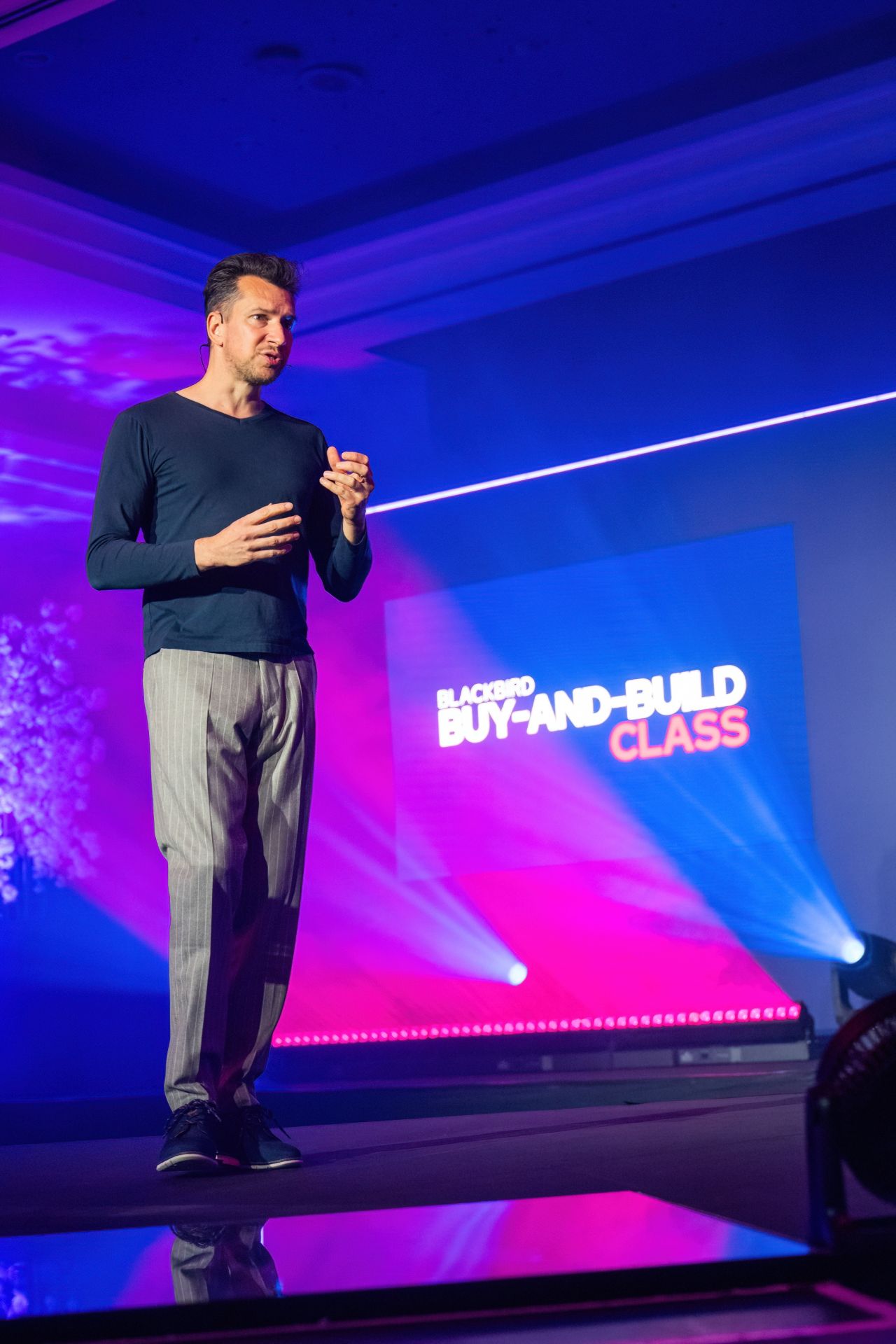
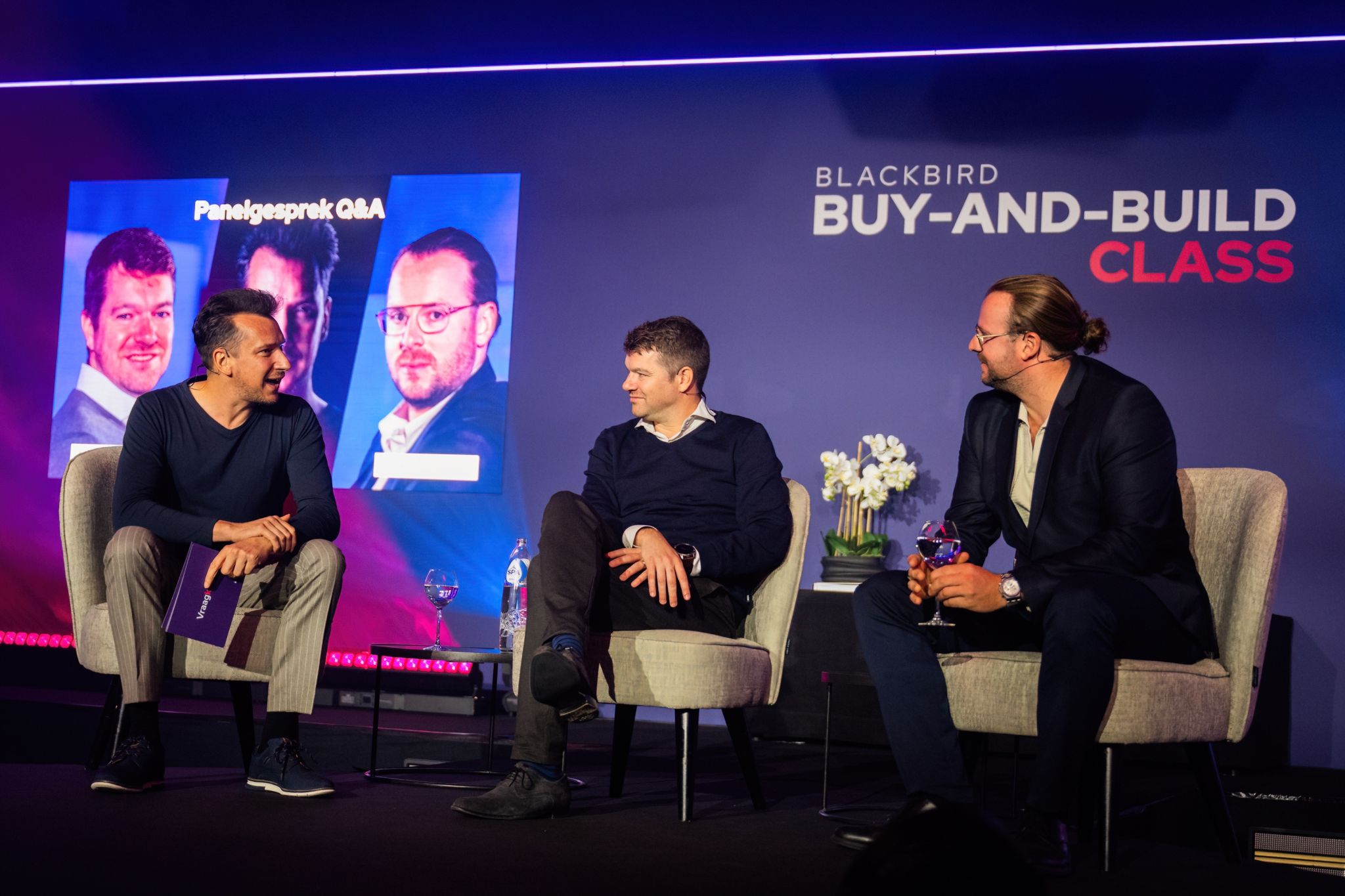
The construction plan is explicit and follows his own buy-and-build teaching. The ambition from the start was not one training company but a training group with specialised brands, built step by step [2]. Four years in, having become the Flemish market leader in strategic business growth, BlackBird took a majority stake in Missing Link, adding expertise in personal wealth building for entrepreneurs to its expertise in company growth, with the stated goal of becoming the largest non-academic training platform in Flanders [2]. The delivery machinery is equally deliberate: roughly 300 entrepreneurs a year through the Business Classes working on their company, strategy and future [5], a four-day Buy-and-Build Class taking 120-plus entrepreneurs through decades of accumulated knowledge with guest lecturers [11], and events such as the Nacht van de Investeerder-Ondernemer bringing 200-plus entrepreneurs together [1]. He applies the same discipline to his own founder team, taking them off-site to sharpen, decide and challenge before a demanding autumn [5].
Takeaways
- Start preparing your company for sale the moment it becomes bigger than you, because that work is identical to building a healthy, profitable, fundable SME and pays off long before any exit; two or three years ahead is far too late [51][48][75].
- Split distinct activities and real estate into separate legal entities years ahead: one unsplit portal site turned a €1.1M share deal into a €750k asset deal netting roughly €350k after tax, and splitting within two years of a sale has fiscal consequences [19][21].
- Make hires two through five triple-A players who bring what you lack; "I can't pay them" is a financing question, and swapping twelve juniors for six experienced profiles produced forty percent more revenue the following year [19].
- Keep a note of your company's calculated value updated yearly and fix in advance the exact amount you need in the bank to sell, so the decision is rational when an offer lands [19][64].
- Use acquisitions instead of vacancies: buying a competitor or a retiring owner's business delivers a coordinated team plus the revenue that repays the deal, and eight in ten small owners simply liquidate at pension [70][19][63].
- Approach your bank in good times with a cashflow plan and quarterly reports as you would an investor, because "een bank financiert geen dromen" and certainly not cashflow craters [52][19].
- Do not carry seventy to ninety percent of your personal wealth in the shares of one SME; activate share value early through regular transactions, since crises come round every seven to ten years [53][47].
- Spend real time outside the business on where your sector is going, because sixty-hour weeks with under an hour of outward view is what makes companies irrelevant in five years [19][36].
Media & appearances
- BlackBird Business EventsYouTubeWie is Andy Coomans?Andy Coomans discusses his twenty-year entrepreneurial journey, starting as a self-employed web builder at age 18 who worked intensively for ten years before deciding to grow his business strategically, eventually building one of Belgium's 100 largest marketing companies.
- BlackBird Business EventsYouTubeBlackBird Podcast aflevering 85: Jan Verbrugge
- BlackBird Business EventsYouTubeBlackBird Podcast aflevering 89: Dieter Provoost
In the news
- Vandaag heb ik op dag 3 bewust even plaatsgemaakt op het podium. Want als je ondernemers alles wil leren over Buy-and-Build, moet je niet alleen theorie brengen. Je moet ook mensen aan het woord laten die midden in die praktijk staan. Daarom mocht Michiel Pouillon vandaag zijn ervaring en expertise delen met de groep. Over deals. Over keuzes. Over wat er in de praktijk anders loopt dan wat er op papier zo logisch uitziet. En vooral over de nuances die je pas leert wanneer je het effectief doet. Ik vind dat één van de sterkste
- Andy Vandaag heb ik op dag 3 bewust even plaatsgemaakt op het podium. Want als je ondernemers alles wil leren over Buy-and-Build, moet je niet alleen theorie brengen. Je moet ook mensen aan het woord laten die midden in die praktijk staan. Daarom mocht Michiel Pouillon vandaag zijn ervaring en expertise delen met de groep. Over deals. Over keuzes. Over wat er in de praktijk anders loopt dan wat er op papier zo logisch uitziet. En vooral over de nuances die je pas leert wanneer je het effectief doet. Ik vind dat één van de sterkste
- Dag 2 van onze Buy-and-Build Class zit erop. Vandaag lag het tempo hoog. Veel inhoud, maar minstens even belangrijk: veel doen. We gingen aan de slag met targets, screening, financiële analyse, synergieën, risico’s, waardering en rendement. Geen theorie om gewoon mee naar huis te nemen, maar oefeningen die deelnemers dwingen om meteen naar hun eigen situatie te kijken. Dat is voor mij ook waar zo’n dag waarde krijgt. Niet wanneer iemand twintig pagina’s notities heeft gemaakt, wel wanneer je merkt dat ondernemers beginnen rekenen,
- Dag 1 van de Buy-and-Build Class zit erop, en het thema van vandaag was PREPARE 🥳 Voor je ook maar één overname doet, moet je weten waar je naartoe wil en of je sector zich daar wel voor leent. De deelnemers gingen vandaag aan de slag met hun DESTEP-analyse, het vijfkrachtenmodel van Porter en hun eigen moonshot visie. Niet als oefening op papier, maar als het fundament voor de overnames die ze de komende jaren effectief willen doen. 's Avonds sloten we af met een keynote van SDM over slimme deals in M&A. Precies de vertaalslag
- Ready, set, go! 2 jaar is het geleden dat we onze BlackBird Buy-and-Build Class lanceerden. Morgen opnieuw, full house met zo’n 120 deelnemers. 👊 Ik heb hier zoveel zin in! In 4 dagen geven we ondernemers een crashcourse in bedrijven overnemen, samen met Toon Bossuyt, Korneel Verhaeghe, Michiel Pouillon, Thomas Van Eeckhout en Maxim Sergeant. Let’s go!

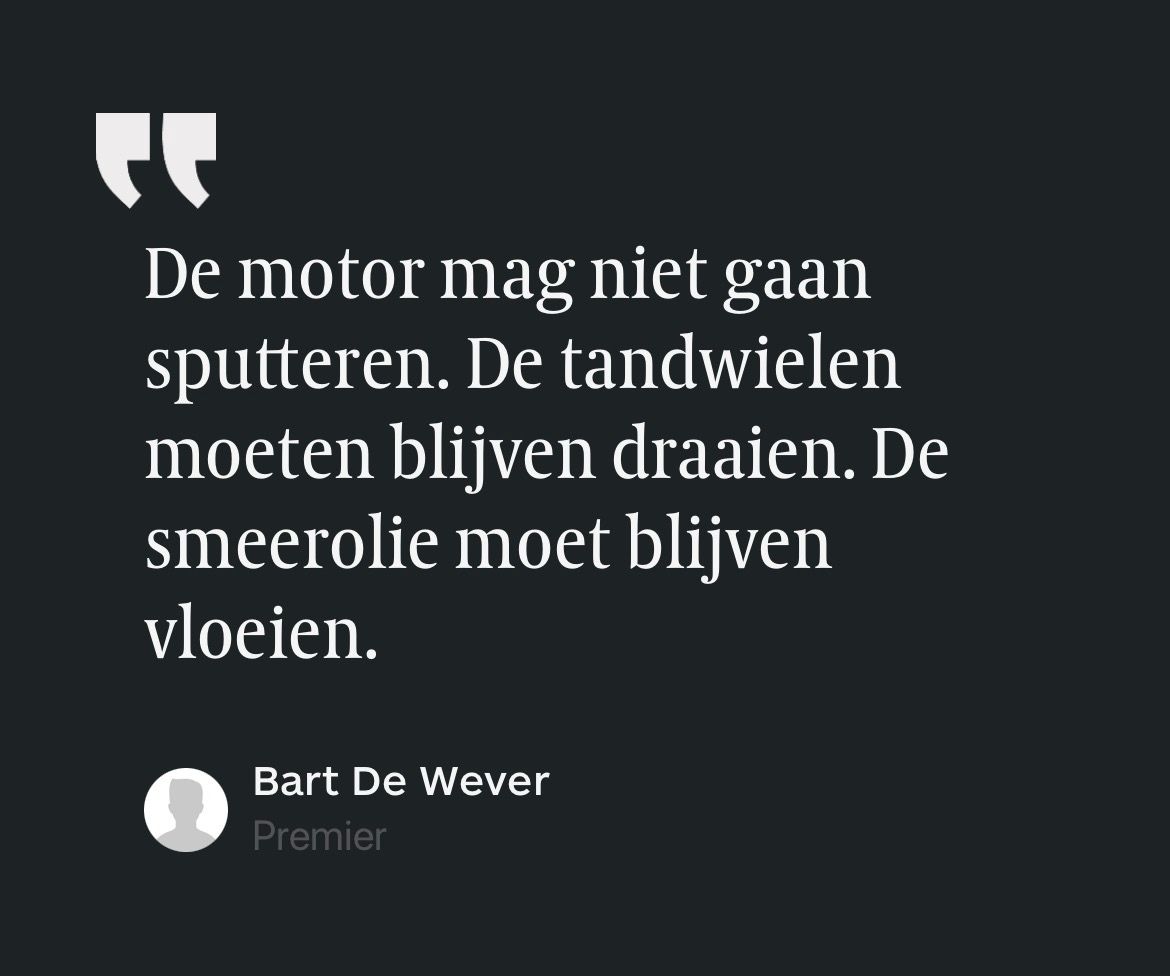
- De motor mag niet gaan sputteren? Nul % groei en steeds meer belastingdruk. Dan is ‘gaan sputteren’ niet langer de situatie. We zitten al in de fase waar de motor niet meer aanslaat, we nodeloos op start blijven drukken, verwelkomd worden door een zuchtend “hnnn-hnnn-hnnn-hnnn-plop” en de vingers kruisen of de motor terug zal starten in de volgende minuut, ofwel we hem helemaal verzuipen. Het overheidsbeslag mag niet stijgen, goede woordkeuze. Want daarmee is niet gezegd dat de belastingdruk niet zal groeien op diegene en datgene
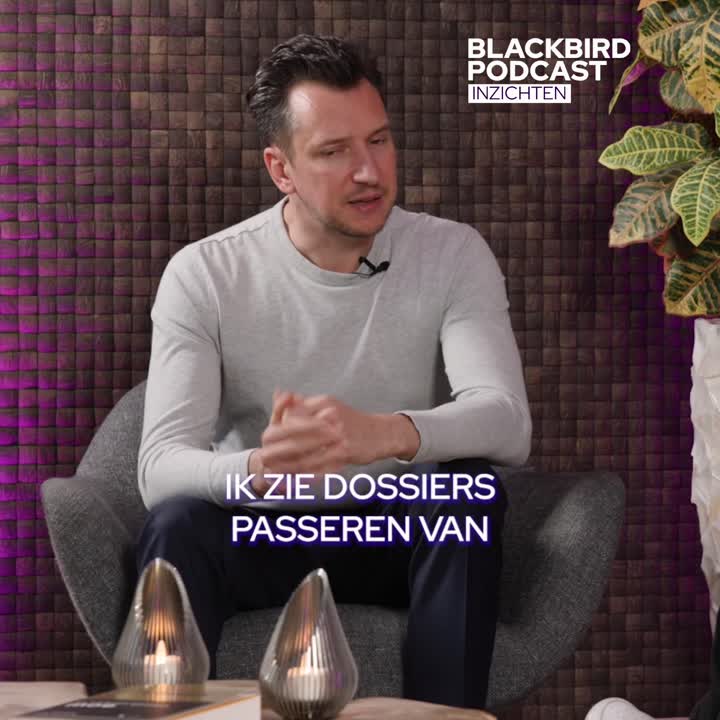
- podcast “Geld ophalen is geen succes. Het is niet de overwinning. Het is vooral een commitment.” We lezen regelmatig dat een bedrijf één, vijf of tien miljoen euro heeft opgehaald. Hoe groter het bedrag, hoe succesvoller het bedrijf lijkt. Maar de interessante vraag is niet hoeveel geld je ophaalt. De interessante vragen zijn waarvoor je het nodig hebt, bij wie je ervoor aanklopt en welke afspraken je vandaag maakt waar je binnen vijf of tien jaar nog aan vastzit. In deze nieuwe aflevering van BlackBird INZICHTEN ga ik samen met
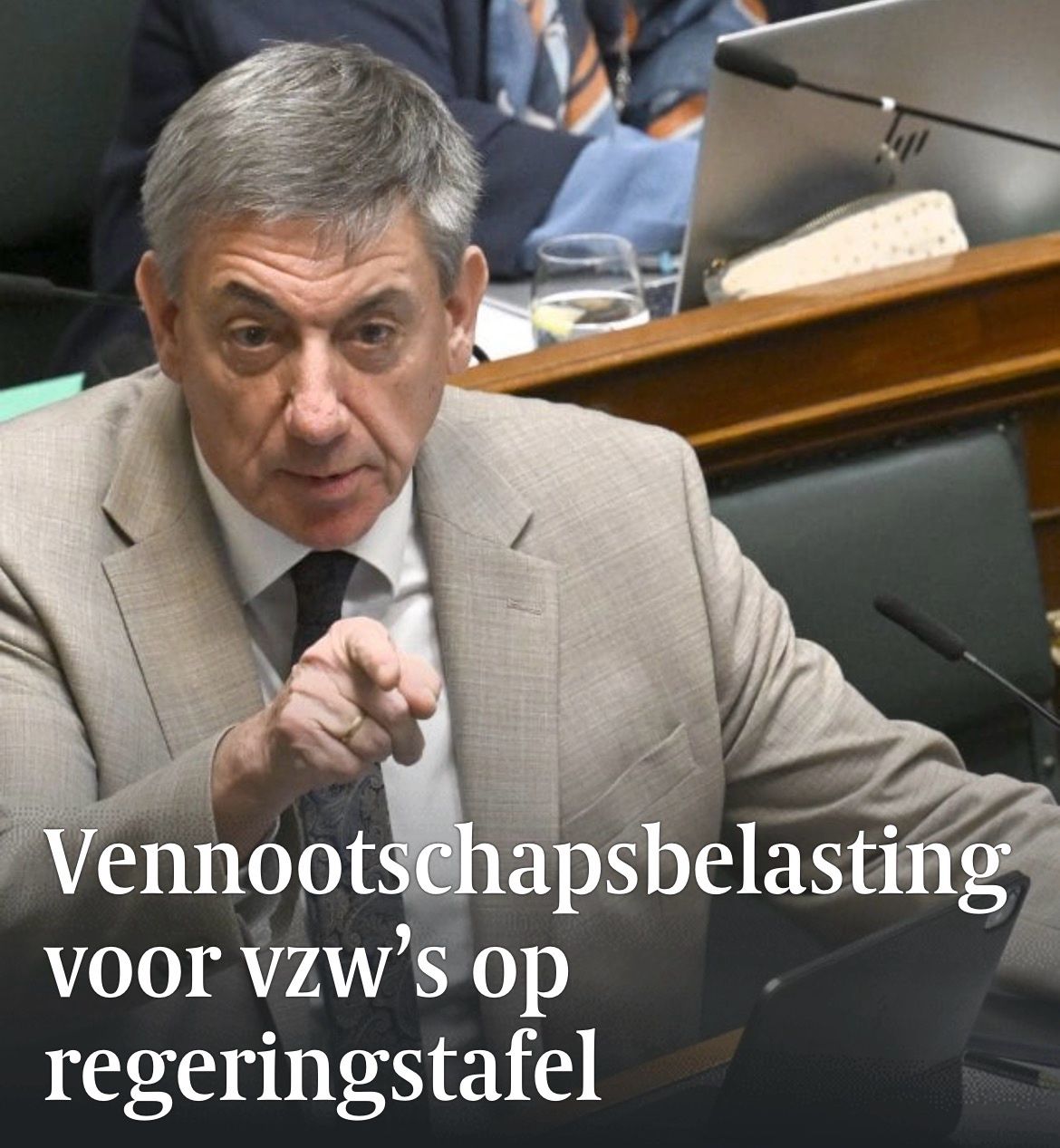
- 1,45 miljard. Zoveel onbelaste winst maakten de mutualiteiten tussen 2020 en 2026. Jaarlijks tikt er zo’n 160 miljoen bij. 🤯 Los van de stadionverlichting die hiermee op mutualiteiten wordt gezet, zie ik soortgelijke verhalen bij festivals, vakbonden, politieke partijen, … Misschien moeten we terug naar de basis? Een vzw is een vereniging ZONDER winstoogmerk. Is het dan normaal dat sommige vzw‘s hoge rendementen draaien en dat dit gewoon passeert zonder 1 euro af te dragen? Uiteraard is het een goede zaak dat giften en donaties



Related profiles
AccountableAffiliation
Connect Your DotsAffiliation
AlluvionAffiliation
DexxterAffiliation
SignpostAffiliation
YappaAffiliation
VismaAffiliation
This page shows public professional information only, each fact cited. Is this you? send a correction, or ask for removal within 24 hours, no questions asked.