
Overview
Hendrik Keeris co-founded Bizzy alongside Steve Declercq in 2021, after developing the concept at Vlerick Business School. Bizzy started as a market intelligence tool combining, analyzing, and presenting company data to help sales professionals spend less time searching for prospects and more time building relationships.
The founding insight was simple: salespeople lose too much time on research instead of selling. Bizzy aggregated Belgian and eventually UK company data into a searchable platform. By 2023, more than 150,000 professionals per month were using Bizzy to look up companies.
Bizzy raised EUR 800K in seed funding and later secured a EUR 4M round to fund the build-out of Bizzy's AI Sales Agent, powered by a database of over 34 million European businesses and 76 million professional contacts. The platform has evolved from a market intelligence focus toward automating entire go-to-market processes for both sales and marketing teams.
Nicolas Van Eenaeme's StarApps studio is a key backer and enabler in Bizzy's growth. The company is part of the broader Ghent serial entrepreneur ecosystem.
Hendrik built Bizzy from the observation that B2B sales is still too manual. His product-market fit thesis centered on eliminating the research burden from salespeople's workflows. The pivot toward AI Sales Agents is a natural extension of that founding vision into the agentic AI wave.
Career history

Education
Master in Financial ManagementVlerick Business School
LinkedIn Voice
Posting style: Active on themes of sales automation, AI in B2B, and ecosystem updates. 8 posts in the batch-3 data set. Key themes: AI sales agents, company intelligence, B2B go-to-market
Talks about
Insights & ideas
The through-line
Everything Keeris says circles one gap: Europe has never had a B2B data platform as good as the American ones, and even the platforms that exist stop short of the moment where data becomes action. The founding thesis was that US players like ZoomInfo, Crunchbase and Apollo offered good, user-friendly platforms while European alternatives were fragmented per country and outdated [9], and the stated goal has been consistent since: "Ons doel is echt om de nummer één op vlak van lead intelligence te worden in Europa" [7]. The ambition has since widened from European leadership in sales intelligence to wanting "to build one of the leading GTM platforms in the world" [2].
What has shifted is where he locates the value. Early Bizzy was a generic B2B data platform without a specific use case, which he calls naive in hindsight, and focus only arrived after shipping many features and talking to users until the sales and lead generation use case emerged as the real gap [7]. The recent work is a steady campaign against the friction that sits between a list of companies and a conversation with a person, described as building an "Intelligent Context Layer" [6]. The founder posture moved in parallel, from operational to strategic across pre-revenue chaos, product-market fit at roughly €1M ARR in Belgium, and initial scaling to 30 people [7].
On killing friction in the prospecting workflow
The complaint that drives most product decisions is context switching. Users could find the right companies in Bizzy but still had to leave it, jumping to Google, Clay, ChatGPT or other tools to work out whether a prospect was worth pursuing, and that extra research "slows down execution and breaks workflow" [6]. AI Research Questions, built on proprietary data plus web data, exists so that finding, researching and qualifying happen in one place [6]. The same logic produced Recommended Contacts: "you find a great company, and then you lose 10 minutes figuring out who's actually worth reaching out to" [3]. The answer is an ICP matched to real contacts on every account, ready to add to a list or push to a CRM in one click, powered by a Knowledge Center that holds what you sell, who you sell to and the roles you target, pre-configured but editable [3].
The Chrome extension is the same capability pushed to wherever the user already is, returning emails and phone numbers, telling you who to talk to in each company, showing whether people from that company have visited your site, and offering ten lookalikes when you find a good account, all on European data with direct access to legal entities, and free [4]. He applies the same standard to partner tooling, praising headless partner collaboration that lets everyone "stay where they already work: In their AI interface. In their communication tools. In their CRM" for the adoption and revenue it unlocks with zero friction [1].
On intent, and the honesty of admitting a feature was weak
The website visitor tracker is the clearest example of him judging a feature by whether anyone can actually use it. Originally it only named the companies that visited, and he says plainly that "even our own marketing team struggled to do much with that. A list of company names is a starting point, not an answer" [5]. The rebuild adds far more detail per visit and calculates intent so you can separate serious evaluation from a wanderer, with tasks and triggers on whatever matters to you and, in time, recommendations on who to contact inside that company based on ICP [5]. The reference point is Bizzy's own internal practice of stitching together several tools and automations to derive intent, enrich companies and push them into a Lemlist sequence [5]. That visitor data now also surfaces inside the extension [4].
On being a European platform
Coverage is treated as a strategic claim, not a data-ops detail. Bizzy was built for years with a strong focus on Belgium, and the expansion to 18 new markets for 33 European countries is framed as the ambition finally catching up with the product: understanding your market, discovering the right opportunities and connecting with the right decision makers "wherever they are", from Madrid to Stockholm, from Lisbon to Warsaw [2]. The differentiator he keeps naming is trust in the underlying data, "the same old reliable Bizzy European data, with direct access to legal entities" [4].
On going free before going paid
Bizzy deliberately stayed completely free for around a year to maximise usage and brand awareness before monetising, on the reasoning that users do not run away and you monetise later from a much larger base, and he credits that long free period as part of the company's success and credibility [7]. The free Chrome extension is the same instinct still operating [4].
On raising money and what it commits you to
His fundraising advice is specific and unsentimental. Pre-revenue is the best moment to raise because "de chance die je hebt pre revenue is dat er niks meetbaar is, dus dan kun je enkel de droom verkopen of de toekomst verkopen", and founders should negotiate a strong valuation there, since investors expect to slightly overpay at that stage and do not want founders over-diluted and demotivated [9]. For a first round he would choose large business angels or flexible early-stage VCs over big VCs with heavy term sheets, and learn the game with more flexible players first [9]. Raising slightly too much early proved a blessing when markets turned, because you never want a funding constraint to brake entrepreneurship [9]. The mindset underneath is borrowed from Lorenz Bogaert: "Het gaat niet om het relatieve, het gaat echt om het absolute, en door een beetje van de taart af te geven kan je veel groter worden" [9].
He is equally clear about the commitment it creates. "Vanaf dat je investeerders hebt is eigenlijk no way back, en wil je gewoon zo snel mogelijk zo groot mogelijk worden" [9], especially in a fast-moving market. Board reporting he sees as discipline rather than burden, because it forces founders out of day-to-day operations to re-evaluate strategy, goals and resource needs [9]. Experienced investors also open doors, above all to talent: being backed by names like Lorenz Bogaert lets a young startup attract A-players it otherwise could not reach [9]. The one revision he would make with hindsight is to have done longer research before founding, stayed longer in a bootstrap phase, and possibly used convertible loans instead of immediate priced rounds to avoid setting an early valuation and taking dilution [7]. VC backing also shapes go-to-market: sales-led growth is Bizzy's number one scaling channel, but pressure toward lean and product-led growth means they support sales as much as possible through product growth and inbound [8].
On building the team
The hiring model is deliberately staged. Balance the first team by bringing in an experienced CTO and CPO for the hard skills, then surround them with a young team with an entrepreneurial mindset who accept risk and equity rather than a corporate salary package [9]. All early joiners received shares or options, which he ties directly to culture, because everyone treats the company as their baby and shares in the upside [9]. "Ge hebt uw karretrekkers nodig in het begin" [9]. Beyond that, hire only at the bottleneck: do everything yourself until you clearly hit something you cannot get past, then hire specifically for it, which is how Bizzy moved from founder-led sales to a sales team [9].
That model has a hard limit. Going from 0 to 1 works with a junior team, but 1 to 10 requires deliberately bringing in senior people who have done it before, precisely so they challenge the founders' way of working [7]. In the scale phase, team and organisation, not sales or product, is the biggest challenge, because roles from phase one do not automatically carry over and many new people arrive at once [7]. His summary of the founder's job at that point: "Dat is misschien zelfs de belangrijkste rol die je hebt als founder: energie in uw team duwen" [7].
On ambition, naivety and the Flemish reflex
He argues for setting a target and then dismantling it hurdle by hurdle rather than declaring it impossible: "Het is heel Vlaams om te zeggen: nee, dat lukt niet. Terwijl als je alles gaat terugkijken van wat zijn nu eigenlijk al die hurdles om dat te bereiken, dan begin je te merken van: het zou misschien toch wel lukken" [9]. Even landing at 90% of a stretch goal beats the 60% you would reach without one [9]. Starting at all is the harder step: "Heel veel mensen praten over ondernemen, maar het belangrijkste is gewoon springen, gewoon te gaan beginnen" [7], accepting that "je begint aan iets dat waarschijnlijk zal mislukken, dat is basically het" [9]. Naivety is treated as an asset to be preserved rather than outgrown, provided it is hedged: "Behoud een gezonde portie naïviteit en omring u daarbij door toptalent" [7]. Having no prior corporate work experience he counts as an advantage, because with no frame of reference they built the company exactly as they thought it should be, unconstrained by corporate habits [7].
On the phases, and why revenue is more stressful than none
The three phases he describes are pre-revenue chaos, product-market fit at around €1M ARR in Belgium, and initial scaling to 30 people with international expansion [7]. The counterintuitive lesson is that pressure rises rather than falls: "Je hebt meer stress als je revenue hebt dan dat je geen revenue hebt", because expectations get created and every quarter and month must beat the last, whereas pre-revenue there are no numbers to be judged on [7]. The question that defines the current phase is scale: "We hebben een land eigenlijk op de kaart gezet, we zitten voor bijna een miljoen ARR, we zitten met 30 mensen, hoe gaan we nu van een miljoen naar hopelijk ooit 100 miljoen of meer" [7]. On the value of the experience itself he is unequivocal: "Ik denk niet dat je ergens anders veel meer kunt leren dan dat wij de afgelopen jaren gedaan hebben" [7].
On AI as accelerant, not threat
He does not treat AI as an existential risk to the business, because the core is proprietary data used by real-economy SMEs rather than AI as the product itself, which makes AI an accelerating enabler [7]. That shows up in how features are framed: AI Research Questions run on Bizzy's proprietary data plus web data and are described as a foundational building block of the Intelligent Context Layer rather than a standalone launch [6].
On the exit horizon
He is explicit that Bizzy is not a family business to be run for 20 years. As a VC-backed startup he expects his own exit within 5 to 10 years, and dreams of starting again or moving into venture capital [7]. The earlier version of that ambition: "Mijn droom is echt om een giga softwarebedrijf uit te bouwen, ofwel binnen een vijftal jaar verkopen aan iemand anders ofwel, wie weet, ooit IPO" [9].
Takeaways
- Judge a feature by whether your own team can act on its output; the original visitor tracker named companies and nothing more, and "even our own marketing team struggled to do much with that" [5].
- Attack context switching directly: users leaving for Google, Clay or ChatGPT to qualify a lead is friction that breaks workflow and slows execution [6].
- Stay free long enough to build usage and brand, then monetise from a much larger base; users do not run away [7].
- Raise pre-revenue while nothing is measurable and you can sell the dream, prefer large business angels or flexible early-stage VCs over big VCs with heavy term sheets, and accept that after investors there is "no way back" [9].
- Think absolute, not relative: "door een beetje van de taart af te geven kan je veel groter worden" [9].
- Hire at the bottleneck, give early joiners equity, and bring in seniors who have done 1 to 10 before precisely so they challenge how the founders work [9][7].
- Expect stress to rise with revenue, because expectations appear and every month must beat the last [7].
- Set the stretch goal and work the hurdles; 90% of an ambitious target beats 60% of a safe one [9].
In the news
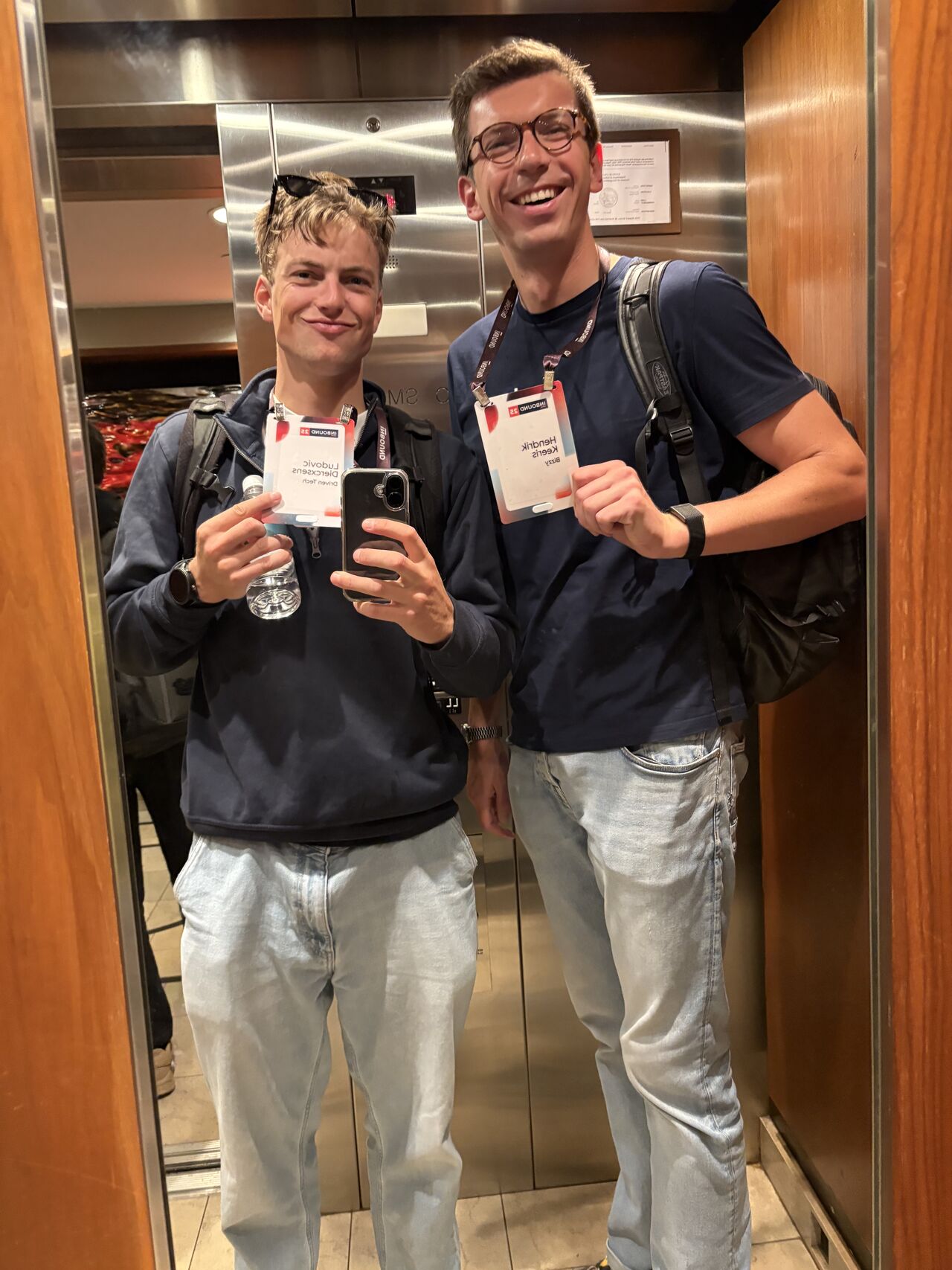
- My favorite event of the year is coming up, Hubspot UNBOUND next week! Quick throwback to my first day last year with Hendrik Keeris . This time I'm stoked to be there with Tom De Kooning and Andres De Jonge . And we're going bigger this year: organising a proper Belgian beer tasting for revenue leaders. A brewery, a selected group of revenue leaders, talking recenue, sales performance and GTM while having a good laugh and some beers. What else do you need in life? ;) Definitely sign up via our Luma, places are limited! (link in
- Our friends at introw.io are doing crazy stuff! Today they are launching Partner Connect, their headless partner collaboration. Allowing everyone to stay where they already work: In their AI interface. In their communication tools. In their CRM. More adoption. More revenue. Zero friction. Making introw.io the first PRM loved by vendors and partners 💛 🩷 Keep on crushing it Andreas Geamanu, Simon Van Den Hende, Laurens Lavaert and team!
- Felicidades Spain, for winning the World Cup! 🇪🇸 What you probably did not know is that Spain is now also one of the countries where you can find and score your next customer through Bizzy. We have added 18 new markets, bringing our coverage to 33 European countries with B2B data and insights you can actually trust. For years, Bizzy was built with a strong focus on Belgium. But our ambition has always been much bigger. We want to build one of the leading GTM platforms in the world. A platform that helps companies understand their
- We think we just killed the most annoying part of prospecting. You know the one: you find a great company, and then you lose 10 minutes figuring out who's actually worth reaching out to. Not anymore. We've just shipped Recommended Contacts inside Bizzy. It basically looks at every account you research and tells you exactly who you should be talking to. Your ICP, matched to real contacts, on every single account. Yes. No more digging, just the right people, ready to add to a list or send to your CRM in one click. How does Bizzy do
- We finally launched our Chrome extension (again!) and we think we've created the best extension on the market 😱 Not only can our extension give you the email and phone number of companies and people you find, it will also tell you who you should be talking to in each company. Yes. Bizzy can now understand who your ICP is and give you contact recommendations based on that, for every single account. But we didn't stop there. 2 weeks ago I told you about our website visitor tracker. Well, now you can see if people from a certain
- We just shipped an update to our website visitor tracker, and this one I'm genuinely excited about. Until now, the tracker did one thing: it told you which companies visited your site. That was it. I'll be honest, even our own marketing team struggled to do much with that. A list of company names is a starting point, not an answer. So we rebuilt it. Now you get far more on every visit, and Bizzy actually calculates intent, so you can see who's seriously looking at your product versus who wandered in. You can set up tasks and
- Bizzy has always helped sales teams find the right companies to target. But finding a lead is only part of the job. Many users still had to leave Bizzy to research and qualify those companies. They'd jump to Google, Clay, ChatGPT, or other tools to understand whether a prospect was actually worth pursuing. That extra research creates friction. It slows down execution and breaks workflow. Today, that changes. We're launching AI Research Questions directly inside Bizzy. Using Bizzy's proprietary data and web data. You can now find,
Related profiles

This page shows public professional information only, each fact cited. Is this you? send a correction, or ask for removal within 24 hours, no questions asked.