Overview
Baekelmans explains that the US is Flanders' largest foreign investor and highlights success stories like AIdaptation — a DARPA-derived autonomous racing company establishing its global HQ at Droneport in Sint-Truiden — as well as Flemish scale-ups Legal Fly and TechWolf expanding to the US. He shares advice for Flemish entrepreneurs (be bold, position confidently, 'fake it till you make it') and argues today's AI boom differs from the 2001 dot-com bubble because business models and applicability are clearer.
Talks about
- Autonomous vehicles
- Robotics
- Artificial intelligence
- Fake It Till You Make It
- Ai Infrastructure
- Antwerp
- Digital Twin
- Smart Cities
Insights & ideas
The through-line
Across everything, one conviction repeats: Flanders has genuine technological substance and consistently undersells it. Whether the subject is nanoelectronics research, cancer therapies, offshore wind or autonomous vehicle IP, the capability is treated as a given and the failure point is always positioning, speed and nerve. "Als het over Tech gaat, en het gaat hier over Tech, dan denk ik dat wij een right to play hebben" [5]. The corollary is that institutions meant to serve that technology base have to behave commercially: "Hoe kunnen wij bedrijven kennen of snappen als wij zelf niet als een bedrijf functioneren?" [4].
The emphasis shifts with the vantage point. The earlier work is technical and civic, arguing that a city becomes governable when you instrument it densely enough to simulate interventions before making them [6]. The later work is commercial and diplomatic, arguing that a technology region wins or loses on mindset, regulatory speed and the ability to beat the neighbours to an investment dossier [4][5]. The most recent activity is closer to home again, gathering companies into a single Antwerp innovation community [1][2][3]. The constant is the belief that technology only pays off when it is made visible, connected and claimed.
On the American mindset Flemish companies refuse to adopt
The single biggest obstacle to Flemish success in the United States is the Flemish company itself. Honesty about an unfinished product loses deals: "Je mag niet zeggen we think we have one of the best products — we have the best product" [4][5]. This is framed explicitly as positioning rather than deception. "Fake it till you make it... dat heeft niks te maken met dingen te doen die niet kloppen, dat heeft te maken met u sterker te gaan positioneren dan al de rest" [4]. The prize for winning that positioning battle is the market itself, taken before competitors arrive [4].
The advice compresses into one instruction: "Be more bold, standout, zorg dat je niet dezelfde bent als iedereen, en make money to do it" [4], elsewhere put as "make sure you have money to do it" [5]. The same reflex applies at continental scale. Europeans should talk about their innovations more proudly and earlier, before they are 100% finished, because visibility is what attracts attention and investors [4][5].
On running a diplomatic office like a company
The team is managed with KPIs, reviews and sales calls, and it builds explicit competitive plans against neighbouring countries: "Ik maak dus een Kill de Dutch plan om te zorgen... hoe kunnen wij die klant verslaan vanuit een business opportuniteit om die investering naar Vlaanderen te kunnen krijgen" [4][5]. The justification is not managerial fashion but epistemic. Government cannot understand the companies it serves unless it functions like one [4]. That commercial discipline extends to how results are reported: Flanders' foreign direct investment job numbers are all counted and real [5], which is the standard he then applies to others.
On Tech First and the Trump administration
"Het new normal in the US is Tech First, the rest later" [4][5]. The evidence is choreography as much as policy: the $500B Stargate announcement was likely demanded by Trump himself and staged for the day after the inauguration, and tech CEOs sat closer to him than former presidents did [5]. The scale is worth sitting with: "500 miljard dollar, dat is zoveel... In context: Vlaanderen, alle export in Vlaanderen voor een jaar is ongeveer 500 miljard" [5]. The accompanying jobs claim does not survive scrutiny, though. The promise of 100,000 jobs from Stargate is doubtful, because datacenters employ very few people directly [4][5].
The verdict on the administration is that a tech-first America is fundamentally good news for a technology society like Flanders, with the caveat that permitting law and administrative simplification at home will decide whether the opportunity is actually captured [4]. On the personalities involved there is real unease: "Ik heb het gevoel nu dat Musk meer naar de darker side aan het gaan is dan Trump en dat is scary" [4].
On why the US invests in Flanders, and why AIdaptation came home
The United States is the largest foreign investor in Flanders, and the reason is synergy on next-generation technologies rather than scale: life sciences and personalised medicine, offshore wind, and semiconductors through imec [4]. "Heel veel van die nieuwe kanker technologieën komen uit Vlaanderen" [5]. The strategic conclusion is to ride American technology waves rather than try to match American size [4].
AIdaptation is the worked example, a diplomatic project two years in the making [5]. The company chose Sint-Truiden over the United States for three reasons: top university talent, test infrastructure at Droneport, and Flanders' neutral position [4][5]. That last point matters most. Staying in the US would have pulled its DARPA-derived autonomous technology mainly toward defence applications [4][5]. The technology itself is presented as the frontier case of Physical AI, an autonomous racecar at 300 km/h being the optimum of software meeting the real world: "Als je dat tegen 250 of 300 km kunt doen in een racewagen, stel je eens voor wat je allemaal kan met diezelfde technologie toegepast op robotten op slower speed" [5].
On whether AI is another bubble
The comparison to 2000 and 2001 is rejected on the grounds that the business models and applicability have been thought through this time. Paid tools deliver measurable daily efficiency, with Copilot saving one to two hours a day for around €30 a month, where in 2000 money chased applications no customer actually wanted [4][5]. That makes a burst less likely [4], although the counterpoint raised in conversation, that capital expenditure vastly outpaces revenue, is left standing [4].
On European regulation
Europe's regulatory reflex is a competitiveness problem, and the contrast is drawn as an image: the plastic bottle cap meme set against SpaceX landing a rocket with chopsticks [4]. The remedy is partly cultural, the same proud early visibility argued for elsewhere [4][5], and partly administrative, since permitting law and administrative simplification in Flanders will determine whether a tech-first moment translates into anything [4].
On digital twins and instrumenting a city
The Antwerp digital twin work rests on a claim about differentiation rather than novelty: "Digital twins were not really new, yes we've done some further integration with new technologies, but we've taken it a step beyond and we've deployed hundreds of sensors throughout the city of Antwerp" [6]. The step beyond is moving from planning on historical big data to a real-time dashboard, with interconnected traffic, noise and air-quality models fed by fixed and mobile sensors [6]. The purpose is anticipatory: "It is to create or pre-create, to model, to simulate before you actually create" [6].
Two practical arguments follow. Data density is cheap if you are inventive about it, which is why air-quality sensors were mounted on Bpost delivery vans that already reach almost every street in Antwerp daily [6]. And the boundary of the model has to be larger than the problem, because Antwerp's mobility cannot be solved inside Antwerp; flows to and from the port and the wider region must be modelled, which is why the twin is set to expand across all of Flanders [6]. The payoff is stated plainly: "The richer our data model becomes, the better we can make decisions, the cleaner we can make the city, the better we can guide the traffic throughout the city" [6]. The institutional pride behind it is equally plain: "imec is one of those jewels in Belgium, we are the world leader in research for nanotechnologies" [6].
On building the Antwerp innovation community
The recent work is aggregation: bringing organisations into The Beacon | Innovation Community, including the Cloudar team [2] and the Antwerp Convention Bureau team [1], and convening the ecosystem through Spark sessions with Hubs4Growth on port technology and Antwerp tech innovation [3]. The city's own story is worth telling loudly, which is the same visibility argument applied locally [1].
Takeaways
- In the US market, never hedge. Say "we have the best product", not "one of the best", or you lose the deal; this is positioning, not dishonesty [4][5].
- Talk about innovations publicly before they are 100% finished, because visibility is what attracts attention and investors [4][5].
- Run public investment-promotion work like a business, with KPIs, reviews, sales calls and explicit competitive plans against neighbouring countries [4][5].
- Flanders wins technology investment on talent, test infrastructure and neutrality rather than scale; AIdaptation chose Sint-Truiden partly to avoid its autonomous technology being pulled toward defence [4][5].
- Treat the Stargate jobs claim sceptically: datacenters employ very few people directly [4][5].
- The current AI cycle differs from 2000 because paid tools have real daily applicability, such as one to two hours saved per day for around €30 a month [4][5].
- A digital twin becomes useful when it runs in real time on hundreds of deployed sensors, and cheap sensor placement matters, such as air-quality units on Bpost vans that cover almost every street daily [6].
- Model beyond the administrative boundary: Antwerp's mobility depends on port and regional flows, so the twin has to expand to all of Flanders [6].
In the news
- A shoutout to next year’s edition … to come forward now already to ensure we can fit you in ! #PortTech The Beacon | Innovation Community
- Two intense days at Port of the Future Week. One clear conclusion: the port of the future is already being built. On 15 and 16 September, an extraordinary concentration of innovation came together at Quay 102: autonomous vessels and drones, robotics, AI, smart connectivity, cybersecurity and, most importantly, the people who can turn promising pilots into operational reality. What impressed me most was how these technologies are starting to connect across water, land and air. Innovation does not happen in isolated silos. It
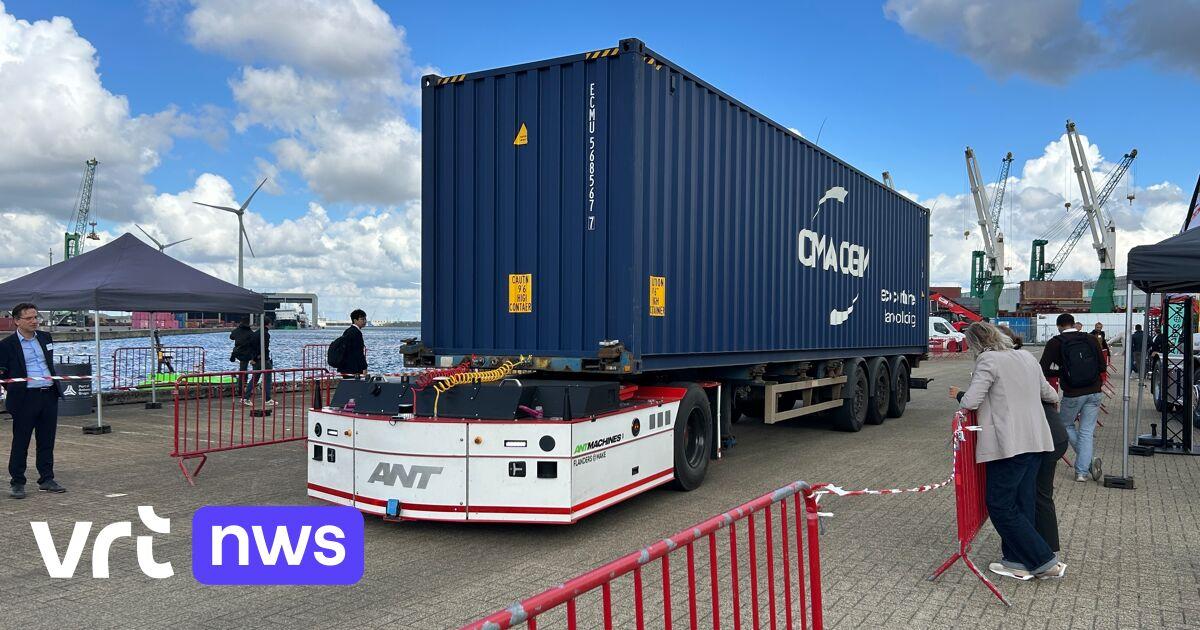
- Autonomous trucks. Remotely-driven cars. Trains controlled from afar. Drones doing inspections. A self-navigating sounding boat measuring dock depth. Sounds futuristic. It's the Port of Antwerp-Bruges, today. What strikes me: the real breakthrough isn't "fully autonomous." It's autonomy + a human operator watching remotely, able to step in. That one design choice quietly solves liability, trust, and regulation — without giving up the efficiency gains. Which is exactly why a port is the ideal testing ground: complex enough to
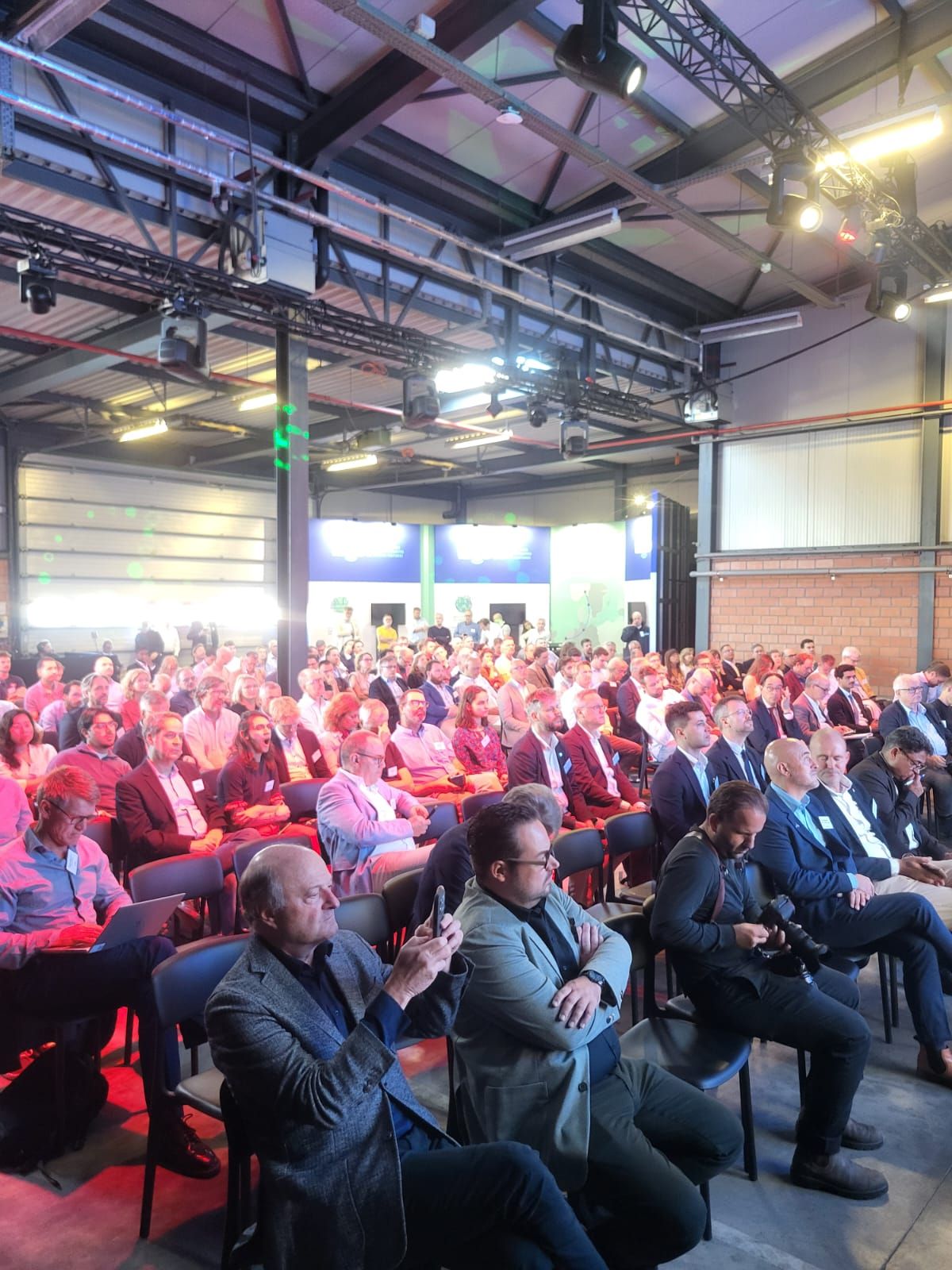
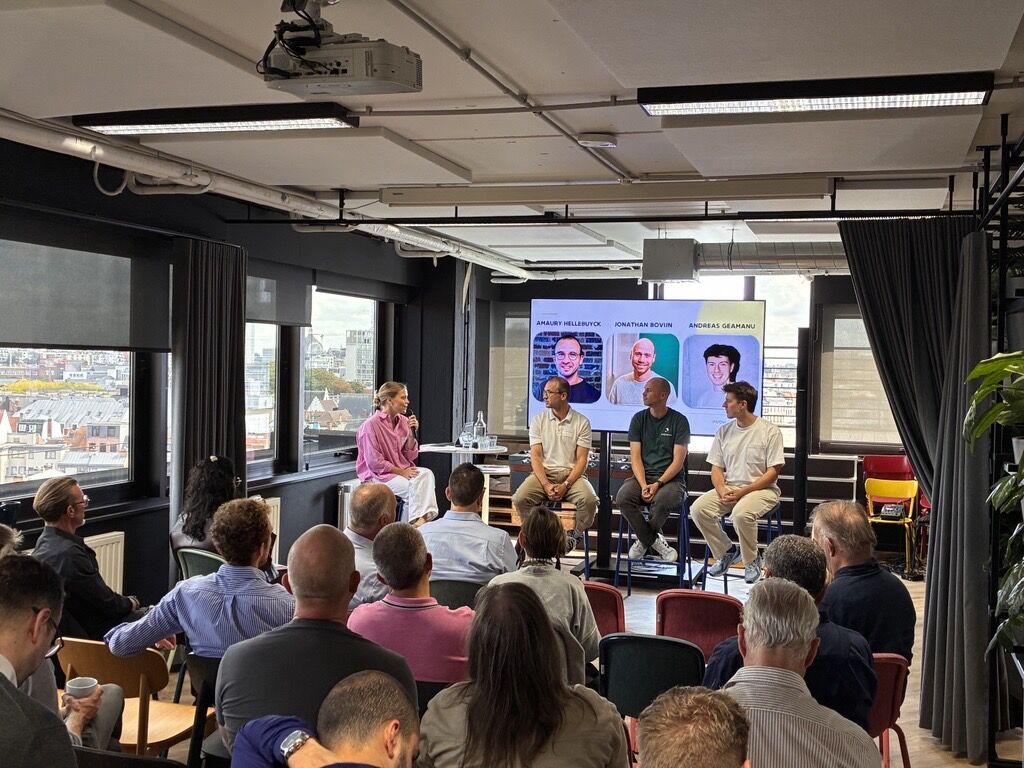
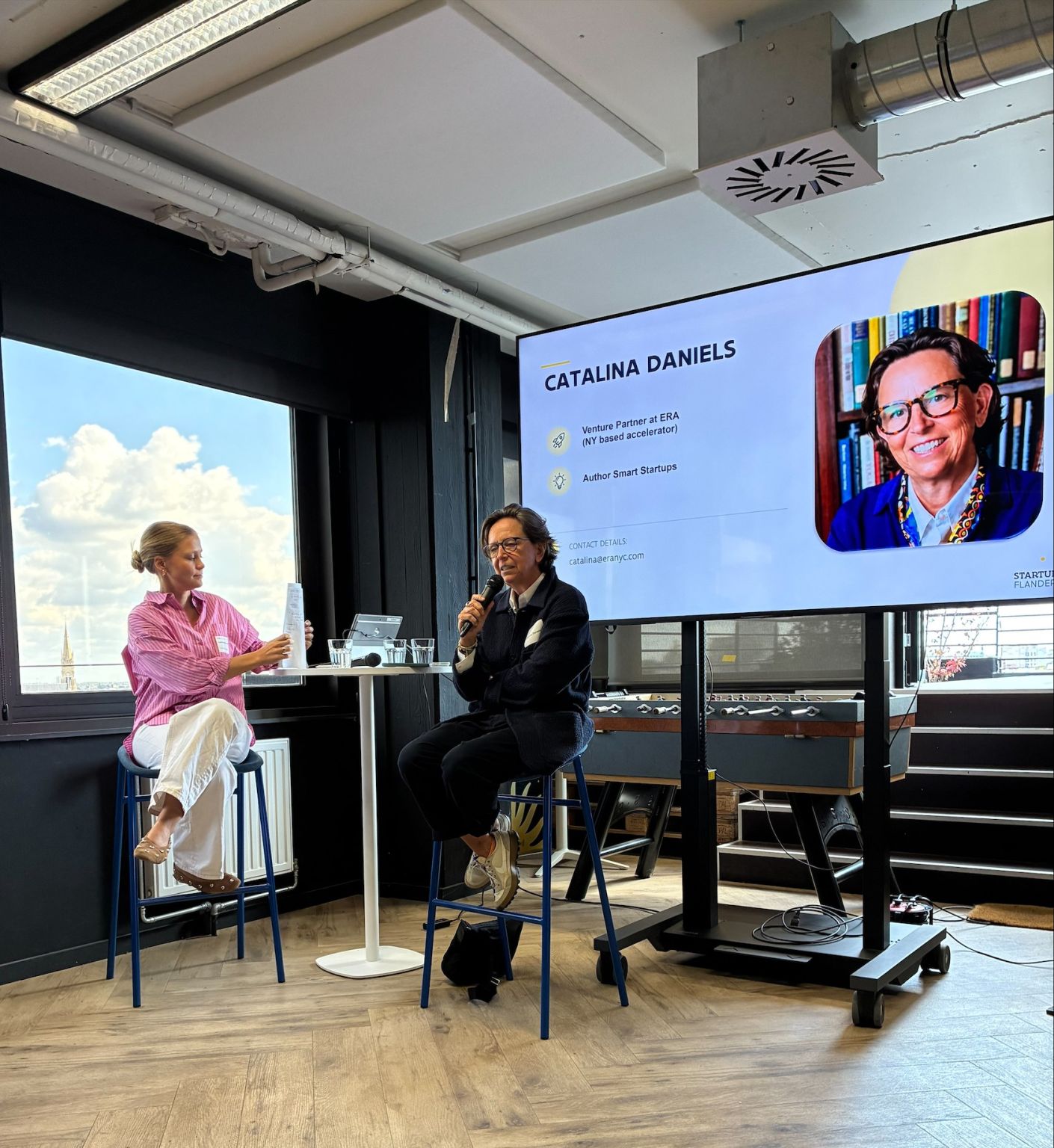
- Great day yesterday at The Beacon | Innovation Community— FIT - Flanders Investment & Trade's Big Leap USA event was sold out, and the energy in the room said it all. Flemish founders and operators genuinely hungry to crack the US market. Loved hearing Catalina Daniels' hard lessons on building stateside, and the panel with Amaury Hellebuyck (TechWolf), Jonathan Bovijn (Polysense) and Andreas Geamanu (introw.io) didn't sugarcoat anything either — real talk on what it takes to actually make the leap. Also great to see the
- Love the movie on our lovely city Business in Antwerp 💥💪 & great to have the Antwerp Convention Bureau team now being part of The Beacon | Innovation Community as well since a couple of weeks ✨
- Welcome to The Beacon | Innovation Community Cloudar team!
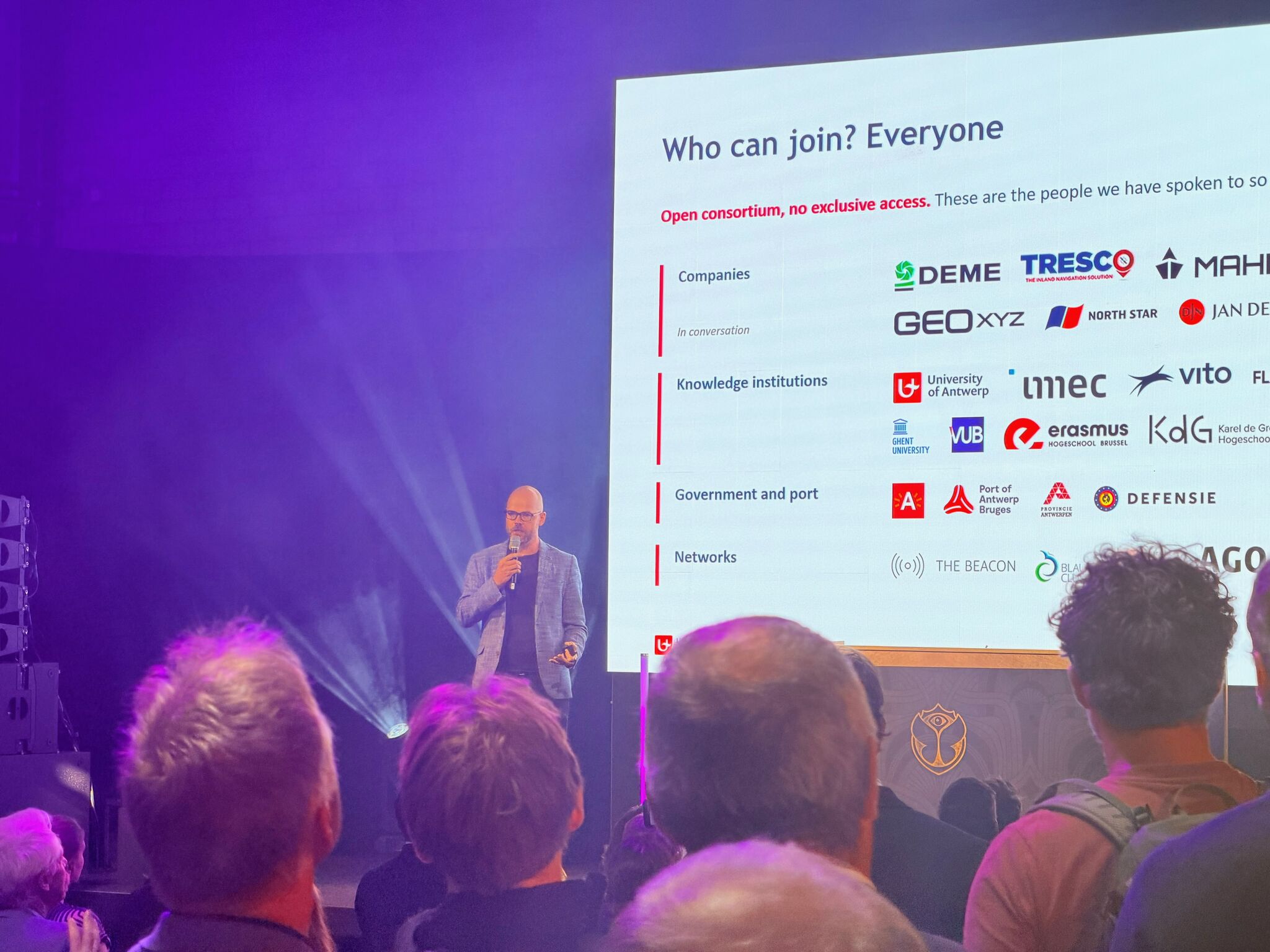
- Will we meet at our Spark session on September 16 ? Check it 👇 The Beacon | Innovation Community Hubs4Growth #PortTech #Antwerp #techinnovation
Related profiles


This page shows public professional information only, each fact cited. Is this you? send a correction, or ask for removal within 24 hours, no questions asked.