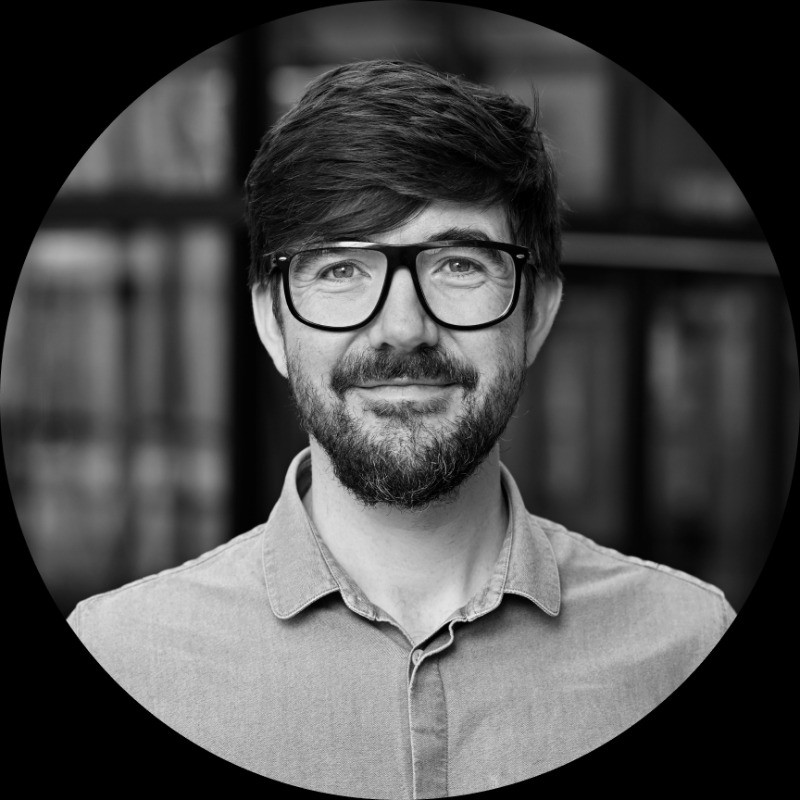
Overview
Helsens holds a PhD in biological and computational sciences from Ghent University. Before Solvice he worked as a Research Data Scientist at Biocartis and Sony, and later as ML Lead at In The Pocket. He co-founded Solvice with Christophe Van Huele in 2015, bringing a machine learning lens to the company's optimisation product stack.
Beyond Solvice, Helsens contributes to Climate Change AI.
Career history

In the news
- Will organoids become as standard as mice in drug discovery? I've been reading up on the promise of patient-derived organoids as ex vivo models last week. Take a biopsy, grow a population of 3D cultures, expose them to drugs, and get a readout that retains some of that patient's biology. Simple idea. Almost suspiciously compelling. :) The promise has been around for a little less than a decade. The newer literature is getting interesting. - A multicenter metastatic colorectal cancer study started with 232 patients (2025), PDO
- I was always that person in the room making the argument that AI models should be trusted with confidential data, in enterprise settings & when assured data is protected and stored in EU. Among the many things that the Fable launch brought us last week, we also learned that zero-data retention can be undone within a day, and I also figured that a single safety flag can quietly undo it, and I'd never know. As we go deep in biology for building protein engineering workflows, I may be discussing something confidential e.g. protein
- Pancreatic cancer is still one of the worst diagnoses you can get, mostly because it's often driven by an "undruggable" KRAS mutation. Big news at American Society of Clinical Oncology (ASCO) a couple of weeks ago: Revolution Medicines showed daraxonrasib nearly doubled survival in metastatic pancreatic cancer. 13.2 months versus 6.7 on chemo. A 60% cut in the risk of death, in a disease where ~90% of tumors run on mutant KRAS. Still not a cure, but landmarks like this are about as good as it gets. I tried to properly understand the
- Just asked a frontier model a textbook biotech drug-delivery question. It paused the chat and offered to downgrade me to a weaker model. The test: "How do viruses enter a human cell, and can we repurpose this for nanobody delivery?" Half of viral-vector research in one sentence. GPT-5.5 answered cold. Fable 5 hit its biology safeguard and offered me Haiku 4.5 instead. Fair enough, viral entry is dual-use-adjacent and the classifier is defensible. We build on these models and want them safe. Yet, unable to discuss questions like
- The tier-1 AI labs have been arriving in biology lately, and they are putting it in the spotlights as could be seen in today's release of Mythos/Fable. Some thoughts that crossed my mind today. Yet it doesn't touch what actually kills programs. Real protein engineering is never one objective, a binder needs sub-nM affinity + manufacturability in CHO + tolerable immunogenicity. An enzyme needs high kcat + cofactor efficiency + a host that survives it. And the wet lab still takes weeks, however fast the design lands. What doesn't
Related profiles
This page shows public professional information only, each fact cited. Is this you? send a correction, or ask for removal within 24 hours, no questions asked.