Talks about
Insights & ideas
The through-line
One idea runs through everything Anouk Lagae says, in boardrooms and in health writing alike: quantity is an outcome, never a target. She learned it commercially at Duvel Moortgat, where "wij spraken nooit over volume, en guess what, wij groeien en twintig dertig procent zonder ooit een doel station en zonder grote budgetten" [9], and she still states it as a creed: "✨Value over volume ✨Quality over quantity ✨Care for profit ànd people ànd planet is value creation" [1]. The same logic governs how she thinks about bodies and organisations: both are living systems that thrive when the conditions are right, and both get sick when you over-manage them or push them past balance.
The shift over time is one of arena rather than belief. The leadership work was about unlocking energy in a team, tending a garden, refusing fear [9]; the later work turns the same attention to human health, making "die eeuwenoude natural intelligence opnieuw toegankelijk" in a modern world through Muchin - Lifestyle Medicine [2], under the banner she repeats constantly, #healthisrealwealth [1][7]. The seed was planted long ago: twenty years earlier, at The Coca-Cola Company in Sydney, an assignment to develop a herb-and-water based healthy iced tea sent her into Traditional Chinese Medicine, and reading the documents on the ferry home, "het licht ging aan" [2].
On leading like a gardener
Her central leadership image is horticultural rather than military. "Ik zie mij nu veel meer eigenlijk als een tuinier. Eigenlijk heb ik een prachtige tuin om te onderhouden en ik moet zorgen dat de juiste mensen de juiste vitaminen krijgen, op de juiste plaats. Die heeft veel zon nodig, de ander net niet." [9] The job is matching conditions to individuals, and guarding against a toxic, over-regulated environment that kills initiative, which she sees as the standard failure mode of large corporates [8][9]. The complement to the garden is the flock: set a crystal-clear direction, the magnetic field that migrating birds follow, then let the team self-organise, alternate the lead and deviate from the straight line to catch the flow rather than dictating the path [8][9].
This reframes what a leader is for. "Eigenlijk ligt de kracht niet in je moet de snelste of de beste van het team zijn, maar eigenlijk ligt het strafste potentieel is wie haalt het uit het team." [9] The measure of a chief executive is extraction of potential, not personal speed. And the mechanism she trusts is affection, not pressure: "Focus op de liefde voor de people and the outcome volgt gewoon. Het klinkt zo basic en het klinkt zo banaal, maar het is iets dat ik ongelooflijk hard nu heb ontdekt door bij Accent te zijn." [9]
On quality as the only sustainable route to volume
At Duvel Moortgat, eight out of ten meetings with Michel Moortgat were about better quality, the best supplier, the best ingredient, the best packaging, and volume simply followed [9]. She carries the discipline into pricing and promotion with visible irritation at discounting a premium product: "Stel dan je Rolls Royce of een Porsche in de etalage, één plus één gratis, waar zijt ge mee bezig?" [9] Sustainable profit, in her account, comes from choosing quality at every link in the chain, right down to making fewer but beautiful, durable parasols that last twenty years [9]. The later formulation drops the product examples and keeps the principle intact, extending it from margin to meaning: caring for profit and people and planet is itself value creation, and the goal is "een meer gezonde balans" [1].
On mistakes, fear and love
She has institutionalised permission to fail. Every new hire at Accent signs a commitment in the first person: "Iedereen die tekent bij ons tekent eigenlijk: ik, Anouk Lagae, beloof dat ik fouten ga maken, ik probeer nieuwe dingen, fouten maken, maar me niet schuldig gaan voelen." [9] The crucial half is the guilt, not the error, because not trying is worse than failing; the board reciprocally commits never to say "I told you so" [9]. Behind this sits a diagnosis of scale: corporates avoid risk because the bigger you get the more you have to lose, so Accent deliberately anchors "stay a cheeky rascal" as a core value to keep fear from creeping in as the company grows [9]. Magical companies, she argues, run on love rather than fear, an almost irrational love for the product at Duvel and an incredible love for people at Accent, with profit arriving as an outcome of that love [9].
The tolerance stops at culture. Culture violations get near-zero tolerance even from top performers, on the medical logic that prevention is better than cure and one unchecked bad cell can sicken the whole company [8]. It is the same systems thinking she applies to bodies: watch the small early signals, act before the imbalance spreads.
On testing small instead of betting big
Big ideas rarely arrive fully formed. Her method is to test ten small things and tweak; after five tweaks something can suddenly turn into the next big thing [9]. She frames this explicitly as a correction, learned at Duvel, of the big-corporate "big bet" thinking that failed her at Coca-Cola [9].
On going abroad
Her advice here is unqualified: "Ga naar het buitenland, it's never too late. Het is life changing, het verandert zo fundamenteel als persoon, het is zo ongelooflijk verrijkend dat geen enkele studie dit kan bijbrengen." [9] The specific capacity it builds is judgement of people without social scaffolding. Abroad you have to assess and trust people in split seconds with no school, dialect or neighbourhood to place them by, a muscle she says Belgians rarely develop because they are forever putting people in boxes [9]. Travel keeps feeding her thinking, whether that is a ferry ride that opened a twenty-year path [2] or a Melbourne tram slogan about dog waste that she turns into a lesson on daily bodily signals [4].
On why we get sick
Her core health question is diagnostic rather than symptomatic: "niet wát ons ziek maakt, maar waarom we ziek worden" [7]. Traditional Chinese Medicine gives her a vocabulary of balance and natural intelligence, sitting alongside integrative and lifestyle medicine [7], and it insists that the ordinary daily evidence matters. Stool, for instance, is a serious indicator of balance in the body: "Je 'grote boodschap' vertelt vaak meer dan je denkt", and paying brief attention to it every day yields valuable signals about digestion and general health [4]. Where support is needed, the path she recommends is a TCM therapist nearby for nutrition and lifestyle advice, acupuncture and, if necessary, the right Herbal Masterblends [4]. She also holds the older adage plainly: food is medicine [5].
On making ancient wisdom accessible
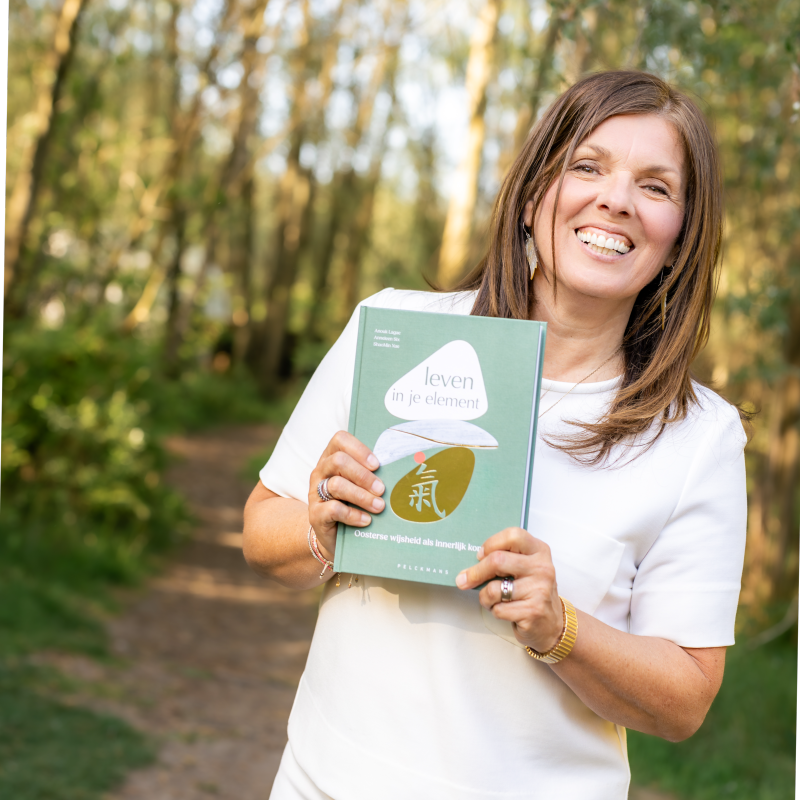
The mission is translation, not mystique. Muchin - Lifestyle Medicine exists to make centuries-old natural intelligence accessible again in the modern world, and the book Leven in je Element, written with Dr. Anneleen Six and Chief Physician ShaoMin Xue, was designed to bring that knowledge and wisdom closer to everyone with a healthy interest in health [2][6]. The reception suggests appetite for it: the publisher said the book was conquering Flanders and ordered a second print run within a month, with a brief stock-out along the way [6]. She works the same accessible register in public conversation, praising an interviewer for "scherpe én heerlijk eenvoudige vragen" and labelling the exchange #zonderzever, a plainly clear conversation about TCM [7]. The effort extends into community events, including a congress on nature's wisdom for women's health [3], and into visible admiration for fellow travellers, "de moedige pioniers die mee bouwen aan een nieuwe wereld in balans" [5].
On what success is
Her answer is short and it governs the rest: "Impact in de maatschappij, dat is mijn definitie van succes." [9] It is also how she chose where to work. She brainstormed with her children about what would make society better if she sold more of it, and her son answered "more jobs for Syrian refugees", which matched Accent's mission of placing more people in jobs [9].
Takeaways
- Treat volume as a by-product: eight of ten meetings at Duvel Moortgat were about better quality, and the company grew 20 to 30 percent with no volume targets or big budgets [9].
- Lead by matching conditions to people, not by out-performing them: "ik moet zorgen dat de juiste mensen de juiste vitaminen krijgen, op de juiste plaats" [9], and set direction like a magnetic field so the flock can self-organise [8][9].
- Sign people up to failing without guilt, and have the board commit never to say "I told you so"; not trying is worse than failing [9].
- Keep near-zero tolerance for culture violations even from top performers, because one unchecked bad cell can sicken the whole company [8].
- Refuse promotions that cheapen a premium product: "Stel dan je Rolls Royce of een Porsche in de etalage, één plus één gratis" [9].
- Replace big bets with ten small tests and successive tweaks; after five tweaks something can become the next big thing [9].
- Go and live abroad at any age, because judging and trusting people without social reference points is a muscle you cannot build from study [9].
- Ask why people get sick rather than what makes them sick, and read daily signals such as digestion as indicators of balance [4][7].
In the news
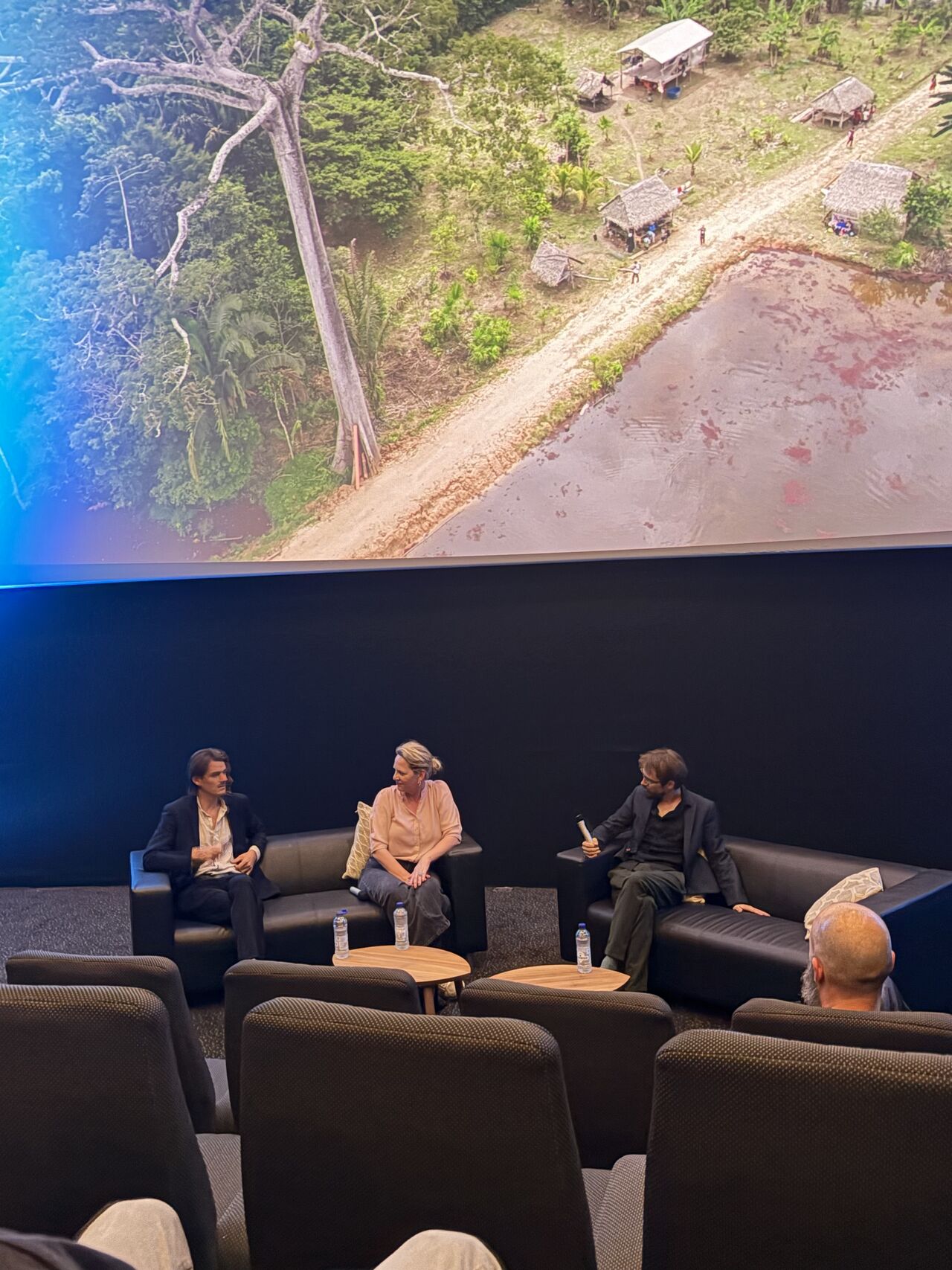
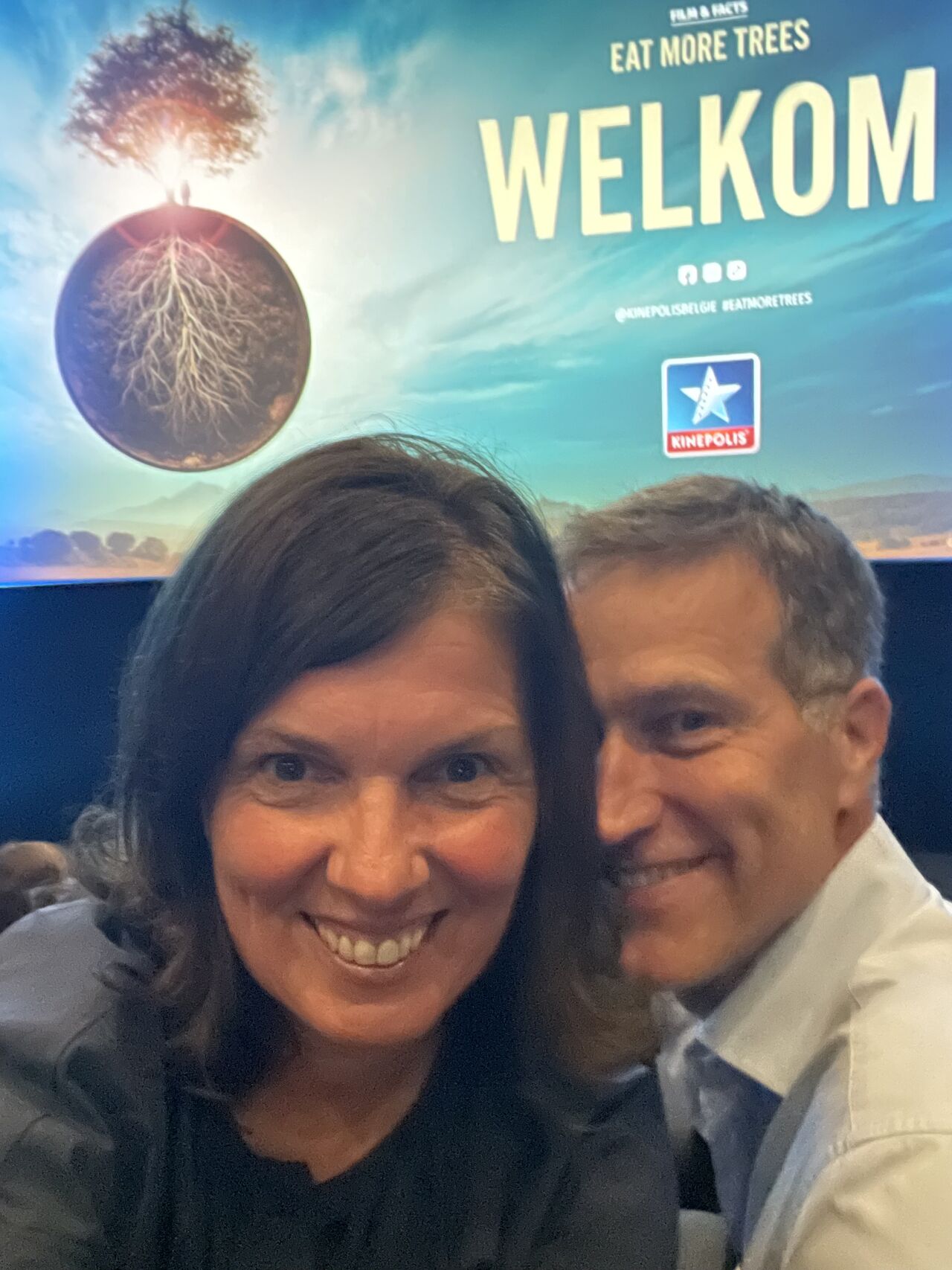
- Wil je ook meebouwen aan een gezonde omgeving waarin wij én de natuur opnieuw kunnen floreren? 🌱 Ga dan zeker de documentaire Eat More Trees bekijken. Het is nog niet te laat. Als we samen bewuster kiezen en bereid zijn om opnieuw verbinding te maken - met onszelf, met elkaar én met de natuur - kunnen we bouwen aan een gezondere toekomst. Healthy soil. Healthy trees. Healthy food. Healthy people. 🌳 Dankjewel om dit hoopgevende verhaal van al deze moedig mooie pioniers met ons te delen Louis De Jaeger, keep on rocking 🕺💚
- Oohh Pascale… 🎶 Pure thing, you make my heart sing. 💛🌿 Wat heb ik genoten van je podcast samen met Gianni Faelens. De ene na de andere aha. “Maar natuurlijk.” “Zo zit dat.” “Waarom vinden we dit eigenlijk normaal?” Er zaten zóveel gedachten in die bleven hangen. Een kleine selectie om goesting te geven om zelf te luisteren: 🌿 Gezonde voeding lijkt soms duur. Maar ongezondheid betalen we uiteindelijk óók, alleen veel later. 🌿 Waarom heeft een supermarkt eigenlijk een klein rayon “gezond”? Wat zegt dat dan over al de rest? 🌿

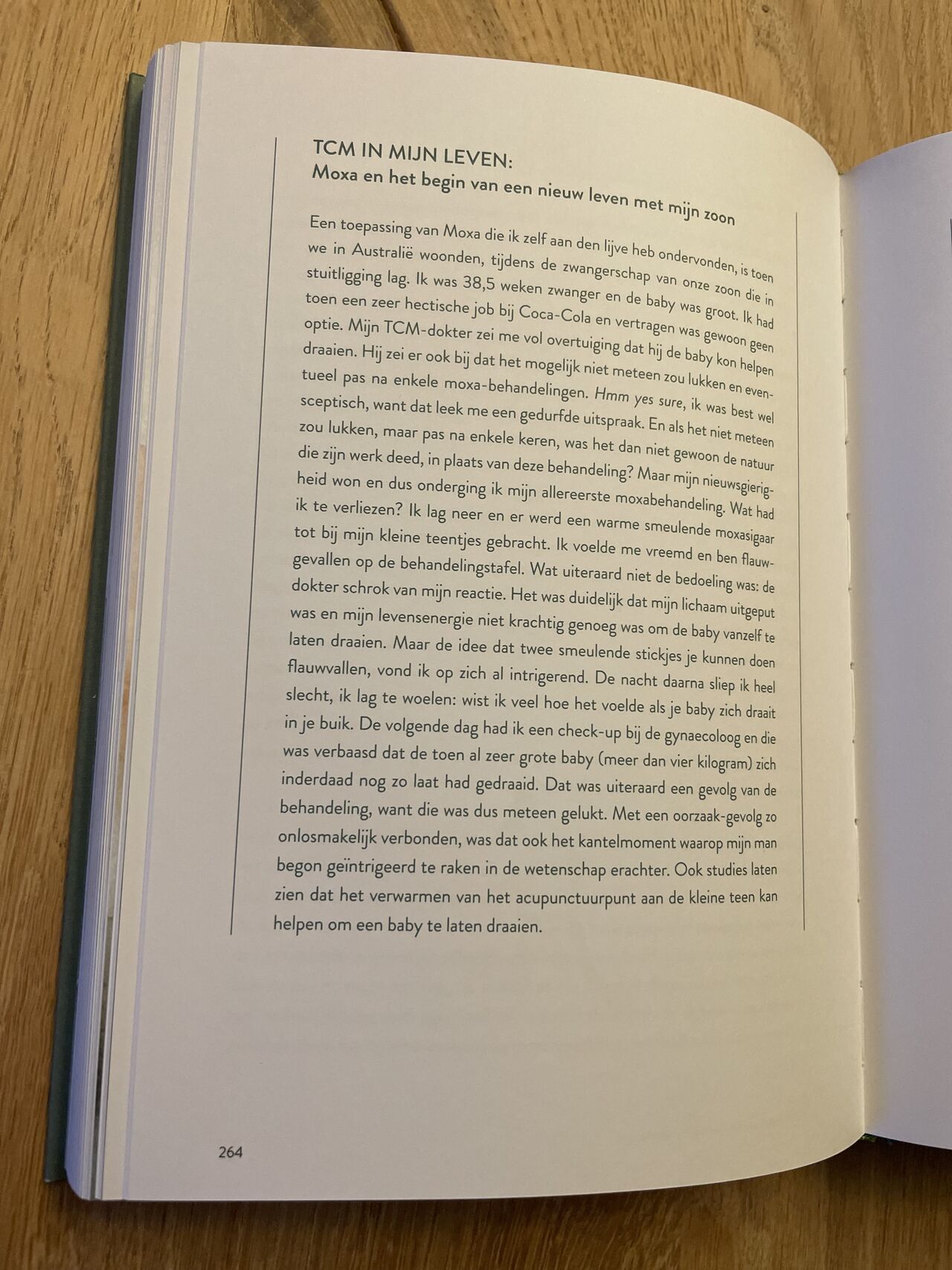
- Je hebt zo van die dagen die je niet snel vergeet. 💛 Vorige vrijdag zat ik samen met een topgynaecologe die me vertelde hoe ze zich al jaren verdiept in integratieve geneeskunde. De Westerse geneeskunde heeft ontzettend veel te bieden. En toch blijven er binnen Women’s Health nog altijd vragen waarop vrouwen vandaag niet altijd een volledig antwoord krijgen. En dus ging ze verder zoeken. Breder kijken. Oost én West. Zo ontdekte ze jaren geleden ook moxa, een eeuwenoude techniek uit de Traditionele Chinese Geneeskunde. Vandaag
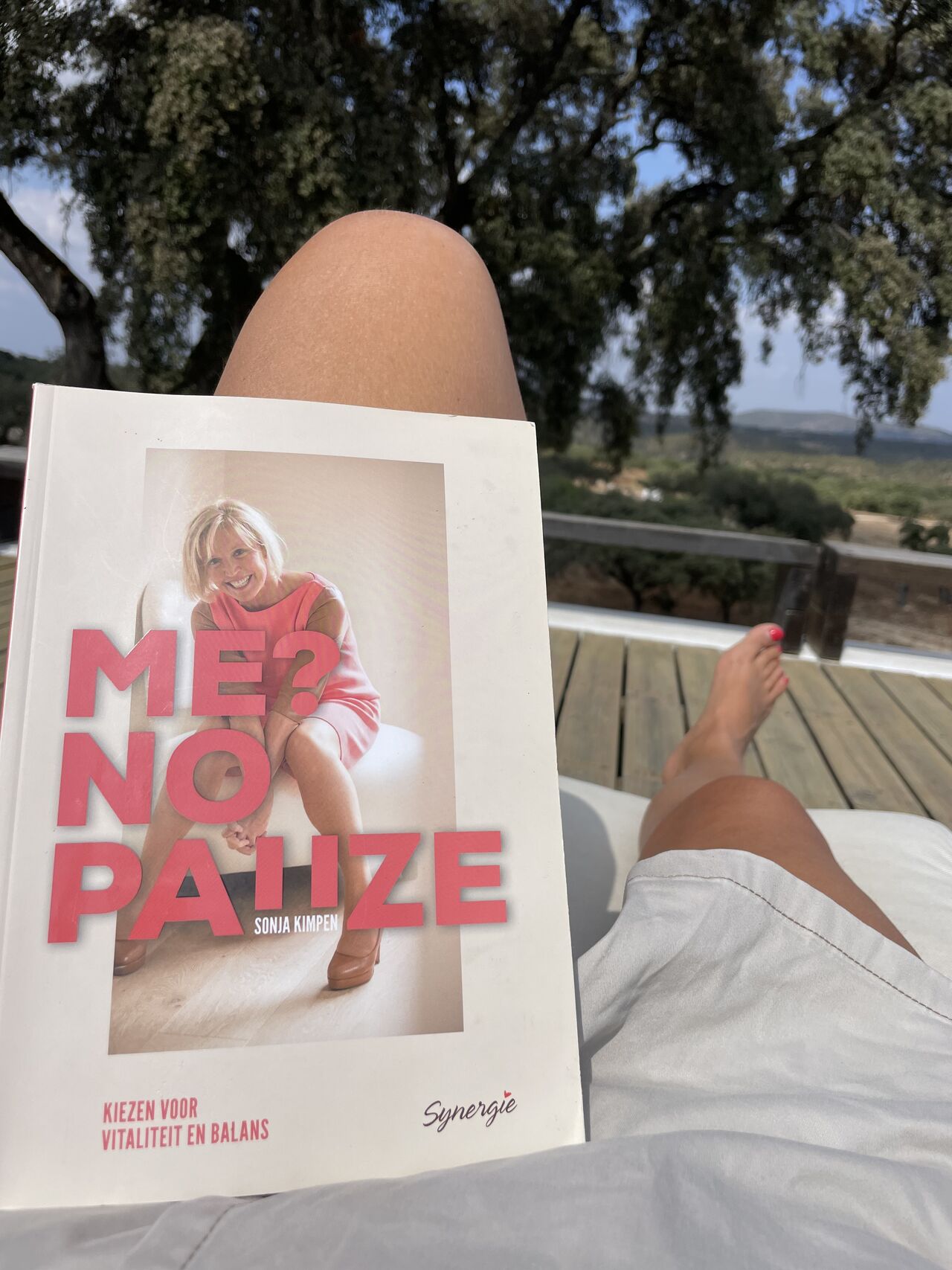
- Ik ga op reis en ik neem mee… 📚☀️ Menopauze van Sonja Kimpen. Misschien had ik het al véél eerder moeten lezen. Maar ja… ik had precies nog niet zoveel last. 😇 Tot ik begon te lezen. En dacht: Ahaaa… dát dus. En dat ook. En dat blijkbaar óók. 😂 Wat ik vooral niet wist: dat de perimenopauze tot wel 10 jaar vóór de menopauze kan beginnen. Dus tegen dat je denkt “hallo menopauze”, is je lichaam vaak al een tijdje aan het voorbereiden. Voor een “tweede lente”, zo wordt de menopauze zo mooi genoemd in de Traditionele Chinese
- Op naar een meer gezonde balans! 💰🩵⚖️🌿 ✨Value over volume ✨Quality over quantity ✨Care for profit ànd people ànd planet is value creation #healthisrealwealth
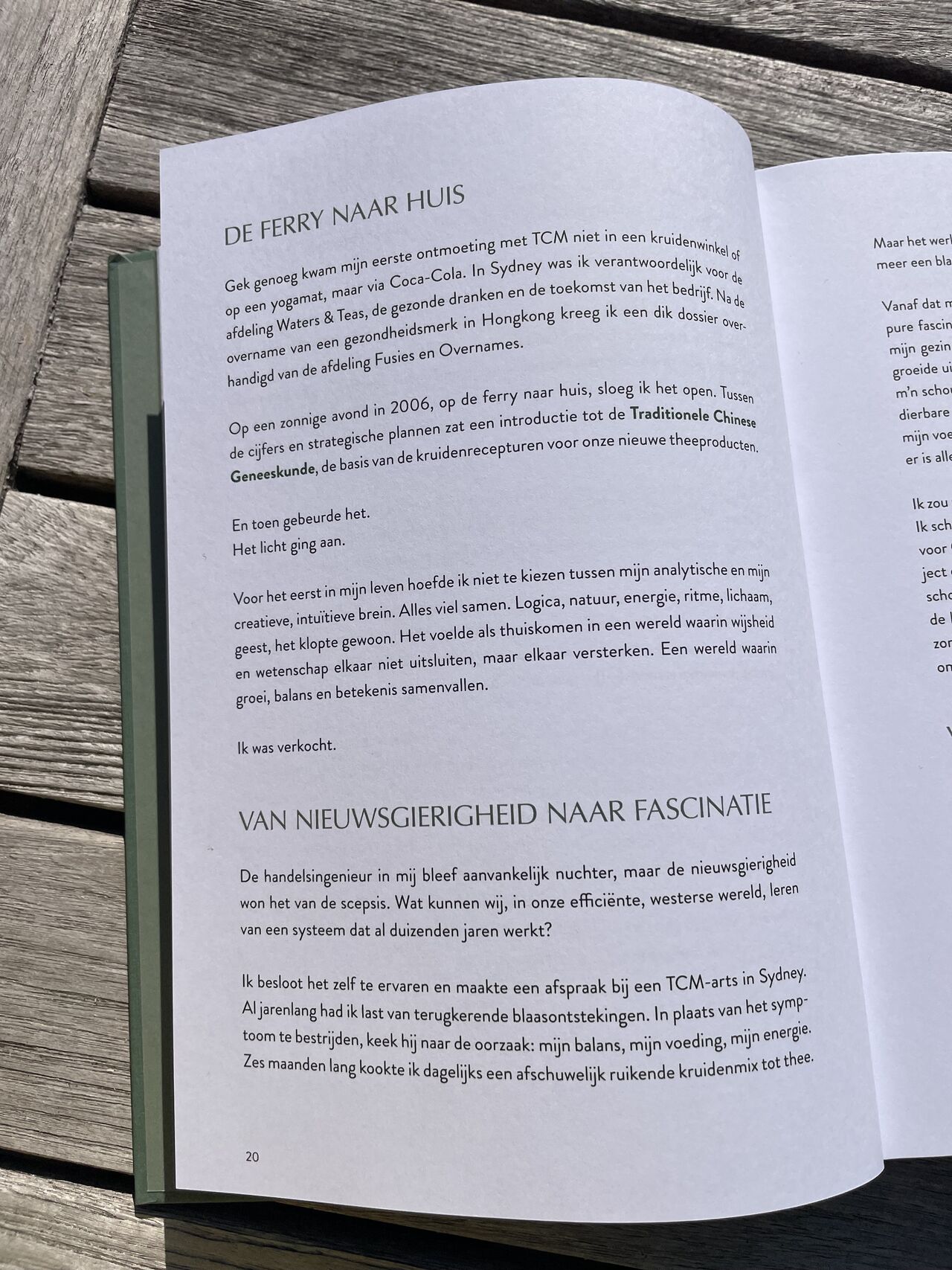
- Op de ferry naar huis… 🌊 20 jaar geleden werkte ik voor The Coca-Cola Company in Sydney. Ik kreeg er de opdracht om een nieuw gezondheidsdrankje te ontwikkelen op basis van water en kruiden - een gezonde iced tea. 😉 Tijdens dat project mocht ik me gaan verdiepen in Traditionele Chinese Geneeskunde. Ik begon de documenten te lezen op de ferry naar huis. Het licht ging aan.💡 De vonk sloeg over. Wat begon als nieuwsgierigheid, werd een passie. Daarna een ietwat uit de hand gelopen hobby - mét diploma - en vandaag onze
- Nature’s wisdom for Women’s Health. Kom je ook?#muchincommunitycongress
- The beauty of traveling and discovering new places... 💎💛 In Melbourne weten ze duidelijk hoe belangrijk een goede stoelgang is... zelfs voor je hond! 🐶💩 Tijdens onze ochtendjogging kwamen we deze hilarische tram tegen. 🤣 Maar wist je dat je stoelgang ook volgens de Traditionele Chinese Geneeskunde een belangrijke graadmeter is voor de balans in je lichaam? 💛 Je "grote boodschap" vertelt vaak meer dan je denkt. Door er dagelijks even aandacht aan te besteden, krijg je waardevolle signalen over je spijsvertering en je algemene
Related profiles


This page shows public professional information only, each fact cited. Is this you? send a correction, or ask for removal within 24 hours, no questions asked.