Overview
The main segment features Bart Steukers, CEO of tech federation Agoria, discussing Belgium's defense industry. He maps the sector as three concentric circles: ~80 classic defense firms (FN Herstal, Sonaca, Sabca) with €2B revenue and 5,000 jobs, expanding to ~500 companies and 13,000-16,000 jobs when including cyber, AI, drones and technical textiles, with potential to double by 2033. Steukers highlights the Ostend maritime ecosystem around Exail Robotics' autonomous mine-hunting underwater drones, the Ukraine war's compression of innovation cycles to 8 weeks, and the historic financing problem where banks refused loans to companies with even 10-15% defense activity. He pleads for European coordination of defense value chains, better AI literacy across the population, and reskilling as automation reshapes manufacturing jobs.
Talks about
Insights & ideas
The through-line
Everything Bart Steukers says returns to a single conviction: the ground under industry has shifted, and the countries and companies that survive the shift are the ones that keep innovation and talent physically close to home. He puts it as a mantra, "Innovatie, innovatie, innovatie, innovatie" [2][3], and as an anchoring argument: "Als talent en innovatie aanwezig zijn, dan gaat ons bedrijf over het algemeen drie keer nadenken al voor het zijn bedrijf te verplaatsen naar een ander deel van de wereld" [2][3]. The defense sector is where he sees this playing out fastest and most visibly, but the underlying claim is about Belgian industry as a whole, and about a public that he thinks is not paying enough attention to what is at stake for the future of industry in Belgium [1].
The posture is forward-looking by design rather than by temperament. Asked about the historical baggage that shaped Belgium's relationship with its own defense industry, his answer is that "Het verleden kan je niet corrigeren. Op de toekomst kan je wel werken" [2]. What worries him is not the past but collective inattention: "Dat is mijn grootste vrees voor België is dat we niet allemaal en masse met dat onderwerp bezig zijn eigenlijk" [3].
On the eight-week war
The single fact he keeps returning to is a compression of time. "De gemiddelde tijd die er nu tussen gaat voor dingen die in Oekraïne gebruikt worden is 8 weken" [2][3], down from three to five years a decade ago, and that compression has created an enormous appetite and stimulus for defense innovation [2][3]. It arrives together with a change in cost structure that he treats as equally fundamental: "Je kan eigenlijk met een drone die niet zo geweldig veel geld hoeft te kosten, kan je vliegtuigen uitschakelen die miljoenen kosten. Dus ook heel het economisch model achter defensie is aan het veranderen" [2][3]. The consequence is that NATO and others have to rethink territorial defense from the ground up [2][3], and that the traditional procurement rhythm is no longer the rhythm of the battlefield.
On the size and shape of Belgium's defense sector
He describes the Belgian defense market as three concentric circles rather than a single industry. The inner circle is roughly 80 classic defense firms, about €2 billion in revenue and 5,000 jobs. Widen it to include cyber, AI and drones and it becomes around 500 companies, €4 billion and 13,000 jobs. Add knowledge institutions and it reaches some 16,000 jobs [2][3]. His projection is deliberately concrete: "Wij schatten dat die sector eigenlijk zou kunnen verdubbelen tegen roughly 2033" [2][3]. He points to Ostend as the model in miniature, where an ecosystem around maritime security is forming with Exail, security firms and academic institutions, and where the logic compounds: "Talent trekt talent aan, innovatie trekt talent aan en dus het zou best wel eens kunnen dat één van de sterke punten van België gaat worden in de komende maanden" [2][3].
On being an SME country in a consortium world
The structural fact that shapes his strategic advice is scale: only 4% of Belgian industrial companies have more than 250 employees, which makes Belgian defense an SME industry [2][3]. His conclusion is that building national value chains is the wrong ambition. Belgian firms should be securing positions inside the supply chains of large consortia such as Rheinmetall [2][3]. The same logic scales up to the continent. Europe risks massive waste if every member state makes its own military innovation choices and duplicates, for instance, F-35 supplier development. Defense value chains and procurement need to be coordinated so that a Belgian company fits together with German, Italian and Spanish partners and so that member states' equipment actually interoperates [2][3].
On the taboo that starved the sector of capital
He is direct about a financing blockage that was, until very recently, still operating. Belgian companies with even 10 to 15% defense activity were being refused bank financing on ESG grounds, which pushed them toward funding sources nobody should want them to use. He dates the change to only two or three months before speaking [2][3]. Behind that sits a longer history: the Agusta bribery scandal of the late 1980s and 1990s forced decades of artificial separation between Belgian defense and Belgian industry [2][3]. His judgement on the correction is unsentimental. Open, transparent collaboration between defense and industry is healthier than companies operating in the shadows [2][3]. And what industry needs from policymakers above all is predictability: "Als er één ding is wat bedrijven niet willen, dan is het echt onzekerheid. Dat is echt het aller allerslechtste" [3].
On jobs, digitalization and reskilling
On automation he offers evidence rather than reassurance, and then immediately qualifies it. Agoria's yearly studies show that "Tot nu toe voor elke job die verdwijnt zijn er steeds drie nieuwe bijgekomen. Het zijn niet dezelfde, hè" [2], including new work in manufacturing and in near-dark factories in Belgium [3]. The qualification is the whole point: because the new jobs are different jobs, reskilling becomes the decisive variable. He splits the responsibility in two. Employers own the task of mapping which skills their organisation will need; employees own the task of acting on that map [2].
On AI literacy as the real weakness
He resists the assumption that Belgium's problem is a shortage of specialists. Proportionally, the country still has a relatively high share of digital experts [2][3]. The weakness is breadth: AI literacy across the whole population. He points at China teaching AI in primary school and calls that approach "completely justified" [2], treating population-wide fluency, not expert headcount, as the gap Belgium has to close [2][3].
Takeaways
- Treat the eight-week innovation-to-battlefield cycle in Ukraine as the new benchmark; it replaced a three-to-five-year cycle and reset expectations for how fast defense innovation must move [2][3].
- The cost asymmetry is strategic, not incidental: cheap drones disabling multi-million-euro aircraft is changing "heel het economisch model achter defensie" and forces a rethink of territorial defense [2][3].
- Belgium's defense sector is best understood as three concentric circles, from ~80 classic firms to ~500 companies including cyber, AI and drones, up to ~16,000 jobs with knowledge institutions, with credible potential to double by roughly 2033 [2][3].
- With only 4% of Belgian industrial companies above 250 employees, the play is winning positions in consortium supply chains such as Rheinmetall's, not building national value chains [2][3].
- ESG-driven bank refusals for firms with even 10-15% defense activity pushed them toward undesirable financing; that has only started to change in the last two or three months [2][3].
- For every job lost to digitalization, three new ones have appeared so far, but they are different jobs, so employers must map future skill needs and employees must act on them [2].
- Belgium's digital gap is broad AI literacy across the population, not the supply of digital experts; teaching AI in primary school, as China does, is justified [2][3].
- Keep innovation and talent local and companies think three times before relocating; certainty from policymakers matters because "onzekerheid" is the worst thing you can give business [2][3].
In the news
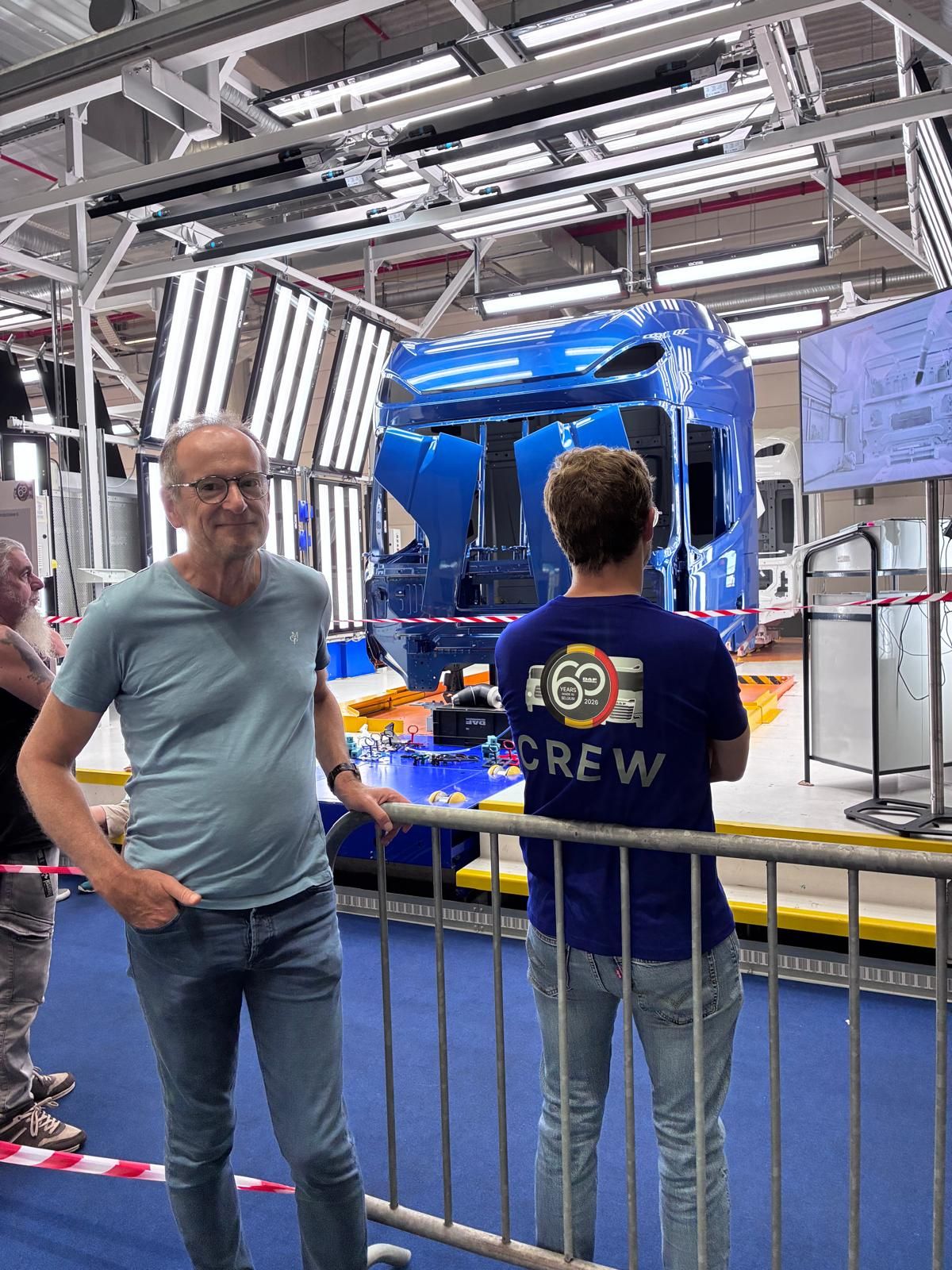
- Duizenden collega's, jongeren en sympathisanten gisteren op de familiedag 60 jaar DAF Trucks NV in #Westerlo - op 1 dag werd hier meer gedaan om jonge mensen voor #Stem-opleidingen te enthousiasmeren dan vele academische studies bij mekaar. Schitterend werk door het team van managing director Stijn Van Eyken. 👏 Dank ook aan Joris Kelchtermans om zijn 'rug' te mogen lenen voor de foto 😇 en aan Joris Biron voor de enthousiaste ontvangst op de parking 🙏 Blij dat ik erbij mocht zijn! Agoria Jolyce Demely Ben Van Roose Pieter-Jan
- Belgische atleten sporten op het allerhoogste niveau, the Allianz Memorial Van Damme ! Belgische technologie-bedrijven maken dit mogelijk, zij spelen immers ook al jaren op hetzelfde allerhoogste niveau ! En wanneer FEB - Federation of Enterprises in Belgium en Agoria de krachten bundelen komt alles mooi bijeen ! Dank aan het Memorial team olv Kim Gevaert, OLY, en alle VBO&Agoria-collega's voor deze fijne samenwerking 👌🎁 Pieter Timmermans Stefan Maes Diego Algaba Miel Croubels Nicolas Bourdon yves de cocker Kevin Borlee, OLY
- Donner un coup de pouce aux jeunes talents bruxellois, voilà ce qui nous enthousiasme chez Agoria ! Une heure et demie d’échange avec Nada M. autour des rêves, des études, de la communication, de l’acquisition d’expérience, des opportunités et des défis, mais aussi de la manière dont chacun peut contribuer à façonner le monde de demain. Vas-y, Nada, et montre au monde qui tu es ! Brussels jong talent een duwtje in de rug geven - daar worden we bij Agoria blij van ! Anderhalf uur in gesprek met Nada M. - over dromen, studies,
- Belangrijk voor al wie begaan is met de toekomst van onze industrie in België!
Related profiles


This page shows public professional information only, each fact cited. Is this you? send a correction, or ask for removal within 24 hours, no questions asked.