
Overview
madewithlove is a software engineering and technology consulting company founded in 2008. The legal entity is madewithlove BV, registered in Leuven, with offices at Sluisstraat 79 in Leuven and Oktrooiplein 1 in Ghent. The company works for SaaS startups and scale-ups. Its services are software engineering (back-end, front-end, mobile and AI), CTO as a service, audits and technical due diligence, recruiting, CTO coaching and product management. The audit practice has run more than 190 SaaS audits since 2008; each audit takes 10 business days from the initial interview to the final report and is bought by investors de-risking an investment and by companies preparing a funding round, merger or acquisition. Named clients include Telenet, Teamleader, Cheqroom, Urbantz, Combell, Doccle, VDAB, KBC, Settlemint, CitizenLab, StoryChief, CrazyGames and Apideck. Andreas Creten is CEO and founding partner. He wrote The Economics of Software Engineering and hosts the podcast The SaaS Show. Tim Sterkens is COO and partner, Dimitri Roose is CTO in residence and partner, and Jonas Van Schoote is a CTO in residence.
Stated facts & numbers
- Founded: 2008
- Headquarters: Leuven (second office in Ghent)
- Legal entity: madewithlove BV, BE0898833969
- Employees: 10-49
- CEO: Andreas Creten (founding partner)
- Services: Software engineering, CTO as a service, technical audits and due diligence, recruiting, CTO coaching, product management
- Audits: 190+ SaaS audits since 2008
- Customers: Telenet, Teamleader, Cheqroom, Urbantz, Combell, Doccle, VDAB, KBC, Settlemint, CitizenLab, StoryChief, CrazyGames, Apideck
Org chart
In the news
- Your risk register is a list of the failures you thought of. Which is close to a guarantee that it does not contain the one that gets you. Residuality Theory, a framework from Barry O'Reilly, inverts how you arrive at a resilient architecture. You do not start by predicting what will break. You start with a naive design and throw random stressors at it. A provider goes down. A regulation changes. Usage patterns shift. A vendor gets acquired. What survives is the residue, and the undesirable residues tell you where the design has to
- We reopened hiring for engineers and the applications came in faster than ever. Most of them, as far as we can tell, are not from real people. Fake candidates used to be rare and targeted. Now it is a numbers game, and every company hiring this autumn is about to play it. In the new SaaS Show, Andreas Creten and Dimitri Roose go through what they are seeing, how they tell a generated application from a real one, and why the better your job ad, the better the fake.
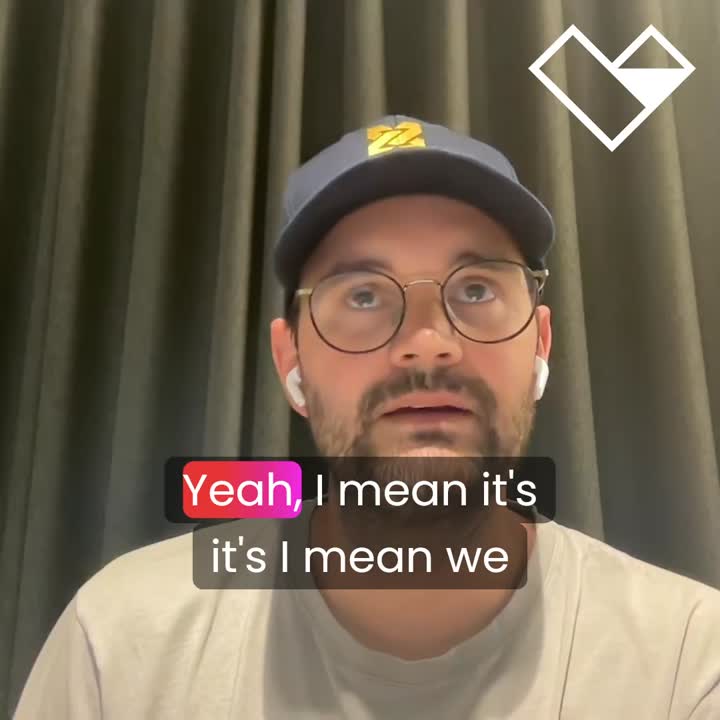
- Fake candidate alert! We recently reopened job openings and the applications came in faster than ever. However, most of them, as far as we can tell, are not from real people. Fake candidates used to be rare and targeted. Now it is a numbers game, and every company hiring this autumn is about to play it. Andreas Creten and Dimitri Roose shine their light on this in our latest SaaS Show: https://lnkd.in/gxfA_7xR If you are a real human and you wish to apply: https://lnkd.in/gtixtftF
- Buying everyone a subscription is not an AI strategy. It is a procurement decision that feels like one. A subscription gives people access to a model. That is genuinely useful if you are an engineer, comfortable wiring together MCPs, skills and specialised agents until the thing fits your workflow. Most of your company will not do that. They will open a blank chat box, ask it something, get a reasonable answer that knows nothing about how your company works, and go back to what they were doing. The gap is not model quality. It is
- Would you run your own GitHub? Your source code is the most precious thing your company owns. GitHub goes down regularly. And in nearly twenty years of working with software companies, we can count the clients who self-hosted it on one hand. Nobody thinks it is worth the hassle. Keep that in mind the next time someone proposes running your own models.

- The query was correct. It followed a textbook pattern and it passed review. It also broke user-facing writes, 17 lock-wait timeouts in under two hours. The setup: a transactional outbox worker claiming batches of unpublished messages with SELECT FOR UPDATE SKIP LOCKED, so concurrent workers do not collide. That is the recommended way to do this. What nobody sees is that InnoDB's default isolation level, REPEATABLE READ, does not only lock the rows you matched. It locks the gap in the index where matching rows would be inserted.
- The gap between a token price and the price of a machine looks enormous. Then you count the rest. The person who maintains it. Access control. Updates. The hours it sits idle, and the day it breaks. For an individual running a small model at home, the saving is real. For a company, the second column is longer than the first. Buy versus build has not changed because the thing being built is a model. https://buff.ly/BQtYeD0

- A rule nobody enforces is a suggestion. That is what happened to every style guide your team ever wrote. Someone sat down for a week, produced a thorough document, and the document went into a wiki where it aged. Not because the rules were wrong. Because there was no moment in the working day when anybody read them. What changes is that an agent will read prose rules and apply them to every diff. The style guide stops being a document and becomes a runtime. The interesting consequence is which rules become worth writing.

Alumni 1 went on to found or lead
- PVincent BattagliaCTO in residence→Co-Founder & CEO at Rebel Food
 Tim SterkensCOO
Something wrong or missing? Send an update. Fixed within 24 hours.