Overview
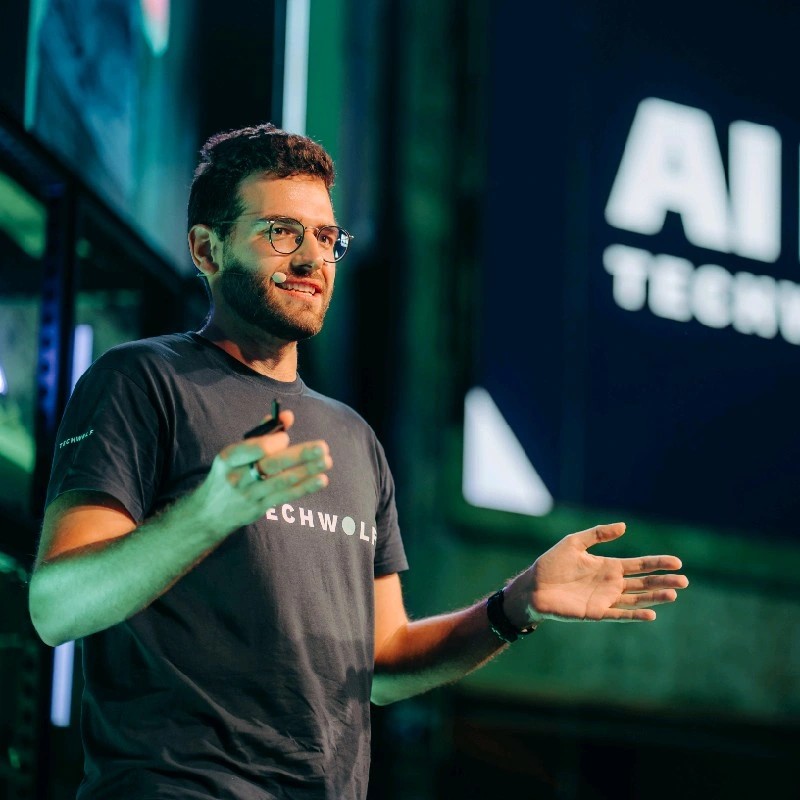
Based in Ghent, Jeroen co-founded TechWolf alongside Andreas De Neve and Mikael Wornoo. TechWolf applies NLP and AI to Skills Ontology and talent intelligence, helping enterprises understand their workforce capabilities. The company is a member of the Wintercircus ecosystem.
As CTO of TechWolf, Jeroen leads the technical direction of the platform, including NLP models, skills graphs, and Enterprise AI integrations. He is a recognized voice in the Belgian AI scene.
Jeroen's work centers on AI-first workforce transformation and skills intelligence. He focuses on building proprietary language models for skills inference that outperform general-purpose models in accuracy and flexibility.
Career history
- Co-Founder & CTOSep 2018 - PresentTechWolf
- Founders Pledge MemberOct 2025 - Present
- Start-up AdvisorJul 2022 - Jun 2024Antler


Education
MPhil, Advanced Computer Science (NLP focus)2018 - 2019University of Cambridgeranked 6th in cohort with 86% average
Burgerlijk Ingenieur (Ir.), Computer Science2014 - 2020Ghent University
Talks about
Insights & ideas
The through-line
Across everything he says, one argument recurs: the hard part of an AI transformation is never the technology. "Going AI-first looks like a tooling problem. You can buy the models and the licenses in an afternoon. The real work is mindset, and there's no license for that" [15]. That conviction shows up in how he runs teams, how he thinks about security, how he reads engineers' grief over lost craft, and how he treats his own role. The technology side he treats as a fast-moving given, worth tracking closely but rarely the bottleneck. The organisational and human side is where he spends his attention: adoption consistency, feedback loops, who owns what, and what people define themselves by once the machine can do the thing they were proud of.
The position has sharpened as the models have. Two years of internal advice at TechWolf boiled down to "when in doubt, reach for the best LLM" [13]; that era is now closing, and his focus has moved from getting people to use frontier intelligence at all to designing around intelligence that is becoming abundant and cheap [1][13]. Alongside this runs a second, older thread: organisations are made of skills, not job titles, and the data to see those skills has always been lying around unread [19][17].
On the end of frontier-by-default
For two years the internal rule was simple, and it made sense: "The gap between the top model and everything else was big enough to justify the extra cost. Defaulting to the frontier was the safe bet, and the best way to avoid people giving up because the model didn't do what was needed" [13]. That rule is being retired. Smaller models have caught up on drafting, summarising, pulling structure out of messy text and answering the hundredth variant of a known question, to the point where "plenty of people now can't tell the frontier model from one a fraction of its size" [13]. He describes a chunk of everyday work as saturating, while genuinely hard problems, long chains of reasoning and novel design still show the frontier pulling clearly ahead [13]. Automatic routing based on the task is the natural consequence [13].
The behavioural evidence arrived shortly after the argument: for the first time since the AI rush began, his team stopped reaching for the most expensive model by default, sometimes to stretch budget, sometimes just for speed, while remaining enthusiastic users of Fable and Sol [1]. He reads the rapid growth of routers like OpenRouter as proof of the same premise, and points to Ox Alpha, an experimental model being given away at 100T tokens per day, as a signal of what is coming [1]. The strategic implication is the part he cares about: "When a new level of intelligence becomes abundant, most of us need to go back to the drawing board. Things that were cost prohibitive just months ago are rapidly becoming affordable" [1]. He also sees the market fragmenting away from one subscription covering all AI work toward a much more diverse landscape across the stack [7].
On leaders who talk about AI without using it
"A leader who talks about AI but doesn't use it is a huge risk on your AI transformation" [12]. Talking is not enough, and neither is giving people time, tools and support, though most companies have not even reached that stage [12]. His framing is categorical: "This is a new paradigm, not a new feature. You either work this way yourself or you don't, and it's pretty apparent if you are talking rather than doing" [12]. Without an ingrained understanding of the new world, he argues, the quality of a leader's decisions inside it will simply be poor, and he rejects delay outright: "The models are here. The tools are good enough. There's no excuse left to keep delaying" [12].
On how the change actually spreads, he is against top-down force. Start with the few people who are genuinely excited, let them show what's possible, let it spread, and skip the company-wide mandate [15]. He is equally against containment: don't lock AI away in its own team, because a temporary task force is fine but "a permanent one just creates an AI silo when it's the opposite of what you need" [15]. The metric he watches is consistency rather than volume. A typical TechWolf engineer uses 18x more tokens than the median across 200 others observed, but the more telling number is spread: internally the average sits 20% above the median, while outside the difference is a factor of five [10]. "Token spend is not a competition, and tokenmaxxing has gone out of style a while ago. Driving consistent adoption, however, is key if you want to make your AI-first approach land" [10]. Getting a setup past prebuilt plugins and tools is what unlocks the next level, which is why the AI-first bootcamp was extended with a module on building your own tools, covering design principles for agentic workspaces and underused configuration options [6].
On identity, craft and loss
He sees software engineers mourning the loss of their craft, and treats the grief as real rather than as resistance to be managed. "Most of them are beyond excited about all the new things they can do, but at the same time they feel a real sense of loss. When technology suddenly makes doing the thing you take pride in feel pretty useless, it can hit you hard" [11]. Writers and visual artists are going through the same thing [11]. Two responses look legitimate to him: keeping the craft as a craft, practiced deliberately, "the way photographers still develop film", or folding the technology in and finding something new to be excellent at [11]. "What doesn't help is pretending the loss isn't there" [11].
He grounds this in his own history. Handing the engineering team to TechWolf's first VP Engineering was obviously the right call and still knocked him sideways for about six months, because until then he had defined himself as the leader of engineering, was proud of it and needed it: "If I wasn't steering the team and developing the people, what kind of CTO was I?" [9]. He draws the parallel directly to what AI is doing to many people now [9]. The compensation is that the skills which survive are ones he already values. With AI, human skills like delegation, structuring, quality checking and architecture, traditionally manager and senior skills, become more important even for individual engineers [19].
He is also blunt about the aesthetic cost of the same technology. "The worst part about AI slop is how it shifts the effort from producing content to consuming it. It's starting to feel pretty rude" [5]. People switch off fast: "The second I read how something has 'quietly' become 'load-bearing', I'm out. Just send me a couple of short bullets instead, I don't need the polish" [5].
On measuring progress by rebuilding your own projects
His preferred instrument for gauging model progress is not a leaderboard. After buying an embroidery machine in January and building an app to turn pictures into stitchable files, he asked Fable to build the whole thing again from scratch, and now treats redoing old projects as his favourite way to measure how far models have come: "Benchmarks don't tell you much about the real shift in capabilities. A project you built before, and the friction along the way, is a different story" [4]. The rebuilt version added live editing and smarter routing, and even reverse engineered the wireless sync to the machine, replacing a workflow that had required separate legacy software in a Windows VM [4]. The bigger difference was in prompting. In January he walked the model through the work step by step and steered actively; the second time the whole job was describing the outcome he wanted, precisely enough, and then standing back [4].
On personal agents moving into shared life
He runs a personal agent, Atlas, and treats the move from a private Telegram chat to a shared WhatsApp group as a genuine shift rather than a convenience. His fiancée has her own agent, and part of the memory is shared, which turned meal planning from a quiet back-and-forth into something they can do together [8]. The same shared memory works on the things a household does jointly: when they discuss the health or behaviour of their dog Milo, the agent gives guidance, writes things down and can then be proactive in surfacing insights, and travel planning follows the same pattern [8]. The strangeness is part of the report rather than an aside. Asked to make a family photo with the new puppy, Atlas painted itself into the picture, standing there with him and the dog but without his fiancée: "Sweet, maybe, but definitely a bit creepy" [8].
On security as a product, and the new risk of joined-up data
At TechWolf, information security reports into him as CTO, deliberately against the common pattern of burying it a few layers down near legal "where the main job is to say no" [2]. He gives two reasons. Commercially, they sell to the biggest banks, pharma and technology companies in the world, all of whom care deeply, so doing an exceptional job here can make a huge difference [2]. Operationally, it is an AI problem: a small security and compliance team carries ISO 27001, SOC 2, ISO 42001, GDPR and the EU AI Act between them, and answering everything by hand doesn't scale [2]. So the team builds instead, shipping internal tooling that hands their expertise to the rest of the company "so a hundred people can make good security calls without waiting in a queue" [2]. That reframes the role entirely: "You own a product that you scale to the organization" [2].
The threat model has changed alongside it. Someone on the team worked out most of the annual team building in advance with no leak at all, just stray messages in public Slack channels, calendar invites never set to private and other small breadcrumbs: "None of it is a secret, until you piece it all together" [3]. Connecting scattered information was always possible and always too slow and boring to bother with, and AI removes that friction [3]. He sees both sides of it. TechWolf's own agents get far more value out of the context graph than manual work ever did, for exactly the same reason, and internally the ability to piece data together brings massive benefits [3]. But innocent access to scattered data points no longer stays innocent [3]. The European reflex of thinking about regulation, transparency and explainable AI from the first line of code turned into a competitive edge as AI regulation spread worldwide, as did building multilingual from day one, now more than 50 languages [19].
On skills as the unit of an organisation
The product argument starts from a visibility gap. In a company of 100,000 people, roughly 15,000 might share the job title developer with no visibility into their actual specialisations: "what we do with the technology is that rather than people being sort of in this developer box, instead they become characterized by their unique skills" [19]. TechWolf infers those skills from multiple data sources beyond CVs and LinkedIn, including HR records, work history and business tools like Jira and Confluence, to identify skilled workers inside large organisations for internal matching rather than only screening external candidates [17][18]. It surfaces hidden talent that would never be found otherwise [19]. The positioning is deliberate: data infrastructure with no employee-facing front-end, which makes it complementary rather than competitive with existing enterprise HR tools, a differentiator large enterprises appreciate [19].
The urgency comes from how change now arrives. Transformation used to come in waves with recovery time in between; "now transformation is becoming continuous... instead of this sort of very old model of, you know, let's replace 2,000 people with 2,000 new people, because that just is not something you should do anymore" [19]. A continuously up-to-date skills view is what makes the alternative possible [19]. The underlying capability is one he has described in general terms too: AI processes large volumes of data and recognises patterns humans cannot handle efficiently by hand, learning from context much as humans do, which enables more personalised services when combined with human judgment, with Netflix recommendations and self-driving cars as familiar examples and an Energy 3.0 project using the same approach to assess skill gaps and show individuals where they stand and where they can grow [16].
On starting from the outside, and not knowing better
TechWolf began as a student project helping computer science students find work matching their skill sets, before pivoting into enterprise talent management [17][18]. He is candid that direction came late: "For a very long time we were a technology looking for a problem to solve" [19]. Ignorance was an asset. "If we would have known all of the challenges and the hurdles to implementing something like this, we probably wouldn't have started" [19]. Insiders who knew every hurdle would never have begun, while outsiders reasoning from first principles could see the problem had become solvable with data instead of surveys, though he pairs that advantage strictly with obsessive learning about the space [19]. As the customer base grew to around 30 enterprise customers, product prioritisation became progressively more data-driven [17][18]. He describes the current chapter as "going from the underdog to the real market leader" [19], and holds a longer ambition for the ecosystem: "I would love to see, you know, five years from now, ten years from now, at the IPO of TechWolf, someone writes 100 new millionaires thanks to TechWolf... ready to put that money into the ecosystem again" [19].
On raising money and building in Europe
He treats fundraising as a promise rather than an achievement: raising money is a commitment to growth, and if the market is too small or the momentum to deliver on that promise isn't there, that should be a red flag against raising at all [19]. With institutional investors, the value comes from the specific partner who joins your board, not from the fund's brand [19]. Europe he assesses in both directions. The main downside is scarcity of leaders who have seen Series B and beyond; the upsides are less competition for talent, longer employee retention, and non-dilutive government grants [19].
On team structure, feedback loops and the CTO trap
An early TechWolf team sat between implementation and engineering and was later deleted. The Customer Work team did its job, taking pressure off both sides so people could focus, but it "quietly absorbed most of our product gaps, so the signal about what was actually broken never made it back to the people who could fix it", amounting to shadow product built with none of the planning or quality control of the core product [14]. The people and responsibilities moved back, under a principle he states plainly: "for every problem, keep the pain it causes and the resources to solve it as close together as possible" [14]. Feedback loops always mattered, but AI makes them critical by speeding up iterations and increasing how much context can flow through, so the team structure and the human loops have to be aligned to it [14].
The same logic applies to his own job. Strong CTOs are universal problem solvers, which becomes a trap at scale: being locally the best person for every problem costs the company focus globally, so the threshold for jumping on problems has to be raised consciously [19]. His alternative to process-heavy delegation is to require a proposed solution alongside every problem brought to him, which grows people's ownership and comfort zone until they stop needing him [19]. Looking forward, he expects that in five years large companies will operate the way scaleups do today, while new small companies will work in radically different ways, with AI cutting dependencies and shrinking cycle times [19].
On culture, hiring and the office
"If you're doing something really difficult, the one thing that makes it fun is the people that you're doing it with. So we guard that very fiercely" [19]. That guarding was learned the hard way. Early London hires were individually stellar but culturally misaligned, because the team got "star struck" by the available talent and skipped values screening, forcing a reboot of the office culture through hiring value champions [19]. On pay, TechWolf concentrates compensation on top performers rather than spreading raise budgets evenly, rewarding exceptional impact exceptionally and deliberately unlike large companies [19]. On location, the policy is office-first without any tracking of office days, solving the problem at the front door: "We only hire people who want to be in the office and then we just trust them to work in the place that is best for them" [19]. He pays attention to the physical layer too, noting that even the distance from a desk to the nearest whiteboard measurably affects how often people get up to collaborate [19].
Takeaways
- Retire "when in doubt, reach for the best LLM" once smaller models saturate your everyday work, and route by task instead: drafting, summarising and known questions no longer need the frontier, while hard reasoning and novel design still do [13][1].
- Measure model progress by rebuilding a project you already built and comparing the friction, not by benchmarks, and watch whether you still need to steer step by step or can just describe the outcome and stand back [4].
- Judge AI adoption by consistency rather than volume: TechWolf's average token use sits 20% above its median while the outside spread is a factor of five, and "tokenmaxxing has gone out of style" [10].
- Spread AI-first working through the genuinely excited few, skip the company-wide mandate, and never make the AI team permanent, because "a permanent one just creates an AI silo" [15].
- Put information security under the CTO and have the team build internal tooling instead of answering queues, so a hundred people can make good security calls unaided: "You own a product that you scale to the organization" [2].
- Assume scattered internal data is now joinable: public Slack messages and unprivate calendar invites were enough to reconstruct a secret, because "none of it is a secret, until you piece it all together" [3].
- Keep the pain a problem causes and the resources to solve it as close together as possible, and delete intermediary teams that absorb product gaps and break the signal back to the people who could fix them [14].
- Treat raising money as a commitment to growth, and judge institutional investors by the specific partner joining your board rather than the fund's brand [19].
- Screen for values even when the available talent is dazzling, since the London hires were individually stellar and culturally misaligned, forcing a culture reboot [19].
- Name the loss engineers and artists feel rather than arguing them out of it: keeping the craft deliberately or folding the technology in are both fine, but "pretending the loss isn't there" is not [11].
Media & appearances
- TechWolfYouTubeArtificial Intelligence in HR (talk at InnoEnergy DEAP event)Jeroen Van Hautte discusses how artificial intelligence can process large amounts of data and recognize patterns that humans cannot efficiently handle manually, enabling more personalized services when human judgment is combined with AI capabilities. He explains that AI learns from context similar to how humans do, using Netflix recommendations and self-driving cars as examples of current applications, and describes an Energy 3.0 project that aims to use AI to assess skill gaps and help individuals understand their position in their industry and growth opportunities.
- Tech CaptainsYouTubeEP32: AI-Driven Talent Management: A Conversation with Tech Wolf's Co-Founder Jeroen Van HautteJeroen Van Hautte discusses how Tech Wolf started as a student project to help match workers to jobs suited to their skills, then pivoted to solving enterprise talent management by enabling companies to identify skilled employees within their existing workforce rather than just screening external candidates. He explains that Tech Wolf combines multiple data sources including HR records, work history, and business tools like Jira and Confluence to infer skills, and describes how the company has evolved its product development approach to be more data-driven as it gained more customers.
- Tech CaptainsYouTubeEP32: AI-Driven Talent Management: A Conversation with Tech Wolf's Co-Founder Jeroen Van HautteJeroen Van Hautte discusses how Tech Wolf started by helping computer science students find work matching their skill sets, then expanded into enterprise talent management by using multiple data sources beyond CVs and LinkedIn, including HR data and business tools like Jira and Confluence to infer employee skills. He explains that Tech Wolf's technology identifies skilled workers within large organizations for internal job matching and describes how the company has evolved toward data-driven product prioritization as it reached around 30 enterprise customers.
In the news
- Some mathematicians spent years on a millennium problem. This week OpenAI brute-forced it: 10,000 agents, 88 hours, millions in compute, launched after hearing a human team was close. The result is a 166-page proof, checked line by line by a machine. Correct, as far as anyone can tell. Whether it teaches mathematicians anything is a different question. The path to it stayed inside OpenAI, so there is little for anyone else to learn from. The frontier moved, but in a way only AI can build on. If you want to be at the frontier of
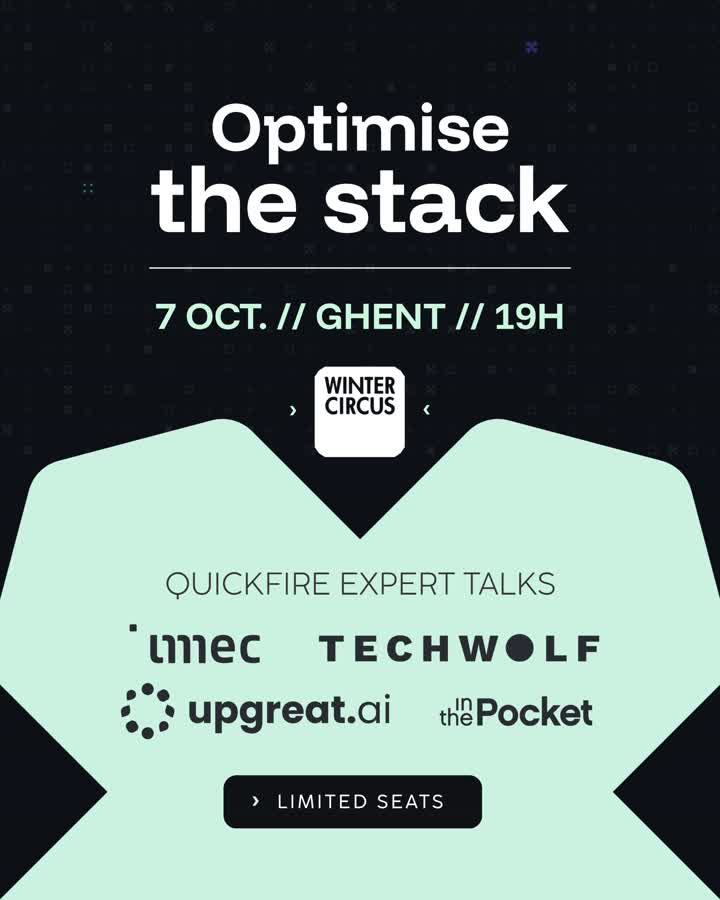
- A different kind of stack party... On October 7, imec, TechWolf, In The Pocket, Upgreat AI, and Wintercircus Ghent are hosting an evening dedicated to the layers behind the AI boom - maximizing your intelligence per euro and ensuring your organization is prepared to scale even further. Our CTO, Jeroen Van Hautte 🐺, will take the stage alongside Jeroen Lemaire (In The Pocket), Steven Latré (imec), and Upgreat AI, mixing strategic perspectives with technical insights on the evolving AI landscape, the infrastructure and economics
- The Anthropic Economic Index says software engineers spend half their AI effort diagnosing and fixing bugs. We looked at our own engineers at TechWolf. It's 16%. Code review is another weird one. The index doesn't even have a task for it. For our engineers it's more than a quarter of their AI time. I've spent part of the summer with our task-level data next to the Economic Index and OpenAI's Work at the Frontier report. At the aggregate, both both seem to make sense, but it obscures that underneath the variance is huge. If you're
- For the first time since the current AI rush started, our team has stopped reaching for the most expensive model by default. While we are still enthusiastic users of Fable and Sol, people are now choosing smaller models often too. Sometimes they do it to stretch their budget, sometimes it's just for speed. It's a broader trend too: routers like OpenRouter are growing rapidly based on the same premise, and it's proving that lots of the work can now be done with cheaper models. More is coming too: Ox Alpha, the experimental model on
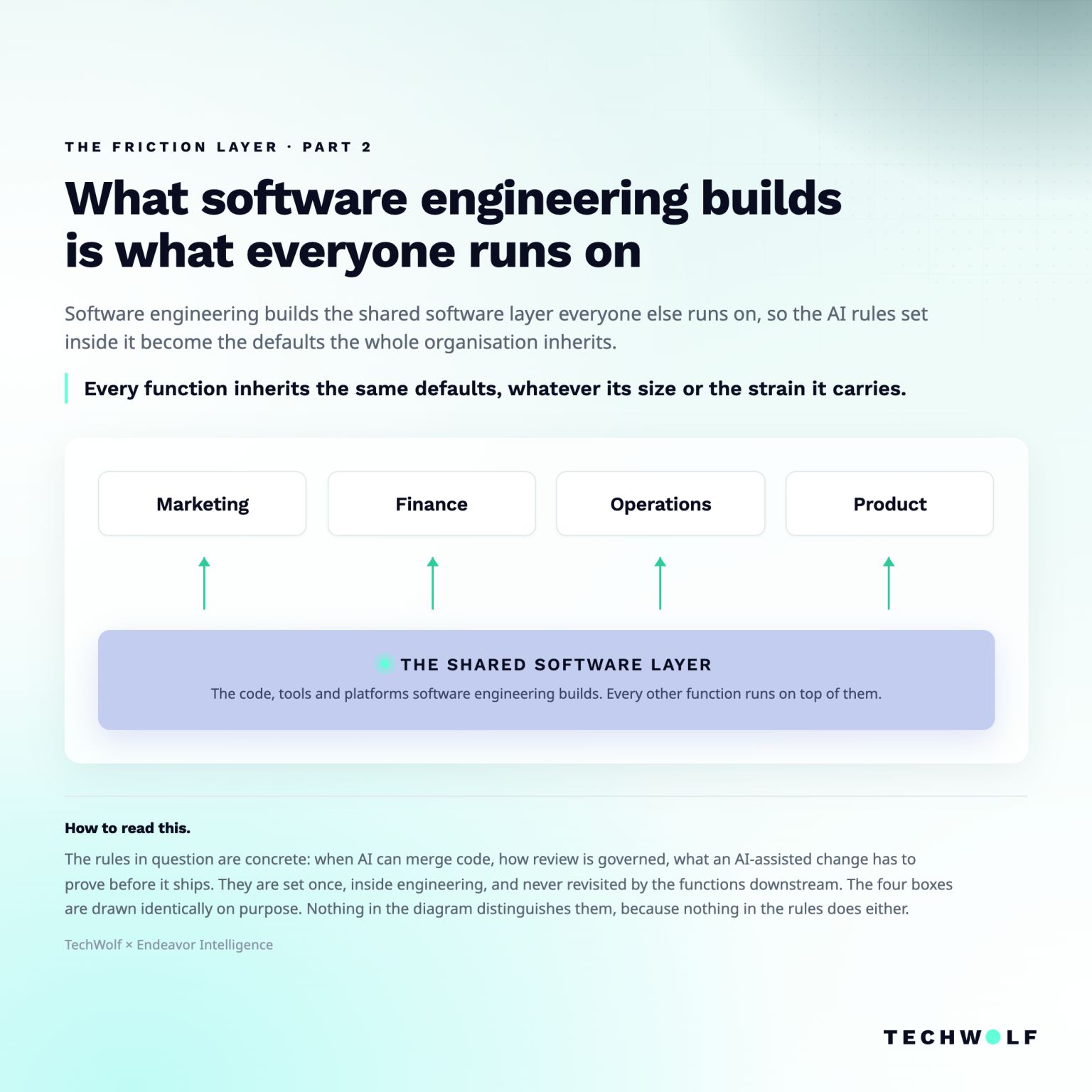
- Part 2 of the Friction Layer series is here, by Markus Bernhardt, PhD, Principal at Endeavor Intelligence, in collaboration with TechWolf. The finding that catches people off guard: the most AI-exposed function isn't the most strained. Software engineering is the biggest technical function, and the first place AI shows up. Yet rank the functions by structural strain, and it only lands seventh. Spread pressure across that much work, and it thins out. So why does it still matter? As our CTO Jeroen Van Hautte 🐺 puts it, engineering
- Most companies bury information security a few layers down, somewhere near legal, where the main job is to say no. At TechWolf it reports into me, the CTO. Two reasons. The first is commercial: we sell to the biggest banks, pharma and technology companies in the world, and they all care very deeply about the topic. Doing an exceptional job here can make a huge difference. The second is AI. Our security and compliance team is small, and between them they carry ISO 27001, SOC 2, ISO 42001, GDPR and the EU AI Act. Answering everything
- Every year we do a big team building at TechWolf. It's a closely guarded secret up until the official announcement. This year someone on the team worked out most of it in advance. There was no leak. Just a few stray messages in public Slack channels, some calendar invites that were never set to private and other small breadcrumbs. None of it is a secret, until you piece it all together. Connecting scattered information was always possible. It was just slow and boring, so you wouldn't bother with it for a teambuilding reveal. Today
- In January I bought an embroidery machine and built an app to turn pictures into something it could stitch. Last weekend I asked Fable to build the whole thing again from scratch. Redoing old projects has become my favourite way to measure how far models have come. Benchmarks don't tell you much about the real shift in capabilities. A project you built before, and the friction along the way, is a different story. My new embroidery studio takes things to the next level: it has live editing, much smarter routing and it even reverse
Related profiles



This page shows public professional information only, each fact cited. Is this you? send a correction, or ask for removal within 24 hours, no questions asked.